| Author |
 Replies: 35 / Views: 6,265 Replies: 35 / Views: 6,265 |
|
|
|
Pillar of the Community
United States
1801 Posts |
Sorry I am late to this party, been distracted lately and not keeping up with the forum. One of these should add some fun to the mix. 1780 over 79, broken castles and exact die match for the reverse die of the 1780 in the current Sedwick auction. I purchased this coin and 5 others at a coin show at minimum 15 years ago (I haven't found the actual receipt yet but it will eventually show up) At the time the dealer informed me that they were part of a burial hoard that had been recently recovered. He had about 15 total spanning 1777-1780, all very high detail but obviously dipped and showing various effects of burial. I picked out the ones I felt had the best look and they have been sleeping undisturbed in my safe deposit box pretty much ever since. They have only been out a few times for scanning for my slowly growing digital record. I reached out to him today, he is retired and his shop closed, but he had no recollection offhand of this particular batch of coins. He dealt with many, many hoards of colonial coins during his 48 years as a professional coin dealer so no surprise there. Anyway here are the 6 coins along with some commentary. Pardon the washed out color, my scanner does not capture the color of coins well. 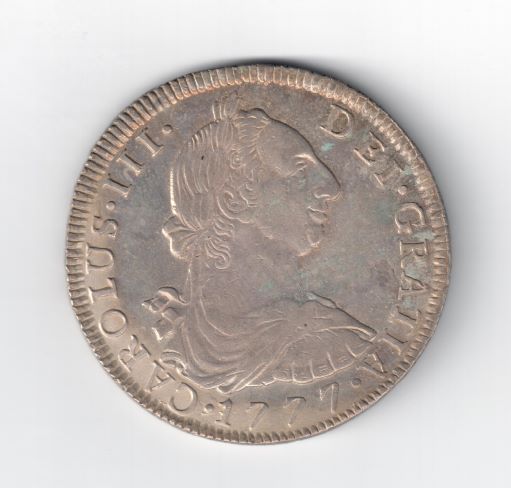 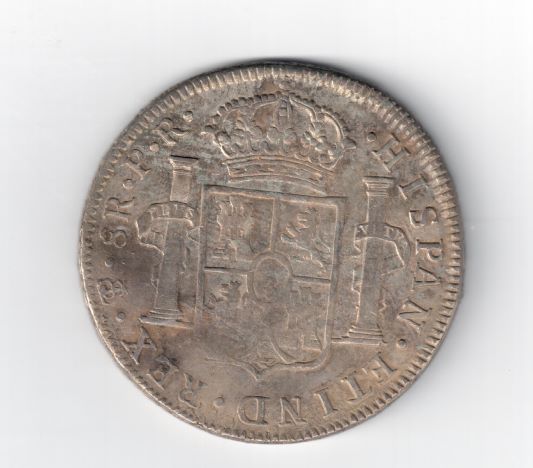 1777 weight exactly 27gr 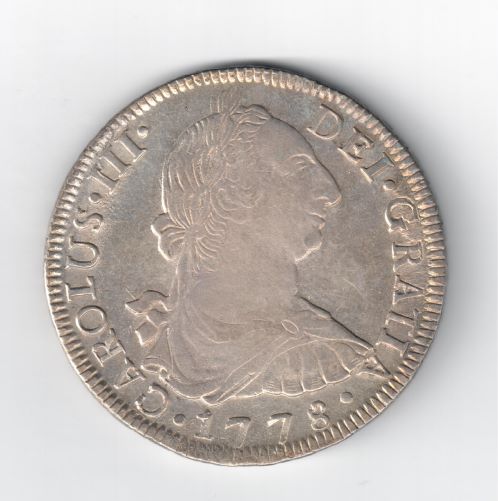 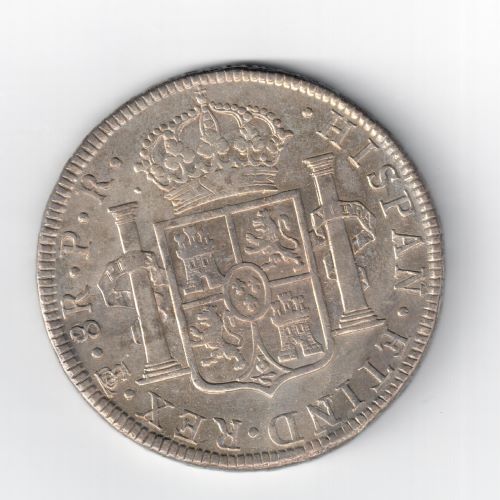 1778 example 1 weight exactly 27gr 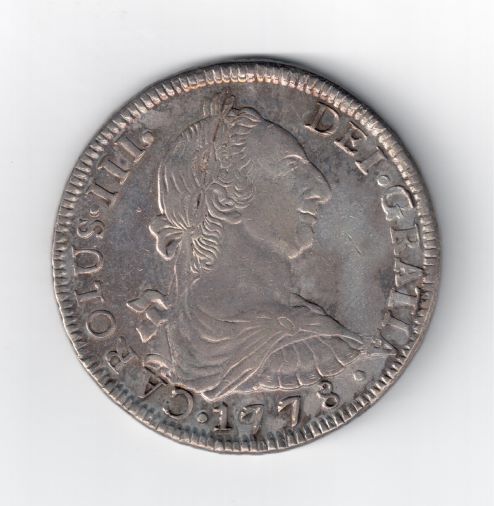 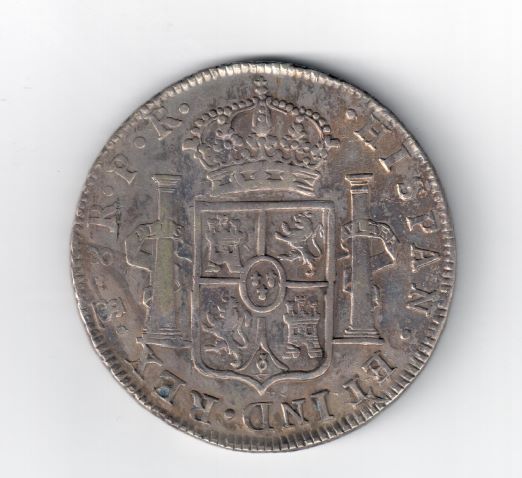 1778 example 2 weight 26.8gr Broken castles 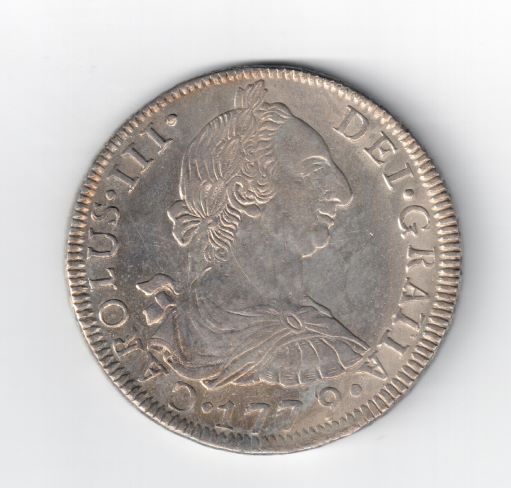 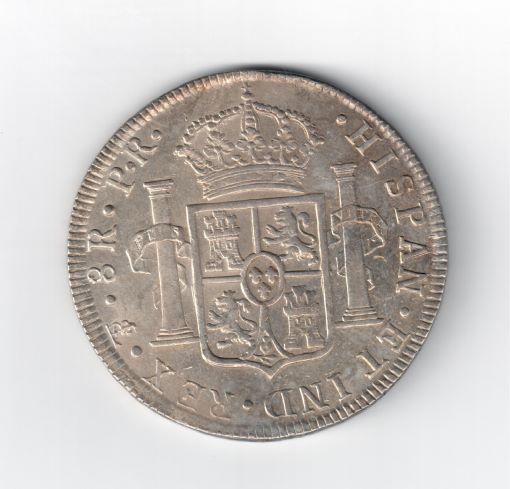 1779 example 1 weight 26.9gr 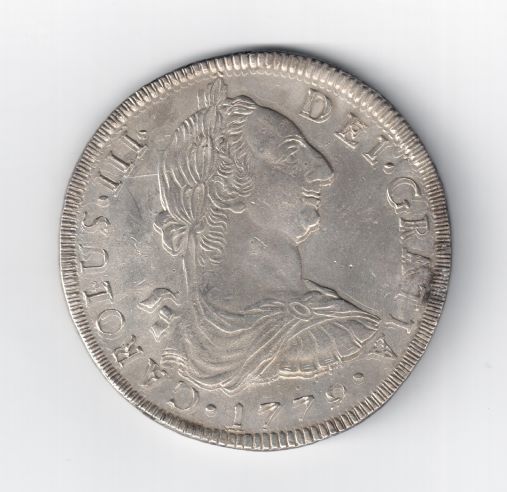 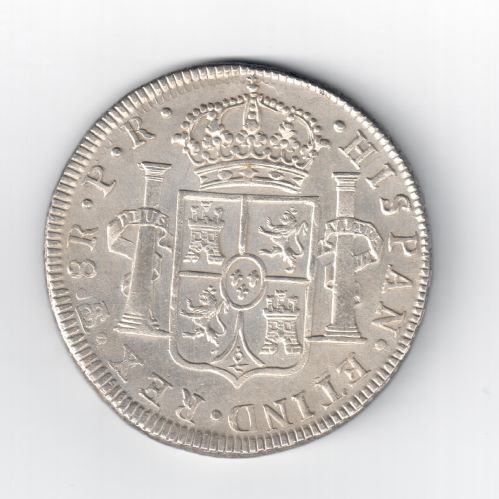 1779 Example 2 weight 26.9gr Wild obverse doubling and faint die clash. Broken Castles 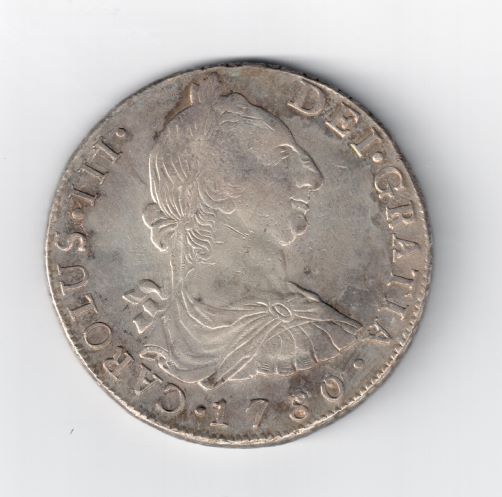 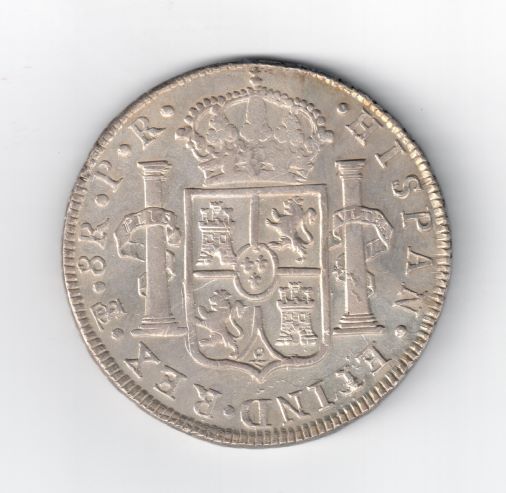 1780/79 Weight 26.9gr, Broken Castle, reverse die match for 1780 coin for sale in Sedwicks auction. Jack, Bob or Realeswatcher, if you want high resolution scans, shoot me a PM and I will send over. Sorry no edge views, only have access to a flat plane scanner and haven't figured out how to scan the edge in a manner that can be seen clearly. Just a few comments on the "broken castle punch" debate and mystery. The castle punch is used twice on each die, not a high production piece like the die itself. I have no guess as to how many dies the Potosi mint went through per year but depending upon that number I can see a punch lasting over a period of time. Second thought, what if the flaw is in the king punch, which would result in each punch starting out as a nice clean broken castle and accounting for the various stages of breakdown that Bob said he noted did not follow chronologically the coin dates? Each new punch would carry the flaw and as the punch broke down the image would change or if the same punch was used in multiple years, it is possible the deterioration in the castle was failure of the individual dies as they were used, not wear and tear on the punch. Also please bear in mind these were "production" mints, looking to crank out as many coins as they could to be shipped out for the crowns commerce. While they had a level of quality control, they were most concerned with weight and fineness, these coins were not struck with the modern collectors fussiness in mind. I will attempt to get down to Santa Barbara with these coins in the near future, there is a dealer there with a nice XRF machine who I am hoping will scan my coins and we can see what they are made of. |
|
Pillar of the Community
United States
5362 Posts |
jfransch Very nice group of coins with a good origin story. The pairs of coins with and without the crack are about what I have discovered as well.
Having coins of the same date means there were two different punch sets in use. I have seen that as well.
The fact that Potosi was a production mint implies a significant number of dies may have been employed. From a US mint publication of 1930 comes an interesting statistic about the Bolivian output of silver. The average annual output during the period from 1770 to 1790 was 4.6 million ounces. This compares to just over 3,000,000 ounces for Mexico. So how many coins were produced?
Mint workers were paid according to total value coined. That is why more 8Rs were produced than minor coinage. Estimates vary on the percentage of the silver used for 8R, but 80% seems to be the most commonly estimated number.
If 80% of 4.6 million ounces was used to coin 8Rs then a production of about 5.9 million coins was produced. These coins were all struck on a screw press which consumes dies more quickly than most modern presses.
As a comparison in 1795 the US mint produced 299 thousand 50 cent coins with 19 obverse and 22 reverse dies. Therefore about 15,000 coins per die pair was produced.
Even if 100,000 coins were made per die pair, about 60 die pairs would be needed at Potosi per year. That is each year from 1770 to 1790.
Next issue were the working dies made with second generation master punches?
It is very likely that like Mexico City the Potosi mint produced working punches as second generation copies.
When did the crack appear?
The matrix block is a very heavy piece of steel. It would not crack. Also a punch made from a cracked matrix block would produce a raised crack on any punch created from it.
The first punch created from the Matrix block was normally used to create a second negative impression in a soft steel block. This impression (a second generation Matrix block) was then hardened for use to create the second generation working die punch.
To postulate a number of punches that would carry the crack as a feature or the punch and not a flaw in the die steel is the only possibility I can envision for mass production. Therefore the first generation punch had to crack as it was pressed into the second generation block.
There also had to be multiple second generation block impressions as well because there are both cracked and uncracked Castles in many years.
But why not simply replace the cracked second generation impression?
It could be that the use of the cracked die was intentional, perhaps to identify silver batches that were low silver.
The one fact we must all deal with is that low silver counterfeits do exist.
That is why I suggest that all examples be tested to determine the density of the silver. That way low silver copies - even if made in the mint - can be identified and properly marked as deficient in silver content. They are fraudulent. The use of a marked die makes sense in Potosi since they has a serious problem with silver shortage, so much so that Potosi coins were avoided by large buyers like the US and China.
|
|
Pillar of the Community
United States
1962 Posts |
Quote:
It could be that the use of the cracked die was intentional, perhaps to identify silver batches that were low silver. That implies ALL or most cracked castle examples should be debased. Planchet testing would be more definitive, but for me, the eye test says that most of the examples one sees are of good silver. As such, I don't think that flies here. Just HOW debased were the pieces you've come across? Also, 130 years earlier, people picked up on the fact that Potosi cobs were being debased during the late 1640s and early 1650s. Over all these years this broken castle appears... no one would have picked up on sustained, large-scale debasement? But again, most examples you see simply LOOK like good alloy... so who knows if the mint workers didn't simply cheat with debased planchets JUST A LITTLE here and there, a la sketchy bullion sellers mixing a few fakes in a $50 face bag? Quote:
"But why not simply replace the cracked second generation impression?" Devil's Advocate? Laziness. Look at how poorly executed the Potosi dies of these years were. The great masters weren't at work here. It seems like it would have been a pain in the cooley to fashion new punches... especially for a mint that could barely punch their design elements in anything resembling a straight line! Bob.. with some patience, can ALWAYS find cheap holed (NOT cancelled, but holed domestically for SUSPENSION, as was commonplace) Potosi bust 8R, even of this earlier period. If you're that suspicious of it, time to get 20-30 examples and do a proper survey. |
|
Pillar of the Community
 United States
1156 Posts |
One thing that bothers me about the broken castle punch is the truncation of the right "foot" of the castle. This appears on all of swamperbob's examples in his book as well as in the 1776, 1777 and 1780 examples in Sedwick's auction. 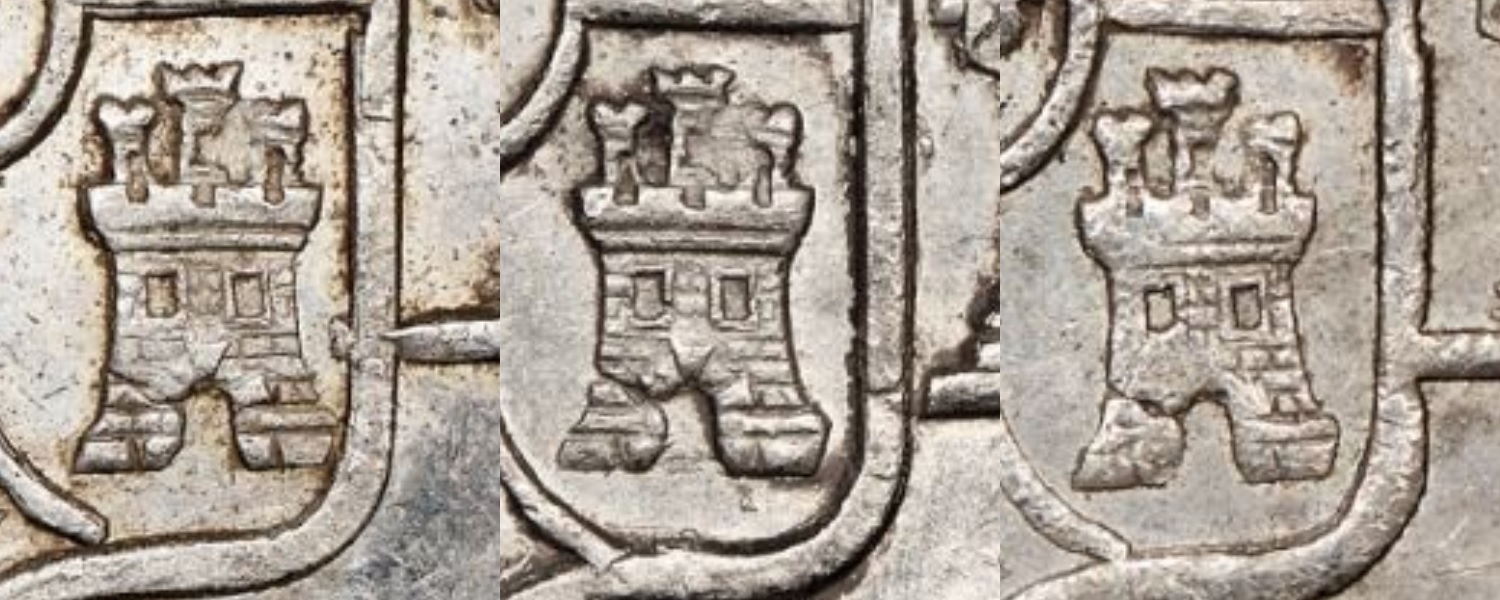 This does not appear to be a feature of the matrix 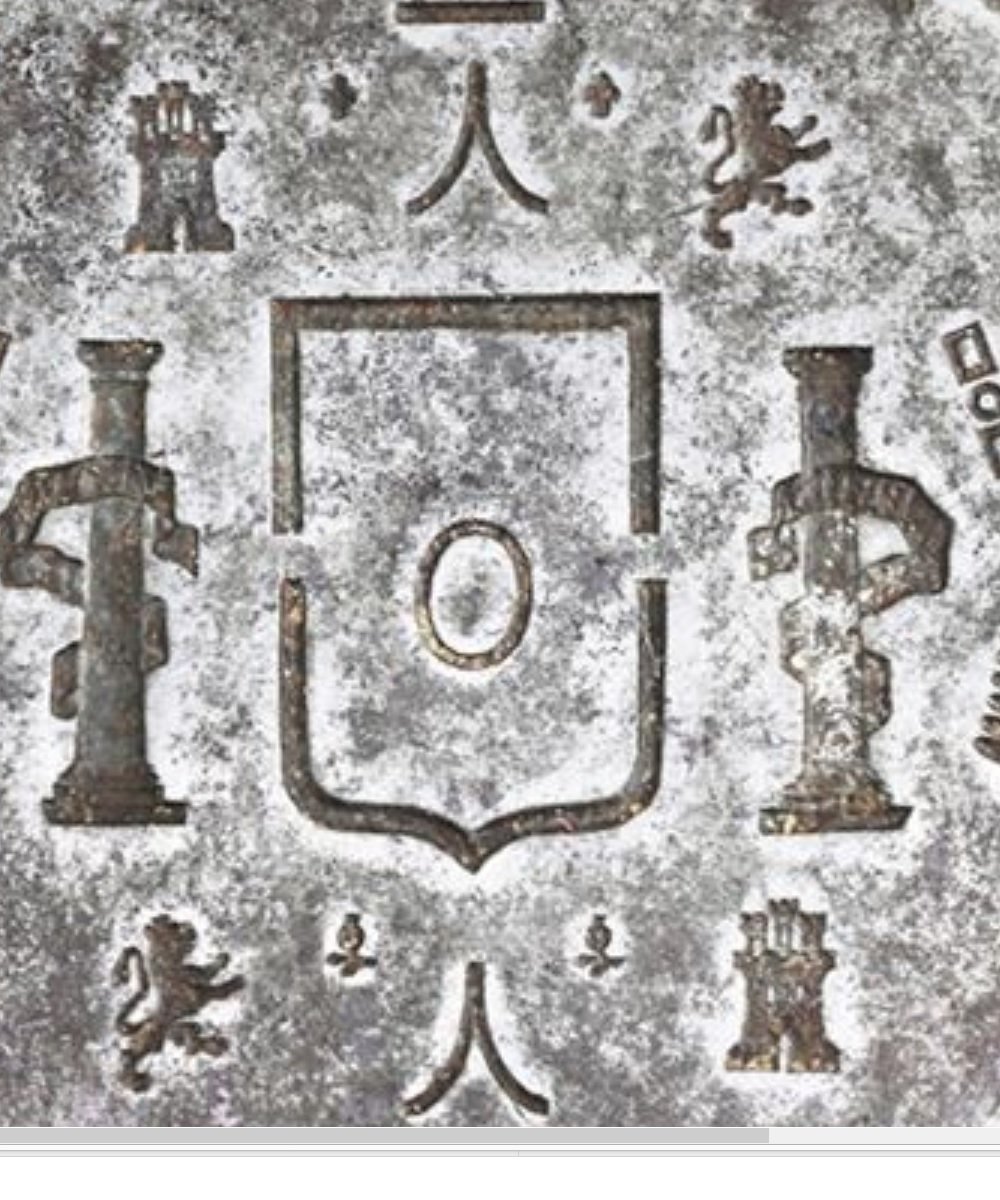 But it could easily happen if you made a copy of the upper left castle where the arc of the oval that encloses the three fleur-de-lis cuts through the castle's right foot. 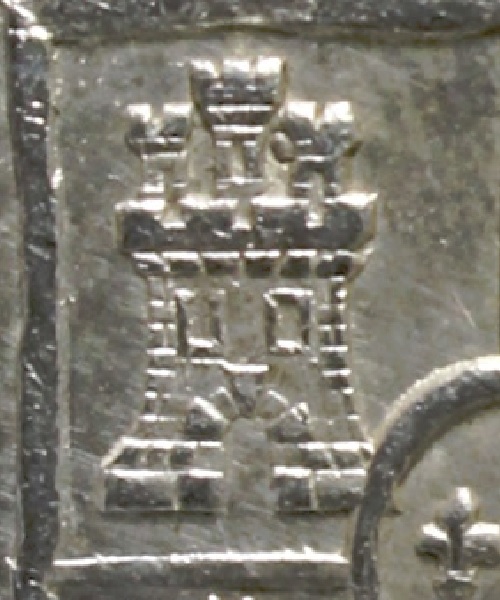 |
|
Pillar of the Community
United States
5362 Posts |
realeswatcher You start by saying: That implies ALL or most cracked castle examples should be debased. Planchet testing would be more definitive, but for me, the eye test says that most of the examples one sees are of good silver. As such, I don't think that flies here.Appearance is perhaps the least accurate method of assessing silver content accurately. If a mint was shorting the content 10% or even 20% pickling the coins would fool the naked eye until significant wear had taken place. In the 1930's Peru used pickling of 50% silver coins to pass alongside the older 90% silver coins at par value. MS Peruvian sols of the 1930's retail the silver color. It is important to note that a pickled coin can not always be detected by XRF either - A handheld XRF definitely will NOT detect a pickled coin since the beam does not penetrate deep enough (about 30 microns) to get a proper signature from the copper. Even older lab XRF devices (pre-2013) will tend to be too shallow and register silver versus copper ratios that are too rich in silver. Only the newer units can accurately work to depths of 100 microns (needed to overcome both pickling and fire scale). Specific Gravity simply can not be fooled as easily and is both quicker and cheaper. You also ask: Quote:
Just HOW debased were the pieces you've come across?
The coins I have noted run from a low of 20% total silver - the copper core piece that started all this to about 80% silver which is 10% short. The average shortage is in the 700 fine range (20% short). The numbers do vary. The copper core coin is an anomaly - perhaps a few planchets were smuggled in? I have also encountered examples that do test 90% as well. So there was some irregularity. Perhaps since both types do exist it might be sensible to test both types using SG to see what the issue averages. You also ask: Quote:
Over all these years this broken castle appears... no one would have picked up on sustained, large-scale debasement? I did not say that no one noticed, Potosi coins were specifically noted as being short in silver by the Chinese before 1800 and again in the 1820s. For that reason Potosi 8Rs (of Charles III) were not accepted in the Canton Factories at the same rate as Mexican issues of Charles III (14% difference in value). There must be a reason for that since only the mint and assayer initials differed between 1774 and 1779. US mint authorities also indicated a shortage but these reports are normally from the early Republican era after the study period which was colonial (1774-1789). So Bolivia has shorted its coins on more than one occasion. It may have been common. So far from no one noticing - the largest bullion buyer in the world noticed and significantly. Remember that the Chinese were using average silver contents of all the Potosi coins they received which included both types of Castles. So I would expect that the results of melting an average batch of Potosi 8Rs (both types lumped together) would produce about 10% less silver than the same number of Mexican 8Rs. The Chinese at the time used 4% as the cost of refining silver - leaving the 10% reduction. You also say: Quote:
But again, most examples you see simply LOOK like good alloy... so who knows if the mint workers didn't simply cheat with debased planchets JUST A LITTLE here and there, a la sketchy bullion sellers mixing a few fakes in a $50 face bag? I agree that is what likely happened. There was some kind of fraud. However the broken castle would then make a perfect marker for the mint workers, officials in the know and bankers who were friends of management. I see the situation as very similar to the reversed edge {{{{{}}}}} on the 1835 Zs OM which is often short on silver but not every time. A clue as simple as the edge that changes direction would be apparent when Bankers stacked the 8Rs on a counting board. The "bad" coins could be rapidly sorted out and shipped to the less favored clients while the one way edge coins stayed with the bank. Counterfeiters operating outside the mint also seem to leave clues on their work so that their bad dollars do not return to them. Finally you conclude: Quote:
If you're that suspicious of it, time to get 20-30 examples and do a proper survey. I have already done that many and I have satisfied myself that there are a significant number short on silver. I am merely warning other collectors that Specific Gravity testing is in order for all Potosi 8R coins of this period. If everyone ignores my warnings so be it - but we are simply perpetuating a 240 year old fraud. I do not know who did it. To me the fraud is what is critical and the good coins can be separated from the bad - so why not do it?
|
|
Pillar of the Community
United States
5362 Posts |
jgenn Good point I had not considered.
I saw the break on the left side of the doorway but really never thought about the change in the outline of the castle.
I like your pictures of the Matrix block. Where are they from? Do they show all sides of the block?
|
|
Pillar of the Community
United States
1156 Posts |
|
|
Pillar of the Community
United States
5362 Posts |
jgenn Thanks for that lead.
|
|
Pillar of the Community
United States
1156 Posts |
I understand that the item from Sedwick's auction was a copy of a part of the matrix block for 4 reales and not the actual matrix.
Edited by jgenn
05/20/2020 10:12 pm
|
|
Pillar of the Community
United States
5362 Posts |
According to a good source, now retired, the Mexican mint vault still contains the colonial matrix blocks for all denominations, but the authorities do not allow photographs. It is too bad that clear pictures are not available for study.
|
|
Pillar of the Community
United States
1962 Posts |
A Cayon auction auction from 2006 contained numerous matrices and punches (I believe that's where the 4R Sedwick example came from): https://www.acsearch.info/search.ht...ot=1&order=2¤cy=usd&company=26&auction=553&lot= Bob, do you have the pic of that copper core piece digitized to post? What year is it? Any other pics of the strong suspects handy? The broken castle being a marker idea still is dubious, though... because clearly a decent number of coins WITH those markers are of sufficient silver content. So if SOME broken castles are debased - but ENOUGH so that those in the know will avoid them - virtually 100% of non-broken castles have to be proper alloy. Do you think that's the case? Have you looked at enough examples where even just visually, you can see a clear trend of ONLY broken castles ever showing hints of debasement? Regarding appearance being a tell of alloy... Pretty much EVERY type of a low-silver alloy tips its hand fairly quickly once a decent amount of wear occurs. The Peru 1930s Soles, British .500, Austrian mid-1800s increasingly debased 10/20 Kreuzers, debased Cap & Rays... and of course low-Ag "normal" contemporary counterfeits. ------ Jgenn, that IS an interesting observation... but the corner simply could have broken off, no? Also... if you're thinking it's something along the lines of what you suggested earlier, somehow copy the coin and fashion punches from that (which seems tecnnologically difficult for this time and place to do convincingly) - why not just use a complete castle from the lower right quadrant? Edited by realeswatcher
05/20/2020 11:44 pm
|
|
Pillar of the Community
United States
1156 Posts |
Quote:
why not just use a complete castle from the lower right quadrant? If your goal is to replicate a genuine punch then I surmise you would copy from the best mint state example, from the earliest die state that you could acquire that was also as fully struck as possible. I have a few mint state Potosi examples but typically one castle is better struck than the other. For instance, the one in my photo is not so well struck that you would want to copy from it. So maybe the best example available was the top castle. Edited by jgenn
05/21/2020 12:18 pm
|
|
Pillar of the Community
United States
1962 Posts |
Whoever would be making these coins would have access to any examples they needed, I would think (I'm working under the premise that any examples came from someone connected to the regal operation).
Again, though... I don't think that would have been technologically feasible for this era within the Potosi circulation area.
-----------
I'm starting to study dates. 1777, for example, has at least THREE visibly different "states", I guess you'd call it, of castle. There's an "unbroken" castle with full feet, then the broken one we're discussing - with right foot always angle cut as you pointed out... but then also a castle with no crack but part of the LEFT foot nicked off.
I took a brief run through 1782 before backtracking to 1777. The one definite trend you notice for the cracked/broken R foot castle is that the dies it appears on are noticeably cruder overall, which is not the case for back in 1777. The placement (alignment) and actual stamping in of the punches is simply sloppier. Also seemed from quick observation like there's variation in some of the other punches on the reverse - again, with the cracked castle pieces' design elements skewing cruder. That said, the product is reasonably close enough to the "better" pieces in overall "fabric" to not necessarily think they emanated from completely different sources.
One other thing to look at... more field space seems to be present overall on the reverses of the neater 1782 w/non-cracked castles. Haven't studied closely enough yet to tell if they're bigger planchets or the combo of sloppy punchsetting and possibly different punches is the cause... but if the former, perhaps there's a connection to fluctuating alloy content in the planchets.
I'm wondering if there weren't two different hands making coins within the mint by 1782... lower man being made to use crummier/more worn down punches. Again, the 1782 execution varies... but not enough where I think they were straight up contemp. ctfeits. from some random group not connected to the mint. I don't think counterfeiting was good enough yet to produce these.
|
|
Pillar of the Community
United States
1156 Posts |
Turns out I have two examples from 1775 with a very early broken castle. 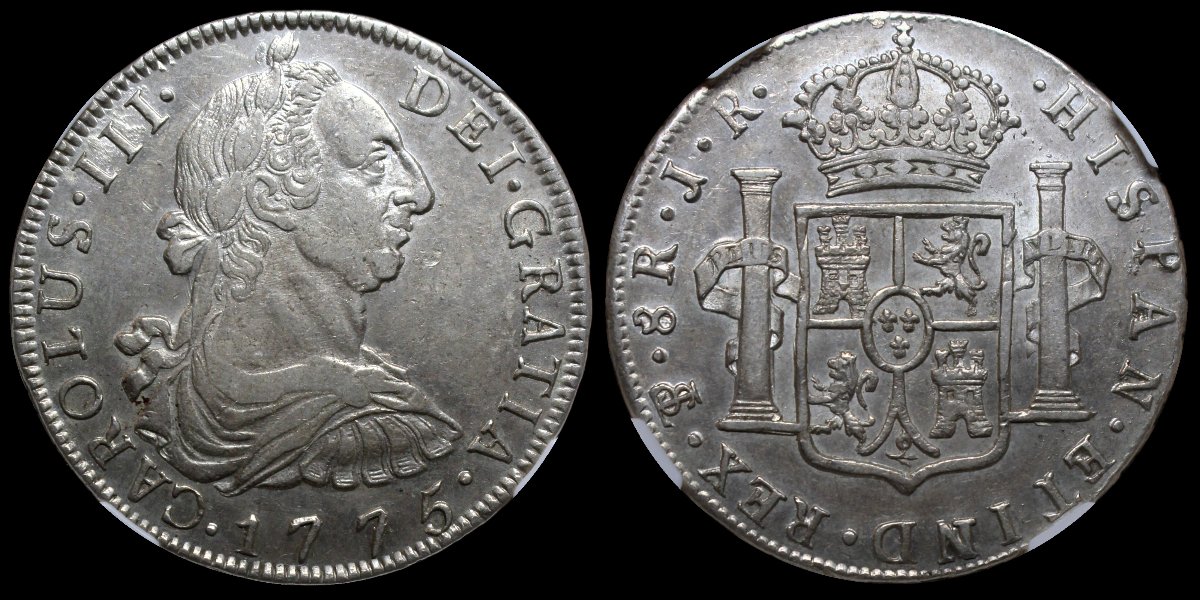 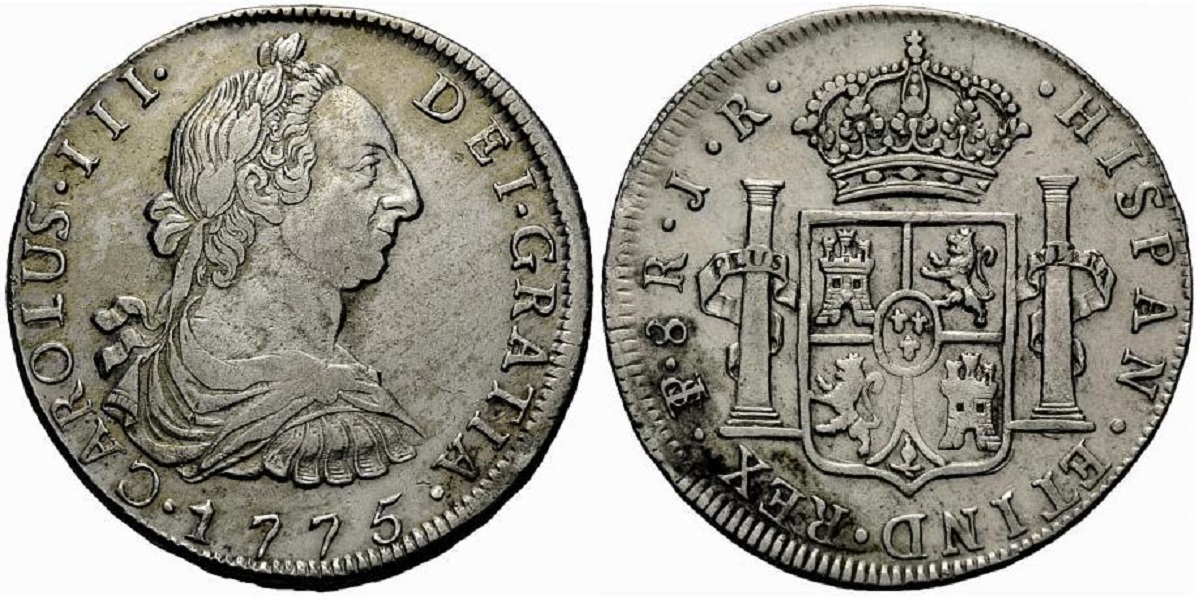 |
|
Pillar of the Community
United States
1801 Posts |
Here is another king punch (or as Bob calls them Matrix block). This one is in the Bogota Coin museum, they had several representing the various denominations but the lighting made it very hard to photograph. (I don't understand why they rejected my request to open the cases so I could get better photos...LOL) 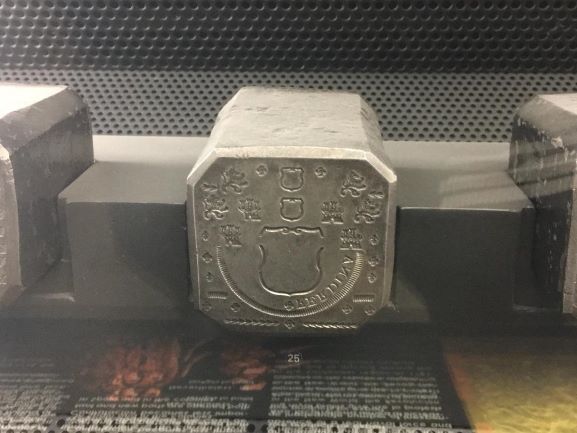 |
| |
Replies: 35 / Views: 6,265 |








 First Page


 Posted 05/19/2020 11:02 pm


