|
This page may contain links that result in small commissions to keep this free site up and running.

Welcome Guest! Registering and/or logging in will remove the anchor (bottom) ads and the security checks. It's Free!
To participate in the forum you must log in or register. | Author |
 Replies: 10 / Views: 2,598 Replies: 10 / Views: 2,598 |
|
|
Pillar of the Community
United States
3076 Posts |
I have absolutely no Idea on using the bellows and manual controls, thank GOD for Live view....Had just a little time to play with it as I finally got the EOS adapter to the canon CD/FL bellows in today...I fist noticed it has such a microscopic range of adjustments to get it focused, and the lighting is really Noticeably harder to capture the coins true colors..but isn't always the case?...nice close ups, but a very small area of view...just what I needed.... 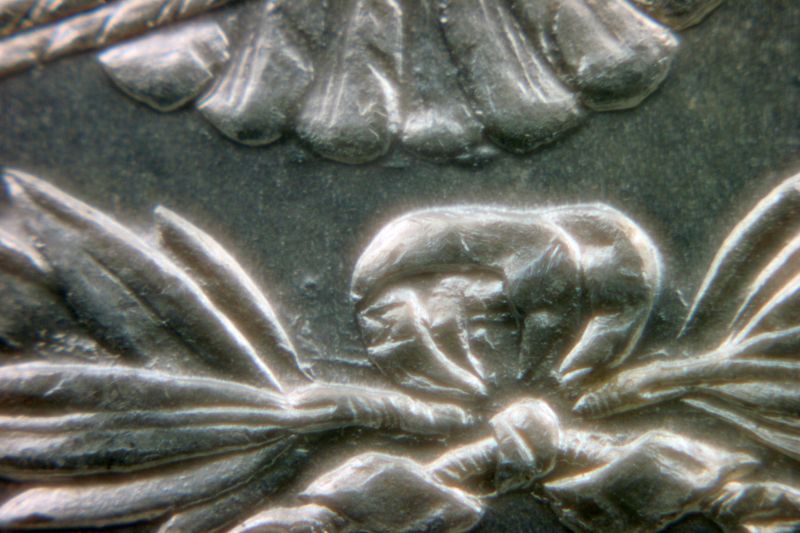 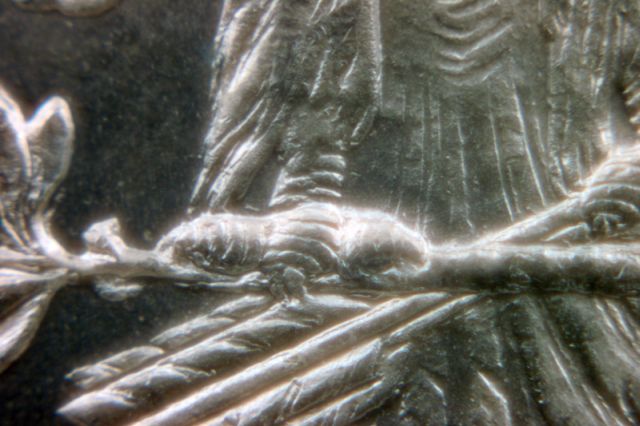 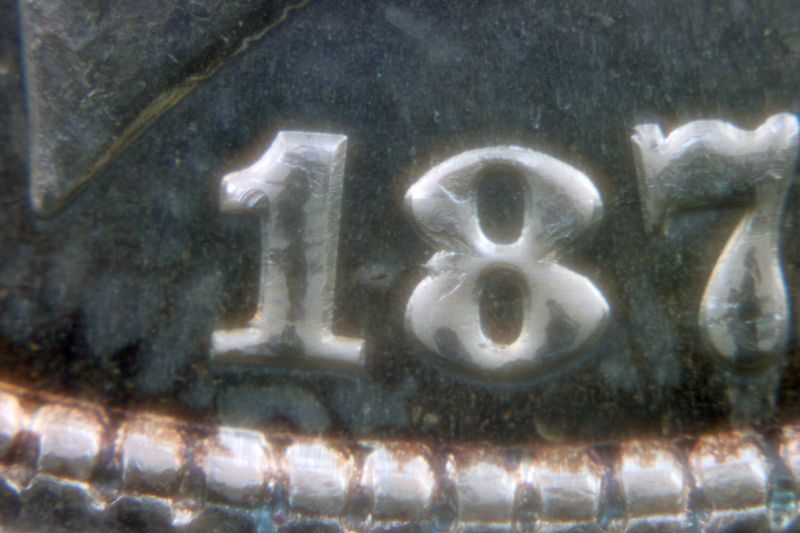 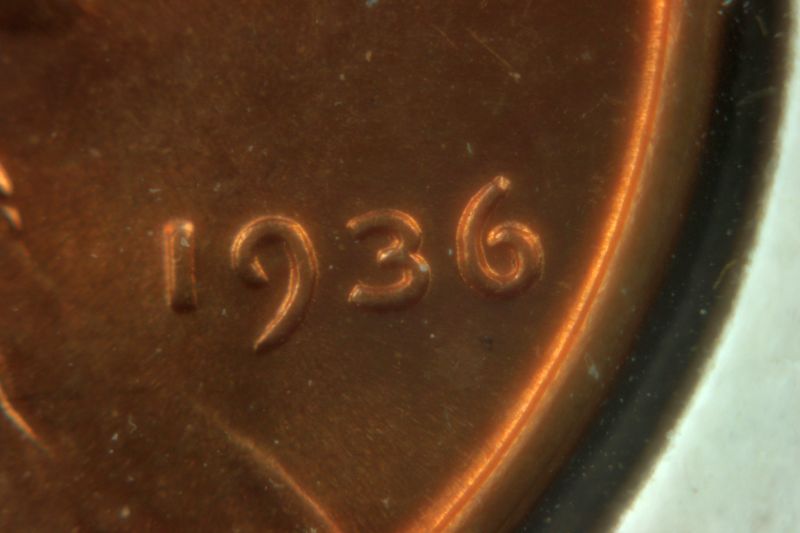 Lens is an Asahi Super Takumar 55MM 1:1.8. I also have the SMC version with a 2X teleconverter but its not the M42 screw type as my first one is..but came from a pentax's...I am guessing this one is, I forget, maybe a Pentax 4/3? perhaps someone could steer men into the correct adapter to get this on to canon FD/FL adapter to get it onto the front of the bellows....Lots to figure out now especially the color,, and area of view as I seem to be only able to get a very small portion of the coins image on camera.....also these desp top lamps are just to incredibly to GD big...may have to try the jansco thing one day after I get the hang of this set up...Thanks... |
|
|
|
Pillar of the Community
 United States
3076 Posts |
With some practice, I am getting used to the manual thing...interesting thing to note is, a camera does it all for you in chosing your distance to the target, with a bellows. one has to back into the frame, the distance to get it into focus....its a small focal point as well...say 1/4 inch for the depth of field..once you find it. its Amazing...I think so far the biggest advantage is the old glass which can be mounted to the newer HIGH Mp (mega pixle) data,,, NEW cameras...which can provide greater detail even when mounted to older glass...it requires manual control , for my 12 dollar lens I did like the results..can't wait to get a real prime... 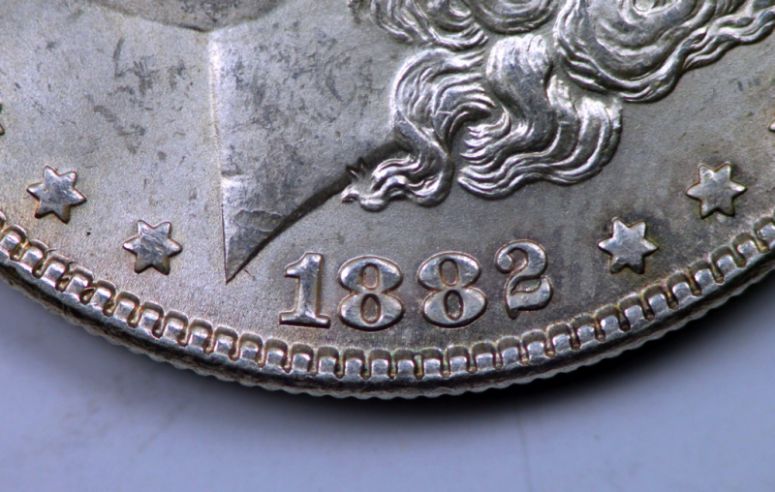 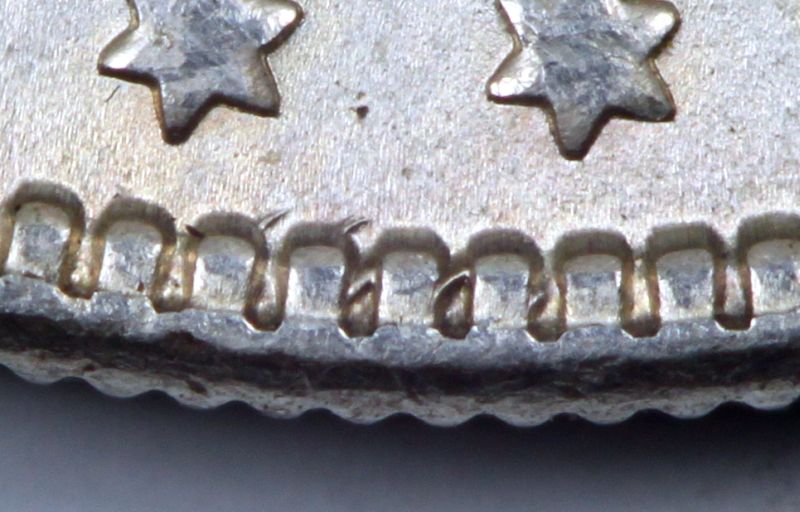 These photo's are not intended to be Macro but they have some nice details...for a $12 dollar lens... |
|
Pillar of the Community
 United States
4051 Posts |
Excellent! Glad to see you got the setup working. And of course you are now seeing all the issues: Depth of Field; Lighting; and the subtlety of simply finding the right working distance for a particular magnification. I'm sure that's not all the issues you will run across... It looks to me like you are stopping-down the lens to attempt good DOF, correct? At higher mags it's often better to keep the aperture almost wide-open (stop down only if lens aberrations demand it) and then take 2 or more images and stack them. This gives you more light to work with, and better sharpness since even at f8 you will start seeing diffraction effects at 1:1 and it quickly gets worse at higher mags. If you want to try stacking I recommend using the CombineZ software. It's free, and there is a Yahoo user group founded by the software author. And it works very well. The Jansjos will make lighting a bit easier, but are still difficult to get into the tight spaces between coin and lens at the higher magnifications. You may need to build some specialty diffusers or reflectors to get the light in where you want it. But my assumption is you are trying to show VAM details, correct? In this case side-lighting is appropriate, so often a single Jansjo at a low angle can be used to show the variety well. As you say in the 2nd post, you are definitely getting used to the manual operation. Just keep the rules in mind to maintain your sanity: 1) Set magnification with the bellows length; and 2) Focus moving the camera versus the subject. Contact me for photographic equipment or visit my home page at: http://macrocoins.com |
|
Pillar of the Community
United States
3076 Posts |
Thanks Ray, The VAM thing is what I am interested in, All thought this setup is, more than fine for getting what I want out of photography, I still need to dive head first in and get to see the whole of the process...The many threads from before are kicking in...One thing I have realized is there will be post processing skills are needed, so far I simply adjust color and resize.. for posting....one thing I was wondering about is how people take these bellows shots of say flower's until I found there is more than "one field of focus..using the bellows"...when I first started just getting the coin to focus reminded me of another's attempt and thread, and frustration in using the bellows.... however, with a little effort, one will find the bellows can be used up very close to the coin, and at a father distance as well... My lens was within a few inches. and I could never get the whole coin in one shot....Then I extended the distance for the coin to be viewed at it's full size..This is something I didn't realize was possible..and the detail is still there......With my eyes, seeing the focus through the view finder on the camera, doesn't work for me, yet within live view on the camera it makes all the difference..I can get my focus, and then zoom in. and refocus..to a greater detail...For now as I don't know much about post processing or stacking..I'm happy with these results.I've read the threads about re-stacking images to gather an overall image of the coins true appearence, just havent ventured that far yet, but its something we all must delve into in the end....I just bought a prime lense,EL CHEAPO...however it seems it may be a high end Lecia lens, time will tell...Al together, I'm happy playing with the bellows for extreme MACRO results. More than good enough for what I intended...and the results are even getting better....If not for the many threads on cameras, and lenses I would not have had any Idea of how to get what I was looking for unless I spent a ton of money... Another aspect. As Ray and Dave have mentioned, one gets the coin into the focal plane, this is only a starting point... while in the manual mode..the F/stop and the shutter speed effect the lighting and "detail" of your shot... I find in general, looking for a rule to follow, when the F/number is lower the greater the light is upon the sensor..so the shutter speed if you have control over it. also effects the outcome...say 500 vs 160,,,160 lets more light in..The apeture or F number also effect the results..just my observation..the detail is the result..and these are the variables...but Its not all that complicated...I see that now... |
|
Pillar of the Community
United States
4051 Posts |
Yes, the smaller the f number the bigger the opening, so more light gets let in and shutter speeds can be faster, but depth of field is less. It's usually best to focus with the smallest f-stop ("wide open") and then close down the aperture to where you want it for the shot. Focusing with small apertures is very difficult.
So, what Leica lens did you end up with? I don't know of an El Cheapo Leica lens. I own a couple and they were definitely not cheap!
Have you tried the single light at low angle trick? Makes the surface look more 3D...Ray
Contact me for photographic equipment or visit my home page at: http://macrocoins.com |
|
Pillar of the Community
United States
3076 Posts |
I haven't tried the stacking thing yet, and I am interested in learning how to do that to combine pic's and get a better overall average and representation of coin's, Right now I an using Irfanview because its pretty easy to use for crop and resizing, As for stopping down, for one the camera's settings and where I have the lens apeture at almost full wide open or I don't even see the coin...once my image is in view I use the live view to adjust what it thinks its seeing as I'm in full manual mode, so I don't know if these numbers are true representations of the true shutter and F numbers... However, I do drop or raise the settings and watch the result on screen, Both the F/stop and the shutter speed directly effect what I see on screen, But I do want to try and see the dept of field thing your talking about...For the most part, I'm trying the baby step approach, having only 2 variables to work with...shutter and F/stop...and I have left out the ISO, meaning I usually only use 100 or 200 for now, AS IT IS one of the variables to consider for the final outcome... Usually this works good for coins on my point and shoot and DSLR, but here I am learning the bellows thing, I'm trying to remember from the many thread's But if I raise the ISO does this allow me to have a faster shutter speed, and still have sufficent light if I start to close the apature raising the F number F8 or say F16, MY meaning is..... DEPTH of field....you commented that the depth of field is less as the lens is wide open, so if it's closed, to a point, does the depth of field get better? but is just harder to get it into focus? and the details get better? and of course the shutter speed still only effects the amount of light hitting the subject......same as before,, with out the higher ISO... I'm just trying to understand how to use the ISO with the bellows, as I believe its different than with the plain camera....to get some kind of rule or principle of the 3rd variable using the bellows....Improving Depth of field... as with my first 2 principles, shutter and Apature, low ISO I'm getting decent results...Raisng the F number, allows the blades to shrink the lens opening...letting less light in...DOES raising the the third principle of ISO allow more light in? allowing greater depth of field? I know you can only raise it so much before other things like arberation(spelling) and CA come into play... It complicated to some extent but not really, I just need some guidelines on how or what effectes the depth of field using the bellows..as If I have the stock lens its really simple and not an issue...Thanks |
|
Pillar of the Community
United States
4051 Posts |
Quote:
I haven't tried the stacking thing yet, and I am interested in learning how to do that to combine pic's and get a better overall average and representation of coin's Stacking is actually a lot of fun to do, but is a bit time consuming...and not required until you are frustrated at not having enough depth of field or enough image sharpness. You can get both simultaneously with stacking because you can optimize each of the stacked pics for sharpness, and the stacking takes care of the depth of field. Quote:
For the most part, I'm trying the baby step approach, having only 2 variables to work with...shutter and F/stop...and I have left out the ISO, meaning I usually only use 100 or 200 for now Baby steps is a good approach! Your camera may be fine at higher ISO settings but 100-200 is a safe bet. You can get faster shutter speeds with higher ISO but you will need to experiment to see what gives the best result. Quote:
you commented that the depth of field is less as the lens is wide open, so if it's closed, to a point, does the depth of field get better? but is just harder to get it into focus?
and the details get better? There is always an "optimum" aperture setting for a particular image. Wide open, most lenses suffer from aberrations. Close the aperture down a little, and the image gets better for two reasons: aberrations are reduced; and depth of field improves. Close it down further, and depth of field gets better but at some point diffraction starts to degrade the image, and shutter speed may need to be very slow or ISO very high. F5.6-F8 is usually your best overall compromise between aberrations, depth of field, diffraction, and shutter speed/ISO tradeoff. Here is my recommended procedure: - adjust aperture wide open - adjust lens-camera distance to get best focus - stop-down lens 1-2 stops. I Recommend f5.6 to f8. Don't go beyond f8 or image sharpness will degrade due to diffraction - Adjust ISO and shutter speed to give correct exposure - Snap the pic! Quote:
Raisng the F number, allows the blades to shrink the lens opening...letting less light in...DOES raising the the third principle of ISO allow more light in? allowing greater depth of field? The ISO adjusts the sensitivity. Higher ISO is more sensitive. Same amount of light, but the sensor needs less light to capture the image. This can allow you to close the aperture a bit while keeping the same shutter speed, or speed up the shutter at the same aperture. Of the 3 parameters Aperture, Shutter Speed, and ISO, only Aperture affects Depth of field. So you want to keep it in the range you want to get the proper depth of field. Once you select the Aperture you want, then you can trade-off ISO and Shutter speed to get the proper exposure. Hope this helps and is not too confusing...Ray Contact me for photographic equipment or visit my home page at: http://macrocoins.com |
|
Pillar of the Community
United States
3076 Posts |
RAY!!This exactly what I am experiencing...And why I asked how this third, principle ISO as I call it...effects the overall image...from many a thread Have I read and encounter the "noise" effect of a higher ISO. which in many cases gets a nice picture,and has its own limits for the best picture, but this discussion is of coins, which is a different monster...And the lens has by my reckoning, Has it's own best best sweet spot,,, something we have to learn for our camera and the particular lens we attached to it...Its not a fix all. But the principles, are what I want to know, from my own trials, and to have others know these foundations,,,if only from my comments...POST processing, after the fact of the coin shot. Can be like ebay...its a wonder how they sell all of there coins, coins with poor photo's,, I will try soon and work on the stacking of images..My true goal is to represent the true image which can not be seen with one image.. And thanks RAY my friend for sharing all of these, more than Ideas.....I got my bellows and could not even get focused, now the world is new, and there is much more to learn...And as SD has mentioned...Its not about the macro of coins...The EYE is opened to the Beauty of the world..... |
|
Pillar of the Community
United States
3076 Posts |
I hate, to be in the middle of moving in the subject as this....Its SO KEY, in the principles, I hope others are following....DANG.....
|
|
Pillar of the Community
United States
4051 Posts |
I'm in the same situation. We just finished inspections on a home we're purchasing and I'm in process of packing stuff up in preparation for the move. We close on 22-Nov, but have to do a lot of renovation before moving in so between acting as general contractor, packing and moving, and my (more than) full-time Day Job I don't have a lot of time left over for my numismatic endeavors. Around Thanksgiving I'll be completely consumed with the renovations until we start the move just before Christmas. I don't see myself doing much more than short replies for the next 2-3 months...Ray
|
|
Pillar of the Community
United States
3076 Posts |
Ray, Thanks again, I see now this relationship, but it also is the relationship of the quality of the lens, what ever the lens you have...Cheap or high end...cheap has more to work out, the high end higher priced lenses have less to tweek...
Cameras are glorified TV's... The over all image of pincushing and such even, balance of the TV's internal processes. total picture control, , I never thought they were so inline....TV what we watch and what we shoot... and the out come,
|
| |
Replies: 10 / Views: 2,598 |
|
To participate in the forum you must log in or register.
Disclaimer: While a tremendous amount of effort goes into ensuring the accuracy of the information contained in this site, Coin Community assumes no liability for errors. Copyright 2005 - 2026 Coin Community Family- all rights reserved worldwide. Use of any images or content on this website without prior written permission of Coin Community or the original lender is strictly prohibited.
Contact Us | Advertise Here | Privacy Policy / Terms of Use
|
| Coin Community Forum |
© 2005 - 2026 Coin Community Forums |
| It took 0.42 seconds to rattle this change. |
 |
|
| |
| |







 Posted 10/31/2011 10:55 am


