| Author |
 Replies: 16 / Views: 5,585 Replies: 16 / Views: 5,585 |
|
Pillar of the Community
Canada
535 Posts |
|
|
|
|
Pillar of the Community
United States
560 Posts |
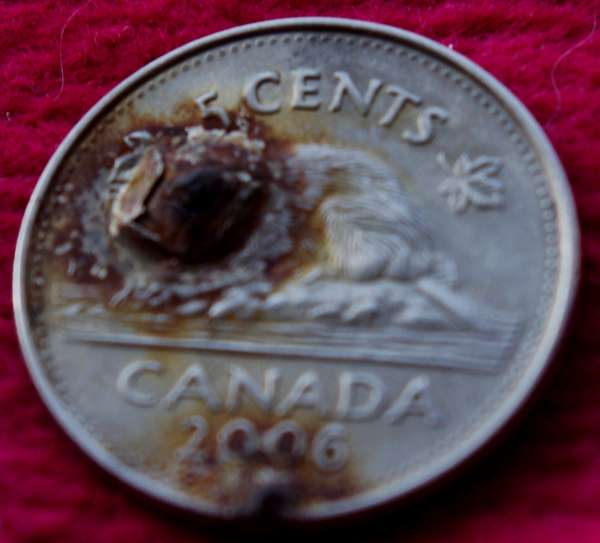
spot welder? some sort of acid?
Edited by patrick
03/22/2012 7:15 pm
|
|
Rest in Peace
United States
2668 Posts |
|
|
Bedrock of the Community
Canada
10743 Posts |
Quote:
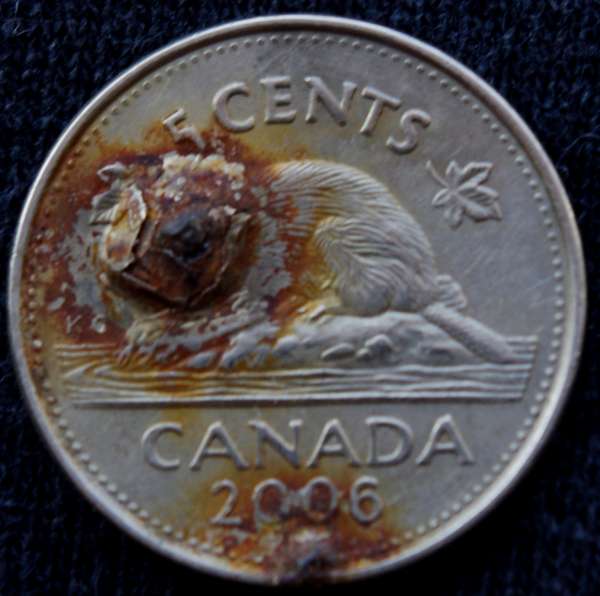
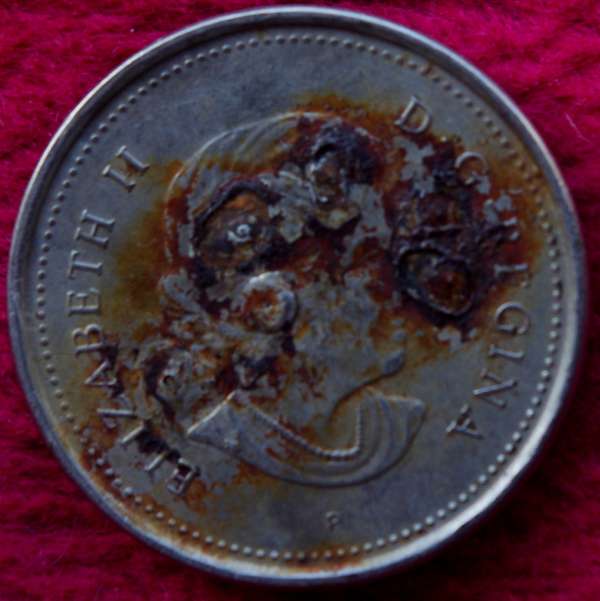
Exploding Beaver I'd say the Queen doesn't look that good either.  |
|
Moderator
 Canada
10480 Posts |
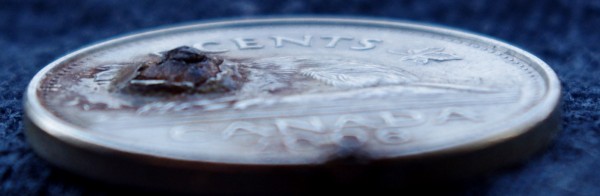
Neat. You can actually see on the reverse (from the surface down) the nickel, then copper, then nickel plating layers, peeled back like an onion... looks like someone put a massive electrical current or heat through this coin, I would agree with spot welding...
"Discovery follows discovery, each both raising and answering questions, each ending a long search, and each providing the new instruments for a new search." -- J. Robert OppenheimerContent of this post is licensed under a Creative Commons Attribution-NonCommercial 3.0 Unported License. See: http://creativecommons.org/licenses...0/deed.en_USMy eBay store
|
|
Pillar of the Community
Canada
902 Posts |
Amazing what some people with too much time will do to a coin.
|
|
Bedrock of the Community
United States
12437 Posts |
The plating was breached which caused the steel core to rust, it has nothing to do with a welder. As the steel core undergoes further oxidation(rust), it would expand outward causing a larger breach of the plating.
|
|
Moderator
Canada
10480 Posts |
I can replicate this coin in about 20 seconds with a spot welder. Note that there are two blackened contact points on this coin. If you look at the obverse, that is not a pattern of rust spall, my guess is that the copper plating was starting to melt, underneath the thicker nickel plating.... I suspect Ugly can chime in here, he loves this stuff. I bet he could even tell you the make and model of the welder, and what day of the week the error was made!  "Discovery follows discovery, each both raising and answering questions, each ending a long search, and each providing the new instruments for a new search." -- J. Robert OppenheimerContent of this post is licensed under a Creative Commons Attribution-NonCommercial 3.0 Unported License. See: http://creativecommons.org/licenses...0/deed.en_USMy eBay store
Edited by SPP-Ottawa
03/23/2012 2:36 pm
|
|
Pillar of the Community
Canada
2430 Posts |
Spot Welder for sure! Poor little beaver...he was just minding his own business! Poor little guy!  Edited by darryldarryl
03/23/2012 2:40 pm
|
|
Bedrock of the Community
United States
12437 Posts |
The two "blackened" points are not really black at all but they are a nice shade of rust red- that is the normal color of iron oxide. The effigy side shows rust concretions that were transferred either from another coin or an unknown iron object. The discoloration on the coin is from rust staining that could easily be removed with a dip in CLR household cleaner. There is nothing in the discoloration that would indicate an extreme heating event such as a welder.
|
|
Valued Member
Canada
115 Posts |
That's what happens when you do nothing but sit around on (or with) coins for 75 years. The wife finally has had enough and blows the lazy beaver's brains out.
|
|
Moderator
Canada
10480 Posts |
Quote:
There is nothing in the discoloration that would indicate an extreme heating event such as a welder. You can do all kinds of things to coins, without discolouring them, it all depends how hot you run it. I have had lots of success with TIG welding coins. When I can sneak into the machine shop at work, my favorite prank is welding high carbon mason nails to 25-cent coins and Loon dollars and hammering them into soft asphalt in parking lots.  The only thing is you can't really mess around with the zinc-cored 1-cent coins, since zinc has a low melting point (about 420 C) relative to the steel cored coins, and plating metals (Ni and Cu). A quick search online also shows some examples, like this cool Australian coin: 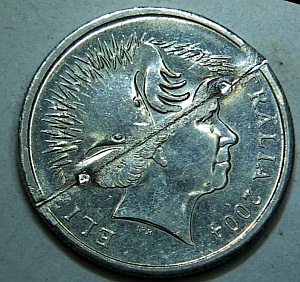 Here is an American 11-cent piece (note there is no discolouration):  Check out this welding art (that you can sit on). No discolouration there (clad coinage): http://interior-create.blogspot.ca/...ogether.html"Discovery follows discovery, each both raising and answering questions, each ending a long search, and each providing the new instruments for a new search." -- J. Robert OppenheimerContent of this post is licensed under a Creative Commons Attribution-NonCommercial 3.0 Unported License. See: http://creativecommons.org/licenses...0/deed.en_USMy eBay store
Edited by SPP-Ottawa
03/23/2012 6:02 pm
|
|
Pillar of the Community
 Canada
535 Posts |
That's an interesting link. Thanks for that SPP-Ottawa. Now that I have a better idea of what happened to this nickel, I think I will put it in a 2X2 and add it to my ugly coin collection. I may have to call that collection by a different name, might be copyright issues with another CCF member.
|
|
Pillar of the Community
Canada
993 Posts |
I do a lot of metal detecting and find plenty of coins in similar condition. Any of the newer plated steel coins that have been buried for a short while usually have extensive damage. I have found cents and nickels that were barely recognizable as coins. In fact, It sometimes takes a careful study with the loupe to determine that it's really a coin. They just don't make 'em like they used to.... sigh..
|
|
Valued Member
Canada
248 Posts |
Im back!SPP & Timnic, Great observations!    I just couldn't resist and had to chime in. Now about the nickel! To me you all have sense to your conclusions as possibles! I have a thought maybe someone made an electrical contact that arched from two points and got in contact with a acid based substance maybe even rain and oxidized the steel component from within having been exposed from the melt. I've worked with spot welders for a while and think what are the odds of two hits with a spot welder and how hard it would be to do that and think that it would be in worst shape for it. I'm still thinking someone with two wires and electricity. Thanks guy's you brought a smile to my day!  
|
|
Bedrock of the Community
United States
10045 Posts |
I have to admit--the title of this thread made me laugh on several occasions. Whatever the specific cause to this coin, I have seen the same effect on plated ferrous objects near saltwater. Once the plating is breached, rust displaces the original volume of metal, which breaks out like a blister. Before long, there is catastrophic failure of the metal, which is why ships have a sacrificial anode attached to the hull. |
| |
Replies: 16 / Views: 5,585 |






 Posted 03/22/2012 8:01 pm





