| Author |
 Replies: 18 / Views: 16,561 Replies: 18 / Views: 16,561 |
|
New Member
United States
19 Posts |
|
|
|
|
Pillar of the Community
United States
1699 Posts |
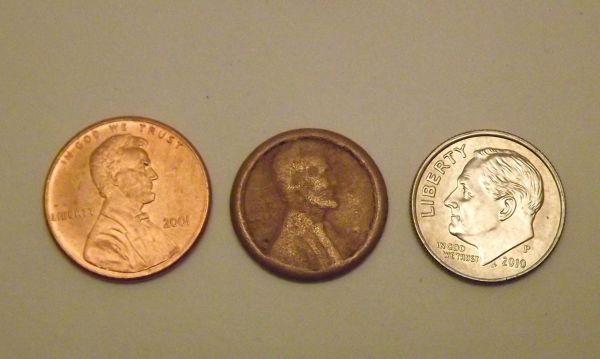
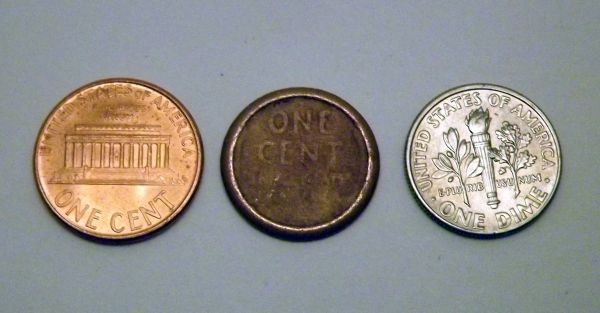
This one is post-strike damage. If it were struck on a dime planchet, the coin would be made of silver, have a stronger, clearer impression of the design, and would not have that large rim. And,  |
|
Pillar of the Community
United States
1080 Posts |
the rim is so raised because it is a "dryer" coin or something similar. It was damaged by hitting the rim on edge repeatedly (like rolling around in dryer machinery).
|
|
Pillar of the Community
United States
1796 Posts |
Indeed, Dryer Coin. The thickness of the rim gives it away. |
|
Moderator
 United States
16694 Posts |
It's been hammered down and, it's copper.
swcoin.ecrater.com
|
|
New Member
 United States
19 Posts |
There is silver showing when you look at the edge, Unfortunatly it did not photograph well enough as it is such a thin line of silver. it almost looks like copper over silver with the edges from the excess size of the copper over silver. If it is a Dryer Coin would it bend over on both sides equally? Thanks everyone! |
|
Rest in Peace
United States
7075 Posts |
That little bit of silver that you see on the rim is probably a little bit of silver colored metal that the coin picked up while it was in the dryer -- or -- perhaps it was shoved into some sort of good luck token or put into a bezel to make a piece of jewelry.
But the edges are quite rounded which makes me think it went round and around for a long time. Also, it is quite worn down which seems unlikely if it was in a good luck token.
Maybe it got put into a rock tumbler.
|
|
Bedrock of the Community
United States
14454 Posts |
the thick rim says its PMD instead of any type of error. I am not sure if it was spooned or it spent some time in a dryer but either way it is not a Lincoln Cent on a dime planchet |
|
Pillar of the Community
United States
5896 Posts |
Looks smaller than the dime.
And if you can weight it, that will tell what you have.
|
|
Pillar of the Community
United States
1374 Posts |
Today, it is popular to further hammer the coin into a ring. Most I've seen were made from Walkers. Check this out:   Edited by Drsandman2
09/16/2012 10:08 pm
|
|
Pillar of the Community
United States
2540 Posts |
|
|
New Member
United States
19 Posts |
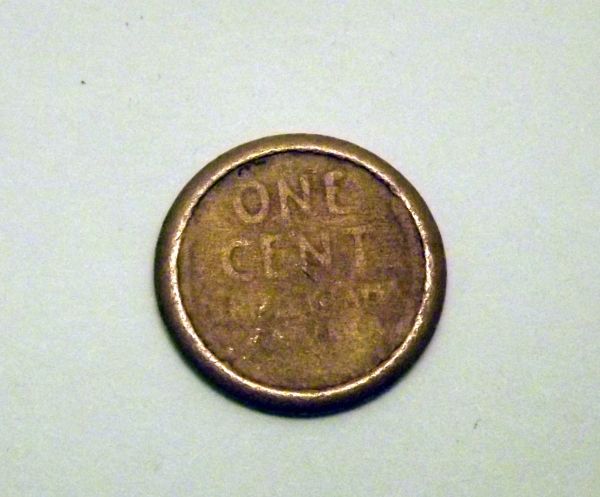
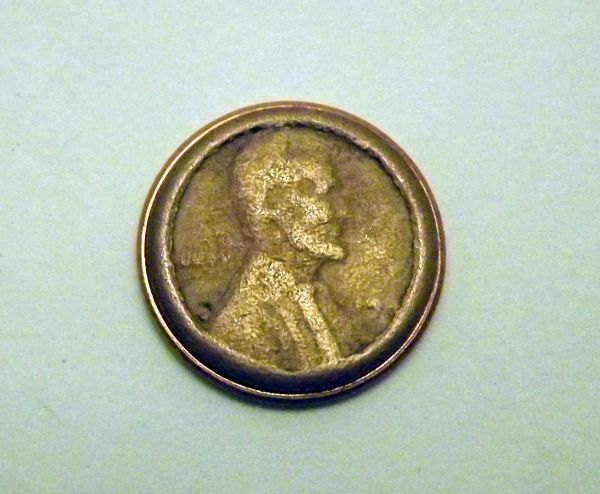
Ok I finally had to measure and weigh the coin...... The width is ever so slightly wider then a dime. Please see the last picture that shows the flat rim all around the edge. If I measure inside the rim it is equal to a dime. The thickness measure inside the rim also equals a dime. The weight is .oo2 grams heavier then a dime, but less than a penny. This measuremnts are as close as I can get with electronic caliper and electronic digital gram scale.
|
|
New Member
United States
19 Posts |
One question I forgot to ask....If it is a spoon and or Dryer Coin why is there the flat rim like in the last picture? I would think a dryer could not be that percise. If a spoon coin then I can understand the the entire edge being beaten over to one side or the other, but not the rim. Anyway that is just my thoughts after researching dryer and spoon coins on the internet. Thanks again to everyone who looks and offers an opinion.  |
|
Pillar of the Community
United States
1758 Posts |
For future reference I have been working with a few U.S. and World error collectors on confirming off-metal compositions in their collections. See my work recently with Mike Diamond of Coin World (Collector's Clearinghouse) on the 1941 "brassy" slightly overweight Lincoln Cent and confirming its not of a Peruvian planchet stock. There are probably other mis-classifications in this arena with slabbed and non-slabbed pieces from my observations as I also collect off-metal errors both U.S. and World. See next weeks Coin World's Collector Clearinghouse article (Week of: 10/15/2012) on pages 82-83 on this piece andsome others Lincoln off-metals. On this specimen its an obvious bang around the rim job (i.e., upset rim) or post-mint damage. In colonial coins particularly with the imported English/Irish contemporary counterfeit halfpence (1/2d) from the 1700's of a struck (not cast) nature this was actually done during the striking event occasionally by the counterfeiter to simulate wear so they would pass easier into the marketplace as real 1/2d. Actually I never seen a 18thC farthing with this effect. Anyway - But of course this is not the case with U.S. 20th/21stC coinage as in this specimen - EVER. John Lorenzo United States Edited by colonialjohn
10/05/2012 12:37 pm
|
|
Valued Member
United States
108 Posts |
drsandman2, that is very cool!
-Jay
|
|
New Member
United States
19 Posts |
ColonialJohn and jarubla - Thank you for looking at my coin and ColonialJohn thak you for the information. If nothing else I am lrearning from every response. ColonialJohn, your last sentence is throwing me off just a bit; "But of course this is not the case with U.S. 20th/21stC coinage as in this specimen - EVER." Are you saying, it's a counterfit or just a PMD coin. Thanks again!! |
| |
Replies: 18 / Views: 16,561 |








 Posted 09/16/2012 6:48 pm





