| Author |
 Replies: 12 / Views: 7,074 Replies: 12 / Views: 7,074 |
|
|
Pillar of the Community
United Kingdom
2928 Posts |
Someone kindly posted a link to a fake coin dealer's outputs. Some scary stuff there. So scary indeed that I rechecked my latest purchase of a Greece 5 Drachma 1833. The details are amazingly similar - except, thankfully, for one huge difference. But it's a dangerous world out there ... The fake  my coin  |
|
|
|
Moderator
 Australia
16982 Posts |
There are pictures of a fake-makers workshop in China that have been circulating around the 'net for a while now; you can see them in this thread. In the fourth and fifth picture, you can see an obverse die for making fake Otho 5 drachmas. Don't say "infinitely" when you mean "very"; otherwise, you'll have no word left when you want to talk about something really infinite. - C. S. Lewis
|
|
Pillar of the Community
Hong Kong
1270 Posts |
Quote:
The details are amazingly similar - except, thankfully, for one huge difference. But it's a dangerous world out there ... The fake seemed not to be made of silver. They can simply be differentiated by ring test, or more specific by S.G. The most deceptive and terrible counterfeit I have met... Please see the following thread P.8-9: https://goccf.com/t/66289&whichpage=9 |
|
Pillar of the Community
United States
1758 Posts |
I think I have posted my XRF analysis on these modern chinese counterfeits in previous posts. Some alloys are: 1. German Silver (Cu/Zn/Ni). 2. Brass (Cu/Zn) with sometimes adding silver to give it a good color. 3. Bronze (Cu/Sn) with the same addition of silver and sometimes lead to give it proper regal weight. The key to Chinese counterfeits is the EDGE. If the edge looks new you know it not a 19thC or earlier piece. For 20thC types this becomes more difficult - here look at the lettering with a loop. They have grainy or rough surfaces as most are made from a cast die transfer process from actual real coins - which is why most look like Mint State coins yet have wear spots on the high points as most were made from circulated coins. Buy slab coins and if buying raw have the seller send an image of the EDGE. It should be beat up and worn for these older coins. Very tough to duplicate. They sell with with low selling counts in the U.S. on E-Bay with a P.O. Box U.S. locations. So buy from people with say over 500 transactions with 98%+ transactions. In the upcoming Contemporary Counterfeit 8 Reales book being published by the American Numismatic Society in 2014 by Robert Gurney/Gord Nichols/John Lorenzo (myself) we will examine these Chinese counterfeits in more detail and explain the different alloys. This book will not only be for world collectors of Spanish American coins but anybody looking to educate themselves in not buying a Chinese counterfeit and how Chinese counterfeits were made and distributed and the different alloys and their characteristics. This book will also be the first to include (2) CDs which will allow the reader to view in digital format over 1,000 counterfeits. John Lorenzo United States |
|
Valued Member
Greece
425 Posts |
how many grams is yours specimen? Here it's a fake we have discussed in an greek forum  can you put a better picture taken from a camera and not from a scan Edited by epop
12/22/2012 4:38 pm
|
|
Pillar of the Community
Hong Kong
1270 Posts |
There are two coins, the first one is real and the other is fake for you to compare. The real one was bought in mainland China in 2004, it weighs 21.92 grams, 38.0mm in diameter. The second one was bought two years ago as a copy from ebay, it weighs 21.25 grams and 37.4mm in diameter. The fake one has no silver content so it is much thicker than the real one (see the edge picture). Real: 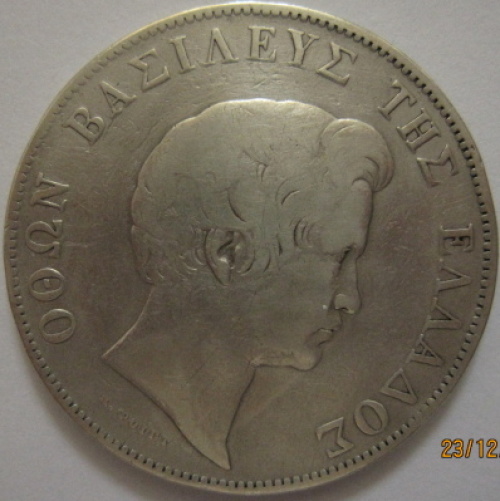 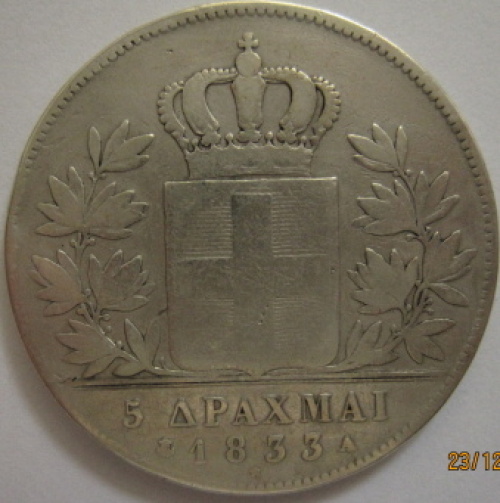 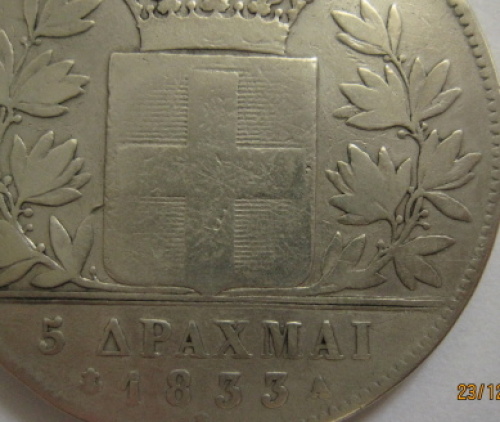 Fake: 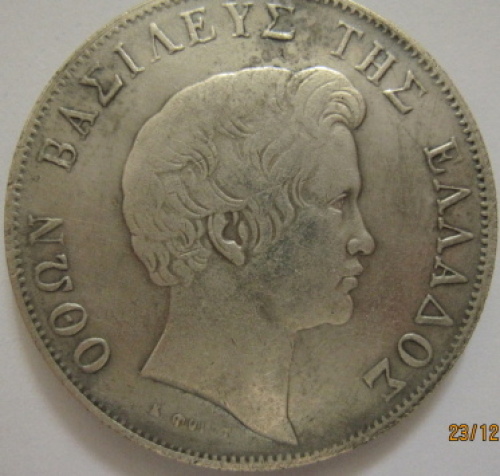 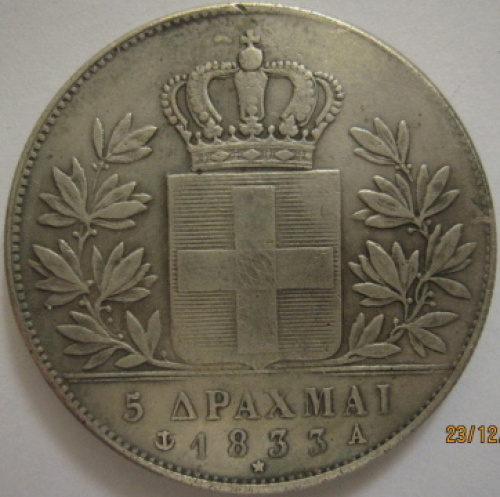 Real on top: 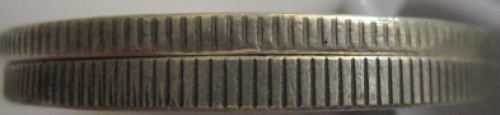 |
|
Pillar of the Community
 United Kingdom
2928 Posts |
Hi, Thanks for having a look The weight is 22.16g (=/- though my scales are pretty good) Attached are the best pics I can take (It looks and feels real in hand - but it was a coin I was most iffy about buying)   thanks |
|
Pillar of the Community
United Kingdom
2928 Posts |
|
|
Bedrock of the Community
United States
36953 Posts |
These are very good fakes and aged to look like they had quite a bit of circulation.
|
|
Pillar of the Community
United Kingdom
2928 Posts |
Hi - which ones are you referring to? There are a couple of real examples in the thread to ... unless you suspect more?
thanks
|
|
Valued Member
Greece
425 Posts |
Your coin Bacchus it's a real one.The weight it's the appropriate and the design it's ok.Nice coin to have in your collection
|
|
Pillar of the Community
United Kingdom
2928 Posts |
Thanks for the reassurance. I couldn't see anything worng with it but the fakers have gotten really good. :)
|
|
Pillar of the Community
United States
1758 Posts |
As I said the edge - here with very crude file marks - but you do make an interesting point - the THICKNESS - I have not considered this factor - probably because I do not own any real issues to compare - the coin ring also - brass, bronze and german silver all will have a LOWER coin pitch than silver - the edge, coin pitch and just could be - a thickness differential - as in your coin.
John Lorenzo
United States
|
| |
Replies: 12 / Views: 7,074 |
|








 Posted 12/18/2012 12:36 am


