| Author |
 Replies: 10 / Views: 4,164 Replies: 10 / Views: 4,164 |
|
|
Valued Member
United States
126 Posts |
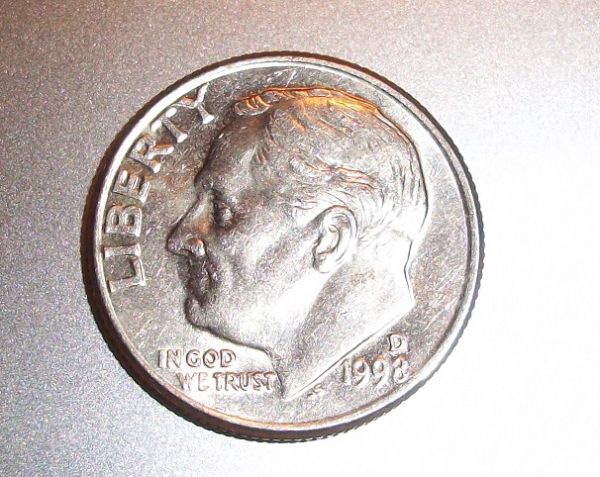
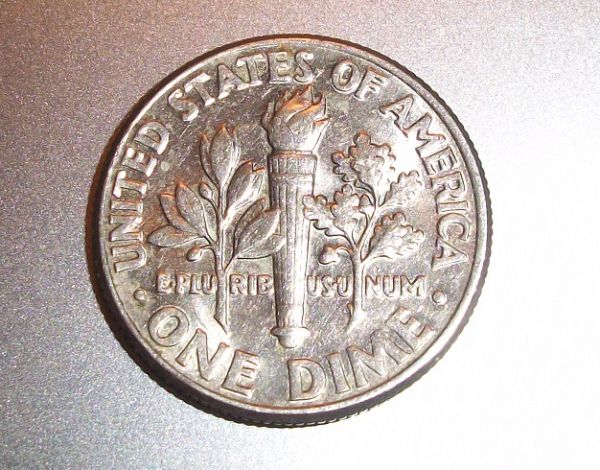
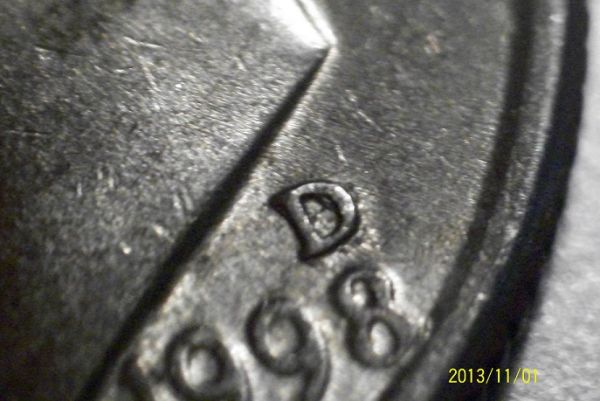
I have a dime that looks to have a regular edge on a fourth of the dime and rest of the edge looks odd to me. I just would like to know what caused the edge to go thinned. Below is a picture of the regular edge and the other is the thinner edge. Thanks.   |
|
|
|
Rest in Peace
United States
7075 Posts |
I'd need to see a photo of the entire coin, both sides.
Was the coin struck off-center?
|
|
Pillar of the Community
872 Posts |
What year is the dime in question? Was it normal circulated style dime, or was it pulled from a mint or proof set? Taking a wild guess here without seeing the entire coin. I would have to say its strike related, or planchet overall size or shape. The coin is struck and maybe its not quite the right thickness or wasn't hit hard enough for it to expand completely. I did a google search and found this article; http://www.coinworld.com/articles/u...aled-by-weak |
|
Valued Member
 United States
126 Posts |
Thanks for the info. I did a google search on it as well, but I guess my keywords were not good enough because I couldn't find anything on it.
|
|
Valued Member
United States
126 Posts |
|
|
Bedrock of the Community
United States
12437 Posts |
The reeding has been shaved(probably done with a lathe), there is nothing in the minting process that would create a middle band of reeding like that.
|
|
New Member
United States
1 Posts |
This is an old topic. I just came across it looking for oddities in edge reeds for another coin. Someone said this is not possible in the minting process. That is wrong. This can be very common in the minting process. Most people just don't look at the reeding on their coins in their pocket. Coins in modern mints actually have a 3rd die. It's called the collar die. It is a die that fits between the obverse and reverse die. As the pressure comes down on the obverse and reverse die onto the planchet, the pressure causes the metal to expand outwards into this collar die. If the collar die is reeded, you get a reeded coin. If it is lettered, you get letters on the edge, etc... Sometimes, either the pressure is not even for whatever reason, or the planchet is thinner in one side or another, and you get a short collar mark. Make sense?
|
|
Pillar of the Community
United States
1915 Posts |
Exile, welcome to the forum. I would however agree with Thad, aka biokemist6, that this was from PMD not something during the minting process. Thad is very knowledgable in varieties and errors, and a god when it comes to coin conservation. I would venture to say it may have been encased in a bezel at one time. Edited by seal006
08/23/2014 11:13 pm
|
|
Pillar of the Community
United States
8534 Posts |
 .....BadThad is Biokemist ? Oregon coin geek.....*** GO BEAVS ! ! ! ***
|
|
Bedrock of the Community
United States
12437 Posts |
Quote:
Someone said this is not possible in the minting process. That is wrong. Did you even bother to look at the SECOND picture? That edge is most definitely machined and there is no way the collar or weak strike pressure is going to create anything that looks like an edge that was partially removed on a lathe. If you are so confident in your statement, then feel free to post more images of this "very common" occurence. Edited by biokemist6
08/25/2014 12:23 pm
|
|
Bedrock of the Community
United States
62064 Posts |
I've seen this on the new cents as well. I Wonder how much of this could be attributed to counting machines?
|
| |
Replies: 10 / Views: 4,164 |
|










 Posted 11/01/2013 11:49 am