| Author |
 Replies: 45 / Views: 7,184 Replies: 45 / Views: 7,184 |
|
|
|
Pillar of the Community
Australia
1041 Posts |
I am not to shore if they were cut from sheet like penny's but here is a penny sheet with a half a coin it was struck or frown in the scrap but some could have got through . any way do you have better pictures of above so it would be very possible to have a half coin just don't know about that one as if it was found in it would have been put away straight away and would be unc for show and should show no signs of were and the edge should look rough like what you have just my thoughts the experts will tell you 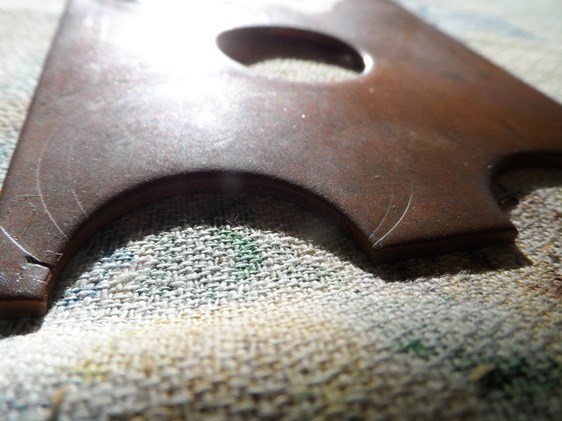 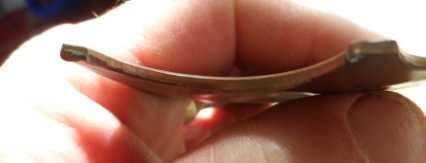 |
|
Bedrock of the Community
United Kingdom
18982 Posts |
I would have thought that the blanks would be washed and annealed before being fed into the dies, so a half-blank would likely be spotted at that stage. And if an irregularly-shaped blank DID get fed between the dies, it's more likely that it would be caught somewhere in the middle between the dies rather than for the round edge to line up perfectly with the edge of the die. I still think the lawnmower scenario is most likely for the florin - I too have found cut coins like this when detecting.
|
|
Valued Member
 Australia
236 Posts |
Thanks for all the thoughts guys, I agree with most of them and a special thanks to Shane for going to that much trouble to show me.
I have a much clearer picture now of what the sheet/strip that planchets are cut from looks like.
Shane I don't have the half florin coin yet, when I do I will post some better pics [if I'm able to]
|
|
Valued Member
Australia
236 Posts |
Hi! Numis Rob my thoughts did coincide with yours about the perfectly aligned strike on a faulty planchet but the coin is actually more than half of a florin, it is probably 55% or more. If the mechanism that picked it up was cylindrical then it might have been obliged to sit correctly because of this. Similarly within the collar. I don't know what is the next process after stamping out the planchet. Would like anyone's thoughts on this. Thanks.  |
|
Valued Member
Australia
236 Posts |
Hey Shane the seller did provide a pic of the other side, just remembered it. 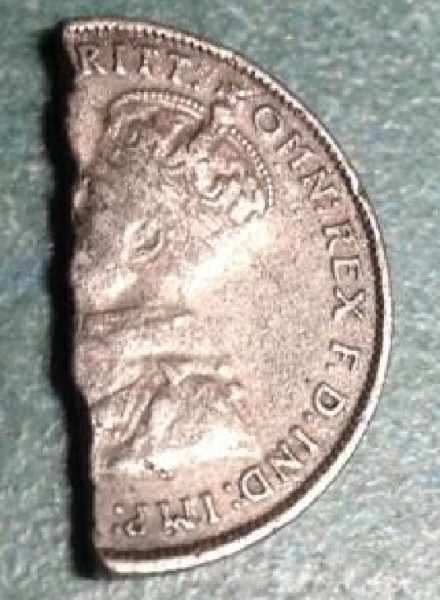 |
|
Formerly nancyc
Australia
5385 Posts |
I have a halfpenny that's in 2 pieces like the florin under discussion here. As far as I can tell, my coin is a genuine article, the 2 halves fit together very well. I'll post some piccies tomorrow.
life is a mystery to be lived not a problem to be solved
|
|
Valued Member
Australia
236 Posts |
I have the utmost respect for everyone's opinion but by jove I confess I LIKE nancyc's the best.  |
|
Pillar of the Community
Australia
1041 Posts |
I wish it was a better picture to see how much were is on the coin it should have been taken and put away on the first day and never have been used
anyone who would have found this coin in the first place would have put it in a jar or draw as it was so unusual human nature to do this when you get it we will see I think you have a real one here
|
|
Pillar of the Community
Australia
852 Posts |
It is possible for a coin to snap in half during circulation.If there was a defect in the metal (cold shut or similar)then it might snap. So possibly not a shed job but an error coin.
It isn't possible for half a blank to go through the coining process and come out looking like half a coin. For one thing the rimming process requires the resistance to form a rim, otherwise you get the Blakesley Effect.
Shanew,are you sure that is a piece of bronze from stamping out blanks? Scissel (the waste from coining) shouldn't have so much wasted space between punch holes. Mint records show how many blanks were cut out and how much metal went back to be melted again and I doubt the figures would support that piece of yours.
We used to be able to buy scissel from the stamping out of beer bottle tops (made great tree guards against rabbits). The holes were stamped out very closely together.
Plus what are those circles marked on the surface?
My understanding of clipped coins is that straight clips come from the edge of the sheet and ragged clips from the end. Can't guarantee that changes in mint procedures might change those observations.
|
|
Pillar of the Community
Australia
1041 Posts |
nealeffendi its not mine I have had the picture on file for a few years I just used the picture to show there are halves made mint records mint records you do here a lot about mint records if we belived them nothing would be found and nothing would be rare as you all now I aint no expert I just comment on this as I like it
|
|
Valued Member
Australia
236 Posts |
Hi nealeffendi thanks for your thoughts.
I'm not sure about the Blakesley effect in this case but I get the gist of what you are saying and agree that a half coin could not be struck without a broadstrike effect bulging the unrestrained straight edge.
So being struck as a half coin can be eliminated as a possibility. imo
Thanks that is a big advance.
|
|
Formerly nancyc
Australia
5385 Posts |
life is a mystery to be lived not a problem to be solved
|
|
Valued Member
Australia
236 Posts |
That is a very impressive error Nancy, thank you for showing it. |
|
Valued Member
Australia
236 Posts |
Here is a slightly more than half a coin that was minted successfully. Admittedly the many flat facets will have helped to hold it in place, but it shows it is possible at least. This is from a display at the RAM. "A poorly cut blank has been struck resulting in an incomplete coin. This can be caused by a fault when the blanks are cut at the factory in South Korea. There are many different types of these errors that we've outlined in our error coin index."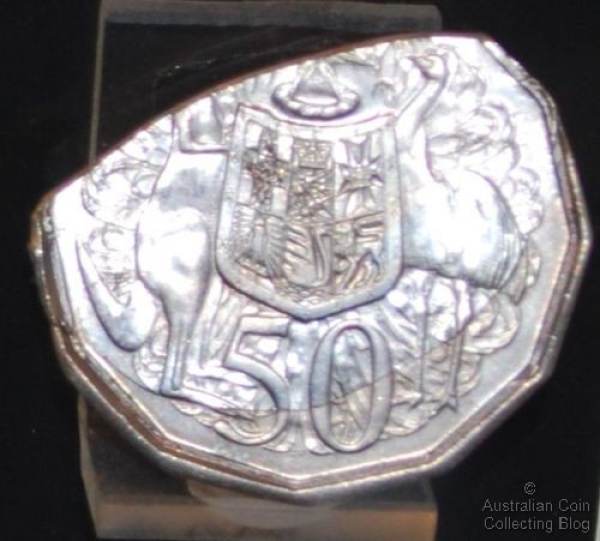 |
|
Formerly nancyc
Australia
5385 Posts |
Quote:
There are many different types of these errors that we've outlined in our error coin index." Hmmmm..wonder where that index is. Is it accessible by general public members or restricted to just RAM staff? Anyone have any info? Be nice to have an 'official' index of errors. life is a mystery to be lived not a problem to be solved
|
| |
Replies: 45 / Views: 7,184 |





 First Page


 Posted 04/07/2014 6:03 pm


