| Author |
 Replies: 12 / Views: 2,192 Replies: 12 / Views: 2,192 |
|
|
Pillar of the Community
United States
1116 Posts |
On of the lce's that I deal with on a somewhat sporadic basis sporadically puts out a newsletter that has proven valuable to me of the past years. But in this month's mailing they had a point that I am confused about: The point is this: Choose overall rarity over conditional rarity. One of the reasons that this is confusing to me is the term "overall rarity" and "conditional rarity" I believe that a coin that has a low population is more worthy of investment dollars over something graded by a TPG as a ms or pl70 such as an ASE for example. The point was made that common coins have a volatile market when compared to a lower grade in a coin that is more established. I'm heading over to the lcs this week to get a better understanding of what was published. Since ms 70 only exists in modern coins the coins of the early 1900's and before in lower grades are more affordable and have growth potential. What I am really doing is posting this as means of opening a discussion about what to look for. |
|
|
|
Pillar of the Community
3772 Posts |
If you are looking at coin collecting primarily as an investment you have to look at supply and demand. The supply of many modern coins is well known, but what is known about the demand? When the number of collectors interested in a particular coin (at a certain grade or better) increases the price will go up. So the best investment is in markets where there are rarer coins and a potential growth in the number of collectors for the specific area. In some regard the American, Australian, British and European (for some countries) market is fully established and the number of collectors as percentage of the population is not going to grow very much (potentially even dropping). Looking for a long term investment it might be better to buy coins Mexicans, Brasilians, Indians or Chinese collectors would be interested in.
|
|
Pillar of the Community
United States
865 Posts |
When you say conditional rarity I thought of a coin that is rare in a high grade. I can go to my coin shop right now and choose from probably 30 different PL70 ASEs. I dont think they were talking about modern coins when referring to conditional rarity.
|
|
Pillar of the Community
United States
865 Posts |
Here's a good article on the subject. http://coins.about.com/od/coinbuyin...rarities.htmI don't agree with the point they made about current date cents graded a 70. Paying that much money for a coin that's only worth 1 cent outside of its holder is absolutely absurd to me. |
|
Moderator
 United States
23522 Posts |
Advice appropriate to collecting Classics isn't necessarily appropriate to collecting Moderns. Moderns do not have the fullness of time to determine whether they will retail ongoing collecting "legs," regardless of scarcity (and "scarcity" for Moderns is a relative term by comparison to typical Classic mintages).
I disagree with shying away from Conditional Rarities. The people who can afford them are recession-proof, and will be buying during a down market. And as a for instance: An issue which becomes a ridiculous Condition Rarity at MS65 is probably going to be an attractive buy at 64, because of all those who'd like a 65 but can't afford one.
Successful coin investing is not about making money. You can't assume or even hope that investing in coins will do you as well as other investment vehicles.
It won't.
So what you do is, maximize the liquidity of what you're holding. Invest in stuff with either broad demand or specialized niche demand aided by rarity. Buy things people buy. An AU 1909-S VDB is a far better investment than a Gem 1875 3CN with a mintage half that of the Lincoln and a similar street value.
|
|
Pillar of the Community
United States
3453 Posts |
Quote:
An AU 1909-S VDB is a far better investment than a Gem 1875 3CN with a mintage half that of the Lincoln and a similar street value. Hey!  But I do agree. They may have a similar street value but when it comes time to sell, you will most likely have people lining up to buy the VDB and not the 3CN - you have to know where to find 3CN collectors (we tend to hide  ). |
|
Moderator
United States
23522 Posts |
It would figure, you'd be the next poster by.  |
|
Pillar of the Community
United Kingdom
856 Posts |
Quote:
The point is this: Choose overall rarity over conditional rarity. One of the reasons that this is confusing to me is the term "overall rarity" and "conditional rarity"
Not in Britain. I have several coins that are very rare. Only one or two examples are known apart from mine. They are overall, very rare. Are they worth a fortune? No. The collector base is small for many absolute rarities. I also have several other coins. You could easily find the same type of on ebay. But mine are in much better condition than any you will see there, or probably at most dealers or auctions. They are rare in this condition. Some it has taken me some time to realise just how difficult it is to find better grade examples and years to find ones I like. When I see such coins I don't hesitate to buy them because I could easily sell them tomorrow for three to five times what I paid. My coins are not exceptional in that right now any better than average British coins seem to be selling at auction for double or more than estimate. By contrast average coins, even if rare, are struggling to sell. It may be the US market is different, but undoubtedly in the current UK market, it's quality more than rarity that sells. Having said that I would still not advise trying to 'invest' in rare coins. You would need to not only know your market very well, but also the coins you buy in detail. If you buy wisely and choose nice coins that will appeal to other collectors it is likely that you will more than make back your money if you sell. But investments? Too volatile and fickle. You'd do better to invest in stocks and shares and keep the coin collecting for enjoyment IMHO. . Edited by Tom Goodheart
10/01/2014 2:38 pm
|
|
Bedrock of the Community
United States
20753 Posts |
Most hobbies are poor choices for an investment. Luckily coins have sort of stayed popular for a long, long time. But interest in coins as an investment is just not smart. With the way things are changing monitarily on Earth, Coins too may vanish, become a lost hobby, etc. For investing in coins and asking others is sort of like asking which stocks to buy, what car to buy or what person to marry.  |
|
Bedrock of the Community
 United States
18893 Posts |
Justcarl...wouldn't it make sense that if coins were no longer minted it would increase the demand as there would then be a limited quantity of them available thus increasing their collectability and value?
|
|
Valued Member
United States
102 Posts |
Supply and demand. Many coins are known by few examples but aren't in demand and therefore aren't as expensive as other coins known by many examples in greater demand. This happens in ancient coins fairly regularly: it doesn't cost much to own a unique coin, but it may be unique by some set of attributes that others don't deem significant enough to pay a premium. Here are two examples from my collection. This coin is not terribly expensive (mid-four-figures) from a city-state in ancient Greece which isn't well known. It is the finest of only four known, from the first pair of dies used (minted ca 200 BC and truly prooflike in condition). 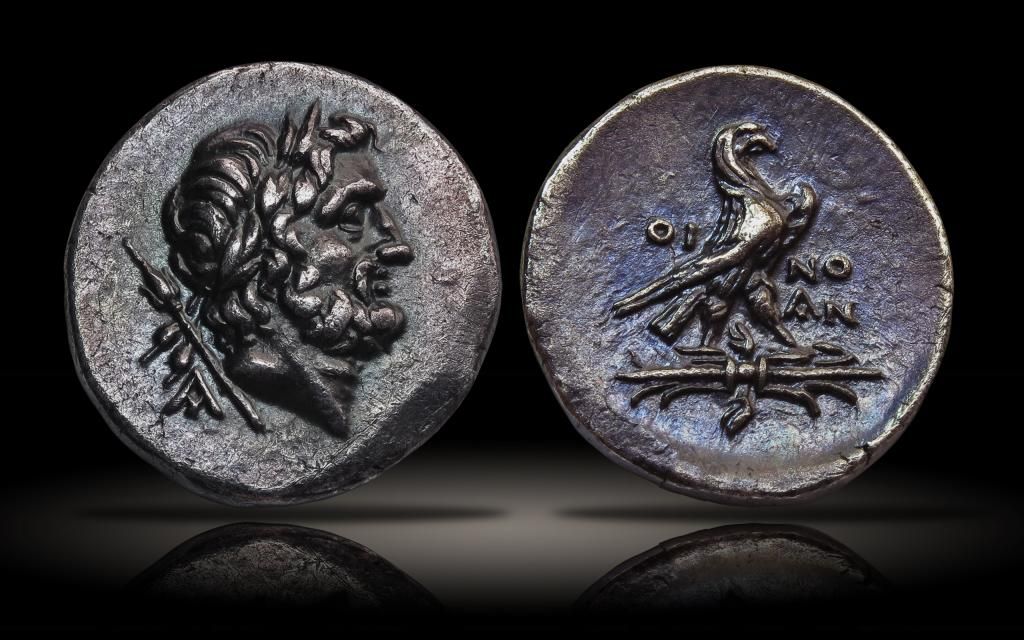 This coin is one of about 80 known, rare but not terribly so, but very historically interesting (many consider it the #1 ancient coin: it was minted by Brutus to commemorate his assassination of Julius Caesar, on the "EIDibus MARtiis" - Ides of March - 44 BC). It costs well into the six-figures because there are many more than 80 people who want one and can afford the price tag: 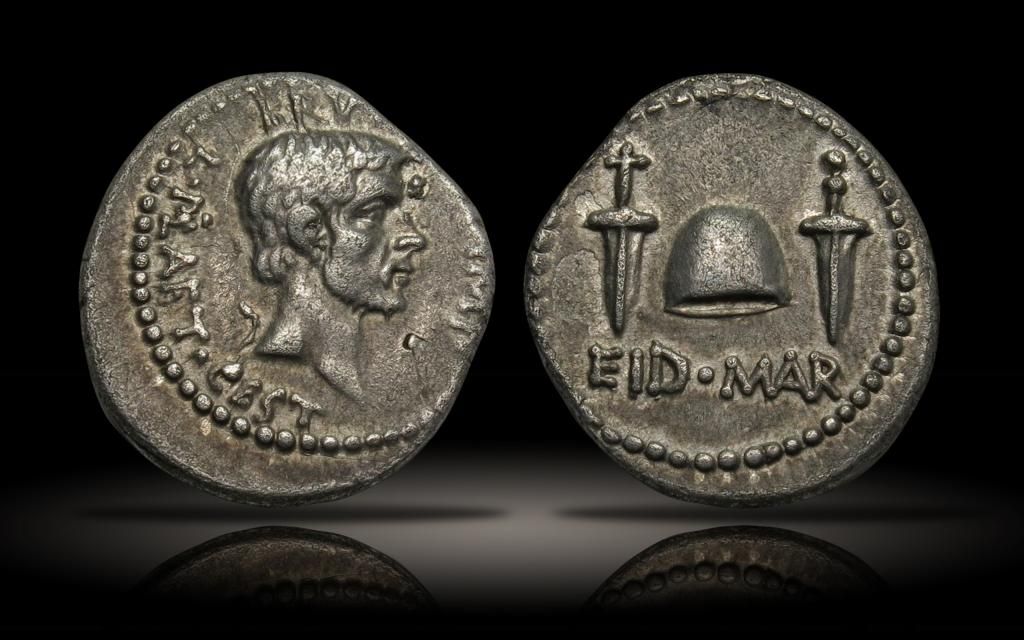 My approach is to find historical coins in broad demand in solid condition. They don't have to be the finest known but should be attractive, aesthetically pleasing, and of a high enough grade to not need to upgrade to enjoy the coin. |
|
Moderator
United States
16694 Posts |
Supply and demand. Demand for certain coins is always there (16-D Merc, 09-S VDB, 93-S Morgan) to name a few.
You notice those are key dates. I constantly look for coins and have successfully found many below FMV and snagged them right up.
If you are looking for the long term, three criteria I go by.
Key-dates, eye-appeal, collector grades.
Can't go wrong.
swcoin.ecrater.com
|
|
Pillar of the Community
United States
937 Posts |
With any investment there are always four factors to consider and understand before it is purchased 1. Rarity 2. Desirability 3. Condition 4. Expected Positive Return As numismatists we all have a basic understanding of Rarity and Condition. As collectors many of us get a bit fuzzy on the other two. As Tom Goodheart has stated his collection is of Very rare Charles I silver coins. They are in high end circulated to moderate uncirculated conditions. So why do these coins not demand five and six figures like the aforementioned 1909 S VDB? As Tom mentioned they have low desirability. There are not millions of collectors old and young rich and poor seeking an example of a high end Charles I shilling or crown. So unlike the relatively young and comparatively common 1909 S VDB cent silver coins of Charles I do not have a high Expected Positive Return Value, so they are not a good investment. So, does this mean that Condition rarity is where it is at? Should we all be buying rolls, mint sets, and proof sets to break up and send to TPG hoping for the elusive 70? Well, that is speculation and that is as different from investing as American Football is to Cricket. So do we buy graded MS 70 modern American coins, are they a good investment? For this discussion I am calling American Moderns as stuck post 1964 and in a series intended for circulation. In these parameters there are no true rarities. Yes there are a number of varieties, die marriages, mint mark punches and errors that are considered rare. So does a non rare modern coin in a holder marked in a rare grade a good investment? It certainly will fail at rarity as it is only rare in this condition. There is a relatively small market for high priced high graded moderns. Condition is a win. So where are we on Expected Positive Return? There are not enough to give as a good record yet, but from what I have seen they do not look like a good investment. Historically collectables are not a good investment. There are times when prices run up but they always settle back down, and many times the chic this week collectable is worthless in a year. If you collect coins do it for the love, if you deal in coins understand what and why you are doing it for, if you must invest in something hire a financial advisor and listen to them. Coin ‘investing' is far more speculation than investment, and if you do not understand the difference you should not be attempting either. But what do I know? |
| |
Replies: 12 / Views: 2,192 |
|









 Posted 10/01/2014 03:27 am


