| Author |
 Replies: 16 / Views: 3,230 Replies: 16 / Views: 3,230 |
|
Valued Member
United States
220 Posts |
I would like your opinion on whether you think this coin has been cleaned or not. It kind of has that look, but I am not an expert at identifying that. 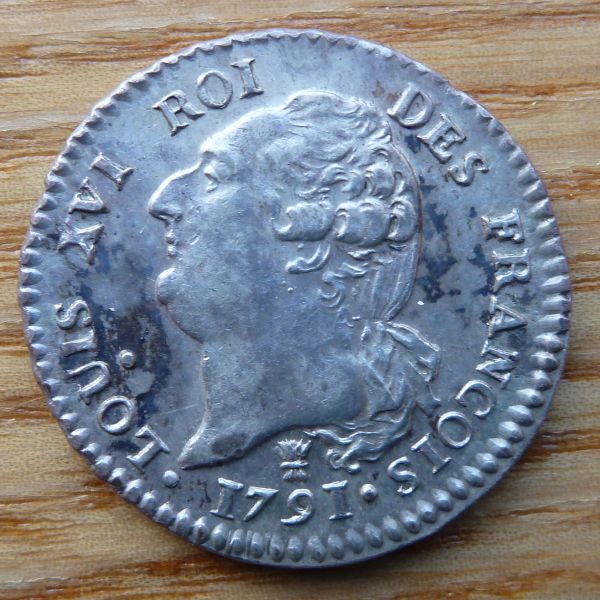 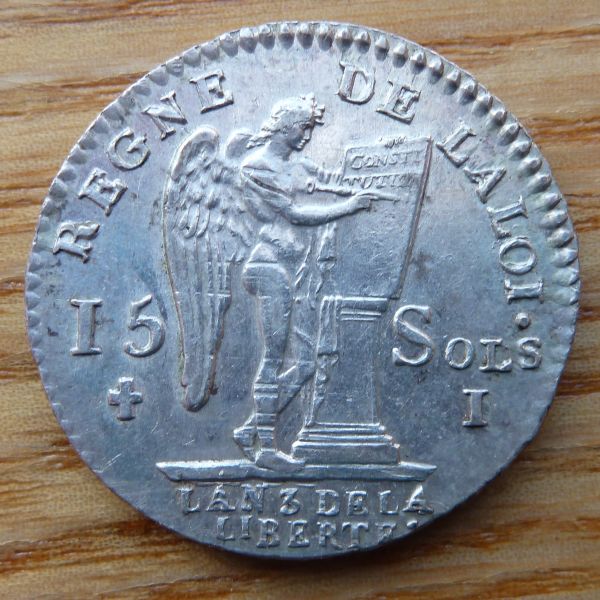 |
|
|
|
Pillar of the Community
United States
5362 Posts |
I am even more concerned that the appearance of the coin makes it look as if it might not be genuine. The central details are soft and lack depth. I think a simple comparison with the following should suffice to illustrate my concerns. 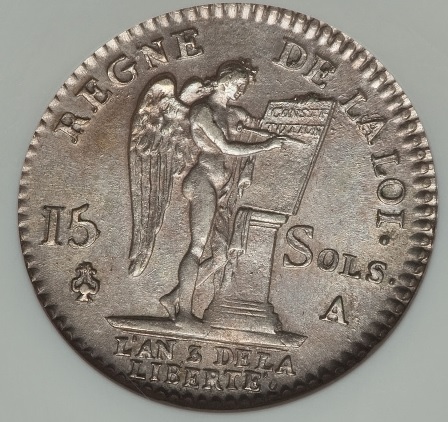 |
|
Valued Member
 United States
220 Posts |
Is that your coin? Can you post the obverse? In all of my research, that is the nicest example I have seen. Quite remarkable. Also, is that example silver or billon?
Edited by thryan9
11/18/2014 8:26 pm
|
|
Pillar of the Community
United States
5362 Posts |
The coin is not mine - it was sold by Heritage Auctions. I used photographs of it in the past to authenticate for ebay. You can find it and two that are closer matches for your type by searching the Heritage website archive. |
|
Pillar of the Community
Hong Kong
1270 Posts |
But the first coin looks okay to me. Is the weight correct?
|
|
Pillar of the Community
Australia
3841 Posts |
I agree with swamperbob's comments. It looks awfully similar to some of the super counterfeits that I am seeing. Best to send it to an expert.
|
|
Valued Member
United States
220 Posts |
This coin has a pretty good providence, so I can't see it being a modern counterfeit, so I'm guessing you mean contemporary counterfeit? And it looks a lot like many of the examples I have seen out there, even the strait line marks on the reverse. 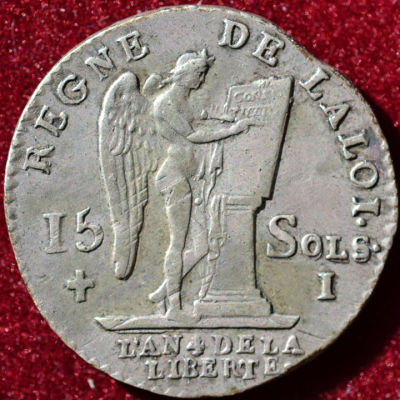 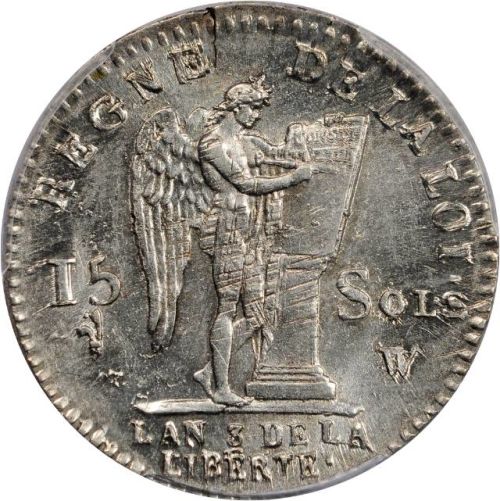 Any further comments would be greatly appreciated, as I really need to know what I've got here. Or maybe I should just send it in for grading? |
|
Pillar of the Community
Australia
3841 Posts |
|
|
Pillar of the Community
United States
5362 Posts |
The articles from Jay Turner are very interesting and illustrate the fact that multiple examples of counterfeits have a better chance of getting caught by a TPG than a single coin. If I was producing these I would let them out 1 at a time and space sales by a year or two. |
|
Pillar of the Community
United States
1760 Posts |
In my new book due out not for awhile (2016/2017) I plan to do a chapter on Foreign Contemporary Counterfeits and a chapter on Chinese Fakes in terms of Material Analysis (XRF) and illustrating around (75) pieces from my World CC collection. Anyway no use talking about the common Chinese alloys anymore (Fe/Ni,Debased Ag/brass, German Silver (Cu/Zn/Ni) - just check the EDGE. You can't fake a 223 year old EDGE IMO. Does it look recent or does it have multitidue of tiny circulation marks or like it was made 6 months ago? I have not seen Chinese Fakes made with conventional levels of silver. Check the coin ring. Also look below the ear on the obverse on this topic piece - to me those appear as casting bubbles via a die transfer process ... IMO.
JPL
Edited by colonialjohn
11/20/2014 2:57 pm
|
|
Pillar of the Community
Australia
3841 Posts |
swamperbob - I have been tracking the sales of some scarce coins and sellers have been doing exactly what you have suggested. Some even blend slabs and some cheap genuine coins as part of their sales. This is getting very difficult.
John - in your opinion, is it only a matter of time when the art of counterfeiting edge is perfected? Also, because coin edge are not well documented in many catalog (in particular lettered edge), would it not be difficult to tell what a genuine edge would have looked like without knowing what it should?
My partial coin collection http://www.omnicoin.com/collection/gxseriesMy numismatics articles and collection: http://www.gxseries.com/numis/numis_index.htmRegularly updated at least once a month. |
|
Pillar of the Community
United States
5362 Posts |
thryan9 The diagonal lines are "adjustment marks" that were on the planchet before it was struck. Genuine adjustment marks will be deepest over the high points of the design and will in some (many) cases disappear (close) in the field areas (low points). The amount of the original line that shows is a direct result of the pressure that the die exerts at that particular spot on the coin. Where the coin is thickest pressure is lowest. Remember that since there was a continuous gouge on the planchet - there should be evidence of the closure of the gap on the coin surface in all cases. Normally this line re-appears when the coin tones or wears but even on MS copies the seam is still there. Look for it. You need a microscope of 100-200X to see it - but it will (must) be there. This closed seam usually does not duplicate even on the best transfer dies being made today. The closure seam will even be there when the surface has worn flat. The seam survives until the BOTTOM of the groove is reached by wear. On forgeries that are struck from transfer dies this effect can be duplicated by gouging the planchet before striking. However, the coin used to make the transfer impression must NOT have adjustment marks. If the host coin used to create the transfer had actual adjustment lines the forger will have very serious problems aligning the scratches. On cast copies the mold must have raised lines to create the features so that they appear incuse on the coin. These transfers (at least so far) do not have the clarity of detail to reproduce the closed seam. I hope they never do - but I am convinced that digitally assisted engravers will eventually get to that point. Look at the bottom of the groove - this is the first point of failure in the casting process. The bottom of the groove should be uniform - and have no raised sections. Chips in a die or mold would show as raised areas at the bottom of the groove. Also the base of the groove will at times retain trapped air during some transfer processes and this will also show as an irregular base. A few crude forgers who do not understand what the lines are may try to add the lines after the casting step but they will fail to get it right 99% of the time and they NEVER duplicate the closed seam. So get a binocular grading scope 30-40X power and check to see if the groves were present before the strike. Check closely where the design intersects with the groove. This area will have a pressure loss like a clipped coin on a smaller scale. Also make sure they are physically correct for planchet scratches. Make sure the coin design is ON TOP of the scratches. The sides of adjustment marks on high grade coins will have scratches that are parallel with the lines. These micro-grooves come from irregularities on the cutting surfaces of the files used. If the marks are die features of a duplicated die or mold any trance of parallel scratches will wear away quickly. They key to making the perfect forgery is to make a perfect die and then using it only a couple times. Greed in the form of overproduction usually is the high end forger's undoing. There are two facts to keep in mind - (1) volume counterfeiting like that done by F.J.Henning works best on circulating coins where little attention is paid to each piece, however, (2) numismatic forgery of high value coins only works when NO ONE COMPARES coins side by side. Numismatic forgery works best when production and distribution are tightly controlled. The micro-O Morgan dollars are perfect examples of this principle in action. The 20th century circulating counterfeits were not noticed in circulation when they passed for $1. They were only recognized as counterfeits AFTER they became high valuable VAM varieties and someone compared them SIDE-BY-SIDE.
|
|
Valued Member
United States
220 Posts |
Whew, this is getting real technical. Anyway, here is the edge view. I will add that this coin is in a collection from the 20's and 30's, although there were some added possibly into the 40's. 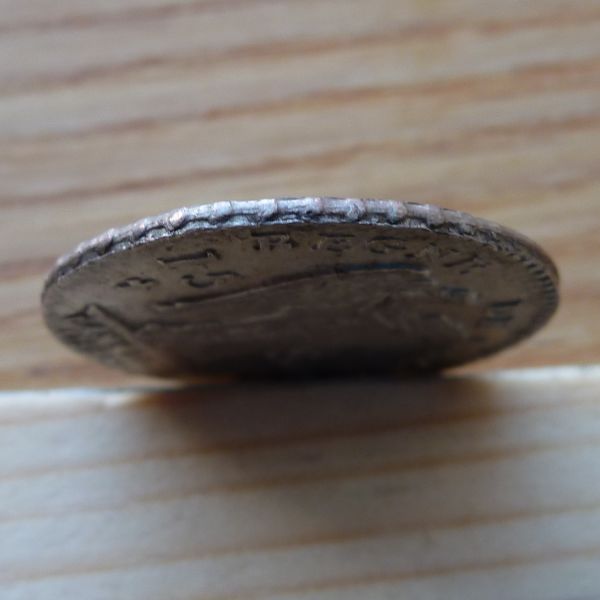 I should add that all of your comments are greatly appreciated! This is a fascinating subject. Edited by thryan9
11/20/2014 2:50 pm
|
|
Pillar of the Community
United States
1760 Posts |
I found that Chinese fakes in almost all cases the edges look brand new - its difficult to duplicate 200 years of wear - and as indicated with these Chinese alloys the coin ring for silver type pieces will be lower, the surfaces more dull and the edges looking new. This appears to have a regal type edge and based on the provenance he just indicated this does look to be more regal than counterfeit - IMO at this point. In the past I have purchased these Chinese CCs and kept these different alloys in my Foreign CC Collection sort of like reference standards of modern forgeries. I learned quickly that some of the times its difficult to make any type of conclusion from pictures in terms of patina or appearance on whether something is a modern forgery or a desirable (to me anyway) a contemporary circulating counterfeit of the period. We see these on ebay and I do have this represenative type in my collection as its a commonly seen CC type which normally come in brass alloy with different amounts of surface silvering - in one his pictures above in this thread we seem to see yellowish areas but without coin in hand is this the camera/scanner ... most CCs are brass alloys for this type and if this is a CC its a rare type with this much of its silvering still intact. Like I said - his pictures are not consistent - most CCs do have this type of edge and are not milled or plain types for a period CC of this type. JPL Edited by colonialjohn
11/20/2014 3:16 pm
|
|
Pillar of the Community
United States
5362 Posts |
thryan9 How certain are you about the age of the collection? How did you come by that information and are the envelopes or holders of that age? Just because some of the coins may go back 90 years ago (1920s) I would be concerned about how custody and maintenance has been handled since then. A coin of this type would have been an "adult" purchase even in the 1920s so the original collector must have passed on.
I am not a very trusting person having been assured by many people of "age" that was simply not true. I have come to recognize the signs of a truly old accumulation by appraising many estates over the past 35 years. A collection originally assembled over 70 years ago is a real rarity - I have never actually seen a collection that old which had not been modified by subsequent owners.
Going back to the coin that started this discussion and the original question - I am fairly certain that it has been cleaned to remove the natural patina less than 70 years ago. I see the discoloration on the obverse as likely chemical and not that old. At a minimum it has been dipped. This means someone has had access to the collection and may have re-assembled or added to it.
John raised a great point which was discussed in the book. The edge should in all respects match the faces of the coin in terms of wear and patina.
I looked at the edge and see an apparent raised line which seems to join the high rounded elements of the edge design. In one or two cases it even appears that the raised line runs partially over the high points. The problem with a "raised" line is the resemblance to a casting seam.
|
|
Valued Member
United States
220 Posts |
Thank you swamperbob. That is the answer I was looking for. I should apologize for not stating this from the beginning, but this coin is a great example of what can happen if you do not handle it with care. I was afraid that I had done something to it that made it look cleaned, and I was right.
This coin is part of my Great Grandfathers collection, most of which were auctioned off in the early 60's after his passing. There were 3 metal cash boxes left over, full of loose coins in small manila envelopes. My Grandfather was more philatelist than numismatist, so these boxes sat in his basement until given to me 25 years ago to sort out. Due to the poor conditions of storage, many of these coins have problems. This coin had tarnished, but what I needed to correct was what looked like melted plastic on it, so I gave it an acetone bath. Repeated soakings later, I did the one thing I never should do, wiped it with a cloth. I knew better, but human nature sometimes makes you do things without thinking. I really didn't notice anything until I took a photo of it, and it looks cleaned. The wipe must have removed some of the patina, and I wanted expert opinions from all of you about the appearance. That is probably why the edge does not match the faces. I will probably just keep this coin now for my own collection as it is probably not sellable.
Next time I post something like this I will be sure to divulge all of the pertinent information at the start. Although a very fascinating subject, it is a shame that modern counterfeiting has turned this hobby into a CSI investigation trying to determine if the picture you are looking at is real.
|
| |
Replies: 16 / Views: 3,230 |










 Posted 11/18/2014 7:40 pm


