| Author |
 Replies: 15 / Views: 2,514 Replies: 15 / Views: 2,514 |
|
|
Valued Member
Canada
180 Posts |
Poll Question
Interested in having a better understanding on the number of hobbyists that do have this item in their collection. If you do have an example of the 1936 10 cent bar in your collection. Is the coin in circulated or uncirculated condition? 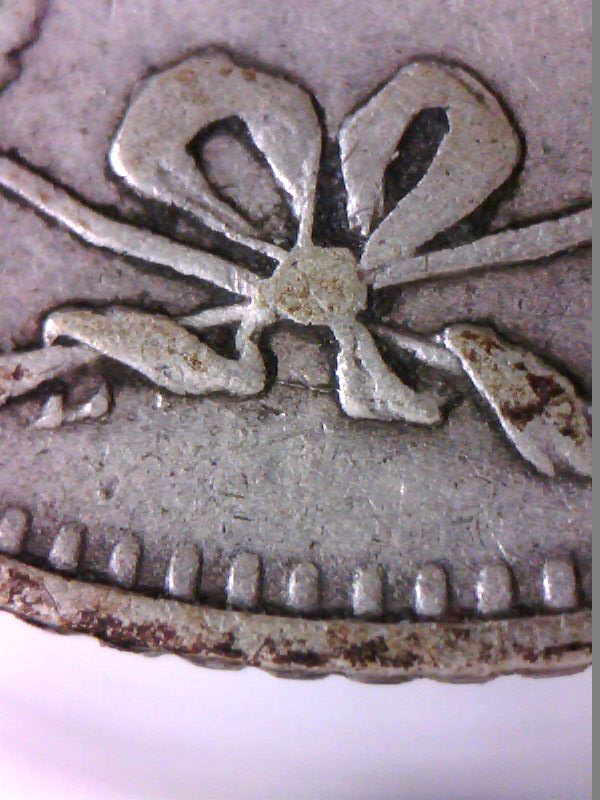
Edited by bellmaker
12/19/2014 06:09 am
|
|
|
|
Moderator
 Canada
10473 Posts |
Quote:
Do you have an example of the 1936 10 cent bar in your collection? There is not a poll choice for a negative answer to your first question. Wouldn't you like to know how many members collect this item, as a comparison of those here who don't? "Discovery follows discovery, each both raising and answering questions, each ending a long search, and each providing the new instruments for a new search." -- J. Robert OppenheimerContent of this post is licensed under a Creative Commons Attribution-NonCommercial 3.0 Unported License. See: http://creativecommons.org/licenses...0/deed.en_USMy eBay store
|
|
Valued Member
 Canada
180 Posts |
|
|
Pillar of the Community
Canada
627 Posts |
in other words, this poll is ONLY for those that have a 1936 bar. correct?
|
|
Valued Member
Canada
180 Posts |
Hopefully the rewording helps.
|
|
Pillar of the Community
Canada
2495 Posts |
I've owned (and sold it) an ms64 ICCS 1936 10c that was a 'bar' variety.
I have an ICCS 1917 10c ms65 with an extremely strong similar 'bar' variety (best one I've seen).
|
|
Pillar of the Community
Canada
1928 Posts |
I have a few, the best one is MS-62
|
|
Pillar of the Community
 United States
1372 Posts |
Without trying to be disrespectful, or start an argument, what is the big deal about a die crack and a die chip? Countless Victorian, Edwardian, and Georgian coins have them. They are interesting in that they help us separate the dies, but what makes this die more interesting, or collectable, then others? I am guessing just the fact that we can easily identify it. I doubt we know how scarce, or common, it may be. Maybe some other, harder to identify, more non-descript die is the scarcest, but how much fun would that be.
http://www.victoriancent.com2011 & 2025 Fred Bowman Literary Award, 2025 Guy Potter Literary Award, 2022 Paul Fiocca Award, & 2020 J. Douglas Ferguson Award. Life Member of RCNA.
|
|
Pillar of the Community
United States
4233 Posts |
Anybody who owns a 1936 10 cent has wishful thinking. That's all it is.
|
|
Valued Member
Canada
180 Posts |
"Without trying to be disrespectful, or start an argument, what is the big deal about a die crack"(bosox)
Avoiding arguments is always nice.
I've heard and read countless times the saying; Grading is subjective.
Do believe that the same applies to what people collect, as what we as individuals choose to like or dislike is also subjective.
There are untold numbers of variances available to the coin collecting world, many collectors will accept this reality, but few will strive to collect every known variance.
The reasons for what someone finds interesting/worthy/practical to collect, are always personal.
Outside influences do often play a part, personal economies do often play a part, but more often it is personal perception that wins the day.
Words cannot adequately describe my deep appreciation for all the many variances that fellow hobbyists (past & present) have worked so hard to bring to the daylight and to the eyes of the young or old collectors that are the hobby, but not all variances appeal to me personally.
I like the 1936 bar 10 cent, just because.
|
|
Pillar of the Community
Canada
1581 Posts |
> Without trying to be disrespectful, or start an argument, what is the big deal about a die crack and a die chip?
A good healthy debate is always good. Kind of pointless being here otherwise. (So, we all agree on everything ... ZZZZZZZZZZ)
What is the evidence that the 1936 25-cent dot is official, and not a die pit? Do the mint reports support it?
|
|
Bedrock of the Community
Canada
10743 Posts |
Quote:
I like the 1936 bar 10 cent, just because. I do too..  I have a EF-40 that the bar/die crack goes the whole way across the bottom of the coin.  |
|
Moderator
Canada
10473 Posts |
I know a collector who has almost a full date run of these "die crack" variances from 1911 to 1936. Apparently, it is one of the weaker spots on the reverse dies?
"Discovery follows discovery, each both raising and answering questions, each ending a long search, and each providing the new instruments for a new search." -- J. Robert OppenheimerContent of this post is licensed under a Creative Commons Attribution-NonCommercial 3.0 Unported License. See: http://creativecommons.org/licenses...0/deed.en_USMy eBay store
|
|
Pillar of the Community
Canada
2531 Posts |
I think it's because that ribbon stretches almost across the whole width of that part of the coin. Not to mention it has pointy tips.
|
|
Pillar of the Community
United States
1372 Posts |
I agree, Bellmaker, that the choices are personal. Certain varieties can catch your fancy, while others do not. Beauty is in the eye of the collector. I find it interesting (but not surprising) that the popularity (demand) of certain varieties seems to drive the prices much more than the rarity (supply). There are many rare, but quite plain, die varieties in the Victorian series that have little collector interest. Occasionally, we see a popular die variety that is both popular and rare, say the 1859 9/6 cent.
http://www.victoriancent.com2011 & 2025 Fred Bowman Literary Award, 2025 Guy Potter Literary Award, 2022 Paul Fiocca Award, & 2020 J. Douglas Ferguson Award. Life Member of RCNA.
|
|
Valued Member
Canada
180 Posts |
"I find it interesting (but not surprising) that the popularity (demand) of certain varieties seems to drive the prices much more than the rarity (supply)"[bosox]
As the hobby moves further away from the dark-ages and deeper into the age of reasoning, these occurrences will become less and less.
In 1954, communication between hobbyists was limited to phone-calls (if you had access to a phone), letters (snail mail) and meetings (if you were able to travel).
In 2014, communication between hobbyists is unlimited.
The tools are there, we just have to pick them up and start building.
|
| |
Replies: 15 / Views: 2,514 |
|







 Posted 12/18/2014 08:36 am





