PCGS - When I first saw this book,
The Complete Guide to Junk Silver Coins, I wondered, what could one say for 82 pages about junk silver? I mean, it's just not all that complicated. Dimes, quarters and halves, pre-1965 right?
I was in for a pleasant surprise. Brian Smith has indeed written 82 pages on the topic and most important, has provided relevant and useful information on the subject. He begins with a most interesting analogy about a silver quarter and a gallon of gas. If you can't draw the connection, then you really need to see this book.
He covers the both the reasons and the history of our transition from real silver to fiat money during the 1965-1970 period before going into the valuation of and investment aspects of "junk" silver coins in general.
Once that is established, each of the three major silver denominations is examined in detail, from the
Barber coinage, through the Mercury/Standing Liberty/Walker series, to the most recent Roosevelt/Washington/Franklin & Kennedy coinage. Then, the more peripheral areas, such as
Morgan dollars and
Peace dollars,
War Nickels (1942-45), 40%
Kennedy halves (1965-70) and modern 40% and 90% silver coins struck for collectors are discussed and illustrated.
One of the most interesting sections then follows - the effect of wear on the weight of these coins. We all know that a "slick"
Mercury dime or
Standing Liberty quarter is thinner than an XF or Uncirculated piece, and it's obvious that it must weigh somewhat less. Well, Smith shows us exactly what the effects of heavy circulation are on these junk silver coins. The amount of lost weight might surprise you!
Counterfeits, while not a major problem yet, could one day be. Smith covers the topic thoroughly, and provides a variety of easy and simple tests to weed out any "bad" coins you might encounter.
Buying and selling tips follow, and all are great advice. He wraps up by discussing the change of material in the cent in 1982 from copper to zinc, and discusses possible future changes to the composition of the cent and nickel.
The book concludes with a useful table of weights, clearing up much of the confusion surrounding the use of the troy and avoirdupois systems. How we got into having both troy and avoirdupois ounces I'll never know, but whoever is responsible should be beaten with a scale.
This is a great little book, and really does tell you about everything you'd ever want to know on the subject. If you're considering buying some junk silver, or if you already have a holding, I'd highly recommend this book.
Available on Amazon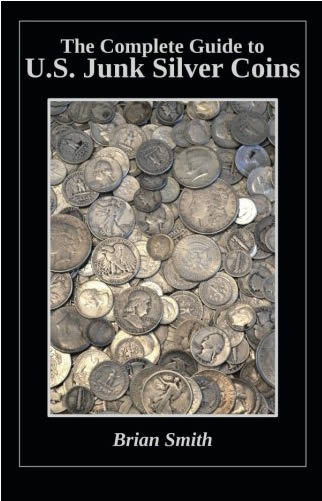








 Posted 07/16/2015 8:33 pm


