| Author |
 Replies: 15 / Views: 21,871 Replies: 15 / Views: 21,871 |
|
|
Pillar of the Community
Hong Kong
1270 Posts |
This note comes from ebay and here is its description: ...Catherine the Great is pictured at left. This note had a cash value in gold of 50 1910 US Dollars, a small fortune in Russia at the time. The note was issued between 1912 and 1917 and is signed by Director Shipov... Is this fact true in the description? I query this statement because the final bid of this note is only US$13.70 last month. It seems unrealistic to keep this note till now and sold a value of that so low. Can anyone provide the information about this note's purchasing value at that era? 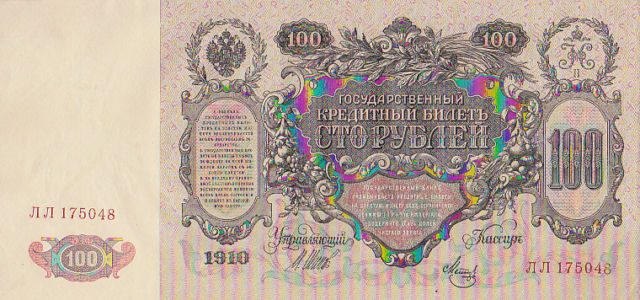  |
|
|
|
Pillar of the Community
United States
747 Posts |
This note lost its value during the Russian Civil War and Bolshevik Revolution. By 1921 it had no purchasing value.
|
|
Pillar of the Community
 Hong Kong
1270 Posts |
Lettow, what you said is very true, I believe.
But at the time of its issue (1910), it still costs a big deal of money.
Could one 100-ruble note exchange for one hundred Nicholas II's silver rubles? I query about this rationale. Silver rubles and paper rubles might have different exchange rates.
|
|
Pillar of the Community
United Kingdom
2624 Posts |
I over paid on a slightly older 50 rouble note a couple of months back... assuming it to be more valuable than it was...
Since then I saw a mint one of these notes in a currency shop for £12.50 and found it equally surprising how cheap it was.
|
|
Valued Member
Finland
294 Posts |
The 500 rouble note from the same period is awesome. A hundred years ago you could buy a house with that, but after the wars only a small bread.
|
|
Pillar of the Community
Australia
560 Posts |
Well if it is in keeping with currency notes back then, it should have been convertible to its value in silver or gold coinage.
|
|
Pillar of the Community
Russian Federation
5186 Posts |
Yes, it technically had a gold value, and this value would still have been meaningful in 1910. Not sure about actual refundability.
Yes, 50 (contemporary) dollars seems about right; no idea how much it was precisely (judging by silver weights, perhaps even slightly more).
|
|
New Member
United States
1 Posts |
Is it totally worthless now? 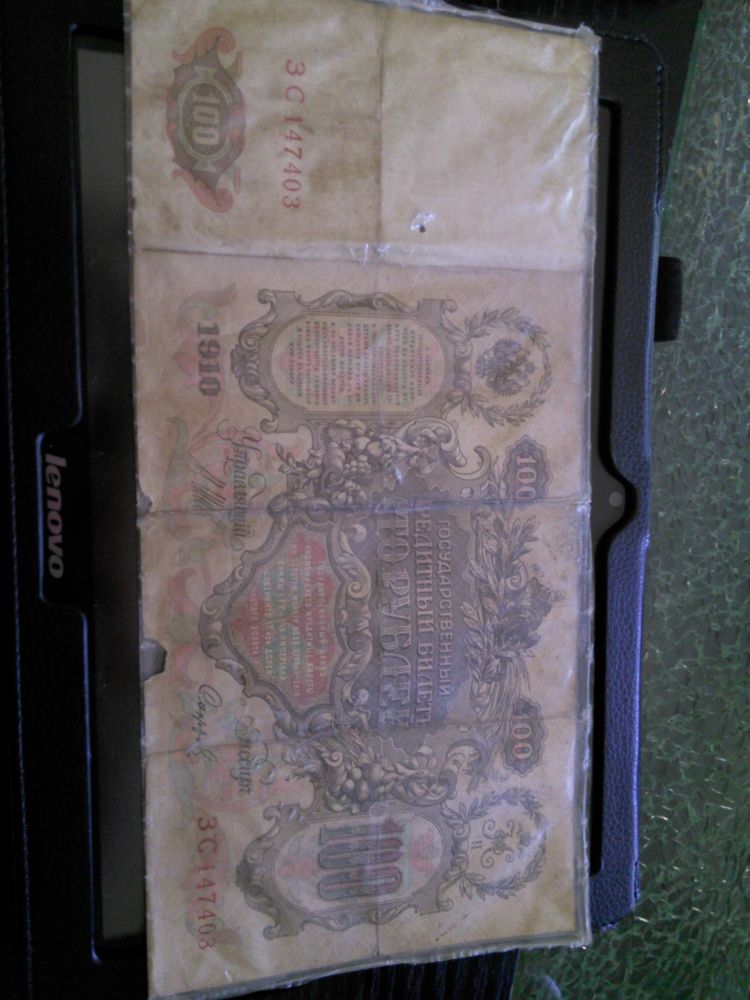 |
|
Pillar of the Community
United States
992 Posts |
It was a good deal of money right here in the US, too. Fifty dollars was a month's wages for a laborer and some journeymen. $500 would buy you a decent house in town, you could rub elbows with the owner of the grocery store and the town sheriff on the same street. The doctors and lawyers were a couple of blocks away, but
you were both doing alright.
The first thing the Bolsheviki did was renege on any and all Czarist obligations, including the convertibility of the money. Lots of people fled the country and took their money with them, paper and gold, as well as anything else they could carry.
The notes have value only as a collectible.
The Bolsheviks destroyed the middle class when they took power with inflation in 1917-1922, and when they left in 1992 they did the same thing, inflated the currency and destroyed the savings of the entire nation.
Edited by paxbrit
05/10/2016 11:18 pm
|
|
Pillar of the Community
Australia
560 Posts |
Also with currency banknotes of this age, the year is of first issue or design, it could have been issued after that year, so maybe 1918 when the value had fallen.
|
|
Pillar of the Community
United States
4883 Posts |
Here's my (imprecise) calculation on this question.
In 1910, a U.S. quarter dollar contained .1808 of an ounce of silver. A Russian 20 Kopeks (5 to a ruble) coin contained just .058 of an ounce of silver. Doing the math, the ratio of silver content (provided each was deemed to have a more or less equal intrinsic value relative to its face value) suggests that at the time the ruble was worth about 40% of the dollar. So a 100 ruble note would be about $40 U.S., at least for that one year, a figure not too far off from what was quoted at the beginning of this thread.
Colligo ergo sum
Edited by Lucky Cuss
12/14/2016 6:54 pm
|
|
Pillar of the Community
Poland
3201 Posts |
Here's a listing of prefixes for the Russian notes signed by Shipov (source: rcoins.com). Both of the notes posted here feature this signature. 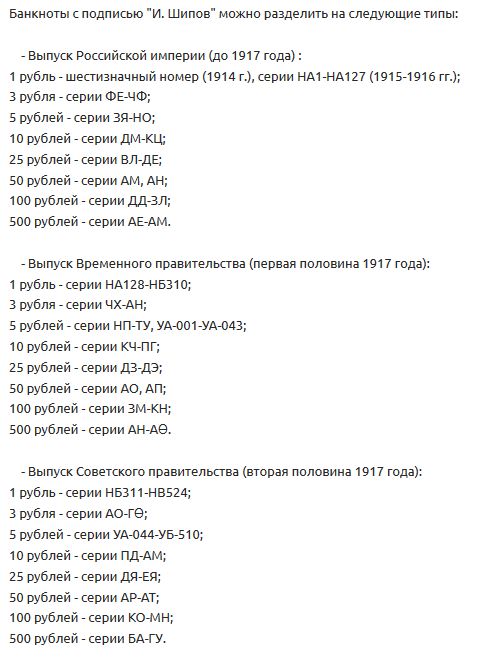 The first note posted in this thread has a "LL"* prefix. That is close to the end of the run and according to the table, this note was issued by the Soviets in the second half of 1917. The second note posted above has a "ZS"* prefix. That one is earlier than the first one (the letter "Z" appears much earlier in the Russian alphabet) but still relatively late. The table says it was issued by the Provisional Government in the first half of 1917. * Cyryllic letters transcribed because when I post them as they appear on the banknotes, they get converted into a useless series of digits.Edited by DL20K
12/20/2016 2:01 pm
|
|
Pillar of the Community
United States
4883 Posts |
The silver content I cited above for the 20 kopeks coin in 1910 was maintained into 1917, but that was the last of such precious metal based minor coinage. I imagine this specie disappered from circulation quite quickly once the Bolsheviks started printing rubles, even if the notes themselves at first hardly changed.
Colligo ergo sum
|
|
Pillar of the Community
Hong Kong
1270 Posts |
With seasonal greeting! Thank you for many information. Henry
|
|
Bedrock of the Community
 United States
12927 Posts |
Interesting thread! Thanks for the photos, data, and history lesson. love it all.  |
|
Pillar of the Community
United States
2645 Posts |
RSFSR and USSR also minted silver subsidiary coinage, including some (50 kopek) at 90 percent silver.
|
| |
Replies: 15 / Views: 21,871 |
|








 Posted 10/04/2015 9:36 pm


