| Author |
 Replies: 17 / Views: 4,599 Replies: 17 / Views: 4,599 |
|
Pillar of the Community
United States
1787 Posts |
New Discovery? Ireland Gun Money 1690 Crown KM#103.1 http://coins.ha.com/itm/ireland/wor...ption-071515Similar but in the following alloy: Lead: 85%, Antimony: 10%; Copper 2%. What makes this piece interesting is that it appears to be O/S on a large size 1/2 Crown as per KM 103.1 description. Not in Proof of course and not VICTO or RIX so not of KM 103.2 or 103.3. Consider the following: 1.This is an incredible amount of Antimony (10%!) to impose extra hardness in a coin. Gun Money is normally is brass & pewter. We see in Mitchiner (p.157) on Compositions of Coins for gun money: Cu: 87.9%, Zn: 8.2%, Tin: 2.1%, Pb: 1.0%, Silver 0.21%, Ni:0.07%, Antimony: 0.27% and Iron 0.11%. Nevertheless there are variations. I have seen antimony used for lead hardening on that China 20th Coin SAP would love to own (past post), Papal Seals (Vatican) and Bryan Money (lead Issues) which are 98-99% Pb and 1-2% Sb. 2. The coin as per KM is O/S on a large size 1/2 Crown as per the Heritage illustration for KM#103.1 IMO. 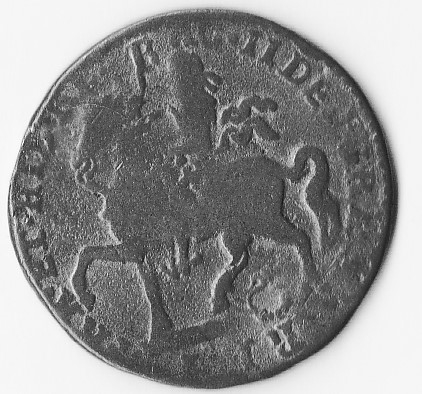 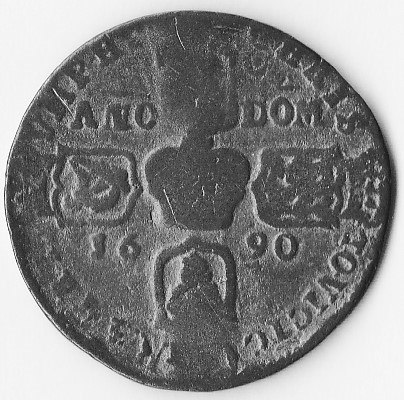 Its high antimony and over-striking as per KM 103.1 make me believe something else? FYI/Comments Pedigree: John Newman (U.K.). Purchased as a contemporary counterfeit but of course composition was unknown to JN and no mention it was O/S. John Lorenzo United States |
|
|
|
Pillar of the Community
United States
4963 Posts |
Interesting piece, it is odd that they would use that much antimony (or lead, for that matter).
Just a quick question - what exactly is gun money?
|
|
Pillar of the Community
Australia
3841 Posts |
I'm quite intrigued. As far as I know, these coins were overstruck or struck on whatever metal the Irish could find. This also included older coins, melted down cannon metal (hence gun metal), church bells and so on. My question would be was there a large amount of antimony available in Ireland. The largest source that I know antimony is mined is China and Russia as well as part of Central Asia. Unless this was a contemporary counterfeit made in China back in the days or the lead / antimony alloy was sourced from China - I find it hard to believe that this is an authentic piece.
I do own a Kweichow antimony coin and have never got around to find the alloy content of it. While I am curious - I just cannot fathom the idea of shipping it. It's a coin that I took many years to hunt down.
My partial coin collection http://www.omnicoin.com/collection/gxseriesMy numismatics articles and collection: http://www.gxseries.com/numis/numis_index.htmRegularly updated at least once a month. |
|
Pillar of the Community
 United States
1787 Posts |
Yes - the infamous 1933? China coin made of antimony. Its been discussed here before. It HAS TO BE a lead/antimony alloy. Question is how much of each metal.
I agree - normally with this type of alloy I would think later counterfeit - BUT - its an over-strike as you can see traces of the HOST COIN right below the back end of the horse.
Went to Heritage and viewed past auctions but all pieces are of the common brass issues. Most intentional struck issues normally have Antimony around 1% or LESS as in Papal Seals (Vatican) and the American political exonumia Bryan Money cataloged by Schornstein. I once owned over 50 Bryan pieces so I am very familiar with their XRF assays which I never published. Sold as part of my Stacks 2008-2010 selling dumps. Fascinating series. Both confirmed on several examples in the past by me in the lab.
Antimony was first used in coinage around the 16thC it seems from Wilkepedia as to harden medals mostly composed of lead. My guess moving forward any medal you see in lead WILL HAVE some antimony to induce hardness so its does not yield to easy circulation damage.
IMO two things take this away from the 19thC or 20thC - its overstike on a host as per the KM description and its super HIGH 10% antimony. BTW its also PLAIN EDGE. Just reporting here and hoping for both positive and CRITICAL comments. Prefer ... critical ...
JPL
Edited by colonialjohn
12/10/2015 08:20 am
|
|
Pillar of the Community
United States
4963 Posts |
Is it out of the question that it may be a fake struck over another fake to be more deceptive?
|
|
Pillar of the Community
United States
1787 Posts |
Numisma - with contemporary counterfeits and/or Modern Fakes (19thC to present in this case) its always the DEGREE of probability.
BTW - The EDGE is old and worn (not pictured) ... so I use that as a barometer for a MODERN FAKE as with all Chinese fakes the edges look like they were struck last week if Plain Edged. More difficult of course if milled ... still .... Extremely difficult to age or reproduce a 100+ year old edge. Just saying ...
Just a gut feeling if you look in KM it says many varieties exist ... as one comment said maybe other alloys exist? with this turbulent anything goes gun money period ... although I will admit this lead/antimony alloy is a far cry from the regular gun money alloy as in my Mitchiner example from this classic paper. This paper is Internet retrievable and a great overview of common alloys for coins in this period.
JPL
|
|
Pillar of the Community
United Kingdom
1324 Posts |
Coincraft (lobel, 1999) has the following on the subject, 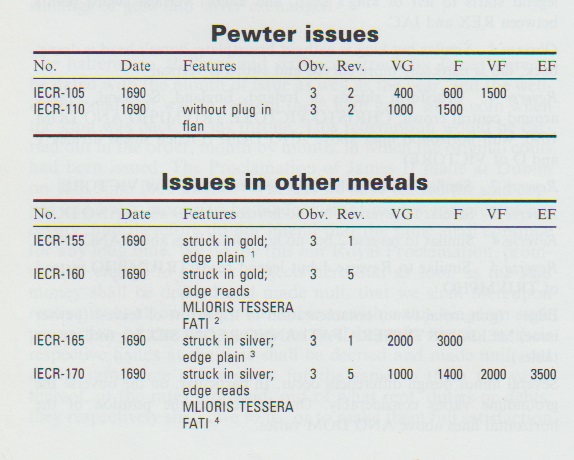 |
|
Pillar of the Community
United States
1787 Posts |
KM lists the gold and silver issues only in Proof. Not sure here but in either case irrelevant for this coin. Pewter from Wilkepedia:
Pewter is a malleable metal alloy, traditionally 85-99% tin, with the remainder consisting of copper, antimony, bismuth and sometimes, less commonly today, lead. Silver is also sometimes used. Copper and antimony act as hardeners while lead is common in the lower grades of pewter, which have a bluish tint. It has a low melting point, around 170-230 °C (338-446 °F), depending on the exact mixture of metals.[1] The word pewter is probably a variation of the word spelter, a term for zinc alloys (originally a colloquial name for zinc).[2]
IMO catalogers have called coins pewter if the lead level were low and had copper and tin introduced at HIGHER levels. A lead level at this level without XRF is normally just called LEAD with never a mention of antimony.
I guess it will always be considered a contemporary counterfeit due to its high lead. It has supporting XRF spectrograph of a high antimony level which is rarely seen. Not sure if anything came up in the GNL CC8R research venture with a similar mix?
It's interesting a no center plug are considered legit which KM does not supply this tidbit - another positive for this coin but ownership is worth 5-10 points. LOL.
I guess the answer lies in XRF analyzing some of these so-called pewter issues in the British Museum, NMOI or the Ulster and see what pans out ... at the NYITL I will show it to Del Parker ... to be continued.
Its been my experience however when you show someone a lead LOOKING coin their UPBRINGING usually DRAGS DOWN the coin. Just saying ...
JPL
Edited by colonialjohn
12/10/2015 3:17 pm
|
|
Pillar of the Community
United Kingdom
1324 Posts |
Some more; 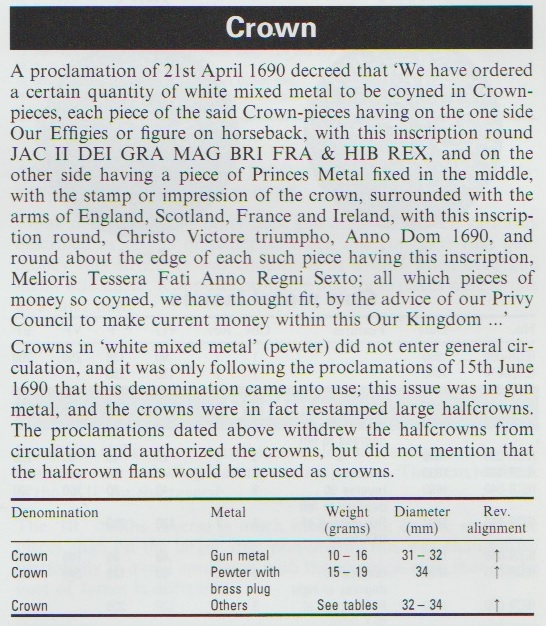 |
|
Pillar of the Community
United States
1787 Posts |
Thanks again ... my piece is medal turn (i.e., concurs with the up arrow rev. alignment) and its 32 mm and 13.6 grams.
Seems the pewter is anything goes? Yes - sure like to XRF some of these other pewter specimens ...
JPL
|
|
Pillar of the Community
United States
5362 Posts |
Antimony is presently mined primarily in China but it was mined far earlier in most of the European countries. I just finished reading De Re Metallica by Georgius Agricola and antimony is covered in that book and mentioned in many places. It was a commonly seen metal and was found in quartz seams along with gold and silver. Wang (1919) indicates that the UK has minimal deposits which are located in Cornwall. So even in the UK antimony was mined. Therefore the use of antimony is clearly possible.
Could the under type be a medal or seal from Germany? German deposits of antimony feature prominently in the earliest records. I guess I am just not seeing traces of the half crown under type.
I would still lean toward a contemporary counterfeit overstruck on an earlier copy of a medal or even a seal like those used by the Kings of Europe. John Newman was a collector of counterfeits - as we have discovered - and several of his counterfeits have been encapsulated as genuine due to errors by NGC.
|
|
Pillar of the Community
Australia
3841 Posts |
I do collect overstruck coins but do struggle to see the underlying features.
As for the status of this coin, I am not comfortable calling this a contemporary counterfeit yet. There can be a strong possibility that it may be genuine given the circumstances. From my understanding, coins were struck with practically any metal that was available which ranged from cannon metal to church bells. If lead was available, I cannot see why they were not used as well. I suspect that the public were quick to reject such coins immediately and the survival rate would be very low. If the details match exactly the same as a genuine coin, I personally would like to consider this as an off metal.
|
|
Pillar of the Community
United States
4963 Posts |
Perhaps lead shot? I don't know, just throwing ideas out there.
|
|
Pillar of the Community
United States
1787 Posts |
John Newman is good and has an eye of the HIGHEST level for counterfeits and regals. About two years ago he found an extremely rare British 1/2d CC. Lets just say for the CRUDE types it easily ranked in the top 12 say as in the Stacks 2008 Americana Ringo Collection for these types and expected price realization. Although prices have dropped I would say $1500+ he could have received if consigned to Stacks/Bowers IMO. I E-Mail'd him but was satisfied to keep it on E-Bay. It brought close to $700.
Having said that he termed this contemporary counterfeit for whatever reason but was unaware of the alloy. Perhaps some people feel only brass or some form of brass/bronze is good.
Remember today with most auction houses not analyzing the coins and catalogs (as in KM) in the same state - some KM issues maybe as several are hinting here too reserved for just one type of alloy - particularly for gun money.
The only clear under-type feature in the pic here in this thread is between the third and fourth legs of the horse left to right. There are other remnants but need coin in hand.
As I said most lead alloys I have seen with just high lead Sb is normally 1-3%. In terms of it being regal - That is an interesting idea and one I suspect of these pewter types say if we did XRF these pewter types in advanced collections and/or museums perhaps OTHERS would show this type of high Pb/SB alloy and then possibly this is a regal and not CC of the period and KM would have to be refined. So what else is new .... LOL.
This is one reason I did this new book with over 700 coins having full XRF analyses and references at times as to their alloys - Canadian,British,France,Ireland,Spain, etc... also the modern Chinese fakes are explained and their alloys.
JPL
Edited by colonialjohn
12/16/2015 6:48 pm
|
|
Pillar of the Community
United States
4963 Posts |
There is a bit of detail from the host coin at the top of the reverse.
|
|
Pillar of the Community
United States
1787 Posts |
Numisma - from andyg's very informative post in this thread Coincraft's IECR-105 seems VERY possible. Again pewter in many cases is just a generic term used loosely when the originator is just GUESSING at the alloy. As an example I have examined DOZENS of coins in which collectors, top end auction house catalogers, so-called experts who have called something bronze which was actually low zinc brass. Since the zinc in brass really needs to be >10% for it to exhibit a yellow color even in high grades. Confirmed multiple examples are in my new book on this misnomer due out later this year.
JPL
|
| |
Replies: 17 / Views: 4,599 |







 Posted 12/09/2015 9:23 pm


