| Author |
 Replies: 24 / Views: 3,165 Replies: 24 / Views: 3,165 |
|
|
|
Valued Member
 United States
237 Posts |
Take no heed of the pictures. The scanner I used is not meant for anything but documents and pictures. The type of light and direction it uses doesn't work with textured, 3D objects, so it makes weird light effects happen. If I were to have a good close up camera, I could show you real, conclusive pictures. Besides, the fact that S OF seems screwy in these non-conclusive pictures doesn't explain that all of ED STATE are tripled as well AND the doubled stars of the obverse. For all we know, this is probably what NGiles was talking about: A doubled/tripled die with Machine Doubling. Edited by SecretGlitch
02/10/2008 09:48 am
|
|
Pillar of the Community
United States
7629 Posts |
If this is hub doubling, it would take better images, as the owner of the coin points out, to tell that it is hub doubling. I still lean on the side of Machine Doubling. And, by the way, the term is "doubled die" - not "double die". |
|
Valued Member
United States
237 Posts |
I wouldn't blame you for leaning on the Machine Doubling side with only the pics I gave you. Because S OF is machine doubled somewhat. (although under 300x magnification you can see the third layer of the tripling) What I should show you is the second "T" under a microscope. The tripling on it is VERY evident, however I need some way of taking a picture through a microscope. I always forget the second "d" in doubled die because when I say it, I don't pronounce both D's, lol. |
|
Pillar of the Community
United States
3507 Posts |
I used to use a flatbed scanner for all the images published in my column until I got a digital camera. The scanner will not change the shape of the inside openings of the letters. Your comparison coins are different dies so regardless of the way the image was created, they are not the same coin. Realize that dies were sometimes hubbed as many as a dozen times when the dies were created for Morgan dollars. The kind of superficial doubling that you see around the edges of lettering is incredibly common and can be seen on almost every coin to one degree or another. I once posted on diagnostics and how to use them. The two coins being compared are different and that is the key thing here. If it don't fit you must aquit:-) |
|
Valued Member
United States
237 Posts |
Well, yeah, they were different coins... I was intentionally comparing it to a regular VAM to show the differences, and also those pictures were BEFORE I found out it was a VAM-50. But for right now I'm talking about a part of the coin that looks exactly like the tripling for the VAM that I can't get pictures of yet, so when I can get pictures, I'll show them, and then you can make a just opinion. |
|
Pillar of the Community
United States
3507 Posts |
Hi, I just want to clarify something just to be sure that we are on the same page. A VAM is a designation given to a coin based upon a particular die or die pair used to strike the coins. That means , for example and using a VAM-50 as the example, every single detail must be identical since every VAM 50 had to be struck by the same die. So with minor variations depending upon die state, everything is identical. The same leter shapes, the same die markers, the same doubling etc. You don't attribute a VAM # to a coin if it has some of the same attributes, it has to have all the attributes. I wasn't sure exactly what you were indicating and you , of course may know all that I just posted, I just wanted to state this to be sure we are in the same place. So, if for example, the openings in the O of OF are indeed different on each coin, the coin can not be matched up. Thanks, Bill Edited by foundinrolls
02/11/2008 6:02 pm
|
|
Valued Member
United States
237 Posts |
Well I'll need to see pictures of a VAM-50's S OF because I have yet to see them. I only saw the picture of the STA (which is identical) and the description of the other markers in the VAM which are also apparent on the coin as well (slight doubled left and some of right stars on obverse, tripled ED STATES OF reverse). I just assumed that S OF was machine doubled by the extreme separation in comparison to the rest of the tripling on the coin, and also assumed that it was more likely to be a pre-attributed VAM than something new, but if you think it's a variety upon this variety, or a different variety altogether, or even no variety at all, I'll be all ears when I get some pictures up which, hopefully, will be in a few days. Edited by SecretGlitch
02/11/2008 9:33 pm
|
|
Pillar of the Community
United States
527 Posts |
After further research, I must admit that what the pictures show, is more in the lines of Machine Doubling. I will admit that I have only been collecting coins for about a year now, I am an amature. I trust the judgement of the other people on the forum. I joined the forum to learn form them. When you get new pics of the coin it would be great to see them, I will check them with the references I have. Maybe the person you took it to can get some pictures of it for you. |
|
Valued Member
United States
237 Posts |
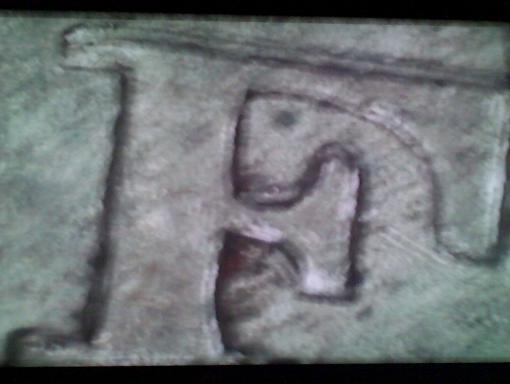
Man, is it hard for me to get a picture at 200x magnification. Sorry that it's so poor quality and blurry. Anything that looks like doubling from the bottom of the F isn't actually there, it's blur, but the doubling going towards the rim is actually there. Image:  SOF004.jpg SOF004.jpg38.09 KB As you hopefully can see, the serif is split/broken a little. (if you can see that the doubling is slightly leftward as well as up) Also, the F in the backround is the same shape of the regular F. I may have been rash on calling it VAM-50, because there are other markers on this that aren't on VAM-50. Well anyway I hope to get more pictures soon. (Knowing how touchy the area of doubling is, I'm sure some people will disagree anyway. The next picture I'll get will be of the S, which it's bottom serif IS split but is hard to picture due to wear on the coin.) |
| |
Replies: 24 / Views: 3,165 |







 First Page


 Posted 02/10/2008 11:26 am


 SOF004.jpg


