Part two:
But this still leaves the RPD term and the MPDs? What are they? On the RPD (Re-Punched-Date) I mention the practice of adding the date digits to the dies. These were done with single digits and sometimes they were added together on what is called a gang punch. But until 1909 these were added by hand on the dies. So when you look at the earlier dies you will notice this, but also on the '
Indian Head cents' you can see them. These devices added to the individual dies were sometimes slightly different. Because they were hand punched they might be slightly over/above/below/to the left or to the right of the desired digit. When the changes were made to correct this, the first punching maybe left on the die, but not raised as much the final punching location. When the digits were re-punched on the same years digits, this is called a RPD. (Re-Punched-Date) This is not a catalog of all of these, but I ran into some images of different ones that are cataloged by FS numbers (listed in the '
Cherry Pickers Guide'). Why is this important? Well the PCGS team use the catalog numbers from this publication for identification of their die numbers they attribute from their site. I also found a few from 'Rick Snow's' listings. So while this is not a complete list, you can see what is going on with RPDs. So lets get started. This is mainly concerning the '
Indian Head cent' series.
The first example of the 'Indian Head' cent design with the RPDs is on the first year. 1859.
Snow-1

This one is a full date RPD with each digit being punched over another all 4 digits. Although not as strong as you might have expected, the digits are slightly affected on the left side of the date digits. (note the arrows) This one is considered Snow # 1 Each Snow number starts there and continues. When the date changes then they start all over again from there.
But here is Snow-2. (a small image)

The RPD shows the '85' digits, affected slightly downwards.
Keep in mind the images are larger on most of these, so you can click on the image and it will enlarge them. I make all of my images larger for this purpose.1860: FS-401
Snow-1

On this one you will see that three of the digits are affected on this RPD. Again this is not a complete listing, but just to help you get started on finding these. On this one it is marked Snow-1 and FS-401. It is the same die, but with two different sources identifications.
1861:
This one is listed as FS-301 and S-1. I just realized the 'S-1' is probably the Snow number 1 that we will see on the other die attributions.
_AAA.jpg)
It looks like the 1 on the end of the date doesn't have a base at the bottom of the digit on the RPD. They must have more than one style of punch for the 1's? The last two digits are mainly affected.
1863:
Snow-1

Snow-2 FS-301

1964
Snow-1 FS-2301
__BN_AAA.jpg)
__BN_AAA.jpg)
Snow-2 FS-2305

Snow-4 FS-2303
__BN_AAA.jpg)
Snow-5 FS-2304
__BN_AAA.jpg)
1865
Snow-2

Snow-3 FS-303
__BN_AAA.jpg)
Snow-4 FS-302
__BN_AAA.jpg)
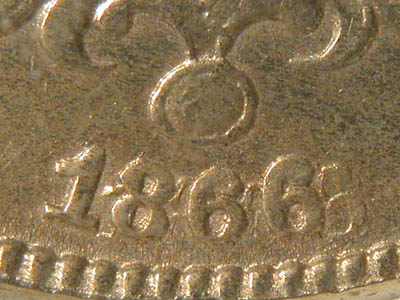
1866:
Snow-2 FS-301
__BN_AAA.jpg)
Snow-3 FS-302
__BN_AAA.jpg)
Snow-9 FS-303
__BN_AAA.jpg)
1867:
Snow-1 FS-301
__BN_AAA.jpg)
Snow-4 FS-302
__BN_AAA.jpg)
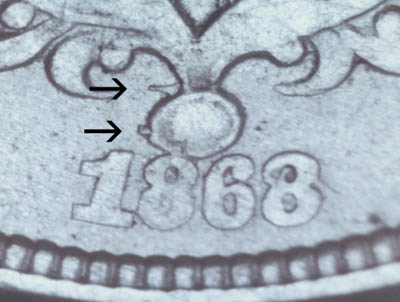
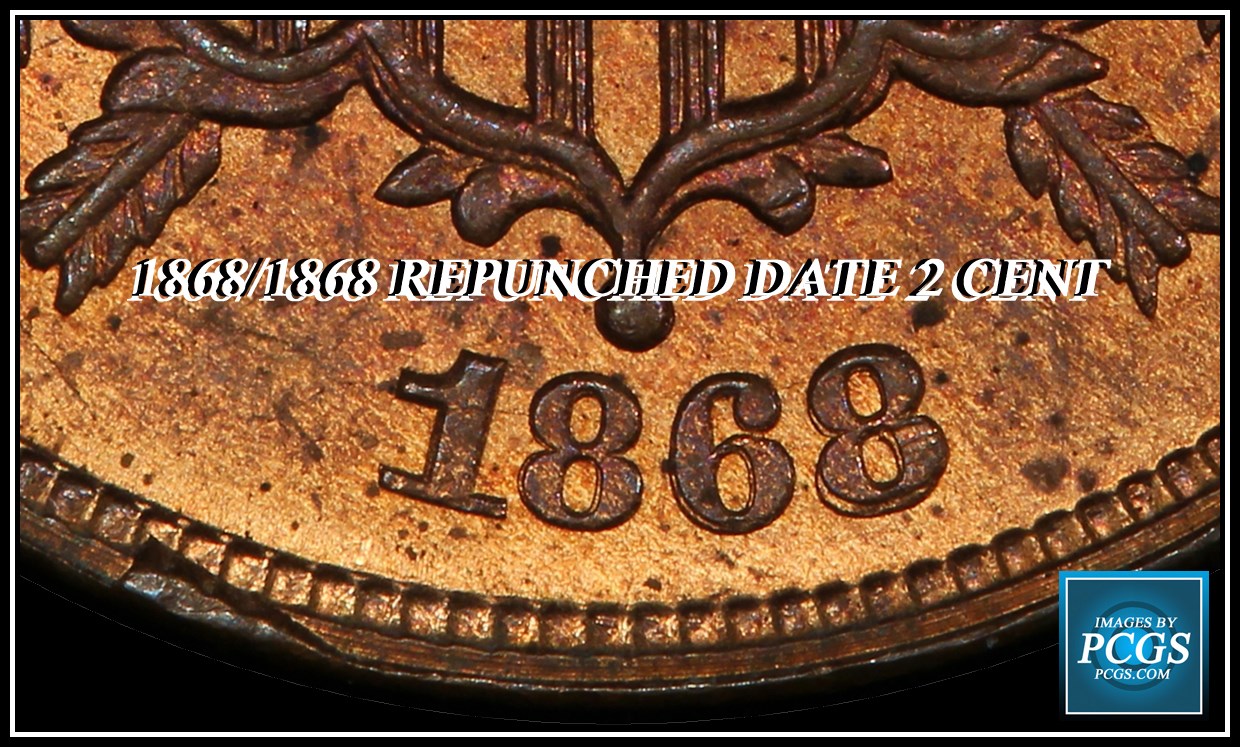
1868:
No ID on this one:
1869:
Snow-1 FS-302
__BN_AAA.jpg)
__BN_AAA_0001.jpg)
Snow-3
__BN_AAA.jpg)
Snow-4 FS-303

1870:
FS-301
__BN_AAA.jpg)
1873:
Snow-1 'Open 3'

1875:
Snow-1 FS-301

Snow-2 FS-302

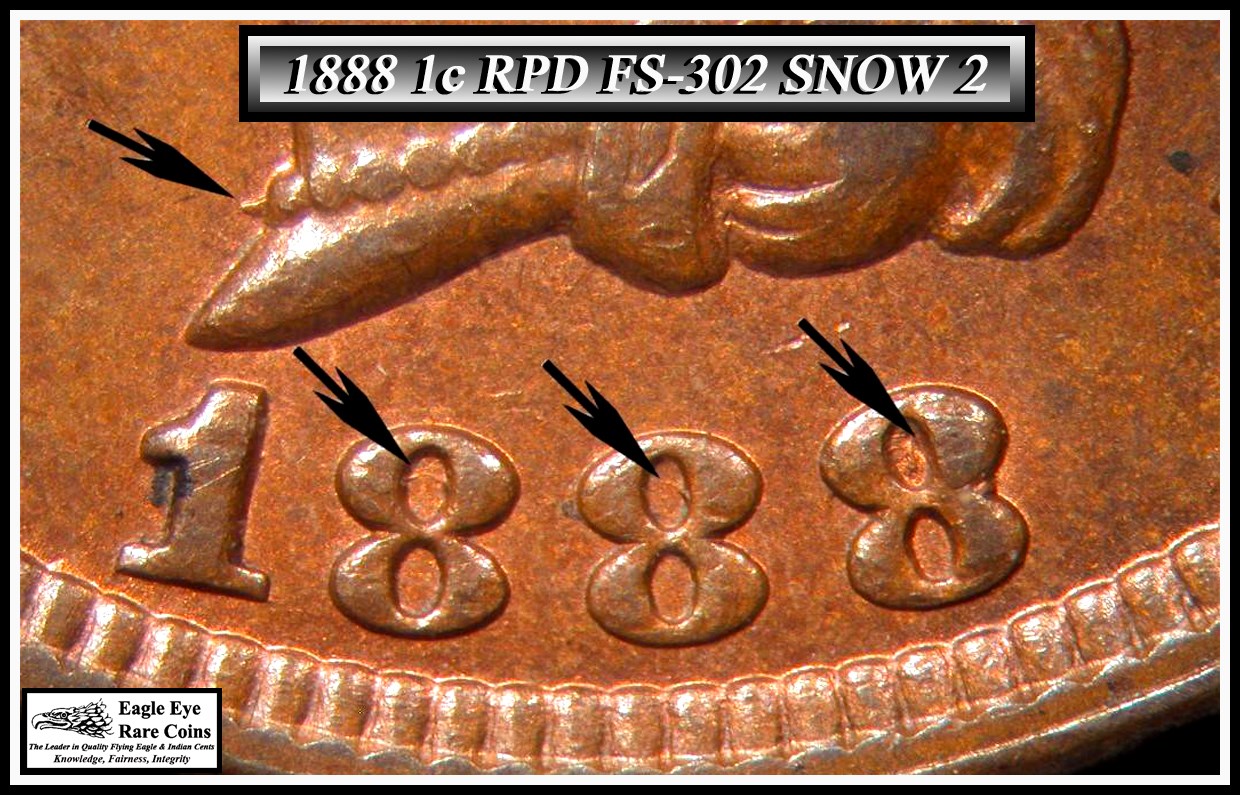
1888:
Snow-2 FS-302
1889:
FS-301
__BN_AAA.jpg)
1893:
Snow-2 FS-301
__RB_AAA.jpg)
Snow-6

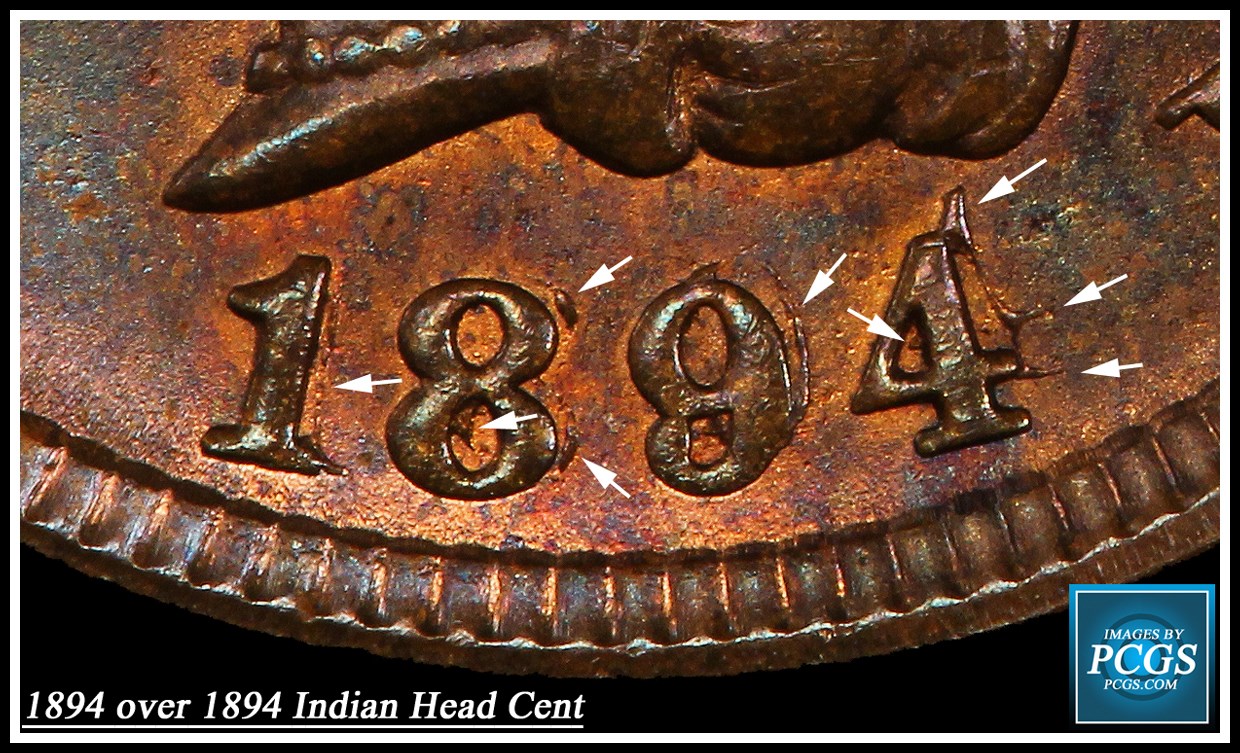
1894:
ID not certain.
1895:
Snow-1 FS-301
__RD_AAA.jpg)
Snow-9

1896:
Snow-1 FS-301
__RB_AAA.jpg)
Snow-23

1897
Snow-8 FS-402
__RB_AAA.jpg)
1899:
Snow-1 FS-301
__RB_AAA.jpg)
Snow-13 FS-302
__RB_AAA.jpg)
1900:
Snow-1 FS-301
__RD_AAA.jpg)
Snow-3 FS-302

1906
Snow-7 FS-301

1907:
Snow-1 FS-301

Snow-2 FS-302

So far we have identified that OD meant
Over Date. The deliberate placing of a different year digit
over a different year. The term RPD to identify a digit that was punched over the same years digit showing a miss-alignment. Now what about a MPD? This stands for 'Mis-Punched-Date.' I prefer a different term as it makes it easier to remember. 'Mis-Placed-Date' as it identifies what happed to that die keeps it easier to remeber.
So my images show this as a separate tag on these images. The mint mark punch was hammered in a place on the wrong area of the die. This could be on the bust, or on the denticals. They are intersting to find, but sometimes harder to see. So studying the locations of some of them, it will help you in your search. So here we go.
MPD
1870:
Snow-5 FS-102

Note on this one you see it in the denticles where the arrow is pointing. Hard to see at first isn't it?
FS-302
__BB_AAA.jpg)
1882:
Snow-6

Note on this one, you can see part of the 1 on the bust on the pearls? (arrows helps a lot on these)
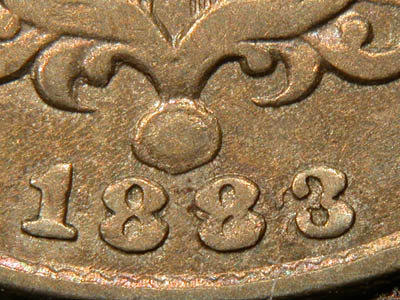
1883:
Snow-1 FS-403

Snow 7 FS-402

1884:
Snow-1 FS-401
__RB_AAA.jpg)
1890:
S-1 FS-401
1894
Snow-2

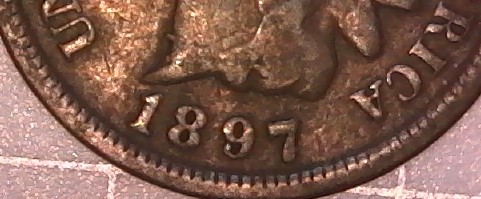
1897:
Snow-1 FS-401
__RB_AAA.jpg)
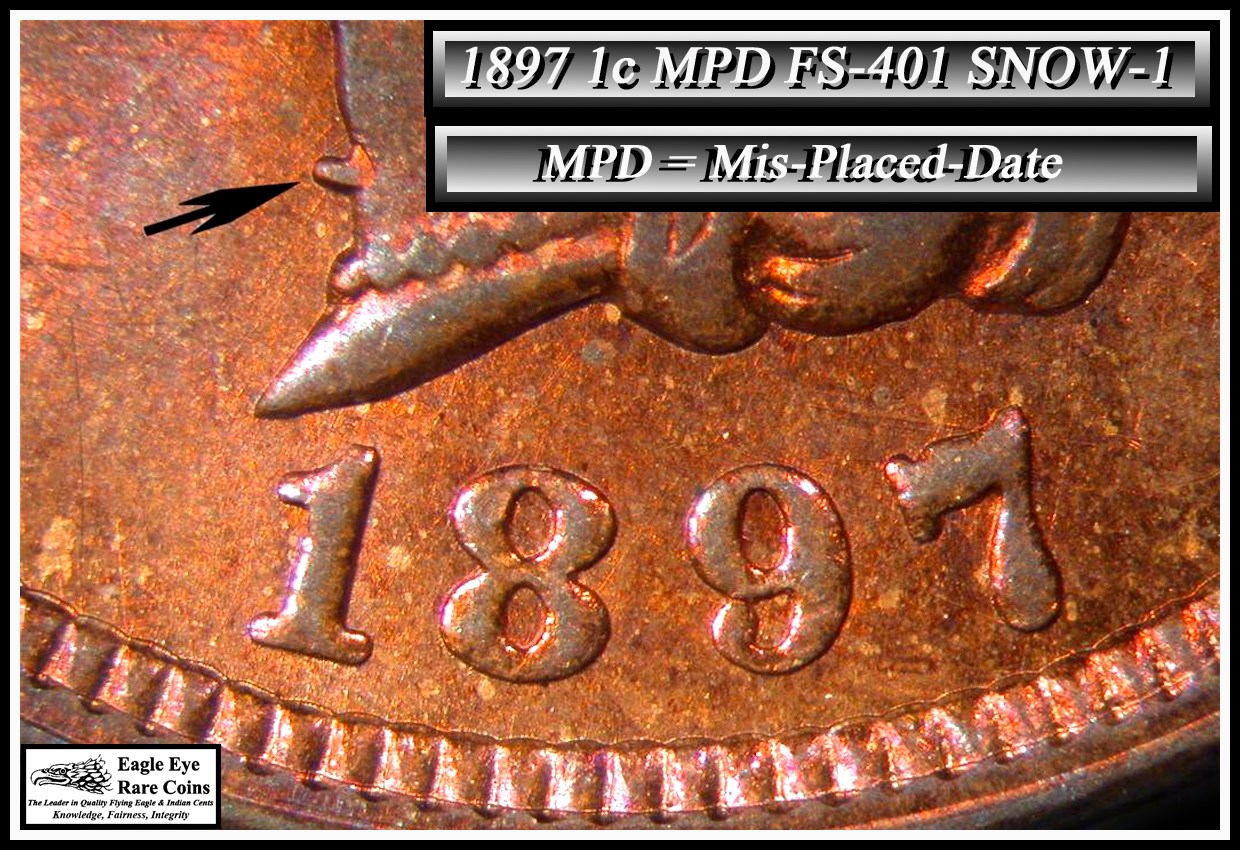

Same die from a two different sites. The most unusual MPD?
1898
Snow-5 FS-402
__RB_AAA.jpg)

Again same die number, from a different source.
1908:
Snow 4 FS-301
__BN_AAA.jpg)
Ok, by now your totally bored? But I wanted to show you perhaps a new variety to search for by new ones. Better images of the ones I found on line that advanced collectors might appreciate. But know the terms again:
OD = Over Date (A different digit was intentionally altered by the mint to continue to use a die until it was retired)
RPD = Re-Punched-Date (helps us to understand that these devices were hand punched into the dies themselves and were sometimes miss punched over each other or moved to a more correct location) These were always the same year the die was made.
MPD=Mis-Punched-Date (The one I call Mis-Placed-Date as that term to me tells me that this was not the location intended for this to happen was not where it landed. Its a long read, but with great images it helps us to visualize these varieties a lot better.
Click Here for part one.




 Posted 09/23/2016 7:40 pm