| Author |
 Replies: 18 / Views: 4,387 Replies: 18 / Views: 4,387 |
|
New Member
United States
26 Posts |
I got this from the bank recently for face value and would like to know what market value it as. I know that the pink writing and the wrinkles hurts, but it's definitely not something you come across every day :) And what exactly was National Currency used for? 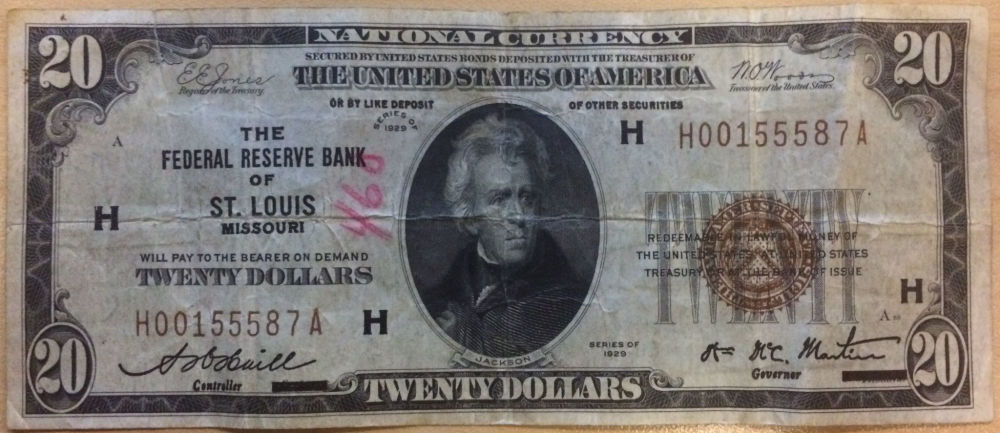 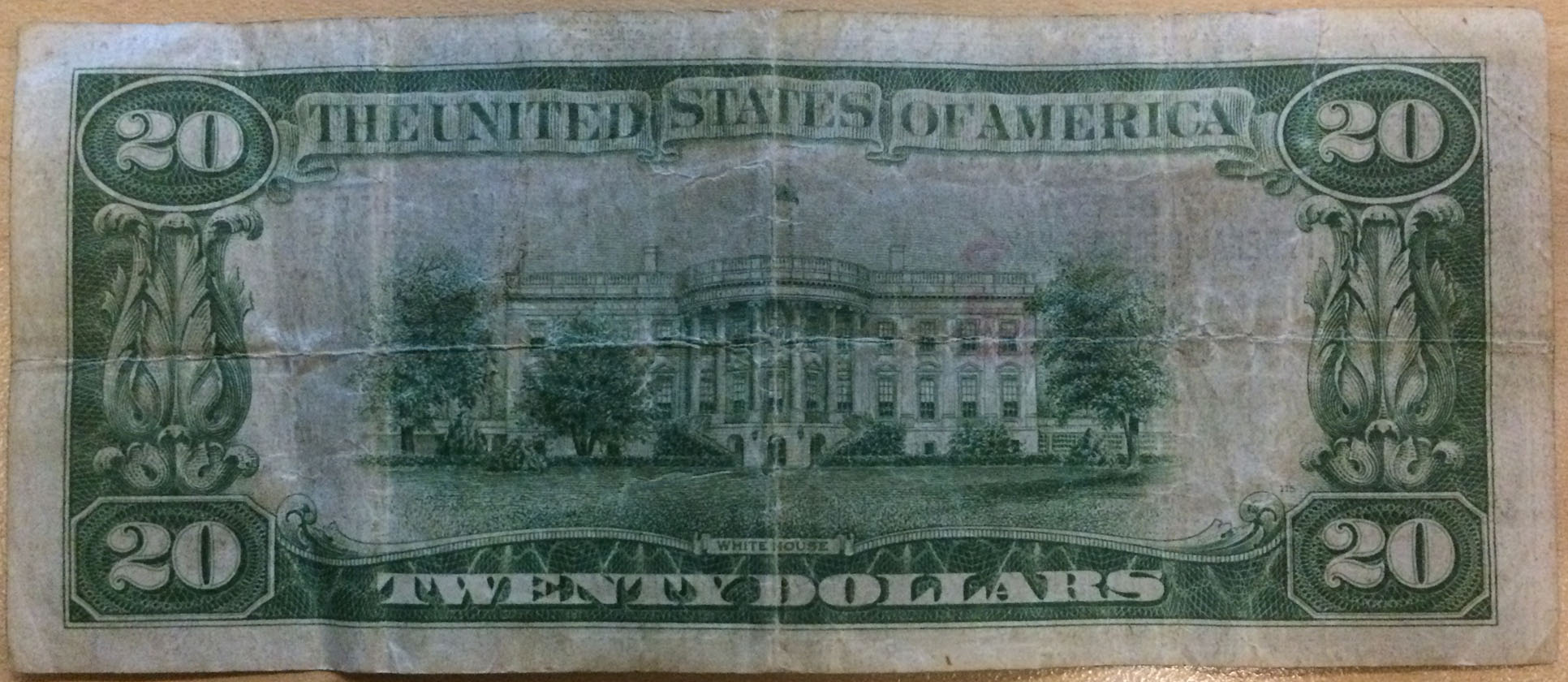 |
|
|
|
Bedrock of the Community
 United States
12912 Posts |
 to CCF! I'll defer to the the National note collectors as to value, but this does, as you pointed out, have some condition issues. It's still pretty cool. It is my understanding that National Bank Notes were "normal" currency. They were privately issued by the regional banks instead of the Feds. This came to an end in the 1930s when all currency was consolidated into FRNs and Silver Certificates. |
|
Pillar of the Community
United States
4637 Posts |
St.Louis $20 FRBN was the lowest printed of the 12 districts (444,000).
All FRBN's were used as everyday circulating currency. Nice find at face value.
With the condition issues of your note, I would value it at $25-$30.
|
|
Pillar of the Community
United States
959 Posts |
They were used to inject cash in the first months of 1933, into the economy to combat heavy withdrawals from the Federal Reserve System.
It floors me to know someone would turn this into a bank, even thought the condition is not the best.
@SteveInTampa; While I'm thinking of it; Do you know if banks are obligated to turn in large bills ($500/$1000) to the Federal Reserve System? I hear conflicting answers about this.
|
|
New Member
United States
2 Posts |
These Federal Reserve Bank Note issues were actually printed on currency stock left over from the printing of National Bank Notes. Thus they're not "National Currency" issues at all - but rather a totally separate emergency currency issue.
re: obligation to turn in large denom bills (500 and up) --
I'd be curious as well if anyone has the answer. I've heard that banks are "requested" to turn them in but that there's no requirement.
re: comment that "it floors me to know someone would turn this into a bank." You'd be amazed what folks still bring to their bank - even today. Have seen remarkable things over 35+ years in the coin business. In the last couple years alone I've had bank tellers bring to me or to other dealers I know: National Bank Notes, $1000 bills, silver dollars and other silver coins, etc. In the age of "Antiques Road Show" and "American Pickers," etc. - certainly more folks are aware. But it still happens!
|
|
Bedrock of the Community
United States
12912 Posts |
to CCF, WPRC! |
|
New Member
United States
2 Posts |
'ppreciate the "welcome."
Thanks CelticKnot!
|
|
Pillar of the Community
United States
4409 Posts |
To add some information to what has already been said, some of these notes were later released during the war years of 1942-1945.
-MV
|
|
Pillar of the Community
United States
4637 Posts |
From the BEP website;
U.S. Currency
Denominations Above The $100 Note
United States currency denominations above $100 are not available from the Department of the Treasury, the Federal Reserve System, or the Bureau of Engraving and Printing. On July 14, 1969, the Department of the Treasury and the Federal Reserve System announced that currency notes in denominations of $500, $1,000, $5,000, and $10,000 would be discontinued immediately due to lack of use. Although they were issued until 1969, they were last printed in 1945.
These notes are legal tender and may be found in circulation today; however, most notes still in circulation are probably in the hands of private numismatic dealers and collectors. If you are interested in purchasing or learning more about these larger denominations, more resources may be available online or at your local library.
The largest note ever printed by the Bureau of Engraving and Printing was the $100,000 Gold Certificate, Series 1934. These notes were printed from December 18, 1934 through January 9, 1935 and were issued by the Treasurer of the United States to Federal Reserve Banks (FRB) only against an equal amount of gold bullion held by the Treasury. These notes were used for transactions between FRBs and were not circulated among the general public.
It's possible that individual banks have internal rules requiring or requesting tellers to turn in all notes above $100, but I have yet to read any laws or requirements about mandatory obligations to return notes above $100 to the Federal Reserve.
|
|
Bedrock of the Community
United States
94367 Posts |
Steve - good input. Silver4Face - Remarkable to find an FRBN still in circulation. The odds seem inconceivable! I collect these by district, and have a St. Louis somewhere - will post a pic later. In the meanwhile - to the CCF! And tell us more about your interests! |
|
Bedrock of the Community
United States
94367 Posts |
Found it - here is a new example from the same district. The BEP issued this note for all 12 districts. Most are affordable in CU grades, with the exception of San Francisco (pretty costly) and Dallas (killer). Still find it amazing to have one turn up all these years later in circulation! 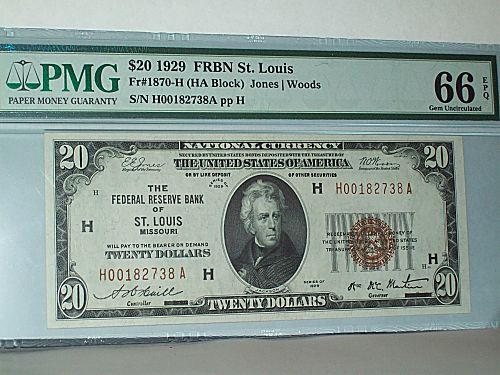 |
|
Pillar of the Community
United States
4637 Posts |
Another awesome addition Mr.Frog, great eye appeal, and centered very nicely.
|
|
Pillar of the Community
United States
959 Posts |
|
|
Bedrock of the Community
United States
94367 Posts |
Thanks guys. Check out the reverse - the left margin appears a hair wider in this pic just because it's positioned slightly closer to the camera to avoid flashback. The registration on this note is perfect - have never seen better. Should be in a 67 holder I believe.  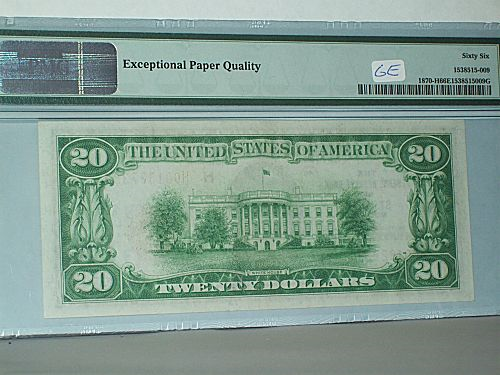 Edited by Coinfrog
10/08/2016 5:27 pm
|
|
Bedrock of the Community
United States
11951 Posts |
Very nice note ....  I don't see many in that condition |
|
Bedrock of the Community
United States
94367 Posts |
I believe I have unintentionally hijacked this thread, and I apologize.  |
| |
Replies: 18 / Views: 4,387 |










 Posted 10/06/2016 05:37 am


