| Author |
 Replies: 15 / Views: 1,725 Replies: 15 / Views: 1,725 |
|
|
Pillar of the Community
Canada
1046 Posts |
hi and thanks for viewing i`m not seeing a great deal of wear on this example and hope it might hit vf 20 it has (a too) shiny appearance perhaps varnished or harshly cleaned at some point i cant tell all opinions welcomed tia 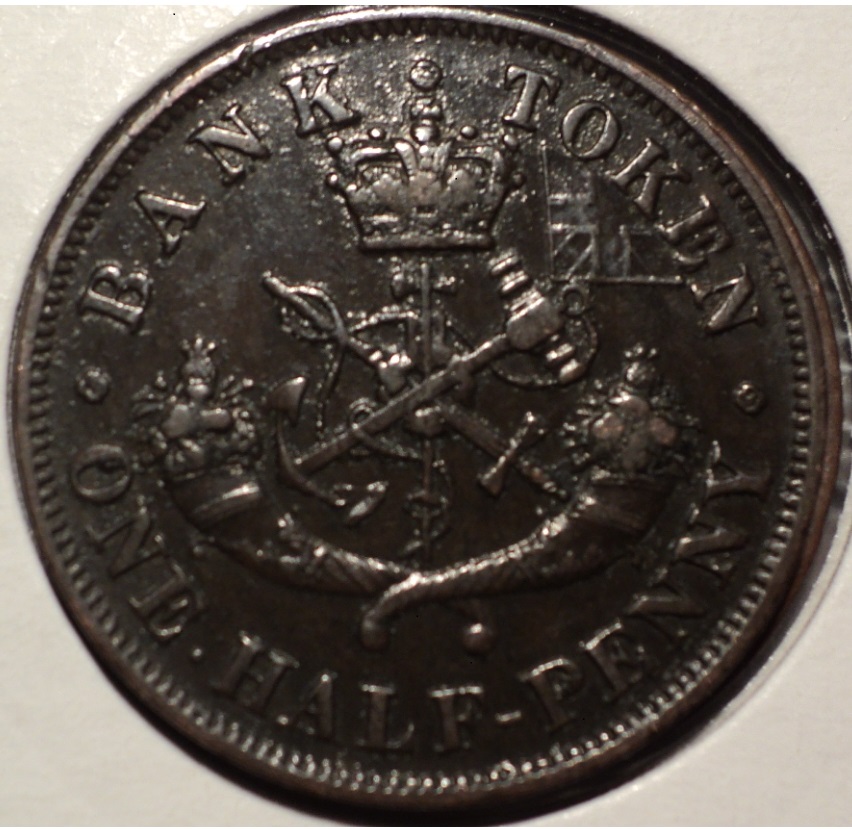 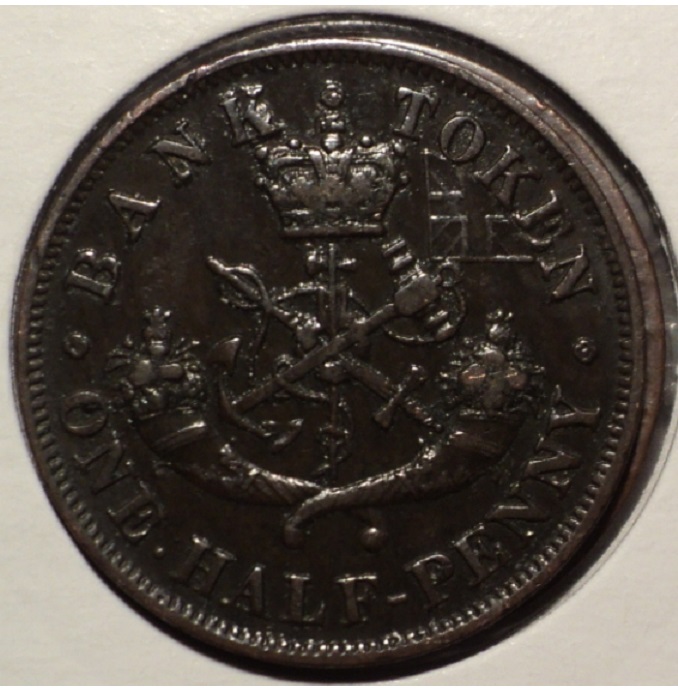 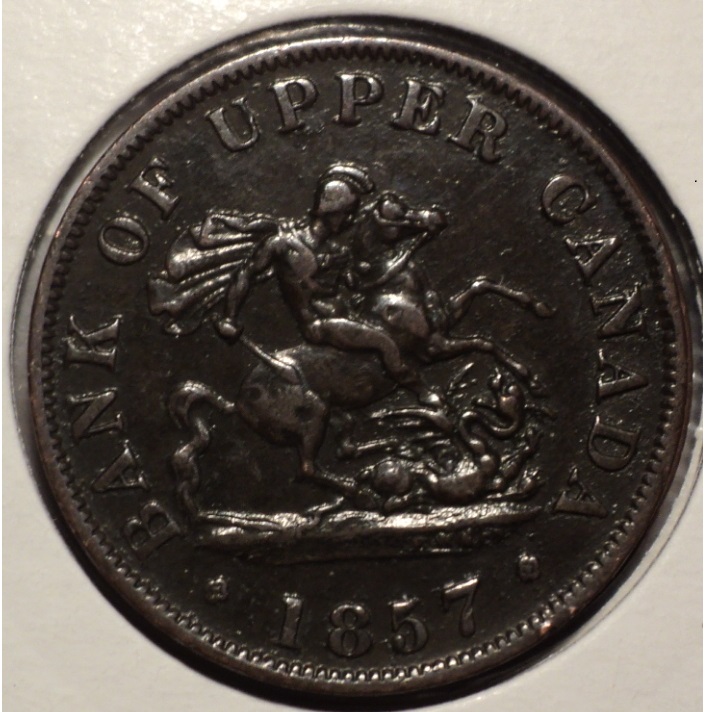 |
|
|
|
Bedrock of the Community
United States
94367 Posts |
Pics don't look shiny, so I'll pass on your comment about possible cleaning, but overall I'd say this coin easily makes VF-20 or better.
|
|
Bedrock of the Community
Canada
10743 Posts |
With lighter photos, it may go higher then VF-20
|
|
Pillar of the Community
Canada
2786 Posts |
By regular standards an easy 20+, by dragon slayer standards just barely a 20 (closer to a 15 simply due to the wear on the reverse). Below is a really nice mint state for comparison. If I had to go by these photos alone I would agree that it does appear varnished. This series was very well made & struck. They appear almost proof-like with extreme definition and depth to the devices. Whatever you think for grading (compared to decimal series) you can probably subtract 10 points. 1857 is the easiest year to find higher grade examples of this issue. 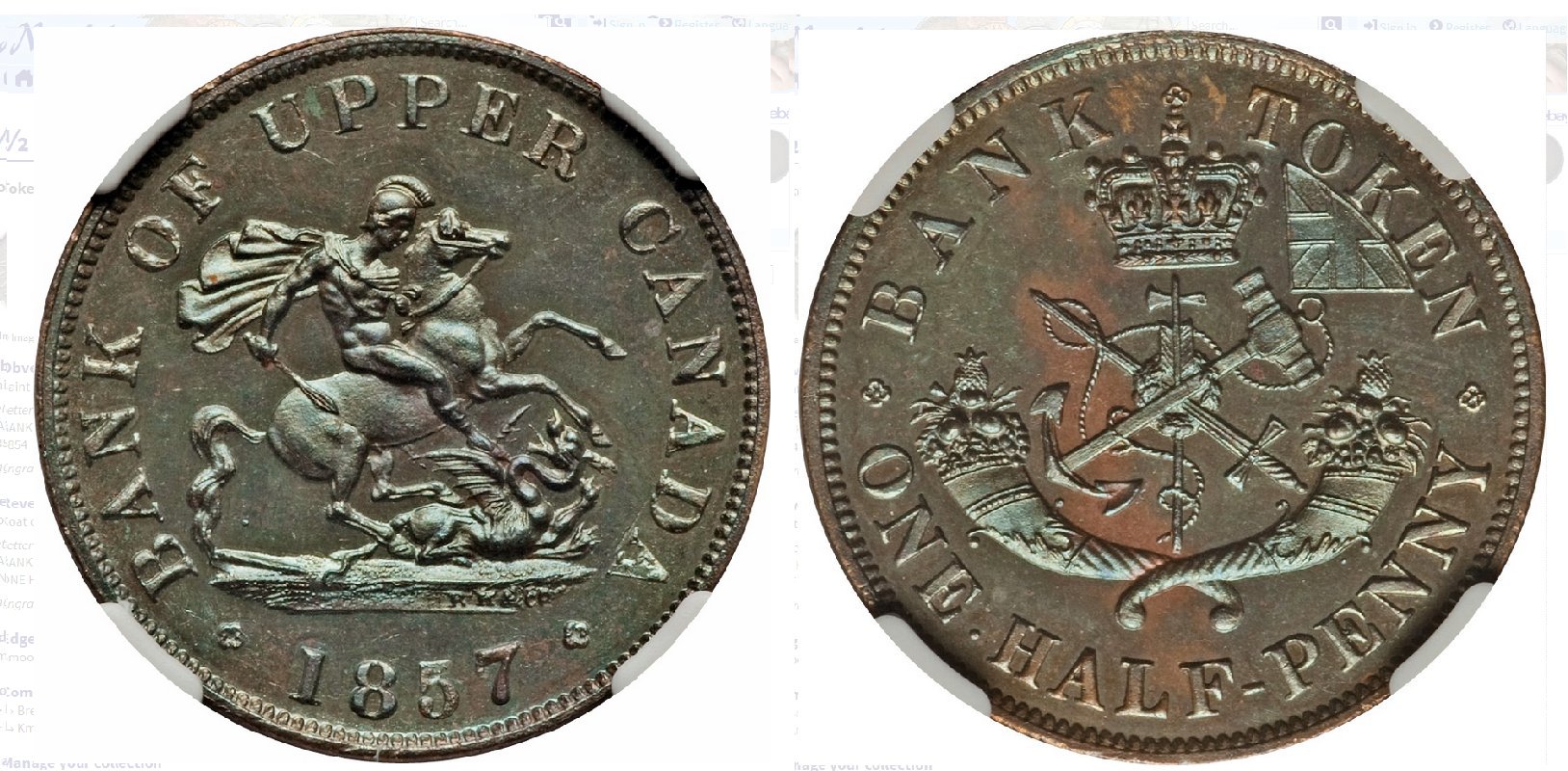 Edited by Wade
12/07/2016 11:32 pm
|
|
Pillar of the Community
United States
840 Posts |
At present VF 20. I suspect a VF 30 may be hidden beneath
the crud and lacquer. If mine, I would administer a careful
cleaning. The crudeness prevents any attempt to a Courteau
attribution.
P.S. Wade, a beautiful ICCS MS 63 token or PCGS / NGC MS 64.
Is a photo of the obverse available?
And, as Wade mentioned, the 1857 series, being the latest, are
more frequently found in higher grades than the other dates.
doug
|
|
Pillar of the Community
Canada
2786 Posts |
edited above post to show proper photo.
|
|
Pillar of the Community
 Canada
1046 Posts |
thanks everyone !!
should I give this example
an acetone bath ?
and then just a rinse
tia
|
|
Pillar of the Community
United States
840 Posts |
I suspect this token will require a bit more than an acetone bath. Acetone will dissolve the lacquer, but I find that acetone does a poor job removing decades of crud and grime. Not all will concur with the following, but here goes... I submerge the item in MS-70 for a minute or so. I don a protective rubber glove and pick up the item. With my other hand I dab the bristles of a soft bristle tooth brush into the MS-70 and work the bristles among the remaining crud (normally remaining in the devices). Using hot tap water, I rinse away as much of the MS-70 as I can, then I place a drop of liquid dish soap on the item and gently (using my thumb), work the soap about the item, thus removing any remaining residual MS-70 solution. I give the item another good rinse under hot tap water. Upon inspection, and when no repeat is necessary, I dry the item by blotting with a soft cloth. Afterwards I give the item a quick dip in Acetone, and let the Acetone evaporate. As a final precautionary measure against future issues (rust / corrosion), I give the item a squirt of WD-40, and after a minute or so, blot away the excess WD-40. I would be hesitant to do this procedure on MS items, but scant notice or depreciation will be encountered on mid grade or lower items. I have sent many items to ICCS and other TPG and have not had any adverse comment concerning cleaning. Some comments to wit: NF-3A1, ICCS VF, (holed, bent), but no comment on being cleaned. However, it must be noted, that some copper tokens will turn a dark gun barrel blackish colour. I do not know the cause. At present, I estimate maybe one out of every five hundred (and I have cleaned a couple thousand) have darkened. enough for now doug Edited by colonialtokens
12/08/2016 5:33 pm
|
|
Pillar of the Community
United States
840 Posts |
Wade
Upon closer inspection, this should grade MS-65.
Terrific ensample.
doug
|
|
Pillar of the Community
Canada
1046 Posts |
hi again and thanks i did not have any acetone..so I doused with scalding water..and then some wd 40..then water with dish soap..no rubbing..etc i hope I have not ruined this example regards 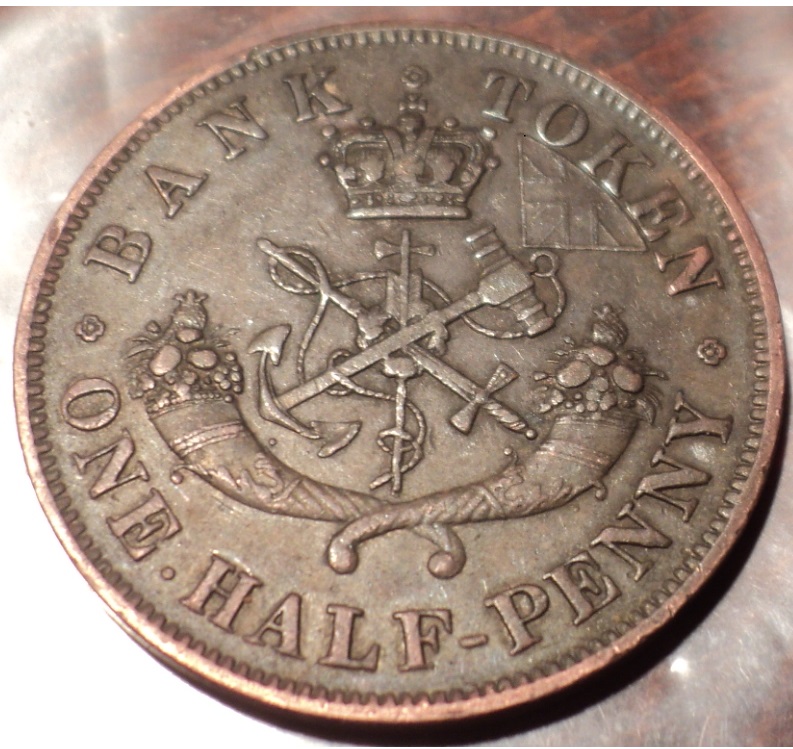 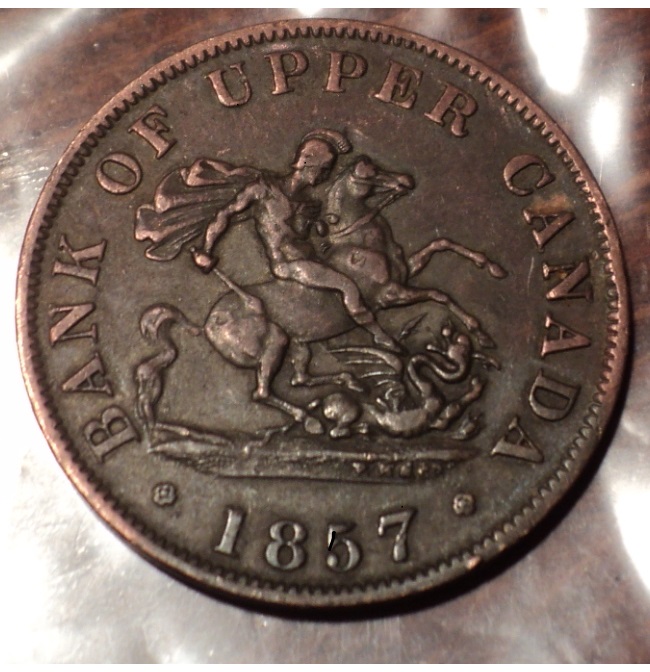 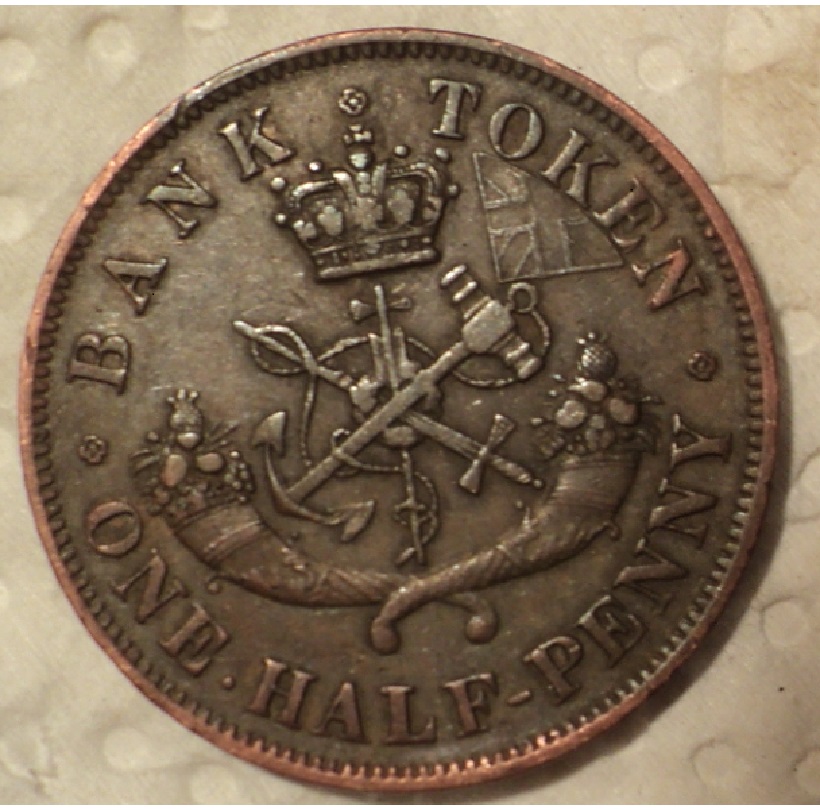 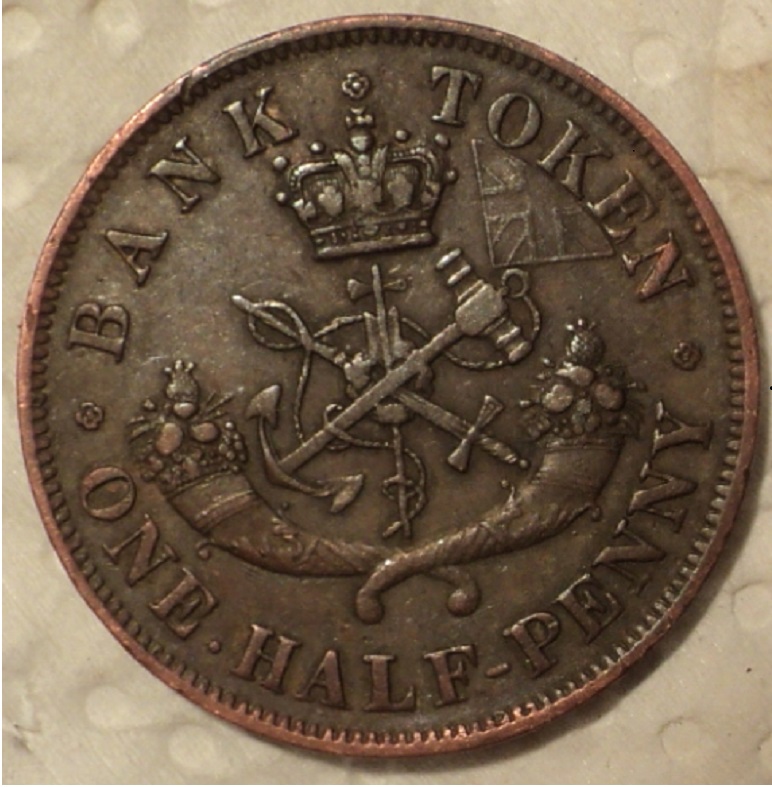 |
|
Pillar of the Community
Canada
3234 Posts |
10 times better...Great details are now showing..
|
|
Pillar of the Community
New Zealand
1679 Posts |
EF30 due to better photo's
Cheers Don
Vickies cents and GB Farthings nut.
"Old" is a figure of speech and nothing more
|
|
Pillar of the Community
United States
840 Posts |
A big improvement. I suspected a lost VF 30 would be found hidden beneath the crud.
You can now clearly see and identify what you have, rather than never knowing for sure.
I will ascertain the Courteau variety when I have more time to study the piece.
Again, Good job. If your final step was a water rinse, I suggest a final light spray
of WD-40 to prevent the possibility of future rust. The old grime acted somewhat
as a rust barrier. Once removed, the surface of the medal becomes more susceptible to the
air and elements. The surface of the medal should be protected with WD-40, or the such.
doug
|
|
Pillar of the Community
United States
840 Posts |
Concerning Torgemco's 1857 St. George Half Penny, Doctor Courteau identified some 48 different varieties of this issue (159-207 inclusive), and I have found a few that he was not privy to.
Varieties 159-189 exhibit a dot within each obverse Rosette, whereas varieties 190-207 have no dot.
Your token is narrowed down to the second grouping (varieties 190-207).
Within each grouping, the second characteristic to note is the terminal (end) of the Anchor Rope Dots.
These are the dots to the immediate left of the lower section of the Battle Axe Handle (slightly above the lower section of the left Cornucopia. These terminate either in one dot, one dot and a small line, a downward pointing dash, 2 small dots, 2 dots (the terminal the smaller), 2 medium sized dots, 2 large dots, 2 1/2 dots, 3 horizontal dots, or 3 downward pointing dots.
Your token has 3 downward pointing dots.
The 3 downward pointing dots are only found on Courteau varieties 206 and 207. Varieties 206 & 207 are differentiated by whether or not the man's left foot shews. Variety 206 exhibits a perfect left foot, whereas variety 207 exhibits no left foot.
Ergo, you have a variety 206, having a rarity factor of 2 (on a scale of 1-10, with 1 being common).
Concerning Wade's MS token:
This is of a Courteau group 1 variety (varieties 159-189 nconclusive).
This token is more difficult to attribute as there are more variables to examine.
One dot is found on varieties 159-164, One dot and a small line are found on varieties 165-174, a downward pointing dash is found on varieties 175 & 176, 2 small dots are found on varieties 177-179, 2 small dots (the last being smaller) are found on varieties 180 & 181, 2 medium sized dots are found on varieties 182-185, 3 downward pointing dots is only found on variety 186, 3 horizontal dots are found on varieties 188 & 189.
At present, I am unable to go much further as I have to retrieve my ensamples from my safety deposit box and compare yours to what I have.
doug
Edited by colonialtokens
12/10/2016 11:08 am
|
|
Pillar of the Community
Canada
1046 Posts |
Doug (if I may) thank you very much for taking the time for i/ding this example for me. it is greatly appreciated also may I ask if you think it may benefit further by an acetone wash and then applying w-d 40 i bought some 100 % pure acetone and just wondering ? tia  |
|
Pillar of the Community
United States
840 Posts |
At present, what you have done is perfectly acceptable. If mine, would be pleased with the result and simply protect the surface with WD-40.
All the design elements are clearly distinguishable (save for normal condition wear of a VF 30). No diagnostic markers remain obscured beneath decades of grime and crud. Nevertheless, not all results will be so easily accomplished. Some procedures will required a bit more effort as the crud will be more stubborn to remove, thus a soft bristle brush (tooth brush, special artist paint brush, etal) may be required to loosen and remove the crud from the devices. Incidently, other soluvents besides MS-70 are also good. Pure Acetone is a necessity. But caution is required and Acetone is flammable and proper venelation is required. Acetone evaporates quickly, thus the remaining Acetone needs to be securely sealed and properly stored.
doug
Edited by colonialtokens
12/10/2016 3:36 pm
|
| |
Replies: 15 / Views: 1,725 |
|





 Posted 12/07/2016 6:22 pm





