Coin Community Family of Web Sites Join Thousands of Coin, Bullion, & Money Collectors
Join Thousands of Coin, Bullion, & Money Collectors Royal Canadian Mint products, Canadian, Polish, American, and world coins and banknotes. Shop for APMEX Bullion on eBay!300,000 items to help build your collection! Vancouvers #1 Coin and Paper Money Dealer Specializing in Modern Numismatics Coin, Banknote and Medal Collectors's Online Mall


Username:
Password:
Save Password
Forgot your Password?


This page may contain links that result in small commissions to keep this free site up and running.

Welcome Guest! Registering and/or logging in will remove the anchor (bottom) ads. It's Free!

Pure Gold Refined From Jewelry And Dental Scrap

To participate in the forum you must log in or register.
Author Previous TopicReplies: 25 / Views: 13,806Next Topic
Page: of 2
Pillar of the Community
Jaobler's Avatar
United States
6385 Posts
 Posted 02/10/2017  6:54 pm Show Profile   Bookmark this topic Add Jaobler to your friends list Get a Link to this Message Number of Subscribers
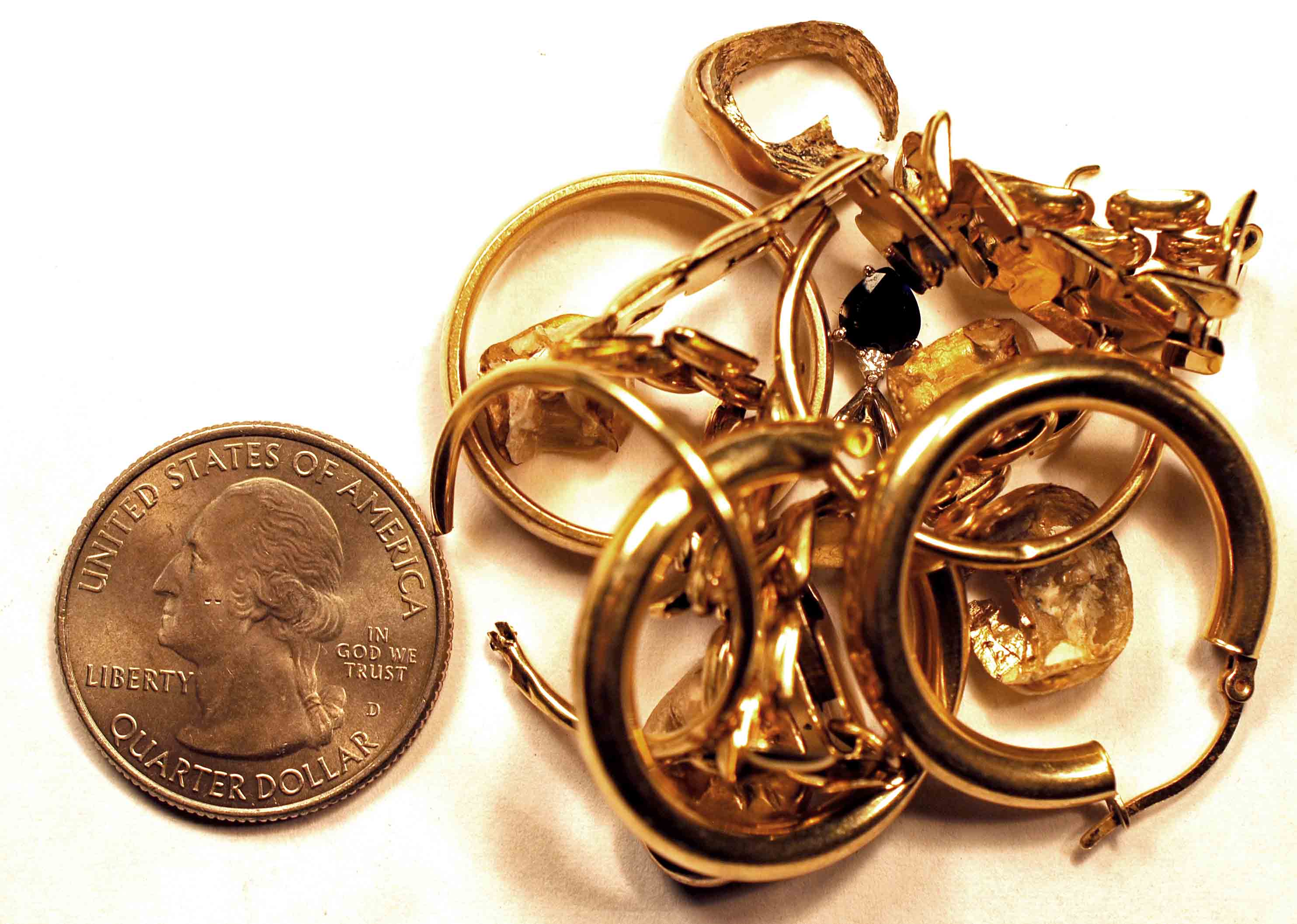
I collected a small stash of 14k jewelry scrap plus several gold crowns and I wanted to convert it to 24k pure gold. Here's the process, with pictures.

The total scrap weight was about 29 grams. Assuming it was all 14k, the estimated yield of 24k gold should have been around (29 x 14)/24 = 16.9 grams. I think the dental gold is a bit lower karat but this weight should be a reasonable estimate.

Pure-Gold-Refined-From-Jewelry-And-Dental-Scrap

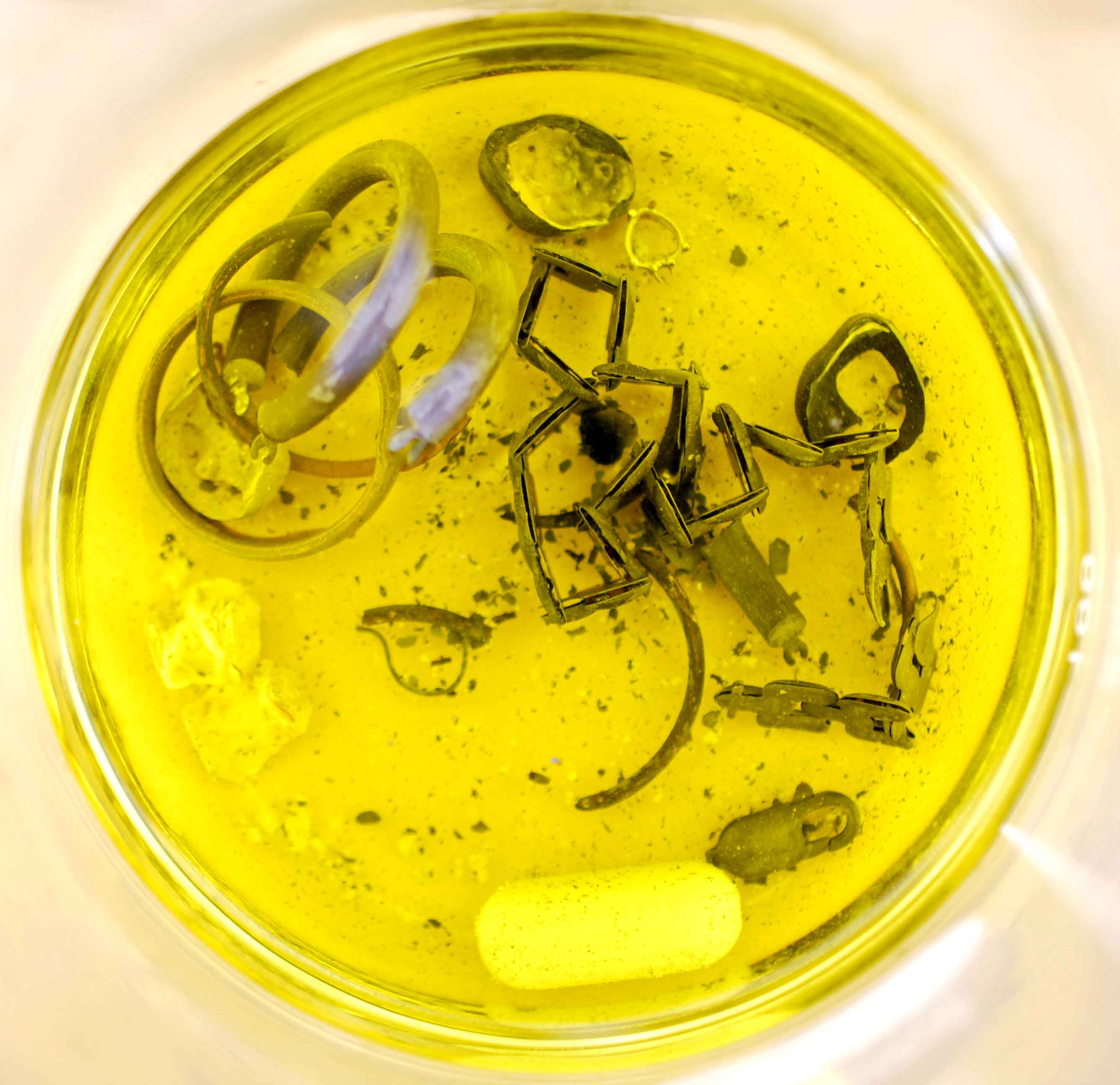
In the past I've used aqua regia to dissolve gold but concentrated nitric and hydrochloric acids aren't readily available since I no longer work in a lab. So, I tried the crude chemist's method of combining concentrated bleach (8.25% sodium hypochlorite) plus swimming pool muriatic (hydrochloric) acid. The mixture generates free chlorine in acidic solution which attacks gold and other metals. The process was very slow. Here's my scrap after a couple hours:

Pure-Gold-Refined-From-Jewelry-And-Dental-Scrap

The liquid assumed a green color presumably from copper and/or nickel in the 14k jewelry alloy. I changed the solution many times as it lost potency. The solution gradually became more yellow as the copper/nickel components were depleted. Here's what it looked like after 3 days:

Pure-Gold-Refined-From-Jewelry-And-Dental-Scrap

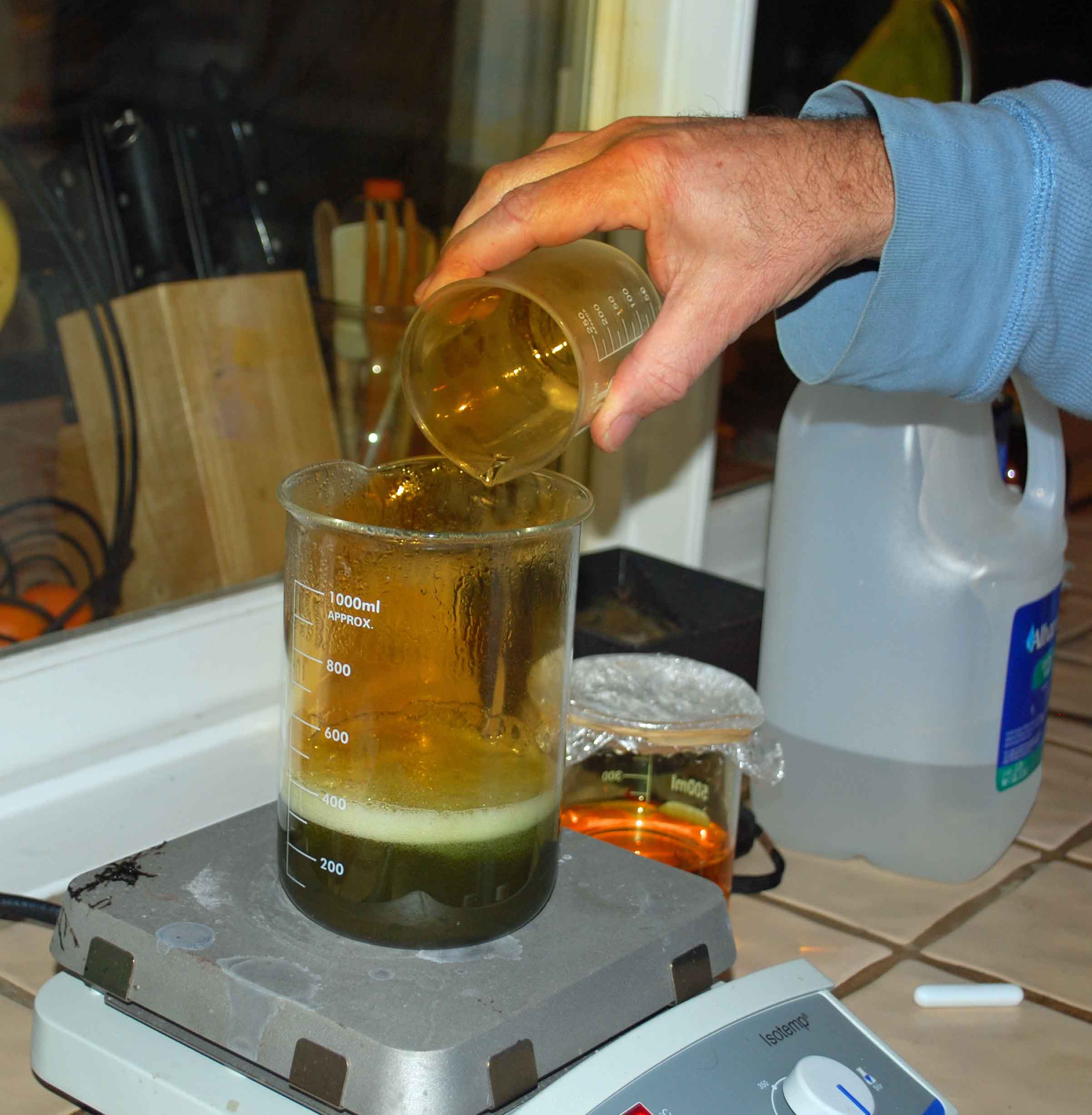
Periodically I combined extract solutions and concentrated the mixture by boiling off water and excess HCl. I then diluted the concentrate (which at this point was mostly sodium chloride, with the dissolved gold present as gold chloride) with distilled water, ran it through a paper coffee filter to remove particulates, and precipitated the gold with sodium nitrite solution. Nitrogen dioxide gas is generated which boils off as a brown vapor. The gold precipitates as a granular solid, called gold sponge. Base metal oxides and hydroxides may also precipitate, mixing with the gold. Here's a photo of the reaction as the sodium nitrite is added.
Pure-Gold-Refined-From-Jewelry-And-Dental-Scrap

The last pieces to dissolve were the gold crowns. I guess that makes sense; you want your dental work to withstand lots of wear so the alloy is likely harder and more corrosion-resistant than jewelry alloy. It took a whole month before the last pieces of crown were dissolved.

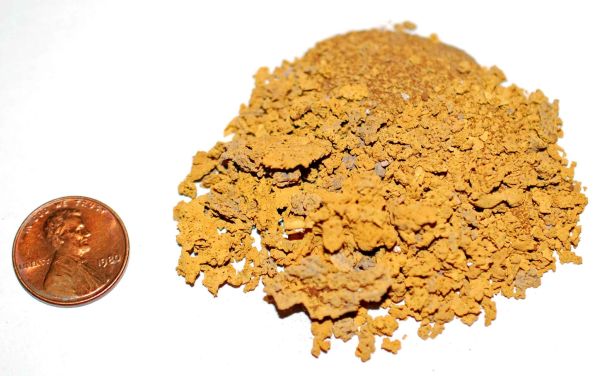
Eventually all the extracts were precipitated and the sponge combined. The total weight was 17.46 grams and the product was visibly contaminated with dark specks and white debris.
Pure-Gold-Refined-From-Jewelry-And-Dental-Scrap

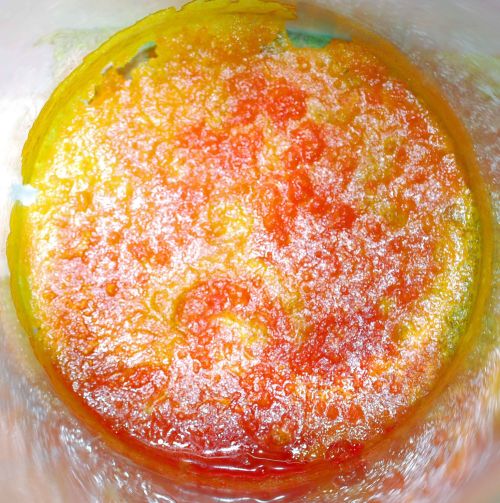
To purify the gold I re-dissolved it in bleach and acid, filtered it, and re-concentrated it, again, to drive off excess HCl. Too much residual acid in the solution will consume sodium nitrite, making the gold precipitation less effective. The nearly-dry residue shows beautiful crimson layers of gold chloride mixed with a thick crust of sodium chloride at the bottom of my beaker:
Pure-Gold-Refined-From-Jewelry-And-Dental-Scrap

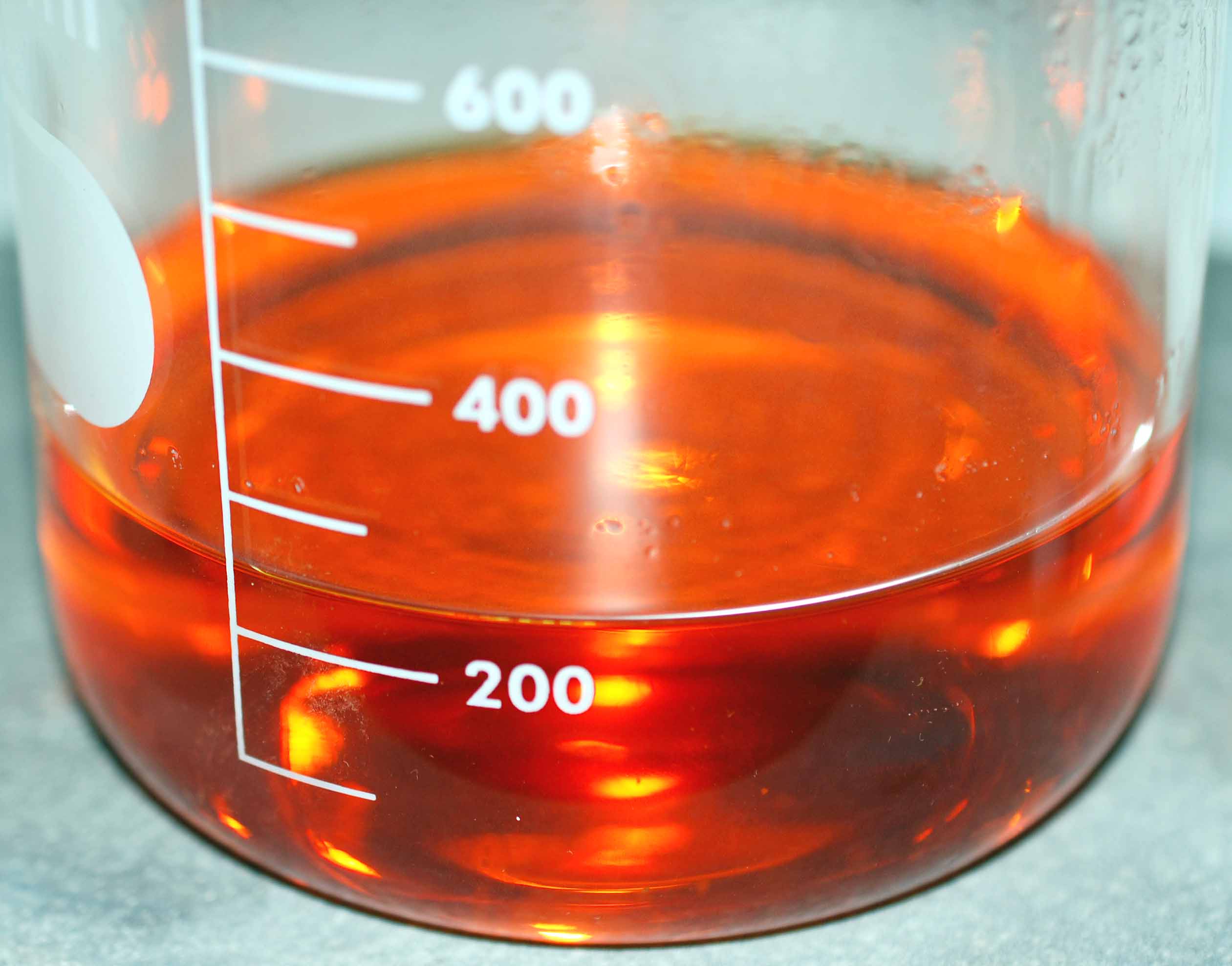
After a final filtration and dilution the gold concentrate was ready for precipitation. I really like the color!
Pure-Gold-Refined-From-Jewelry-And-Dental-Scrap

Here's the beaker after the final addition of sodium nitrite. The gold sponge has separated nicely, forming a coherent layer on the bottom.

Pure-Gold-Refined-From-Jewelry-And-Dental-Scrap

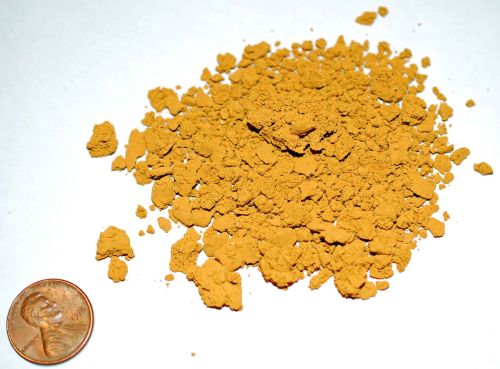
I drained off the liquid and boiled the sponge repeatedly with distilled water, then performed one boiling cycle with dilute nitric acid (which will dissolve any stray silver or base metal oxides), then boiled twice more with distilled water. Finally, I drained off the water and dried the sponge in my kitchen oven. Total sponge weight: 16.84 grams.
Pure-Gold-Refined-From-Jewelry-And-Dental-Scrap

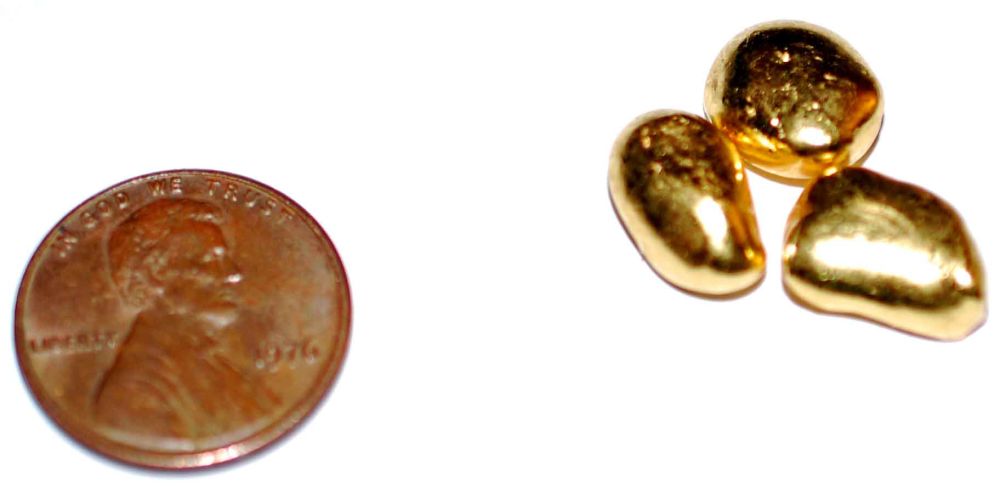
The last step was to use an ordinary Bernz-o-Matic propane torch to carefully fuse the sponge into metallic gold. My three 24k nuggets have a total weight of 16.78 grams; pretty close to my original estimated yield!

This project was very time-consuming but fun. Now I'll have to collect more scrap so I can do it all over again!


Pure-Gold-Refined-From-Jewelry-And-Dental-Scrap
Edited by Jaobler
02/11/2017 10:12 am
Rest in Peace
Buddy's Avatar
United States
7075 Posts
 Posted 02/10/2017  7:27 pm  Show Profile   Bookmark this reply Add Buddy to your friends list Get a Link to this Reply
Great project!

What was the gold sponge on or in when you torched it?

I've heard about people doing this to get the gold out of their old electronics equipment but it seems a bit dangerous if you don't really know what you're doing.

The nuggets make a great reward for your work. Enjoy!
Pillar of the Community
Connor's Avatar
United States
2130 Posts
 Posted 02/10/2017  7:50 pm  Show Profile   Bookmark this reply Add Connor to your friends list Get a Link to this Reply
Very interesting....Thanks for the great chemistry lesson!
Rest in Peace
United States
233 Posts
 Posted 02/10/2017  7:57 pm  Show Profile   Bookmark this reply Add ikeyPikey to your friends list Get a Link to this Reply
May I be the first to admit that I did not expect you to succeed? Well done!
Valued Member
kg5's Avatar
Australia
491 Posts
 Posted 02/10/2017  8:15 pm  Show Profile   Bookmark this reply Add kg5 to your friends list Get a Link to this Reply
Very impressive!
Bedrock of the Community
Earle42's Avatar
United States
10038 Posts
 Posted 02/10/2017  8:46 pm  Show Profile   Bookmark this reply Add Earle42 to your friends list Get a Link to this Reply
Great step by step review!
How much squash could a Sasquatch squash if a Sasquatch would squash squash?
Download and read: Grading the graders
Costly TPG ineptitude and No FG Kennedy halves
https://ln5.sync.com/dl/7ca91bdd0/w...i3b-rbj9fir2
Moderator
Learn More...
Spence's Avatar
United States
34410 Posts
 Posted 02/10/2017  9:20 pm  Show Profile   Bookmark this reply Add Spence to your friends list Get a Link to this Reply

Quote:
This project was very time-consuming but fun.


Beyond my capabilities, but a very interesting read. Thanks!
"If you climb a good tree, you get a push."
-----Ghanaian proverb

"The danger we all now face is distinguishing between what is authentic and what is performed."
-----King Adz
Rest in Peace
bpoc1's Avatar
United States
4078 Posts
 Posted 02/11/2017  06:13 am  Show Profile   Bookmark this reply Add bpoc1 to your friends list Get a Link to this Reply
Thank you, for sharing.
Pillar of the Community
United Kingdom
1351 Posts
 Posted 02/11/2017  10:55 am  Show Profile   Bookmark this reply Add peter1234 to your friends list Get a Link to this Reply
Brilliant work and fascinating.
Pillar of the Community
TobyJ's Avatar
United Kingdom
1273 Posts
 Posted 02/11/2017  11:00 am  Show Profile   Bookmark this reply Add TobyJ to your friends list Get a Link to this Reply
Very very interesting indeed.

This reminds me. A couple of years ago I found some old dentristy gold in the bottom of a box I bought from auction. It was from about 1880, and was unlike any gold I'd ever seen before, it looked like a sponge! Just like in your 5th picture Jaobler. I remember taking it to a Jewellers, where they tested the gold content and it was 24 carat solid, or .99999 gold. They offered me £30 for it, a small square. I refused and sold it to a collector in Greece for three times that money! I wonder why he paid so much for it? to this day I've never come across gold like it again.
Pillar of the Community
fistfulladirt's Avatar
United States
4333 Posts
 Posted 02/11/2017  5:48 pm  Show Profile   Bookmark this reply Add fistfulladirt to your friends list Get a Link to this Reply
If I were to become unemployed, that's one thing I'd do. Thanks for posting!
When I listen to LED ZEPPELIN...so do my neighbors...
Roll hunting since '77
Dirt fishing since '72
Pillar of the Community
Jaobler's Avatar
United States
6385 Posts
 Posted 02/12/2017  1:11 pm  Show Profile   Bookmark this reply Add Jaobler to your friends list Get a Link to this Reply

Quote:
This reminds me. A couple of years ago I found some old dentristy gold in the bottom of a box I bought from auction. It was from about 1880, and was unlike any gold I'd ever seen before, it looked like a sponge!


I'll bet it was exactly that: pure gold dissolved in aqua regia or other oxidizing chlorine solution, then precipitated with sodium nitrite or other reducing agent. Sodium sulfite or metabisulfite will work for that, as well as many other chemicals.

I'll further guess that the gold sponge was a convenient way to portion out the gold to create alloys for casting crowns or other dental appliances. Much easier to weigh an exact amount of soft sponge than to cut gold metal into specific weights! Another possibility would be that gold sponge would be used to mix with mercury to form an amalgam. Mercury/silver amalgams are used to fill cavities (although they seem to have dropped out of favor). A gold amalgam would work just as well; maybe in some cases gold would be superior to silver for that purpose.


Quote:
What was the gold sponge on or in when you torched it?


Buddy, I just made a pile of sponge on a flat slab of stainless steel and gently applied the flame; the sponge sintered together easily. I then used steel tongs to turn the gold mass, flaming each side to round the edges. The gold showed no tendency to stick to the steel and since it is chemically very inert it does not tarnish when heated to the melting point in air. Easy to handle, really!
Edited by Jaobler
02/12/2017 11:09 pm
Pillar of the Community
thq's Avatar
United States
3343 Posts
 Posted 02/12/2017  1:51 pm  Show Profile   Bookmark this reply Add thq to your friends list Get a Link to this Reply
Better living through chemistry! I spent a lifetime on kinder, gentler organic chemistry. Dissolving lignin from wood with reduced sulfur, in either acid or base. In my final job the product was 92-95% purity alpha cellulose fiber, which is feedstock for dissolved and reconstituted products like rayon, CMC and cellulose acetate.
"Two minutes ago I would have sold my chances for a tired dime." Fred Astaire
Pillar of the Community
coin197's Avatar
United States
1963 Posts
 Posted 02/12/2017  11:36 pm  Show Profile   Bookmark this reply Add coin197 to your friends list Get a Link to this Reply
Nice! Cheaper than using a refiner I suppose? How much did the chemicals cost you?
Pillar of the Community
coin197's Avatar
United States
1963 Posts
 Posted 02/12/2017  11:40 pm  Show Profile   Bookmark this reply Add coin197 to your friends list Get a Link to this Reply
Also, would that work with silver?
Pillar of the Community
Jaobler's Avatar
United States
6385 Posts
 Posted 02/13/2017  10:15 am  Show Profile   Bookmark this reply Add Jaobler to your friends list Get a Link to this Reply

Quote:
How much did the chemicals cost you?

I bought $3 worth of concentrated bleach from the Dollar Tree. Swimming pool acid from Home Depot was about $6/gallon as I recall. The sodium nitrite was maybe $5/pound, although I bought that a long time ago. I probably used less than 4 ounces of it for this project.

I bought 100 ml of 50% nitric acid on Amazon which cost about $30 shipped. It came all the way from Turkey and took a month to arrive. I only needed about 10 ml of it to prepare the dilute nitric for my final round of sponge purification.

This process will NOT work for silver. Any silver that dissolves in the bleach/HCl mix will form insoluble silver chloride. Recovery would be difficult. If you want to process silver you would likely need to use nitric acid exclusively and another reducing agent, like hydrazine. Large-scale silver reclaim (like getting silver out of old X-ray film) often employed toxic cyanide solution and is totally impractical (and dangerous) for a home chemist.
  Previous TopicReplies: 25 / Views: 13,806Next Topic
Page: of 2

To participate in the forum you must log in or register.


Disclaimer: While a tremendous amount of effort goes into ensuring the accuracy of the information contained in this site, Coin Community assumes no liability for errors. Copyright 2005 - 2026 Coin Community Family- all rights reserved worldwide. Use of any images or content on this website without prior written permission of Coin Community or the original lender is strictly prohibited.
Contact Us  |  Advertise Here  |  Privacy Policy / Terms of Use

Coin Community Forum © 2005 - 2026 Coin Community Forums
It took 0.43 seconds to rattle this change. Forums


