| Author |
 Replies: 10 / Views: 1,353 Replies: 10 / Views: 1,353 |
|
|
Bedrock of the Community
United States
10065 Posts |
OK - has me stumped. I got two proof silver 2017 sets in the mail from the mint. I noticed contaminants in some of the capsule areas. One contaminant sits on a half dollar and discolors it, same can be said of one of the quarters, and the others just drift around in the capsules. So I thought of sending them back... then I saw the following on LIBERTY for both Sacs. (Preliminary: No, it is not a trick of the lighting.) At first I thought MD, then noticed the L (especially) looks like notching. The doubled areas also are frosted in most cases. 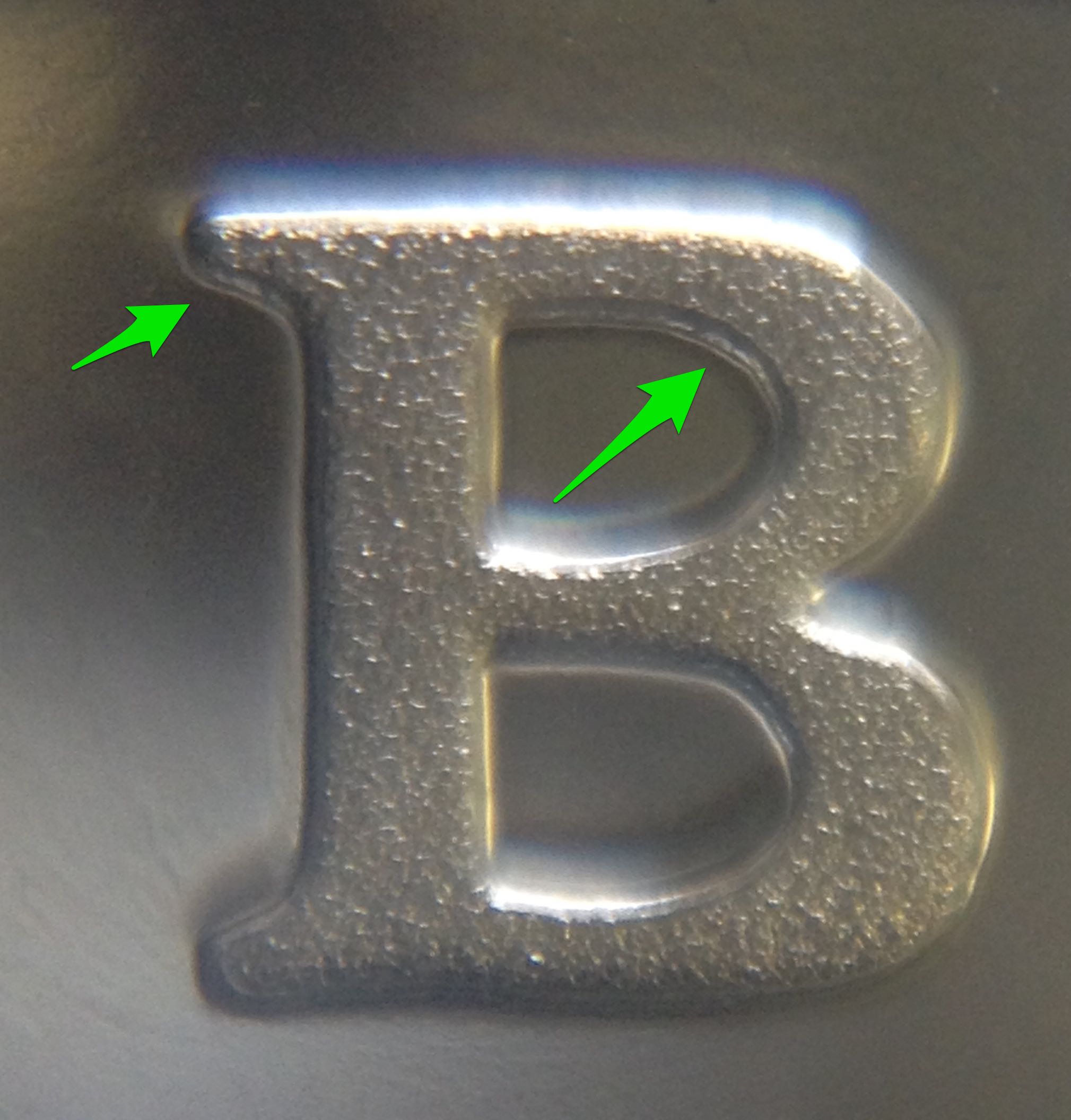 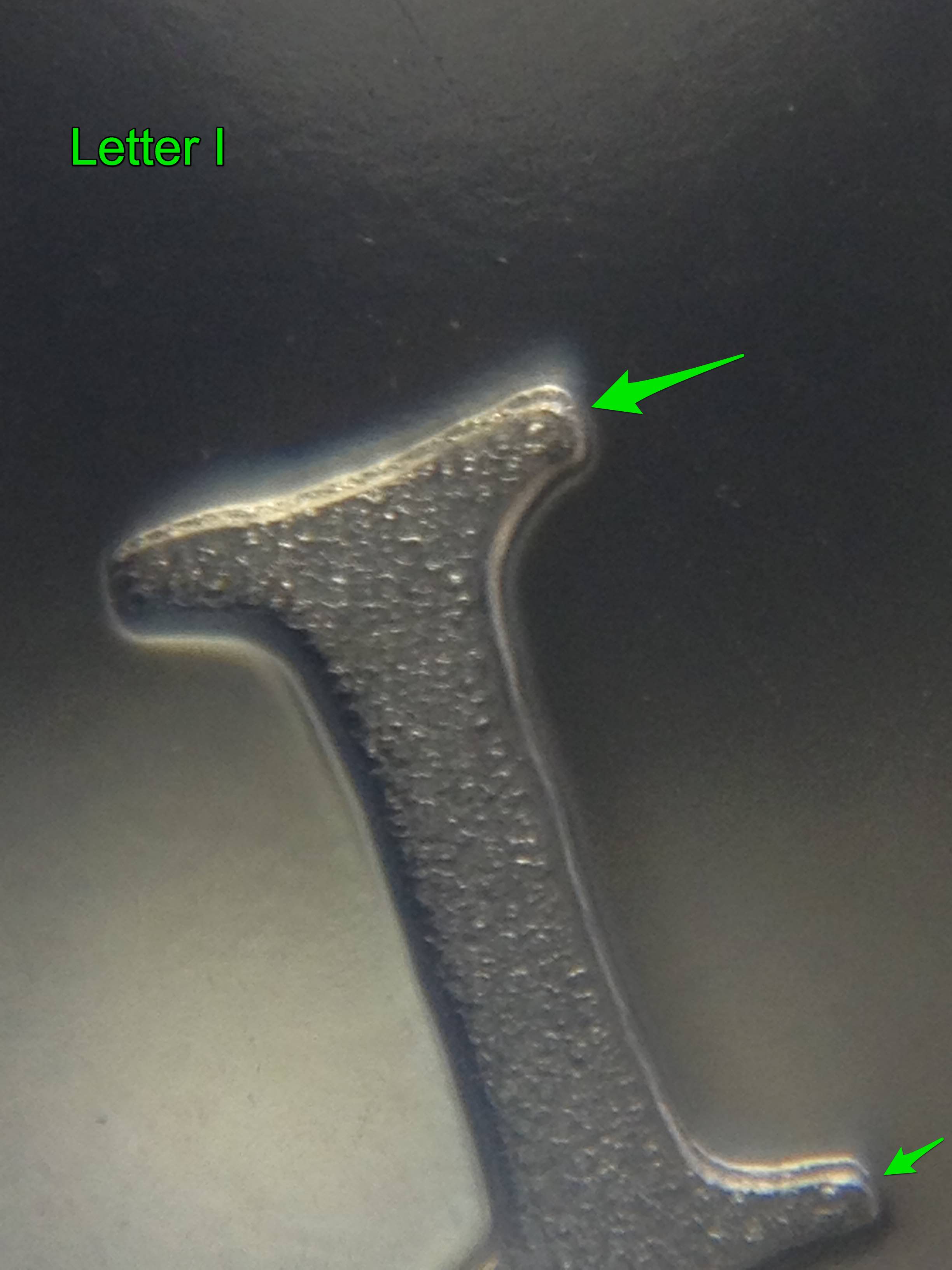 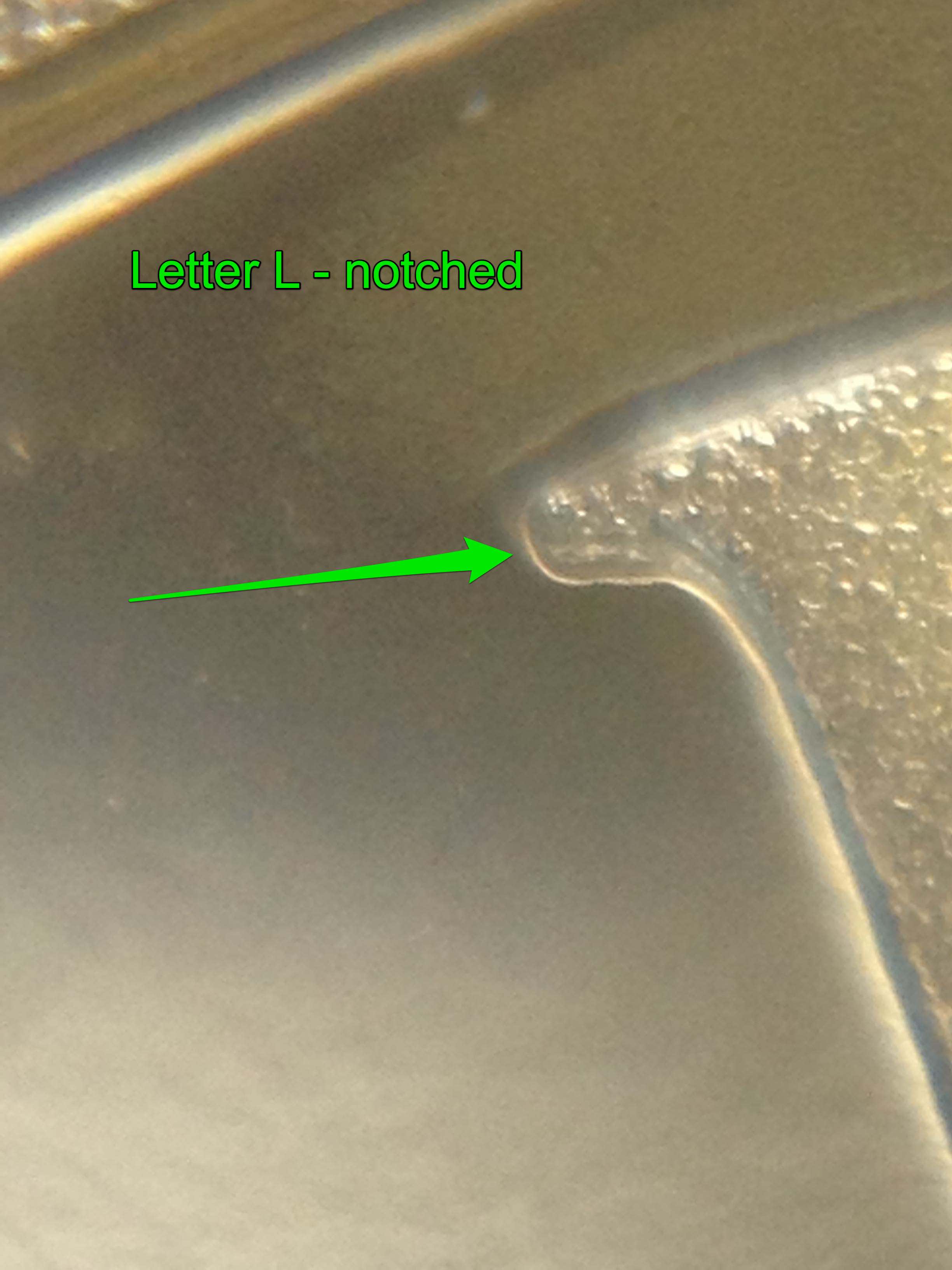 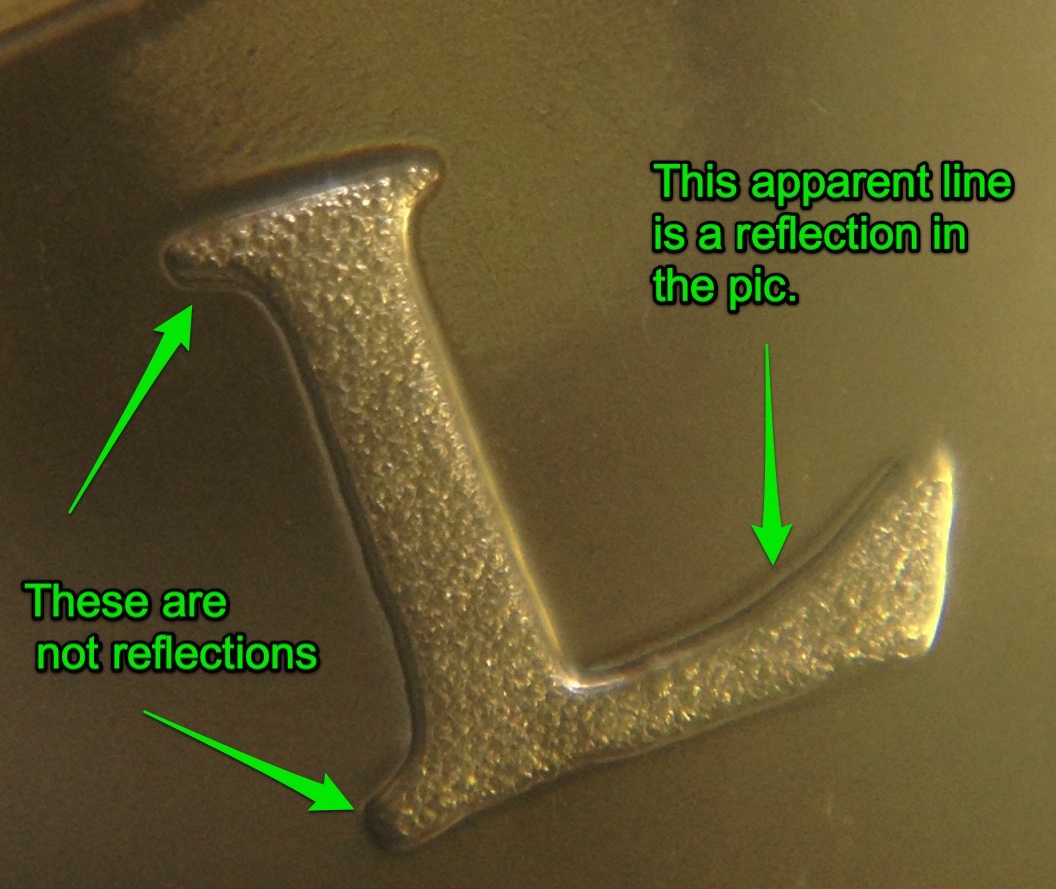 So do I send them back for replacement or not? If the SACs are MD - then no big deal. But if they are DDO, then I am not sure I would want to send the sets back despite the contaminents. Is this MD or DDO? The L, specifically, makes me think it could be a combination. I thought I had a good handle on this, but here again, a problem arises and I want to be sure. Coop? *** Moved by Staff to a more appropriate forum. *** |
|
|
|
Moderator
 United States
56855 Posts |
Beautiful pics. John1  |
|
Pillar of the Community
United States
1696 Posts |
 Great photos. |
|
Bedrock of the Community
 United States
10065 Posts |
|
|
Pillar of the Community
United States
1475 Posts |
@Earle42 - Your iPhone camera setup is amazing. I've been fiddling with DSLR but I'm using my phone more to take photos. I have LG V10 phone which has 16 Megapixel camera.
Question: Were you looking at the contaminants when you find out about doubling in 2017 proof sets? Or do yo usually scan the coins with this iPhone/lens setup? What device do you use to initially check for an error or variety. Do you use a loupe?
|
|
Pillar of the Community
United States
1609 Posts |
One of my Sacs looks like I imagine the Mint intended. The other one does exhibit some doubling - but of the MD variety. Some of the serifs also appear slightly truncated, as if it is a late die state (for a proof). I've tried and been unable to get a clear picture. I also don't have any loose contaminants floating around inside of the plastic. In fact, the only abnormality I see is a fixed piece of fuzzy crap (should Crap be capitalized?, being a technical term?) sitting on the Liberty of the Nickel. It seems fixed and matches the frosting of the word. Not worthy of a photo - unless someone else has the same on their Nickel. I don't know if it has ever been done but it might be interesting to have a thread where everyone can post the variations they see in their proof sets. We might be better able to pick up patterns that way.  Just a thought. |
|
Bedrock of the Community
United States
10065 Posts |
Sorry to not have answered sooner. Its been hit and miss with internet access recently and when I did have time, I forgot this one somehow.
@Coconutjoe:
I have a dissecting microscope under which I view all my coins. This is where my initial inspection took place. I was specifically looking for any errors that might be found. The contaminants would show up though with a normal 10X loop.
The iPhone laser pointer lens was inspired by another online sight. The main problem I had was being able to hold the system steady enough - which is why I rest the phone on something to elevate it slightly above the tabletop and the coin. I find when I zoom on the coin it will go out of focus no matter what, so I end up shimming the iPhone up with numerous pieces of paper until it is back in focus. I also use a cheap bluetooth remote to snap the pic so I don't ruin the focus.
@beidercons - good idea for people to post pics - they could just append them here. I hope more will chime in with ideas about the doubling in my pics.
How much squash could a Sasquatch squash if a Sasquatch would squash squash? Download and read: Grading the graders Costly TPG ineptitude and No FG Kennedy halveshttps://ln5.sync.com/dl/7ca91bdd0/w...i3b-rbj9fir2 |
|
Bedrock of the Community
United States
62064 Posts |
Looks like MD on those affected devices. Note that all area affected are reduced in size. So it is the common MD. The top of the 'I' on LIBERTY shows the reduction the best. Nothing is enlarged like we would expect to see on a hub doubled example.
Edited by coop
07/03/2017 6:02 pm
|
|
Bedrock of the Community
United States
10065 Posts |
Thanks Coop. Admittedly my first thoughts were MD b/c of the devices seeming thinner (which I learned from you). The "shelving" of the MD being frosted is what threw me. Any ideas how this works?  This confused me b/c I see (and may be mistaken) MD as sort of being a "smearing" of the devices as the die shifts during striking. It would seem this smearing would wipe out the frosting on the shelves. Or is the frosting done after striking? How much squash could a Sasquatch squash if a Sasquatch would squash squash? Download and read: Grading the graders Costly TPG ineptitude and No FG Kennedy halveshttps://ln5.sync.com/dl/7ca91bdd0/w...i3b-rbj9fir2 |
|
Bedrock of the Community
United States
10065 Posts |
I am bumping this in hopes I can get an answer to how the MD shelving is also frosted on this coin?
1. Is frosting done after the strike? If not, how would the frosting not just be smeared and look solid on the shelving in the doubling?
2. Now something else hits me I would like to understand. I note the shelving on the L occurs on the inside edges of the outer serifs - in other words one set of shelving faces the other. How can this work if the die is moving in one direction? I cannot figure that one out and need help from those who know more.
|
|
Bedrock of the Community
United States
62064 Posts |
The MD did not affect the lower part of the 'L' while it left flat field doubling on the upper part of the 'L' device. Keep in mind they proof coins are struck more than once. So it is easier for this to happen. It does not reduced the value of the coin when grading, but a lot of collectors will not buy a coin with MD. On the so called notched area, that was just a slight kiss that altered the notched area, (MD) and was not sever enough to remove the frosting of the cameo on that device. Just as there are varying degrees of Acne, the same is true with MD. It is always varied in strength, location and direction. Just a loose die doing what it does, the way it does. Not to be confused with a doubled die. A doubled die will make the same spread of doubling on each coin struck. Why? Because the doubling is on the die. Not created on the coin like MD does. MD can also happen to doubled dies when the dies run amuck.
|
| |
Replies: 10 / Views: 1,353 |
|







 Posted 06/17/2017 7:27 pm





