| Author |
 Replies: 12 / Views: 1,089 Replies: 12 / Views: 1,089 |
|
|
Pillar of the Community
United States
3656 Posts |
Thought this one was curious. Is all this from worn die or is it a little MAD as well? Thanks for looking 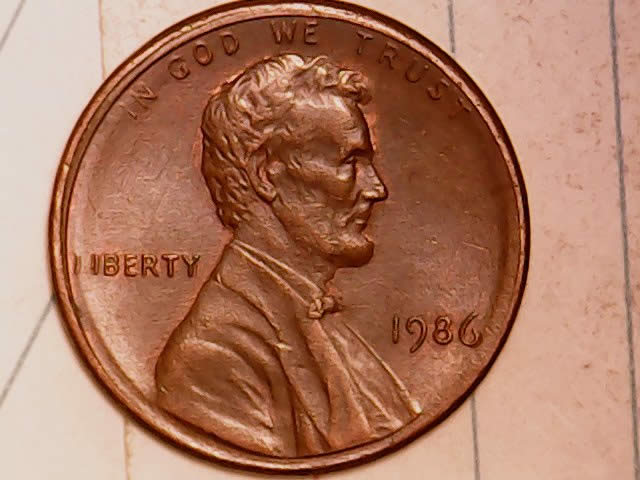 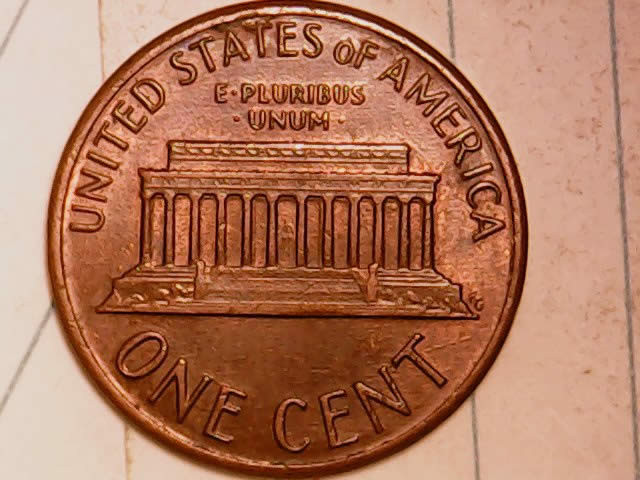 |
|
|
|
Pillar of the Community
5464 Posts |
A just slight off-center strike. Very common for these years.
|
|
Pillar of the Community
United States
1781 Posts |
The ridge around the rim is due to Die Deterioration caused by the upset rim on the planchet. Very common on all dates of zincs. Not an Off Center and if at all misaligned not significant. Edited by koinpro
07/22/2017 5:23 pm
|
|
Pillar of the Community
 United States
3656 Posts |
|
|
Pillar of the Community
7234 Posts |
Yes, slightly MisAligned Die (MAD), if it was an off set then the reverse would be offset equally as the obverse.
MAD's are only on one side (and for some reason I've really only seen them on the obverse)
|
|
Rest in Peace
United States
7075 Posts |
Quote:
MAD's are only on one side (and for some reason I've really only seen them on the obverse) The anvil die is usually the reverse die and the hammer die is usually the obverse die. The repeated striking is most likely the cause of the anvil moving a bit over time. |
|
Pillar of the Community
United States
3656 Posts |
Thanks Mark.
Great info Buddy
|
|
Pillar of the Community
7234 Posts |
Quote:
The anvil die is usually the reverse die and the hammer die is usually the obverse die. The repeated striking is most likely the cause of the anvil moving a bit over time. Great info!! I always wonder though how if the machine "jumps" it only effects a few of the devices and not the whole coin? |
|
Pillar of the Community
United States
1781 Posts |
This could also be a bit of a wire edge from a tilted die. On a MAD there is usually an area of unstruck design like you see in the pic below due to insufficient metal to strike. This one is so minor that it wouldn't miss any design but at least some of the area where there could be design such as denticles is still fully there albeit weak but still there - a diagnostic of a titled die but were talking about something so minor that metal flow could have compensated for this. So it's one or the other but not enough to fret over. 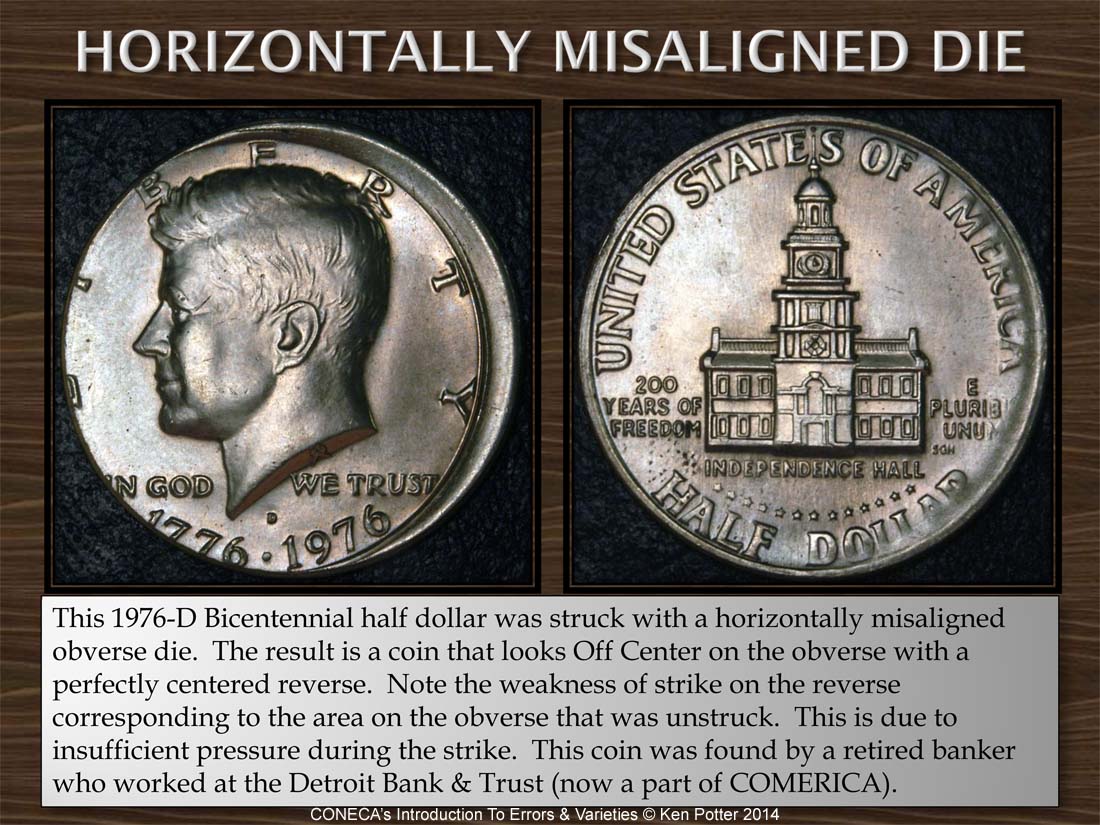 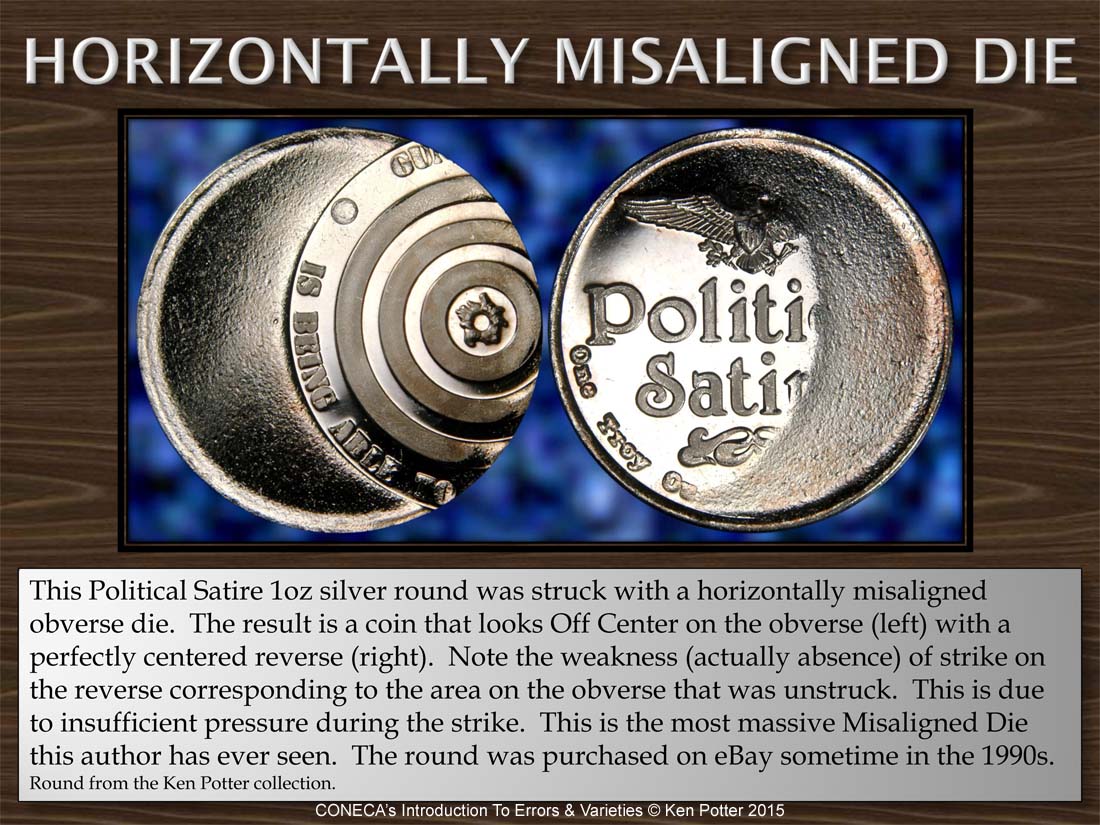 Edited by koinpro
07/22/2017 8:13 pm
|
|
Pillar of the Community
United States
3656 Posts |
Thanks for sharing all that great info - it is really helpful to see the images along with the explanations.
|
|
Pillar of the Community
United States
1781 Posts |
|
|
Pillar of the Community
United States
2775 Posts |
CoinCents your coin is prior to this so not related. Just adding food for thought concerning misaligned die showing on the reverse is possible in later years. See below. Thanks, Doug. Quote:
MAD's are only on one side (and for some reason I've really only seen them on the obverse) http://goccf.com/t/94501&SearchTerms=anvil,dieMikeDiamond - Posted 07/31/2011 10:20 pm Quote: Beginning in 1992 (at the Denver branch), the Mint started experimenting with using the reverse die as the hammer die. This setup gradually became more common until it was the predominant setup in 2002. Changeover was complete (at least for business strikes) by 2005. So all coins, except proofs, are struck with an "inverted" die setup. Also note Condor101 mentions in a different topic the conversion to the horizontal press during this time frame. Thanks, Doug. http://goccf.com/t/76840&SearchTerm...rtical,pressCondor101 - Posted 12/20/2010 1:08 pm Quote: Then since 2002 they have been changing their presses from vertical strike presses to horizontal Schuler presses. |
|
Rest in Peace
United States
7075 Posts |
Halo1st, thanks for the additional information. I honestly didn't even think about those updates to the minting process when I replied. Now I know I can always check this thread in in the future.
|
| |
Replies: 12 / Views: 1,089 |
|







 Posted 07/22/2017 5:18 pm


