











 Posted 11/13/2017 4:28 pm


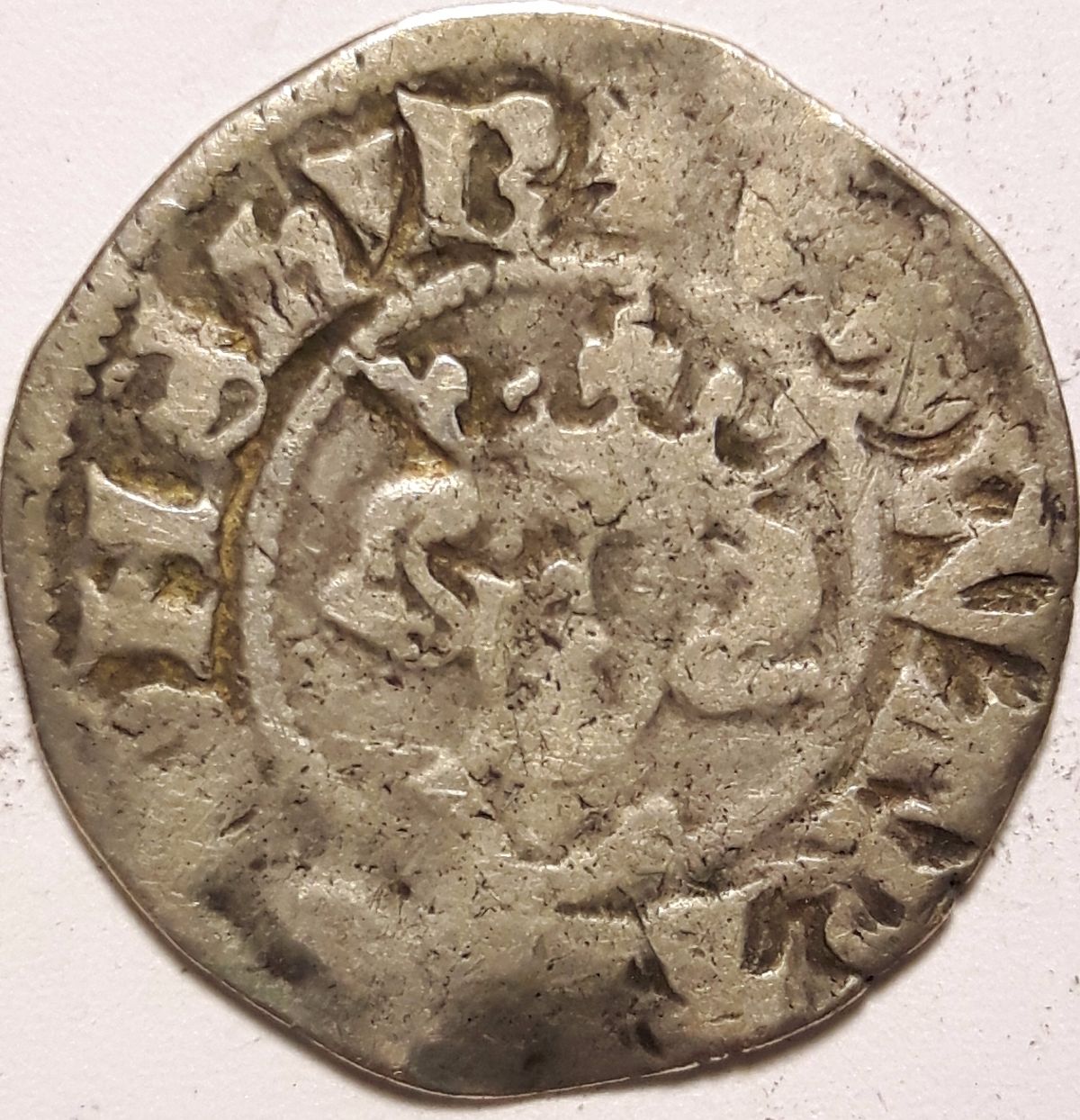
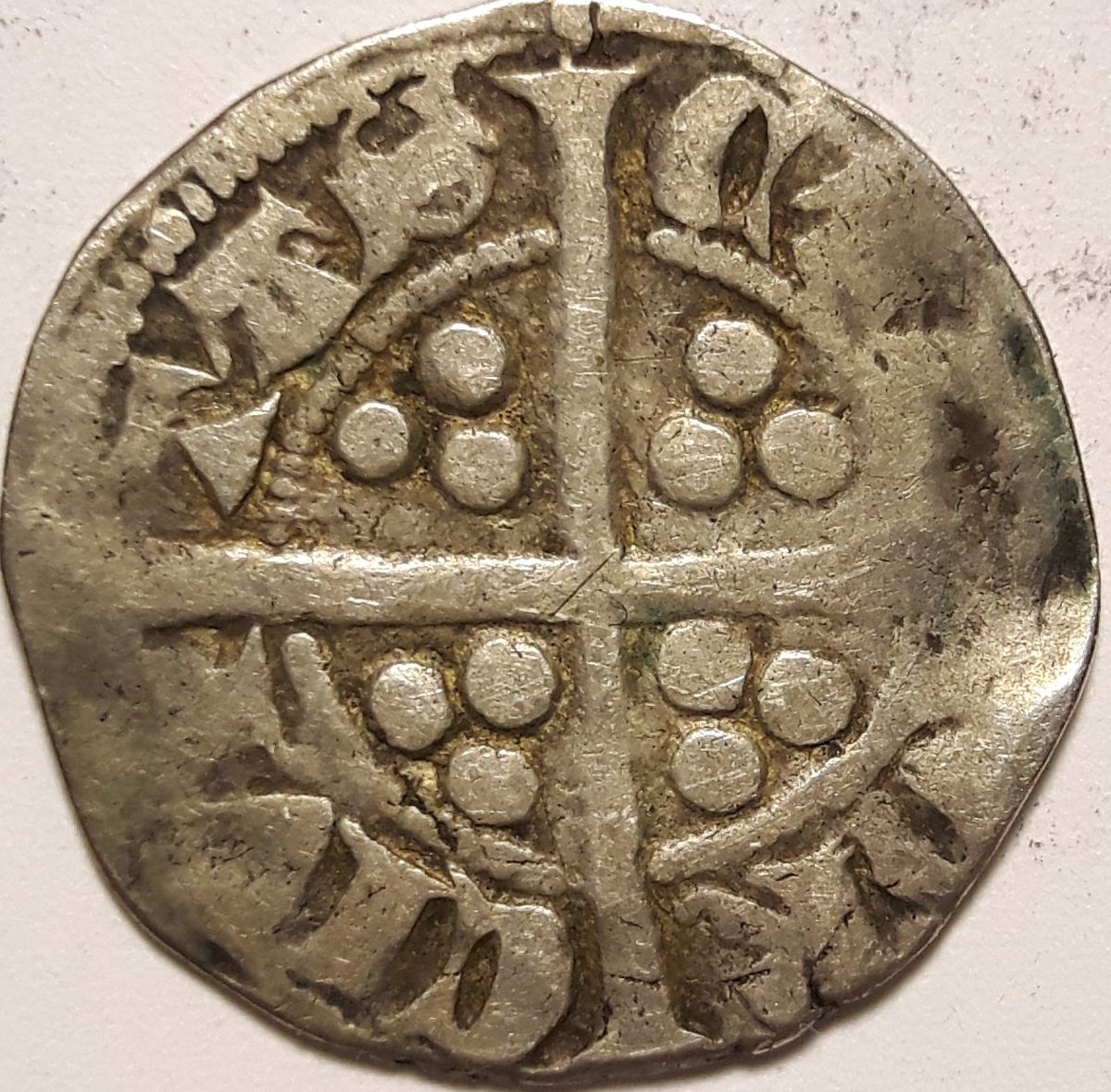
The king's name would in this case be EDWA, the R is actually an abbreviation of REX. EDWA, in combination with a bifoliate crown leads us to either a late class 10 or a class 11. Canterbury issued most of the subclasses, so no help there unfortunately. Class 10 (an to a certain extent 11 as well) is probably the hardest class, due to the fact that its subdivision is based upon the minutest of details, mainly in the shape of the crown. In this case we have a bifoliate crown, with a normal central fleur with straight sides. The left ornament is broken, while the one on the right represents a shape somewhat similar to the shape of a toadstool. The side ornament on the right is somewhat worn, but seems to have been rather hooked, while the one on the left has a straight 'top' and a pellet like shape ornament instead of a hooked one. Such a crown is a textbook example of a class 11 crown; the broken left ornament + toadstool shaped right in particular. Class 11 was initiated in around 1310, three years into the reign of the second Eddy, and ended approximately 4 years later in 1314. This coin is thus an Edward II. But here comes the tricky bit; finding the correct subclass. Well, in this case it is not that tricky. We see two factors that should immediately point to an 11A; On the reverse (in CANTOR) a so called 'scroll-tailed' R can be found, which, in class 11, was only used in 11A. Similarly, we also see round backed C's; Angular backed were introduced at the beginning of class 11B. But wait, there's more! Class 11a can be subdivided even further, although this time more typological. 11A2 is the one we are looking at here, the 'scroll-tailed' R being the clear pointer. Any Edwardian penny is a good one in my book!


