| Author |
 Replies: 12 / Views: 1,022 Replies: 12 / Views: 1,022 |
|
|
Pillar of the Community
United States
5240 Posts |
Edited by Jim0815
05/19/2018 9:57 pm
|
|
|
|
Bedrock of the Community
United States
79001 Posts |
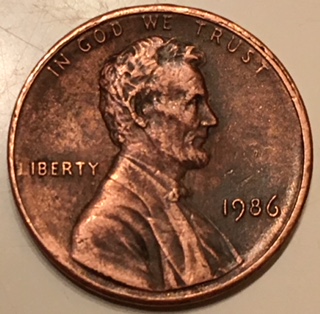
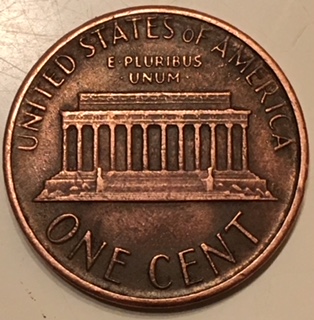
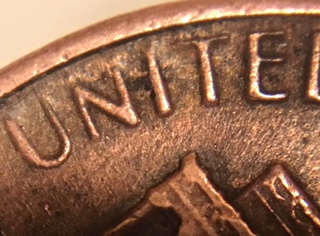
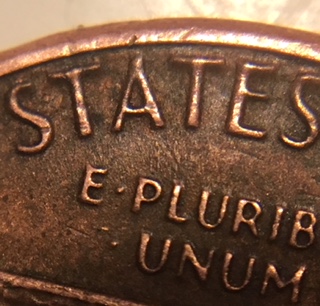
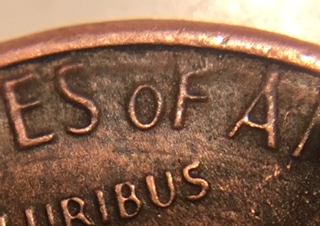
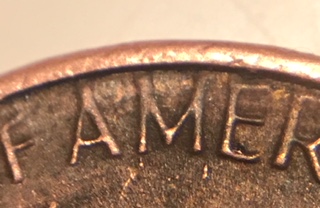
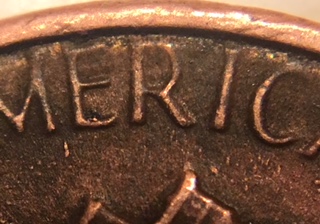
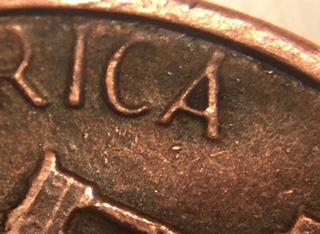
I'm pretty sure it was from massive Die Deterioration and from a over polished die (To get rid of die clashes and to extend the life of the die). This isn't a Doubled Die Reverse. We'll see what the other members think, but I'm pretty sure I'm correct.  Errers and Varietys.
|
|
Pillar of the Community
 United States
5240 Posts |
I'm sure you are my friend!!
|
|
Bedrock of the Community
United States
79001 Posts |
Jim, it's still very cool though just to see how much the die goes through. These dies do take a hard beating. Your coin is in its final die state range (Very Late Die State). Eventually, the die will start to crack slowly (Die Crack) and after that, it will break into pieces (Major Die Break AKA Cud). Errers and Varietys.
|
|
Bedrock of the Community
United States
12477 Posts |
Looking at the pics, I do see die wear, but I think I'm seeing a chemical erosion of the coin's surfaces more prominently. For VLDS, I would expect the motto to be closer to the rim. In this case, the letters are thinner, but in a more normal position. The color looks off as well, so I think it's a combination of LDS and ED.  In Memory of Crazyb0 12-26-1951 to 7-27-2020
In Memory of Tootallious 3-31-1964 to 4-15-2020
In Memory of T-BOP 10-12-1949 to 1-19-2024
|
|
Pillar of the Community
United States
5240 Posts |
Spruett, if it were chemical, would E PLURIBUS UNUM as well as the Memorial be affected as well? Also, how could chemicals elongate letters that have been already stamped? Because of chemical flow, would it's path be indiscriminate and cause the devices to not be so uniform. I'm asking because of its uniqueness. The coin is the same weight and diameter as a normal zinc cent. It hasn't taken any type of hits to make the elongated devices.
|
|
Bedrock of the Community
United States
62064 Posts |
Movement towards the rim is usually caused by die wear. But with the single squeeze dies, it usually doesn't affect the edges of the devices, but the fields just beyond the devices. I don't think this is a hubbing issue, because the devices extend out beyond what is normal, making them distorted. So I'm not sure if this a just caused by die wear? Gonna have to look up some information about when the single squeeze dies came into play? I found this on Wexler's site: http://doubleddie.com/58201.htmlQuote:
According to the 1986 Report of the Director of the Mint, the Mint was in the process of developing single-squeeze hubbing presses for the production of working hubs and working dies. According to that document, "During FY86 (Fiscal Year 1986 which actually began in 1985), the Mint further developed a new process for a key aspect of die manufacturing, the hubbing of dies in a single squeeze. When implemented, this will eliminate intermediate annealing and cleaning and the second hubbing operation. It will also avoid the possibility of hub-doubling (doubled die) errors caused by misalignment of the second squeeze. The new process has been used for master dies and work hubs and is in pilot testing for production dies."
.........
The die shop at the Denver Mint does not produce master hubs or master dies. All master hubs and master dies are still produced at the Philadelphia Mint. Master dies for coinage production at the Denver Mint are shipped to the Denver die shop from the Philadelphia Mint's die shop. The Denver die shop then produces the necessary working hubs and working dies in their die shop. The Denver die shop also produces the unfinished working dies that will be used at the San Francisco Mint. Once received from Denver, the working dies receive their special finishes for proof coin production at the San Francisco Mint.
In Denver the single-squeeze hubbing process was used for the production of cent, nickel, and dime dies during 1996. At that time the Mint was still having difficulty producing quarter dies and half dollars dies with a single hubbing.
By the end of 1996 the new single-squeeze hubbing presses were also installed in the Philadelphia Mint's die shop so that in 1997 they too began producing dies with the single-squeeze hubbing process. In 1997 some of the problems with the single-squeeze hubbing presses were eliminated and the quarter dies began to be produced by the single-squeeze hubbing method. So the single squeeze dies according to this article didn't start until 1996. So the die that created this cent was again and was wearing towards the rim. I needed that information to get it right in my mind. So it is die wear. As mentioned earlier, the thought of die abrasion/polishing would not be a factor, as polishing reduces the devices size when removing the field areas. (Devices are tapered, so the more the field of the die is reduced, the smaller the devices become) on this coin the dies were enlarging and flowing towards the rim with die wear. Edited by coop
05/20/2018 10:36 am
|
|
Pillar of the Community
United States
5240 Posts |
Mr. Coop, y'all have pounded that into my head and I guess why I posted about this particular cent is because of the uniformity of the E, R , I and C in AMERICA. It shows no spread, just elongation. Now that I know exactly for sure by you guys, no more posts from me when I see these things again. Catch and release!
|
|
Pillar of the Community
United States
2752 Posts |
I see a combination of die wear, chemical erosion, and possibly intentional die abrasion. The elongation of the letters toward the design rim is due to die wear.
Error coin writer and researcher.
|
|
Bedrock of the Community
United States
62064 Posts |
Jim: You might want to keep it as an educational piece. You remember this conversation every time you look at this coin. You could share it will other new collectors you come in contact with.
|
|
Bedrock of the Community
United States
79001 Posts |
I agree with Coop! That's great advice. Keep it as an educational learning piece. I also agree with Mike Diamond's statement.
Errers and Varietys.
Edited by Errers and Varietys
05/20/2018 2:12 pm
|
|
Pillar of the Community
United States
5240 Posts |
I sure will. Thank you Mr. Coop, Mr. Mike and David.
|
|
Bedrock of the Community
United States
79001 Posts |
You're very welcome Jim.
Errers and Varietys.
|
| |
Replies: 12 / Views: 1,022 |
|









 Posted 05/19/2018 10:05 pm





