| Author |
 Replies: 23 / Views: 3,467 Replies: 23 / Views: 3,467 |
|
New Member
9 Posts |
Hi, was looking for help to rescue the coins. Ytd I washed the coins with table salt and water. And then rinse with tap water. But somehow the color faded at a faster pace than expected. Is it due to oxidation? IS there a way to recover it? Could vinegar with salt dipping helps? 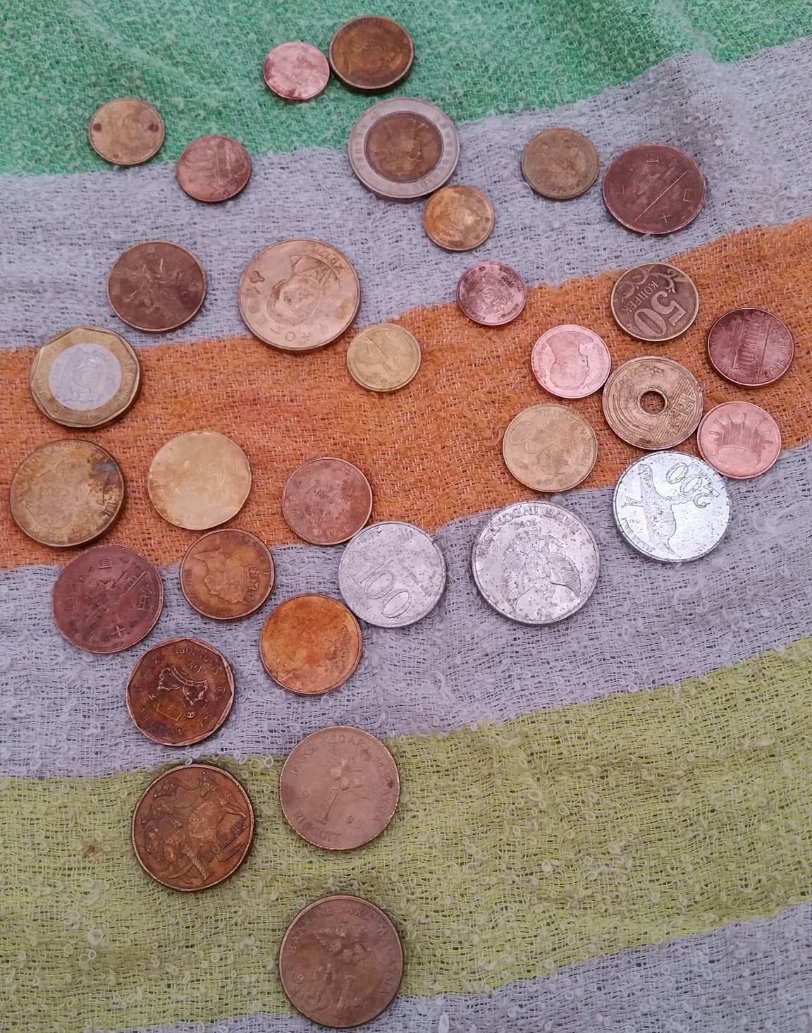 |
|
|
|
Moderator
 United States
194970 Posts |
 to the Community! Your reply was split into its own topic for the proper attention.  |
|
Bedrock of the Community
United States
10065 Posts |
Vinegar will turn copper coins an unnatural pale color.
Salt is corrosive and NOT good to use on coins at any time.
In the hobby, the word "cleaning" refers to any process that removes actual metal from the surface of the coin )corrosive agents). Cleaned coins are considered damaged coins and have less value than originals.
Conserving is removing surface dirt such that the original metal is not touched. If you spilled coffee onto a coin, you could wash it off with water. You have conserved the coin so it won;t have a coffee stain on it. You did not alter the metal in any way.
Water w/ mild dishwashing soap (no scrubbing - removes and/or scratches metal), and a water rinse (distilled is best).
If no change, then acetone (turns some copper pinkish if you do it in sunlight) for a few seconds normally, but since acetone cannot interact with the metal, it can be longer as long as you do not let the acetone all evaporate.
Xylene next.
That being said, if a coin is already corroded, etc, and is a dirt common one where altering it cannot lessen the value, then do whatever to make it look pretty if you so desire.
How much squash could a Sasquatch squash if a Sasquatch would squash squash? Download and read: Grading the graders Costly TPG ineptitude and No FG Kennedy halveshttps://ln5.sync.com/dl/7ca91bdd0/w...i3b-rbj9fir2 |
|
New Member
 9 Posts |
Thanks! @Earle42
So frm the image does the coin already corroded? IS there a method to remove the corrosion?
Those aren't precious coins but I'm keeping it for next gen sake, hence I hope to at least have a decent coin without much tarnish or corrosion.
Thanks!
|
|
Pillar of the Community
United States
2528 Posts |
ouch! Never clean coins if you want to put them in your collection (or maintain numismatic value). If you have nasty coins you want to clean before spending....that's a different story. Salt is a bad idea. Vinegar is an acid (also a bad idea). Before you try any kind of "conservation", why not show your coins with issues here & get some opinions or advice before hand. Many coins are ruined in attempts to make them look better by the well meaning caretaker of the coins. to the forum! |
|
New Member
9 Posts |
Hi @Ratman4762,
Thanks for comments.
The image I attached on the first post is the one with the most issues. There are some stains there. Not sure if it is due to corrosion or not.
|
|
Pillar of the Community
United States
2528 Posts |
 with Earl. Use only pure acetone in a glass container in a well ventilated area. Avoid getting it on your skin. |
|
New Member
9 Posts |
So acetone will remove the corrosion?
|
|
Pillar of the Community
United States
2528 Posts |
I see some green on one of the coins. Definitely some corrosion or other environmental damage going on in the lot you gave the salt bath too.
|
|
New Member
9 Posts |
I see.
So the green ones cant be removed?
How about those dark patches? I see tht it cant be removed.
|
|
Pillar of the Community
United States
8715 Posts |
You cannot reverse the effect of pitted surfaces/corrosion unless you alter the surfaces of the coin. Refer to Earle's advice for conserving coins.
|
|
Pillar of the Community
United States
2528 Posts |
Quote:
So acetone will remove the corrosion? No. acetone will safely remove stuff stuck to the coins surface (grease, gum, glue, etc). Corrosion is damage to the coin (chemical change to the metal). There may be ways to stop the spreading of the corrosion, but the damage is already done. Unless a coin is a key date or an early copper (expensive in even low grades) nobody wants a corroded coin and IMO not worth trying to conserve. |
|
New Member
9 Posts |
Ok noted.
I'll try to wash with water and dishwashing soap first. Hopefully can remove the dark patches around.
|
|
Bedrock of the Community
Canada
24885 Posts |
To the Forum. |
|
New Member
9 Posts |
Quote:
No. acetone will safely remove stuff stuck to the coins surface (grease, gum, glue, etc). Corrosion is damage to the coin (chemical change to the metal). There may be ways to stop the spreading of the corrosion, but the damage is already done. Unless a coin is a key date or an early copper (expensive in even low grades) nobody wants a corroded coin and IMO not worth trying to conserve. Thanks for advice. How about the faded/ decolorise coins? is that irreversible too? |
|
Pillar of the Community
United States
2528 Posts |
Quote:
How about the faded/ decolorise coins? is that irreversible too? A cleaned coin will forever remain a cleaned coin. However, in time, the copper & brass coins should darken & look a little more presentable. Probably take several years without the help of artificial toning or coloring. Not sure about the others as I've never done to them what you have.  I do have some brass tokens that have sentimental value only & used ketchup to halt the corrosion some years ago (probably worse than what you did since it contains acidic tomatoes, vinegar & salt).  They are starting to darken. My 1909S Lincoln I bought over 25 years ago was cleaned. (dealer disclosed but I was less knowledgeable back then) It is no longer red, but I can tell that it was cleaned because color is different from other coins in my set. Looks unnatural is the only way I can describe it. |
| |
Replies: 23 / Views: 3,467 |










 Posted 05/20/2018 12:17 am


