| Author |
 Replies: 5,294 / Views: 290,795 Replies: 5,294 / Views: 290,795 |
|
|
|
Pillar of the Community
Belgium
1185 Posts |
the very unusual coin from @spence is so called siege money that was produced in the city of Maastricht in order to pay the defending garrisson during three emissions several denominations were produced besides another piece of 16 sols (like the piece from @spence) below a 24 and 40 sols 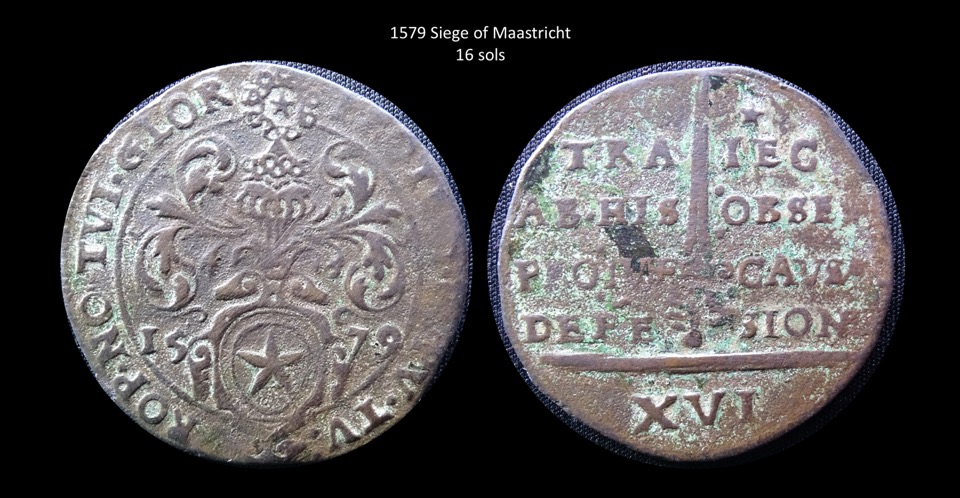 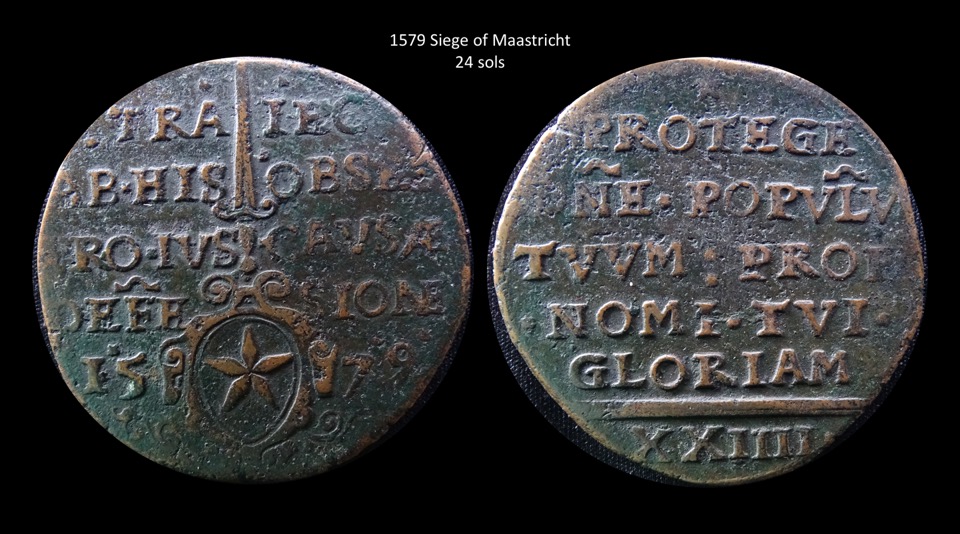 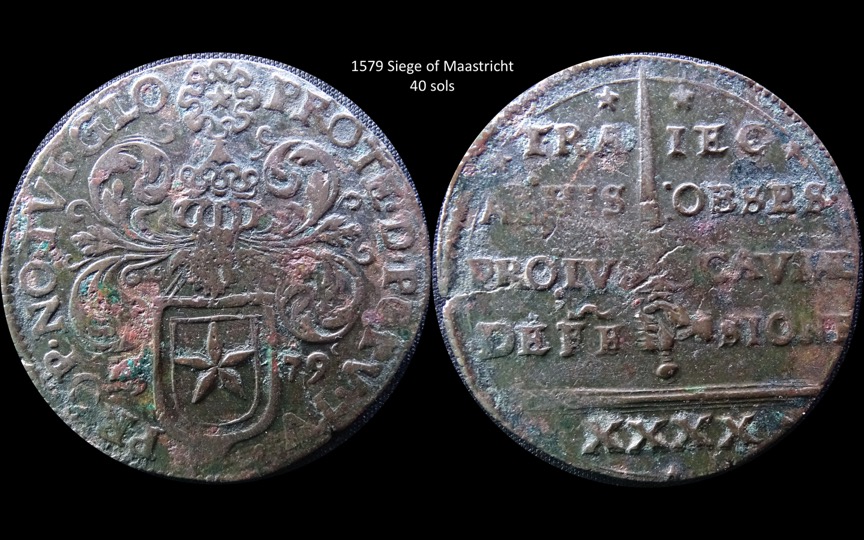 there are smaller denominations like the 1/2 (extremely rare), 1, 2 and 8 sols: these are on my wish list  the siege of Maastricht is an important fact of the 80 years war; it was headed by Alexander Farnese, who -after a surprise movement of the Spanish Army- quickly traveled 100 miles from a mock battle field in order to be there before the relief army of the Dutch; Farnese captured Maastricht - an important stronghold on the Maas river - after fierce attacks and determined defense on June 29 1579; this was the first of a long series of military achievements of the duke, the beginning of the 10 years of Parma. below an impression of one of the offensive moves attacking the city at two weak spots in the walls (upper left and upper right) while the general sits in front of his tent with his senior officers (lower left) (engraving by Frans Hogenberg) 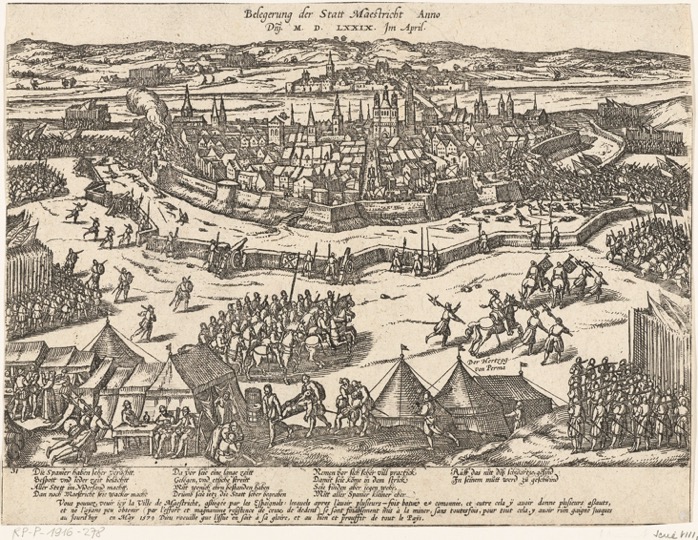 Edited by 1c5d7n5m
09/07/2019 03:26 am
|
|
Pillar of the Community
Belgium
1185 Posts |
siege money from the 1570's made in different cities of the Northern and Southern provinces of the Netherlands are collectors items since a very long time below a silver 40 stuivers (2 guilders) minted in 1578 in the city of Amsterdam; as most siege coins, the planchet is stamped on only one side, the reverse is blank 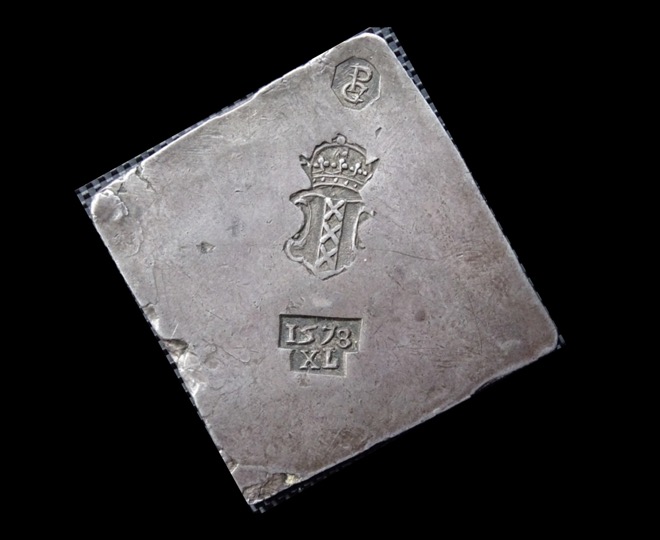 Amsterdam still had a pro-Spanish administration in 1574 when the Spanish army moved to the south, and the rebels tried for years with blockades from the sea and small sized attacks to take the city in 1578 they succeeded; below another engraving by Frans Hogenberg 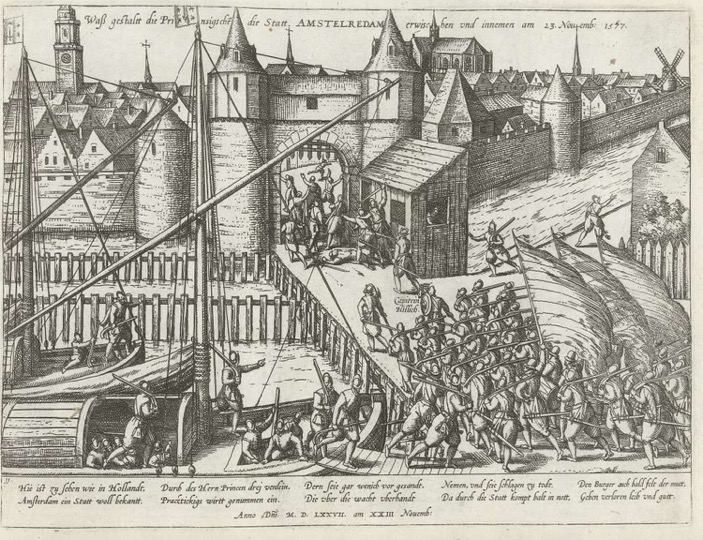 Edited by 1c5d7n5m
09/07/2019 07:16 am
|
|
Bedrock of the Community
United Kingdom
18892 Posts |
English sixpence - 1578: 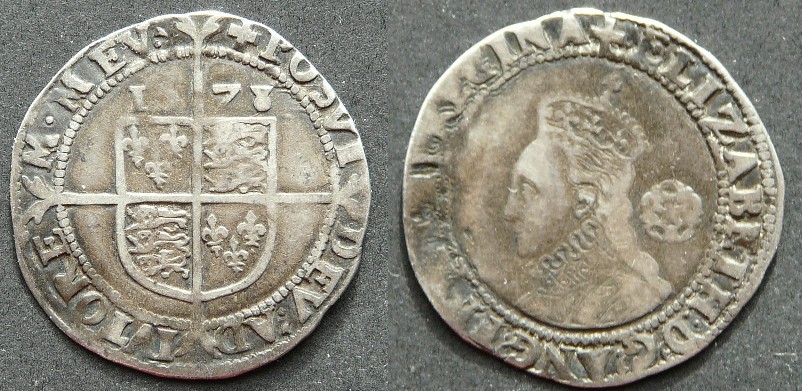 |
|
Valued Member
Norway
375 Posts |
1/2 Öre, Sweden, 1578 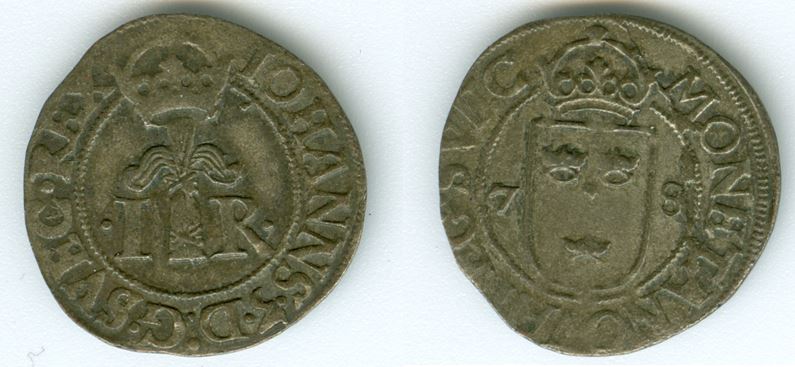 |
|
Pillar of the Community
 United States
8056 Posts |
Wonderful contributions this morning. Tomorrow I will have a siege coin from the other side of Europe. For today, Poland Lithuania commonwealth, 1578 grosz Gdansk mint. First year of coins issued under Stefan Batory, 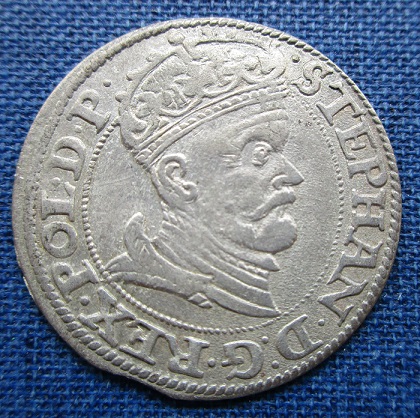 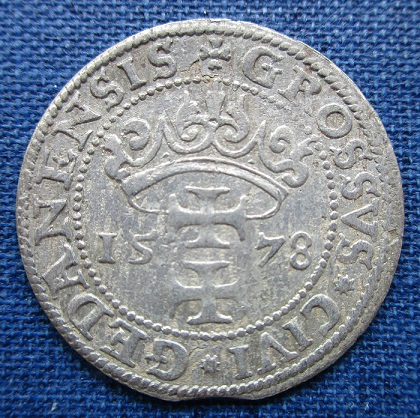 |
|
Moderator
 United States
34562 Posts |
Thx for providing more info about my coin @1c5. Today I have a 2 Kreuzer from the German Countship of Pfalz-Simmern dated AD 1578:   "If you climb a good tree, you get a push."
-----Ghanaian proverb
"The danger we all now face is distinguishing between what is authentic and what is performed."
-----King Adz
|
|
Pillar of the Community
Belgium
2895 Posts |
|
|
Pillar of the Community
United States
2703 Posts |
1578 King Henry III of France1/2 FrancLa Rochelle(H)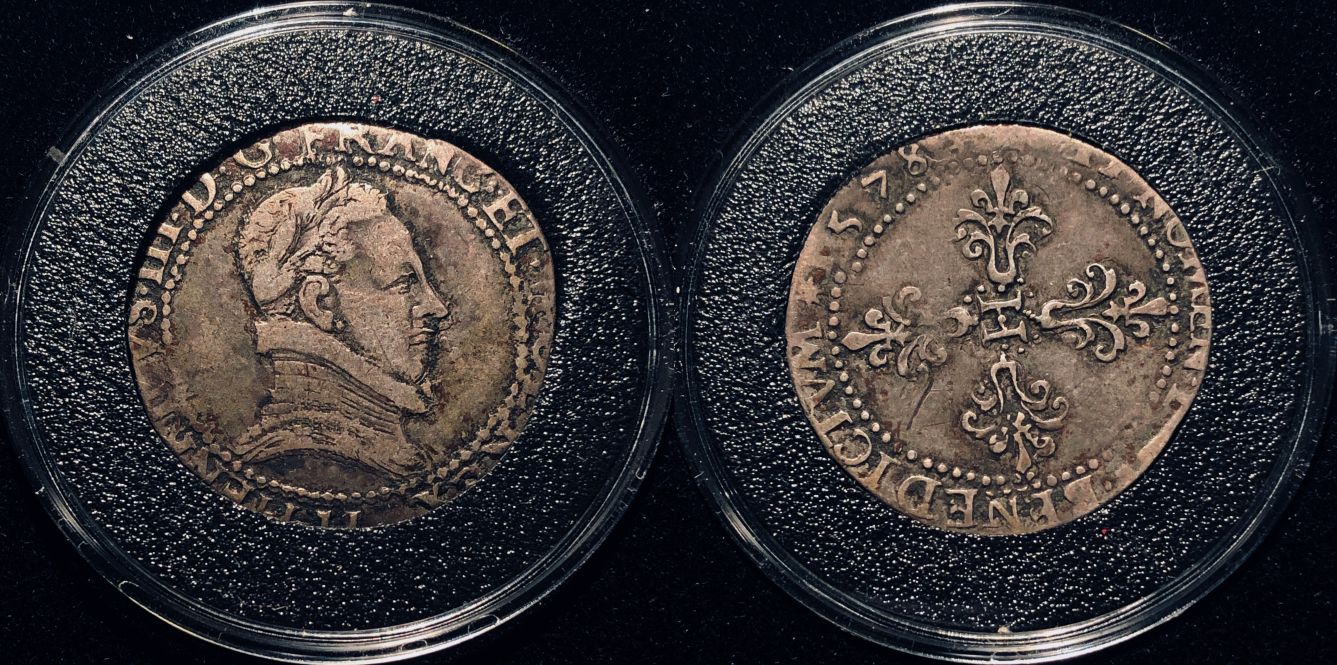 FrancParis(A) FrancParis(A)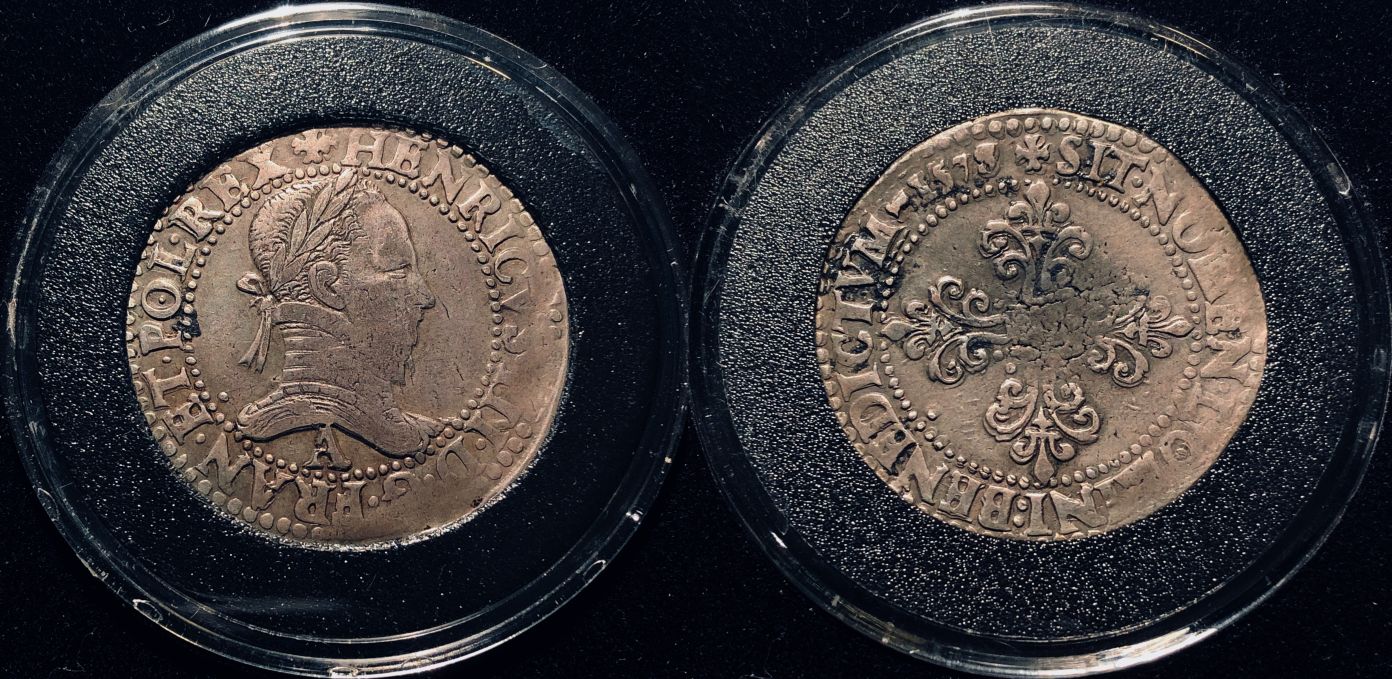 Limoges(I) Limoges(I)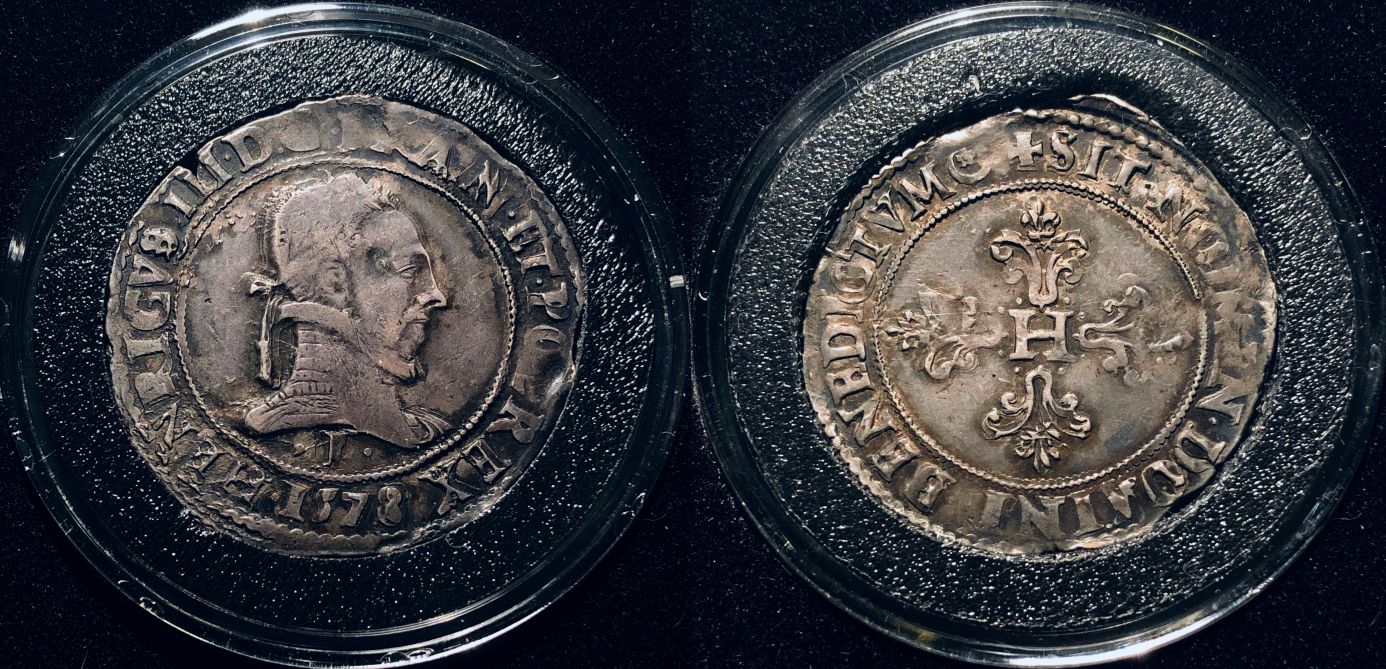 Aimens(X) Aimens(X)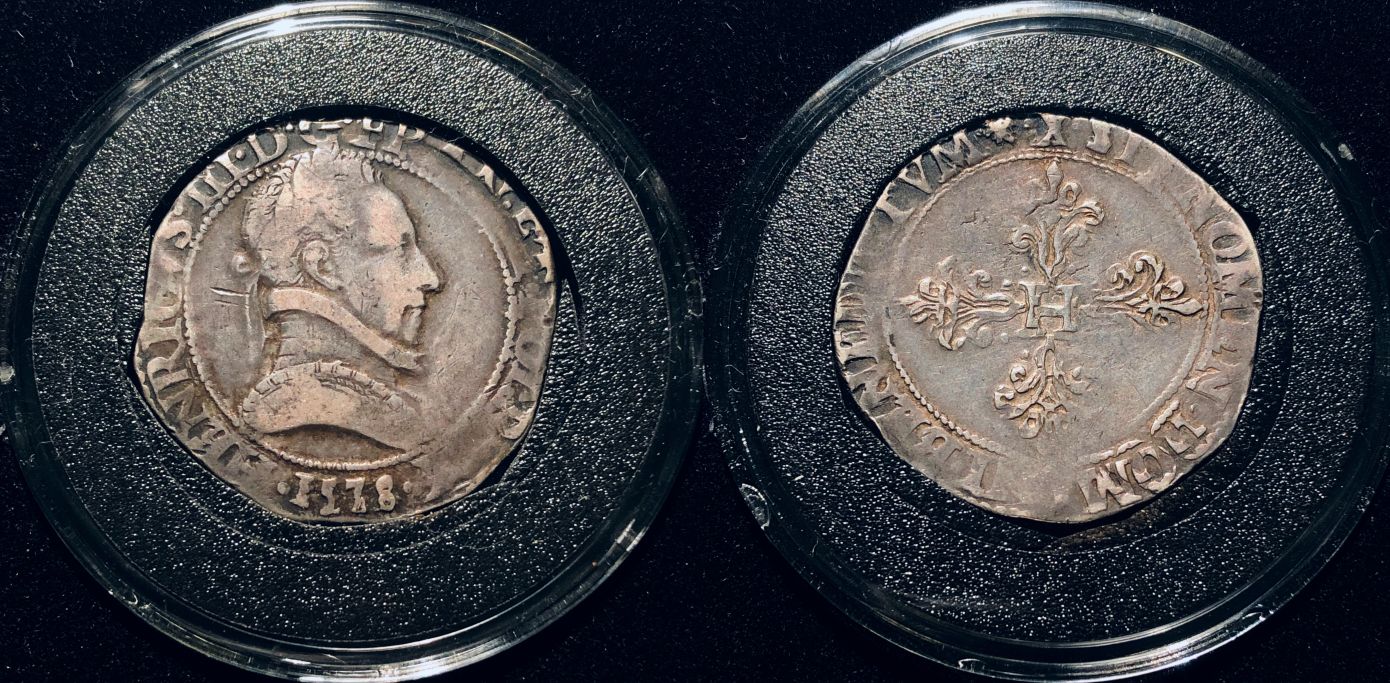
|
|
Pillar of the Community
United States
9395 Posts |
1578 -- Kingdom of Hungary, 1 denar:   |
|
Pillar of the Community
United States
8056 Posts |
1577 siege Grosz, City of Gdansk (K. Goebel mintmaster). Alone among cities in the Poland Lithuania Commonwealth, Gdansk refused to acknowledge Stefan Batory as the new Polish king when he was crowned in 1576. The inevitable result was siege and eventual subjugation of the city in 1577. A very good accounting of the history (1572-77) from a numismatic perspecttive is given here: https://coinweek.com/world-coins/wo...gold-ducats/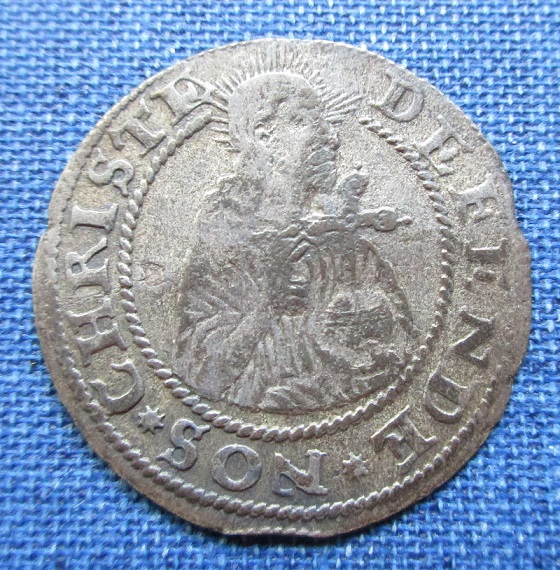 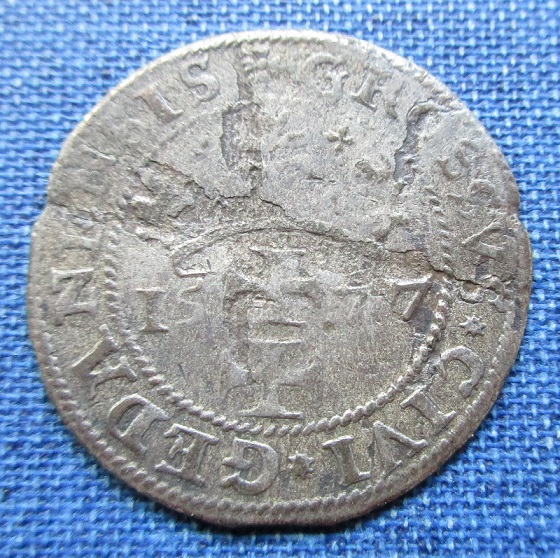 |
|
Valued Member
Norway
375 Posts |
Thaler, Saxony, 1577 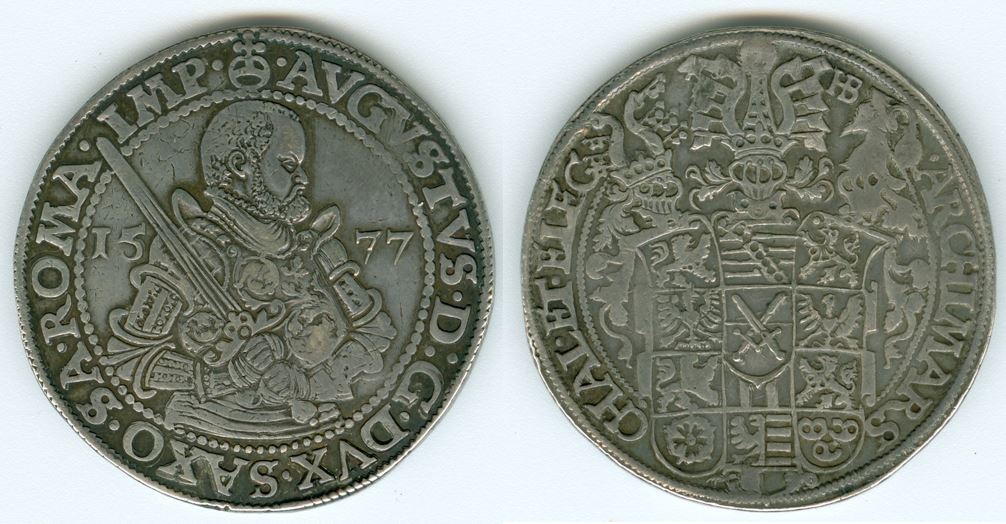 |
|
Pillar of the Community
Belgium
1185 Posts |
1577 a quarter of a Statendaalder minted in Maastricht, the city that was under siege two years later (see siege money of two days ago). 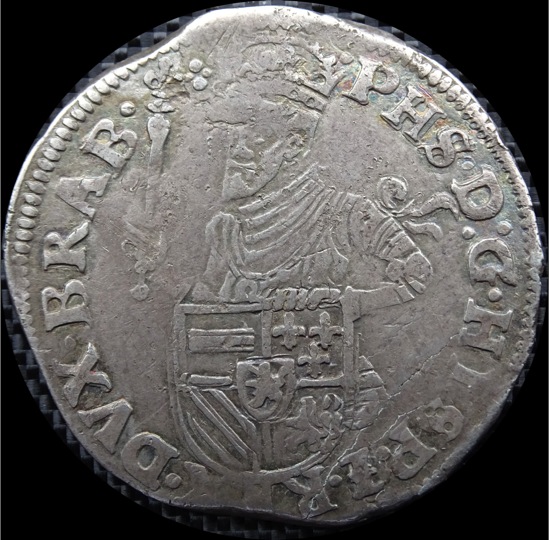 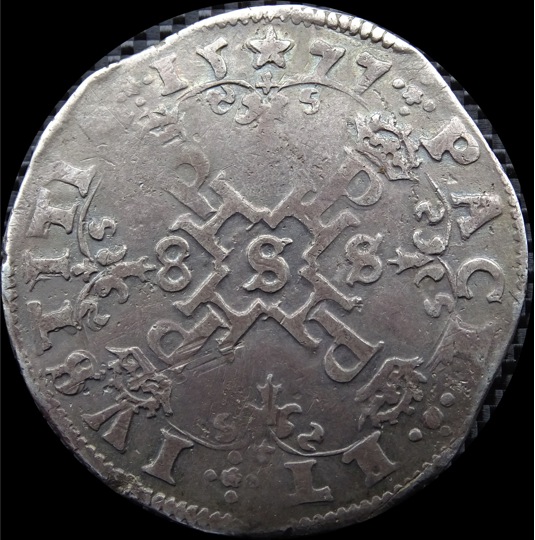 the obverse still shows the portrait of king Philip II and his titles however, the reverse is a revolutionary design as it does not show the Habsburg coat-of-arms but the denomination (8 S for 8 stuivers) between the letters PHS for Philip; the most interesting feature is the legend PACE ET IVSTITIA (peace and justice); this is the motto of the third revolt of the Netherlands agains the Habsburg regime. Indeed, Statendaalders were minted in most of the provinces after the so called Pacification of Ghent in response to the mutinies of the Spanish army in 1575 followed by the horrifying plundering and massacre of Antwerp (the fury of Antwerp). The Netherlands were in shock and responded by a united demand that all Spanish forces should leave the country immediately. https://en.wikipedia.org/wiki/Pacif...ion_of_Ghent |
|
Pillar of the Community
Belgium
1185 Posts |
All provinces united around the monetary system of Statendaalders. Except Holland and Zeeland who started on their own course towards independency (Holland would take more the leadership position to an independent Dutch republic in the coming decades). This independent monetary course was first taken in 1572 with the revolutionary countermarks on Habsburg coins (we will see these a few days from now) and in 1575 with the production of the revolutionary coin of that time: the Leeuwendaalder (sometimes called the Lion Dollar). We'll see the earliest types tomorrow and thuesday. Here is a whole and a half Leeuwendaalder from 1577. whole Daalder, quite commonly found but less so than the year 1576: 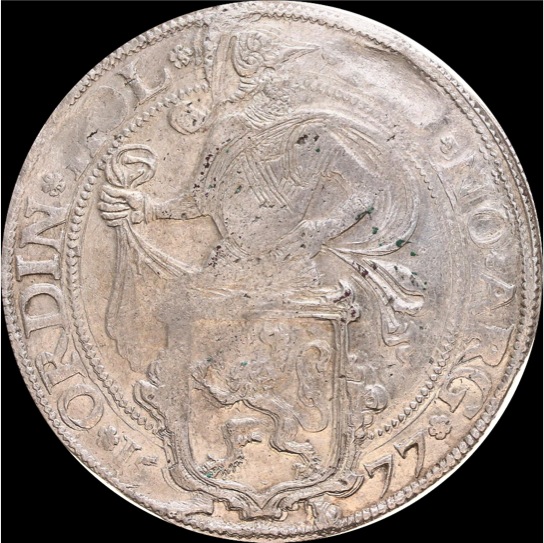 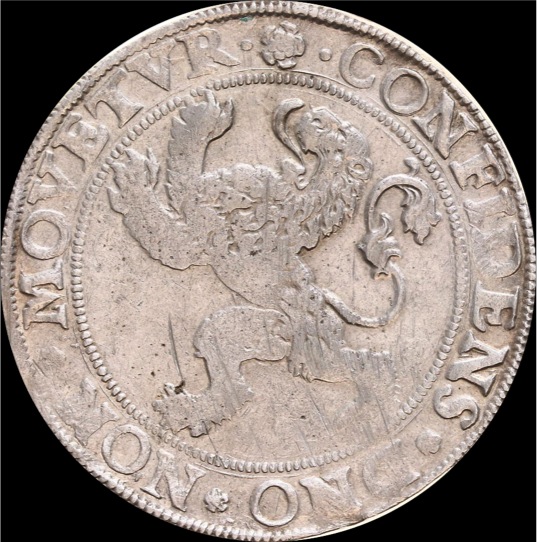 the half daalder is more difficult to find it has the same design: 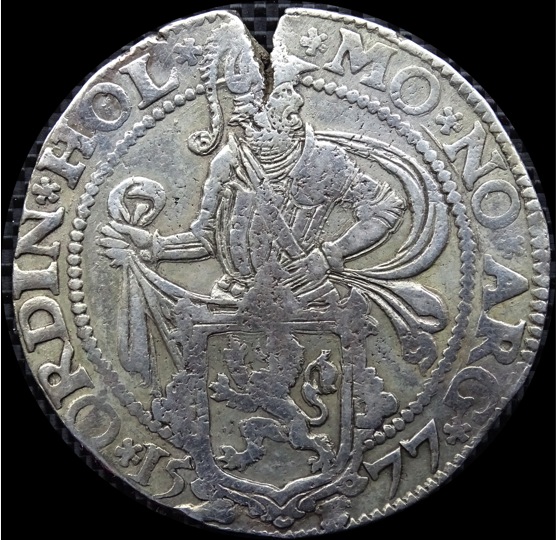 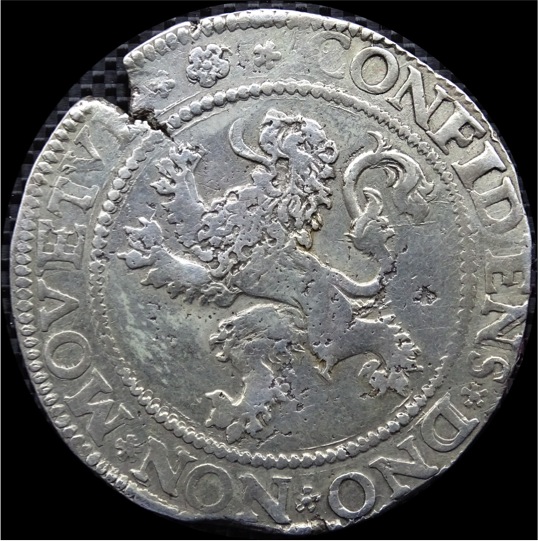 |
|
Pillar of the Community
Sweden
2124 Posts |
You all have such faboulous collections and fantastic coins and jetons! I have a single coin from the 1570s, and that one I cannot nail to a specific year, so it has to stay out of this thread. If you still want to see it, you can find it here: http://goccf.com/t/306552&whichpage=33#3053675Edited by erafjel
09/08/2019 08:34 am
|
|
Pillar of the Community
United States
8056 Posts |
I took a look, and that is a very nice coin indeed, with interesting comments on the history.
Very interesting that a lower denomination coin bears a legend in French while the silver coins (t360's post of yesterday) are still in Latin.
|
| |
Replies: 5,294 / Views: 290,795 |








 First Page
 Previous Page


 Posted 09/07/2019 03:43 am


