| Author |
 Replies: 162 / Views: 36,676 Replies: 162 / Views: 36,676 |
|
|
|
Pillar of the Community
  United States
8062 Posts |
Absolutely!
Boleslaw IV was the last ruler to preside over something resembling a Polish state. At the end of the 12th century, and through most of the 13th, Poland was fragmented, and coinage was issued separately by the princes of Krakow, Masowsze (Warsaw area), Wielkopolska (Greater Poland - the area to the northwest containing Poznan and Gniezno), Pomerelia (Gdansk), etc.
In the 1290s, through a combination of diplomacy and deaths of his rivals, Przemysl II was able to accomplish a measure of reunification, and to be crowned King of Poland in 1295 (the first king in two centuries). However, a year later he was murdered during a bungled kidnapping attempt.
Wenceslas II of Bohemia, who was already Duke of Krakow then assumed rule over the areas held by Przemysl, and was crowned King of Poland in 1300, later marrying the daughter of Przemysl.
So some Polish catalogs, and collectors of Poland coins often include the coinage of Wenceslas (even though I don;t think his title as King of Poland shows up on his coins).
I am also hoping that anyone who has medieval coins from Silesia will feel free to post them during the appropriate week. As we've seen from some of the 12th century history, Silesia was Polish at the early part of the last millenium, then part of the Holy Roman Empire, even though ruled by Polish (Piast) princes until the 16th century.
Next week we will even see Hungary in the mix!
Edited by tdziemia
10/05/2018 07:11 am
|
|
Moderator
 United States
34564 Posts |
Ok super! I'm glad to be able to contribute. As I mentioned before, here is my Praggroschen dating to 1278-1305 AD. It was issued under the authority of Wenceslaus II of Bohemia. It is attributed as Kopicki 10013 and Saurma 390. 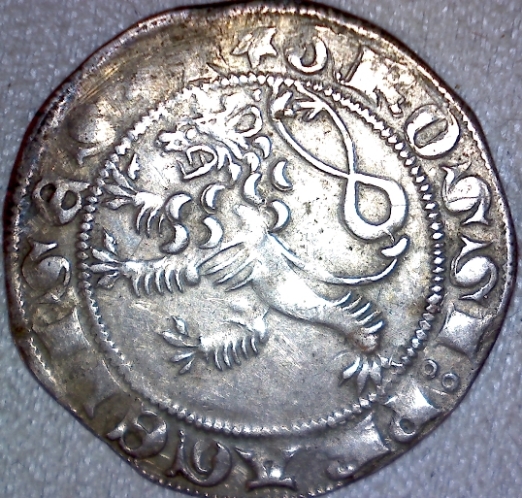 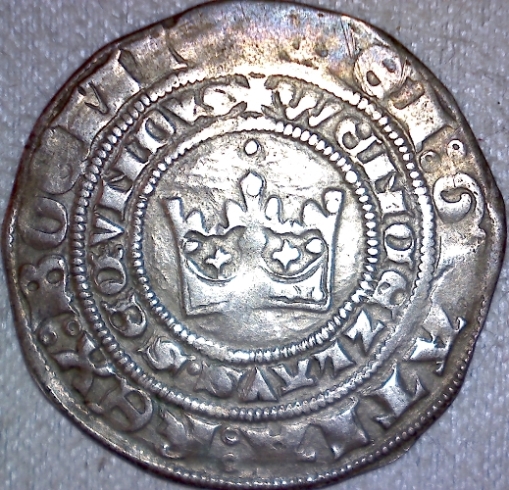 "If you climb a good tree, you get a push."
-----Ghanaian proverb
"The danger we all now face is distinguishing between what is authentic and what is performed."
-----King Adz
|
|
Moderator
United States
34564 Posts |
@tdz, sorry just noticed your request for confirmation on that Boleslaw IV Denar. I agree with your current attribution of Kopicki 54a and here is why:
54 a-d have the obv inscription going in clockwise fashion as opposed to 55 a-d, where the text runs backwards. In terms of the sub-variety, you need to look at what is over the king's head. For a it is nothing, for b it is a propeller-looking thing, for c it is a leftward-pointing sword, and for d it is a tiny, three-towered building that looks remarkably like a sideways letter E. On your coin, this area is a a bit damaged, but I can clearly see the face and the curved part of the head immediately next to the rim denticles. In the sub-varieties where there is an object between the head and the denticles, there is more space.
I will say that there are some small differences in the letter spacing and orientation between yours and the line drawing in Kopicki, but this is of course very common as everything was done by hand by workmen who likely were illiterate.
"If you climb a good tree, you get a push."
-----Ghanaian proverb
"The danger we all now face is distinguishing between what is authentic and what is performed."
-----King Adz
|
|
Pillar of the Community
United States
8062 Posts |
Thanks very much for the help on the attribution. Gumowski has very little to help on this.
For those who are following this thread, the mid-12th c. Polish denars posted are typically 12-14 mm and 0.5 g. In 1298, the Kutna Hora silver mine opened in Bohemia, and would be one of the most productive mines in central Europe over the next century. SO the prager groschen of Wenceslas (minted in Kutna Hora) is a large, lovely 28 mm coin, nearly the diameter of a US half dollar.
Edited by tdziemia
10/05/2018 07:16 am
|
|
Pillar of the Community
United States
8062 Posts |
Time to move on to the 14th century!
We will include Wladyslaw II Jagiello (confusing as he was the second Wladyslaw II) whose reign began in 1386 but also covered one third of the next century.
|
|
Moderator
United States
23731 Posts |
|
|
Pillar of the Community
Spain
2752 Posts |
Really interesting and informative thread...following and learning... btw...Spence..great coin love the lion... Paul  |
|
Moderator
United States
34564 Posts |
Quote:
large, lovely 28 mm coin, nearly the diameter of a US half dollar.
I agree--it has a nice heft to it. I'll dig through my collection and see what I've got for this week. "If you climb a good tree, you get a push."
-----Ghanaian proverb
"The danger we all now face is distinguishing between what is authentic and what is performed."
-----King Adz
|
|
Moderator
United States
34564 Posts |
Here is a Denar from Polish-controlled Hungary that dates between 1373 and 1382 AD. It was issued under the authority of King Louis I and can be attributed as Kopicki 10038 and Huszar 547. 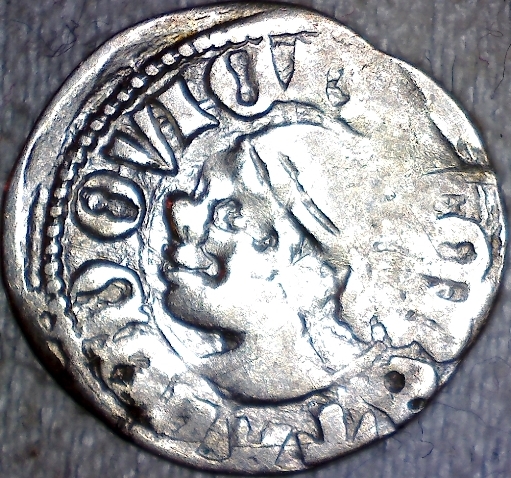 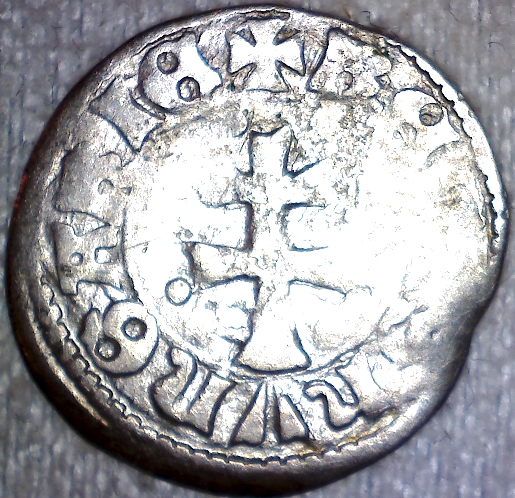 "If you climb a good tree, you get a push."
-----Ghanaian proverb
"The danger we all now face is distinguishing between what is authentic and what is performed."
-----King Adz
|
|
Pillar of the Community
United States
8062 Posts |
Great contribution! Also Gumowski 390. When Casimir the Great died in 1370 without a legitimate heir, it marked the end of the Piast rule of Poland which had begun with Mieszko almost 400 years before (even the squabbling that had led to the fragmentation in the 1200s was all in the family). The crown passed to his nephew by marriage, Louis of Anjou, already king of Hungary and Croatia, which had been previously agreed. Louis reigned as an absentee king, but his coins are included in the Polish catalogs (Gumowski as well as Kopicki). My coin from this reign is a florin, Gum. 394, Huszar 512. Rev: fleur-de-lis, +LODOV ICI REX Obv: S IOHA NNES B 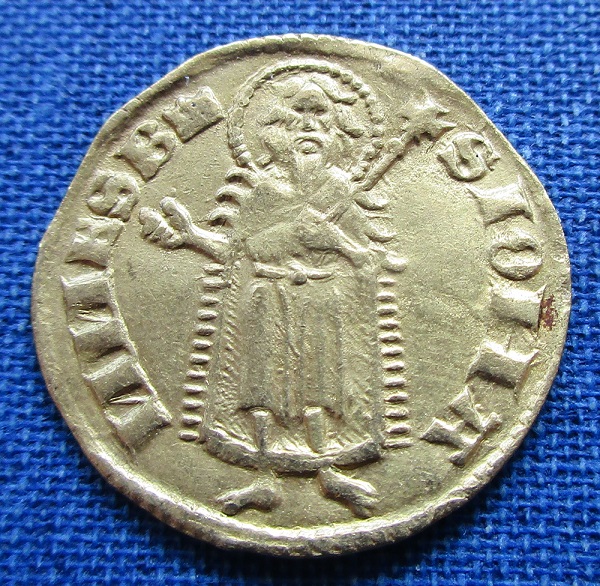 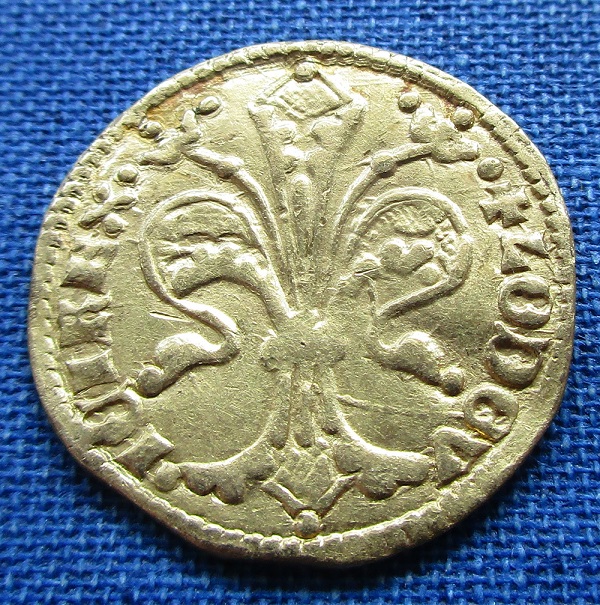 Edited by tdziemia
10/08/2018 8:47 pm
|
|
Moderator
United States
34564 Posts |
"If you climb a good tree, you get a push."
-----Ghanaian proverb
"The danger we all now face is distinguishing between what is authentic and what is performed."
-----King Adz
|
|
Pillar of the Community
United States
8062 Posts |
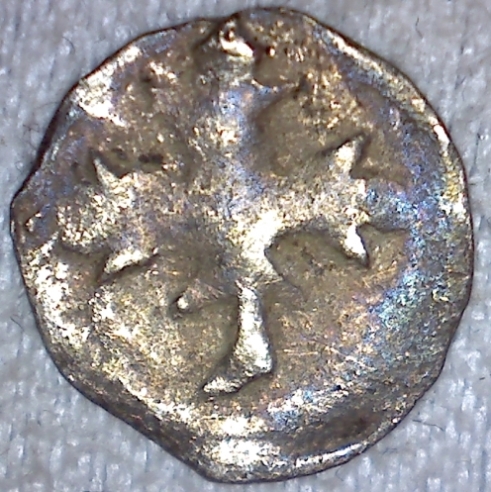
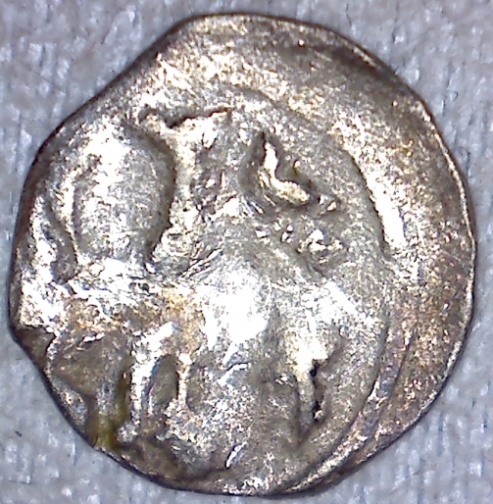
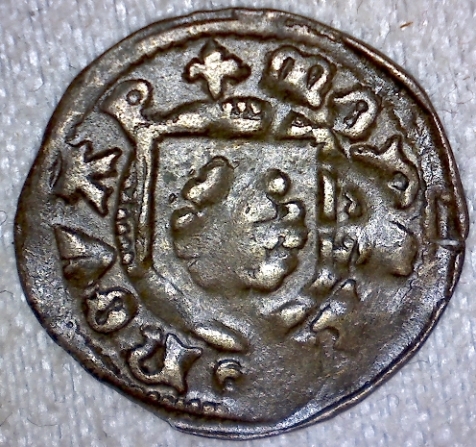
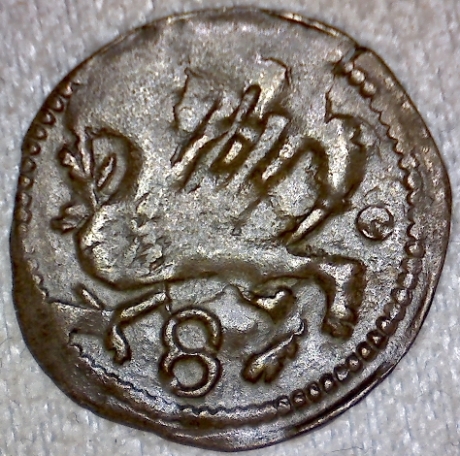
Stepping backward a bit ... Bohemian rule of Poland under Wenceslas II (1300-1305) and, after his death, his son Wenceslas III (1305-1306) did not go down well with the Piast princes, in particular, Wladyslaw Lokietek of Kujavia. By 1308 he had taken Krakow, and begun consolidating power over Polish territory. In 1315 he added Greater Poland, and in 1320 was crowned King of Poland, albeit a much smaller Poland than was ruled by earlier Polish kings (Pomerania and Gdansk had fallen under rule of the Teutonic Knights in 1308, and Silesia remained loyal to the king of Bohemia). Under Wladyslaw's son, Kazimierz III (Casimir the Great 1333-1370), the western and northern borders were stabilized, and there was successful expansion to the east. Here is a tiny denar (11 mm, 0.27 g.) of Kazimierz III, Kopicki 332, Gum.355. From the Karolkiewicz collection. Obverse: Forward facing bust of king, KA(ZIMI)RI (legend partially off planchet) Reverse: Crowned eagle, POLO (I am not sure what the rest of the legend is supposed to be) 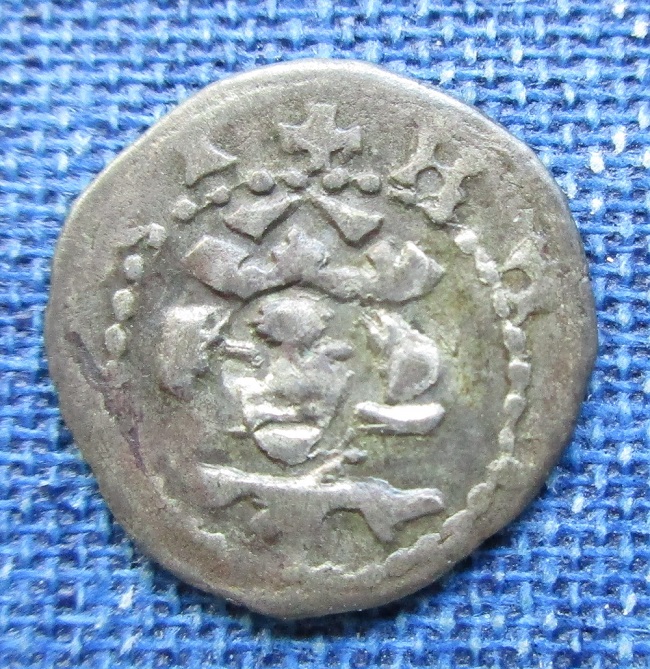 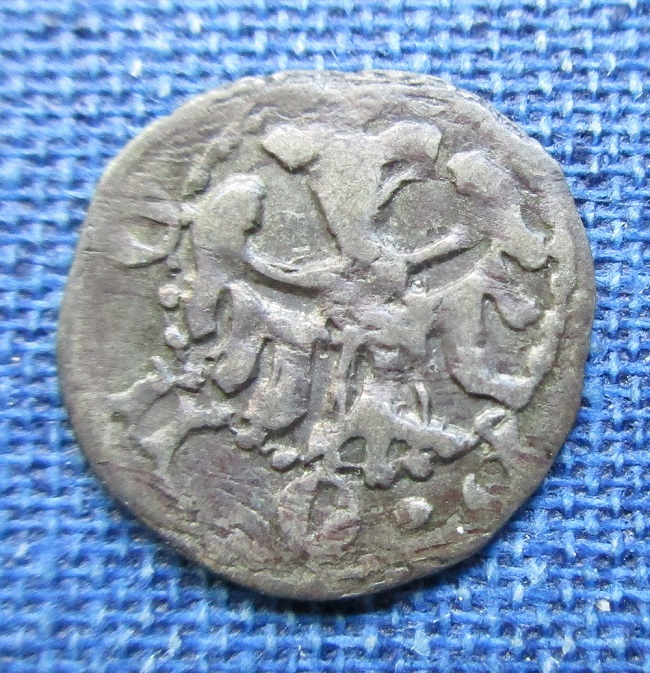 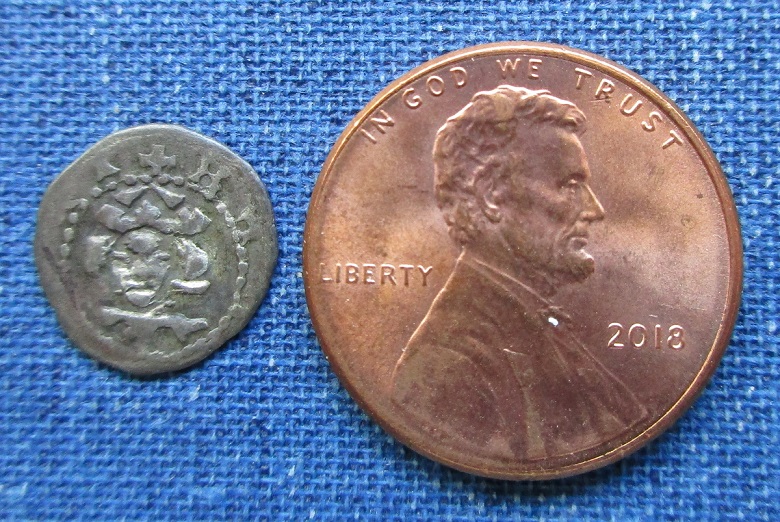 Edited by tdziemia
10/08/2018 10:55 pm
|
|
Pillar of the Community
United States
8062 Posts |
I think we were posting at the same time.
That Pyritz kwartnik is great. I was completely unfamiliar with this place (Polish Pyrzyce -- haha, give that one a try!). Looks like MONETA NOVA P on obverse.
|
|
Moderator
United States
34564 Posts |
Yep--great minds think alike.  You nailed my inscription--sorry for not including that info in my post. With regard to your Denar from Kazimierz III, I think that the full Kopicki attribution is 332a. The rev inscription is REX POLOn. "If you climb a good tree, you get a push."
-----Ghanaian proverb
"The danger we all now face is distinguishing between what is authentic and what is performed."
-----King Adz
|
|
Pillar of the Community
United States
8062 Posts |
Medieval Poland was a bit later than other countries in minting groats/groschen/groszy. As mentioned upthread, the Bohemian Praggroschen was probably in use to some extent since circa 1300. As part of his coinage reform, Kasimierz melted down denars, and began issuing larger denominations, including the first Polish-made grosz. They are quite rare. One is currently up for auction: https://www.numisbids.com/n.php?p=l...=2815&lot=53 |
| |
Replies: 162 / Views: 36,676 |





 First Page
 Previous Page


 Posted 10/04/2018 8:22 pm