Coin Community Family of Web Sites Join Thousands of Coin, Bullion, & Money Collectors
Join Thousands of Coin, Bullion, & Money Collectors Royal Estate Auctions - $1 Coin Auctions300,000 items to help build your collection! Coin, Banknote and Medal Collectors's Online Mall Specializing in Modern Numismatics Vancouvers #1 Coin and Paper Money Dealer Royal Canadian Mint products, Canadian, Polish, American, and world coins and banknotes.


Username:
Password:
Save Password
Forgot your Password?


This page may contain links that result in small commissions to keep this free site up and running.

Welcome Guest! Registering and/or logging in will remove the anchor (bottom) ads. It's Free!

Some Research I Have Done On Why No Laminations On Zinc Cents

To participate in the forum you must log in or register.
Author Previous TopicReplies: 23 / Views: 4,727Next Topic
Page: of 2
Pillar of the Community
Pete2226's Avatar
United States
3330 Posts
 Posted 01/12/2019  09:57 am Show Profile   Bookmark this topic Add Pete2226 to your friends list Get a Link to this Message Number of Subscribers
LAMINATIONS
Lamination errors occur on copper alloy cents, but not on copper plated zinc cents. They occur because of a planchet defect caused by impurities or internal stresses in the alloy which causes metal to separate along horizontal planes of weakness. Lamination flaws occur when impurities or foreign materials or gas become trapped within the planchet metals as they are being formed or are the result of an inadequately mixed alloy. (1) Copper alloy cents are 95% copper and 5% tin and zinc (until 1962 when the cent's tin content, which was quite small, was removed). Thus the amount of the minority metal was sufficient to create separation along horizontal planes if the alloy was not mixed properly.
Copper plated Zinc Cents are composed of Zinc Alloy 190 electroplated with 8 microns of copper. Zinc Alloy 190 contains 0.005% max Lead; 0.010% max Iron; 0.005% max Cadmium; 0.7% to 0.9% Copper; and 99.08% Zinc. I think that the supply of minor metals is insufficient to be reflected as an inadequate alloy mix capable of producing a lamination. In addition, Zinc strip - as it is being processed for rolling into coils - has lubrication applied to it which leads to improved surface finish, as well as distributing a corrosion-protective barrier on the strip. (2) This added protection serves to further prevent corrosion induced laminations from developing.
In addition the hardness of Zinc Cents is a bit less than the hardness of copper cents which also serves to prevent lamination in Zinc Cents. The Hardness of copper cents = ~76 on the Rockwell 15-T scale and a range of "Hardness between 62 and 72 Rockwell 15T are [sic] considered nominal (standard) for RTS planchets [note: planchets for all denominations] at the United States Mint." (RTS= Ready to Strike). (3) I have had hardness tests run with these results: "The actual 15T Rockwell Hardness on this 1976D was measured at 75.2" and "The actual value on this 2000-D was measured at 59.1." (4)
I think that the primary reason, however, we do not see lamination on Zinc Cents is that the Interfacial Free Energy for Zinc is significantly less than for Copper, which would explain why Copper after being rolled is more subject to delamination than is Zinc.
"The surface energy defined as the surface excess free energy per unit area of a particular crystal facet is one of the basic quantities in surface physics. It determines the equilibrium shape of mezoscopic crystals, it plays an important role in faceting, roughening, and crystal growth phenomena, and may be used to estimate surface segregation in binary alloys." (5)
This can also be seen when examining the Metallic Crystalline Structure. The Metallic Crystalline Structure of Copper is face centered cubic (FCC) structure and The Metallic Crystalline Structure of Zinc is hexagonal close packed (HCP) structure. Both have a packing factor of 0.74, consist of closely packed planes of atoms, and have a coordination number of 12. The difference between the FCC and HCP is the stacking sequence. The HCP layers cycle among the two equivalent shifted positions whereas the FCC layers cycle between three positions. Cubic lattice structures allow slippage to occur more easily than non-cubic lattices, so HCP metals are not as ductile as the FCC metals. The impact on the slip system (slip planes and slip direction) of Copper is to increase the likelihood of consequent deformation mechanisms and delamination. (6)
A lamination can occur on clad coins, but such occurrence is rare. It can be recognized because it occurs in the clad layer itself and does not expose the copper core.
Footnotes:
(1) http://www.error-ref.com/
(2) Jarden Zinc - Technical Brief: Lubrication of Solid Zinc Strip
(3) ALTERNATIVE METALS STUDY Contract Number: TM-HQ-11-C-0049 FINAL REPORT August 31, 2012 by Concurrent Technologies Corporation, Submitted to: United States Mint, Page 42.
(4) https://conecaonline.org/rockwell-h...jnIRxzZ0gh2s
(5) Surface Science 411 (1998) 186-202: The surface energy of metals by L. Vitos, A.V. Ruban, H.L. Skriver, J. Kolla´r
---Center for Atomic-scale Materials Physics and Department of Physics, Technical University of Denmark, DK-2800 Lyngby, Denmark, Research Institute for Solid State Physics, H-1525 Budapest, P.O. Box 49, Hungary
Received 3 November 1997; accepted for publication 2 May 1998
(6) "Primary Metallic Crystalline Structures - Similarities and Difference Between the FCC and HCP Structure" https://www.nde-ed.org/EducationRes.../fcc_hcp.htm


Moderator
Learn More...
Spence's Avatar
United States
34425 Posts
 Posted 01/12/2019  10:18 am  Show Profile   Bookmark this reply Add Spence to your friends list Get a Link to this Reply
Interesting treatise @pete. As I understand it, you are proposing the following mechanisms for lamination formation:

1. High interfacial free energy
2. Inadequate alloy mixing, especially in the presence of small amounts of alloying
3. Surface corrosion prevention during strip and planchet preparation
4. Hardness

I'll have to think about it a little bit, but I'm not convinced that a surface phenomenon (as I currently understand interfacial free energy, surface corrosion, and, to some extent, hardness to be) would have a strong effect on lamination formation. This will be a fun thought experiment.
"If you climb a good tree, you get a push."
-----Ghanaian proverb

"The danger we all now face is distinguishing between what is authentic and what is performed."
-----King Adz
Pillar of the Community
Pete2226's Avatar
United States
3330 Posts
 Posted 01/12/2019  10:25 am  Show Profile   Bookmark this reply Add Pete2226 to your friends list Get a Link to this Reply
Thanks, Spence. I have had fun with this research. I no nothing about metallurgy, but have been trying to learn enough to make sense out of this subject.

I am gravitating towards thinking that the most influential factor in lamination is the Metallic Crystalline Structure.
Bedrock of the Community
Conder101's Avatar
United States
17884 Posts
 Posted 01/12/2019  10:34 am  Show Profile   Bookmark this reply Add Conder101 to your friends list Get a Link to this Reply
There are two more reasons why laminations are seldom seen in modern coins compared to earlier coins whether they are alloys or single metal. One is induction furnaces. In earlier gas or coal/coke fired furnaces the metal had to be stirred to mix the metals. This could lead to incomplete mixing, and/or introduction of contaminants into the melt. Or if stirred too vigorously before pouring the introduction of gas bubbles into the melt. Induction furnaces are self stirring. The moving field lines through the metal provides a mixing action and encourages convection cells that help bring gas bubbled to the top where they can escape. Second is better ways of determining temperature. In the early years of the mint (until probably the latter half of the 20th century) they could only judge by eye based on the color of the melt. If the melt is too hot it is possible for bubbles to form in the melt from vaporizing metal. With today's modern sensors it is possible to take the melt to a specific temperature and hold it there allowing contaminates and gas bubbles time to rise to the surface where they can be skimmed offf with the dross and without vaporization. The result is a solid more uniform ingot.
Bedrock of the Community
coop's Avatar
United States
62064 Posts
 Posted 01/12/2019  10:49 am  Show Profile   Bookmark this reply Add coop to your friends list Get a Link to this Reply
Putting it in a single image:
Some-Research-I-Have-Done-On-Why-No-Laminations-On-Zinc-Cents

Thanks for researching this information Pete2226.
Edited by coop
01/12/2019 10:51 am
Pillar of the Community
tropicalbats's Avatar
United States
6116 Posts
 Posted 01/12/2019  11:23 am  Show Profile   Check tropicalbats's eBay Listings Bookmark this reply Add tropicalbats to your friends list Get a Link to this Reply
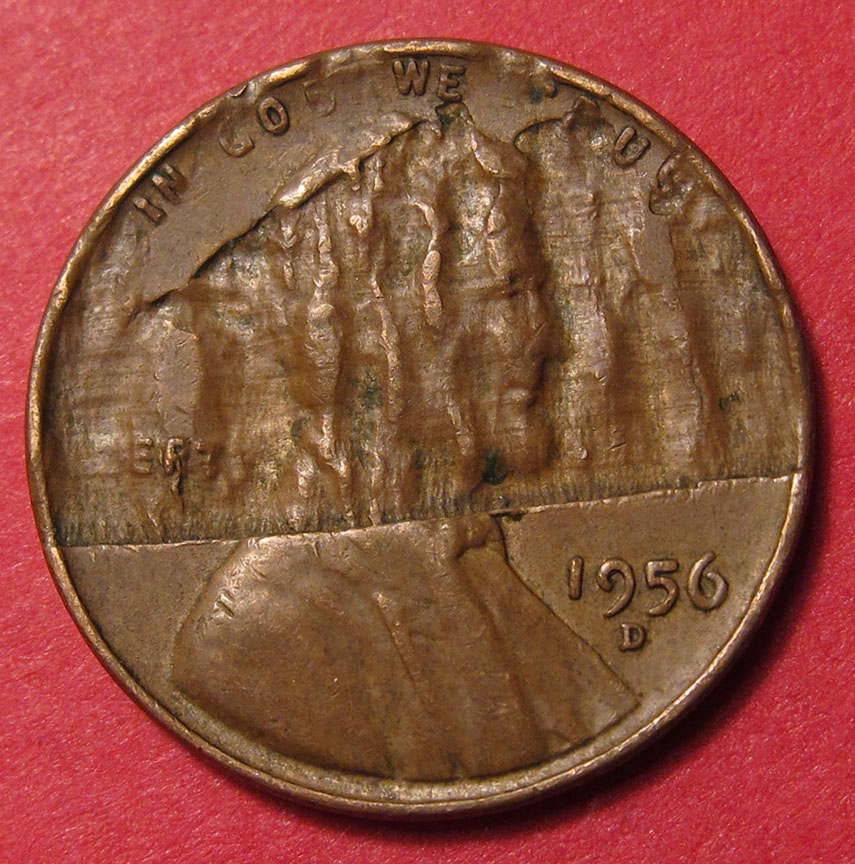
One of the assumptions given here is that laminations occur on a horizontal plane of weakness. While planar may be defined as "having the characteristics of a plane" (i.e. two dimensional), one might interpret that as something nearly flat.

But most laminations are not flat and show strong non-planar rippling and various curvatures. I might suggest different wording is needed here. Possibly as simple as using "pseudo-planar", which is used to describe wave-like horizontal stratifications in geology.


Some-Research-I-Have-Done-On-Why-No-Laminations-On-Zinc-Cents

Or I could be totally wrong. Maybe the weakness is planar and the deformation occurs during the strike as related to pressure ridging or gas bubble dispersal.

Anyway, extremely interesting thread and hope to see a lot on the topic here.
Pillar of the Community
Pete2226's Avatar
United States
3330 Posts
 Posted 01/12/2019  11:41 am  Show Profile   Bookmark this reply Add Pete2226 to your friends list Get a Link to this Reply
Condor101 - thanks for the additional information. I will be adding it to my paper (attributing it to you, of course).

Coop - thanks for the image!

Tropicalbats - thanks for the wording suggestion - I will see if I can incorporate it! Your coin is a VERY nice lamination!

Pillar of the Community
fortcollins's Avatar
United States
3659 Posts
 Posted 01/12/2019  11:55 am  Show Profile   Bookmark this reply Add fortcollins to your friends list Get a Link to this Reply
One additional difference exists. Copper plated zinc planchets are not annealed before striking.
Bedrock of the Community
coop's Avatar
United States
62064 Posts
 Posted 01/12/2019  12:09 pm  Show Profile   Bookmark this reply Add coop to your friends list Get a Link to this Reply
The 1956 lamination is a different type, because the lamination is varied in depth. There is a straight line across the bottom. The top I feel goes all the way to the top of the coin in varying depths. A great example. I'll have to add it to my files.
Pillar of the Community
Pete2226's Avatar
United States
3330 Posts
 Posted 01/12/2019  12:29 pm  Show Profile   Bookmark this reply Add Pete2226 to your friends list Get a Link to this Reply

Quote:
Copper plated zinc planchets are not annealed before striking.


Correct. The zinc used (Zinc Alloy 190) is identified as being "self annealing". Perhaps all zinc is "self annealing"?
Pillar of the Community
Pete2226's Avatar
United States
3330 Posts
 Posted 01/12/2019  12:32 pm  Show Profile   Bookmark this reply Add Pete2226 to your friends list Get a Link to this Reply

Quote:
The 1956 lamination is a different type, because the lamination is varied in depth.


As a "different type":

Does it have a different name?
Does it have a different cause?
Pillar of the Community
Halo1st's Avatar
United States
2775 Posts
 Posted 01/12/2019  11:33 pm  Show Profile   Bookmark this reply Add Halo1st to your friends list Get a Link to this Reply
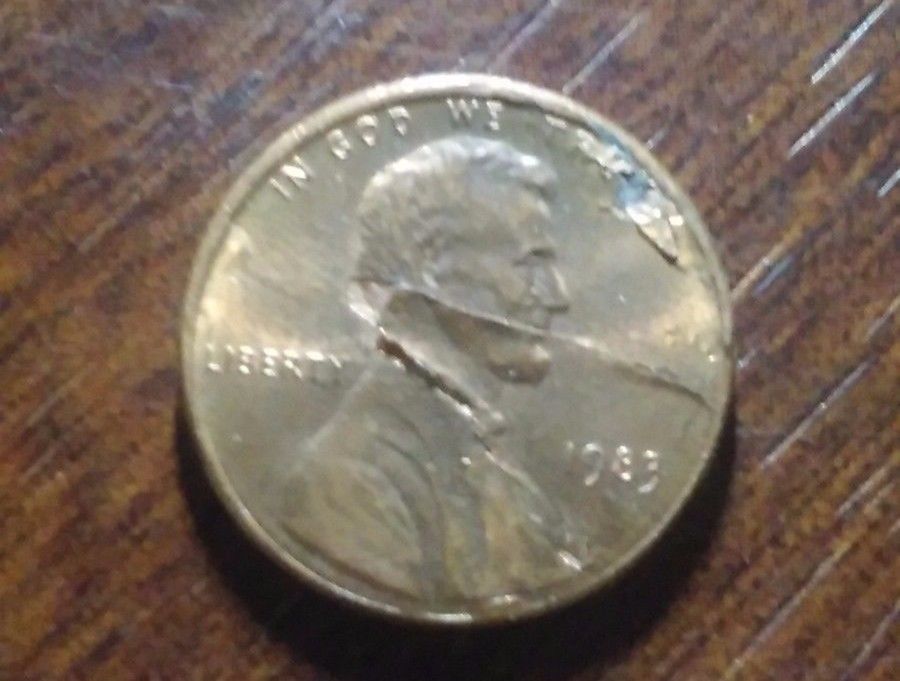
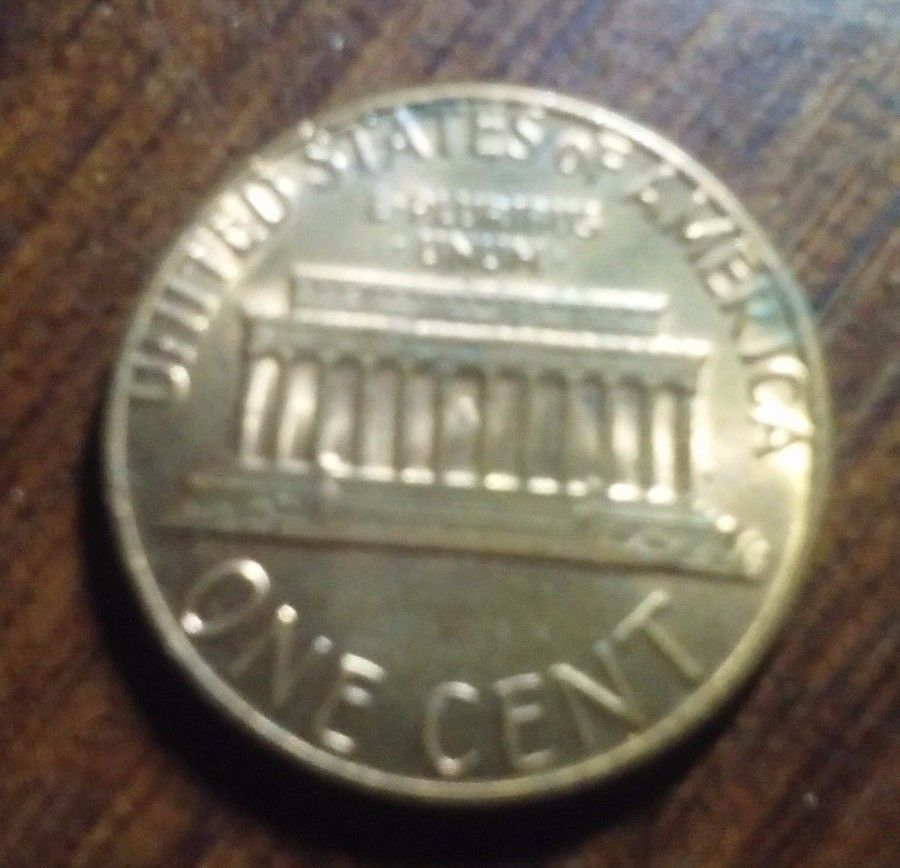
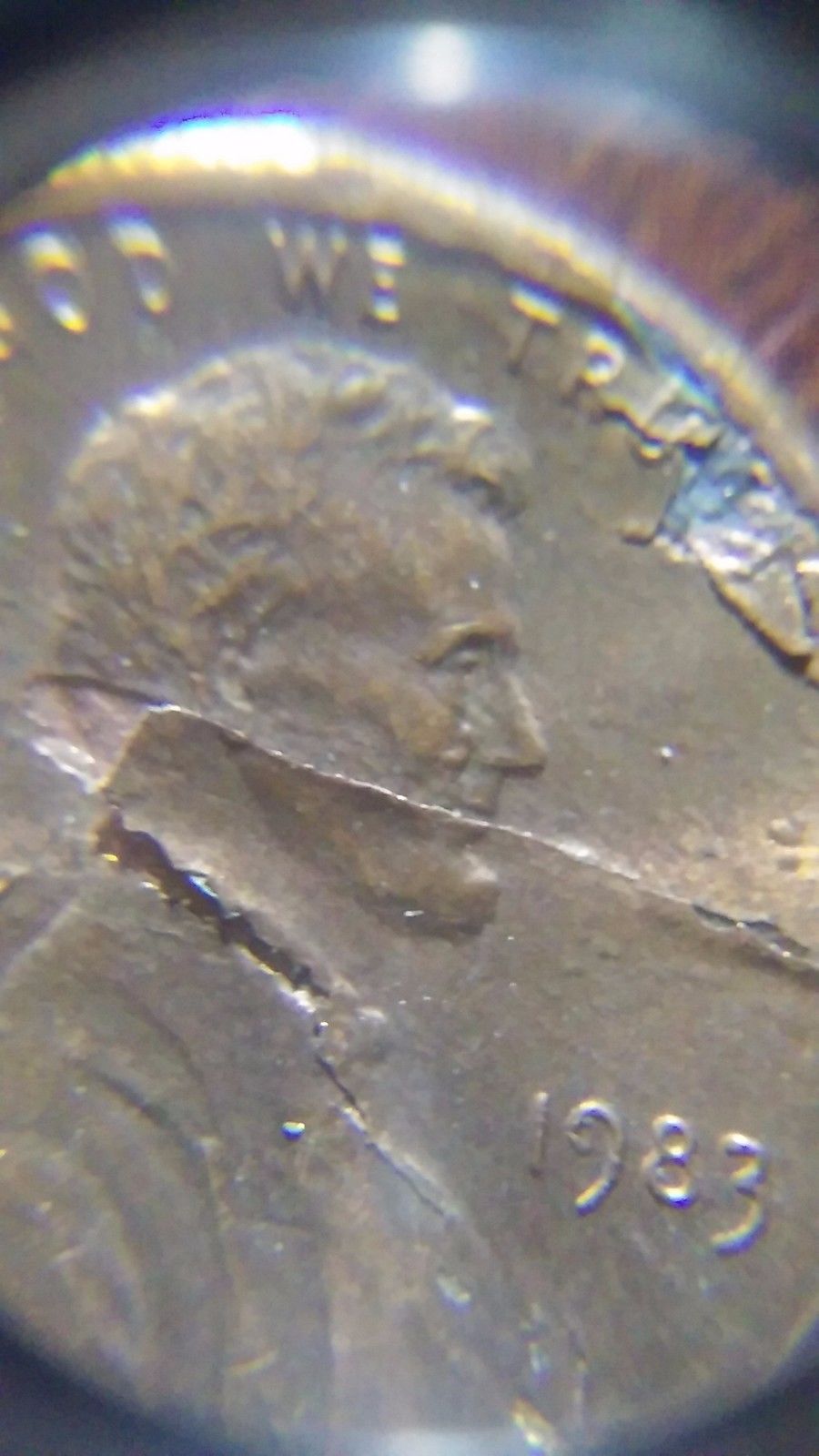
Pete2226, Excellent research. We can all learn from. That said, I've search and search for the topic that we questioned this 1983P shown from ebay, but failed short. I did save the images back then and thought I'd add here.

I still think its either an alloy separation issue or the copper plating has separated in an unusual fashion. First and last I've seen like this.

Adding food for thought. Thanks, Doug.
Some-Research-I-Have-Done-On-Why-No-Laminations-On-Zinc-Cents
Edited by Halo1st
01/12/2019 11:34 pm
Pillar of the Community
Pete2226's Avatar
United States
3330 Posts
 Posted 01/13/2019  09:26 am  Show Profile   Bookmark this reply Add Pete2226 to your friends list Get a Link to this Reply

Quote:
I've search and search for the topic that we questioned this 1983P shown from ebay, but failed short. I did save the images back then and thought I'd add here.

I still think its either an alloy separation issue or the copper plating has separated in an unusual fashion. First and last I've seen like this.


Maybe someone can help find the topic again. I wish the photos had better focus. It appears to be plating which is peeling, but looks possibly thicker than 8 microns. Also the area at the back of the neck has the appearance of a lamination. Very interesting. I really don't know what to do with it! Thanks for pointing it out!
Pillar of the Community
stoneman227's Avatar
United States
2376 Posts
 Posted 01/13/2019  10:47 am  Show Profile   Bookmark this reply Add stoneman227 to your friends list Get a Link to this Reply
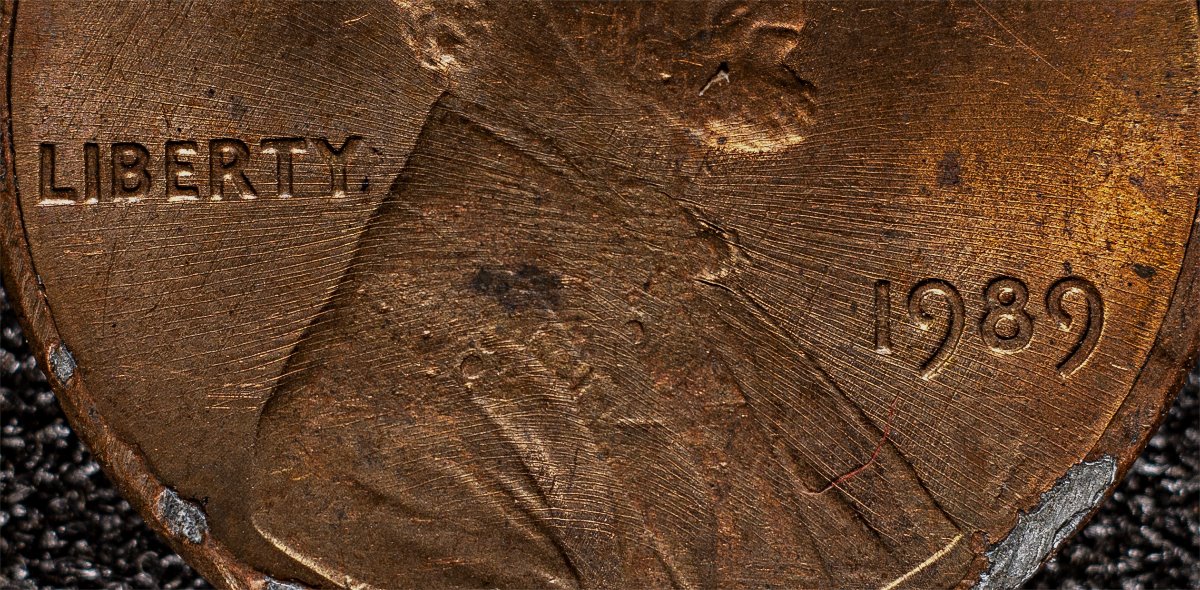
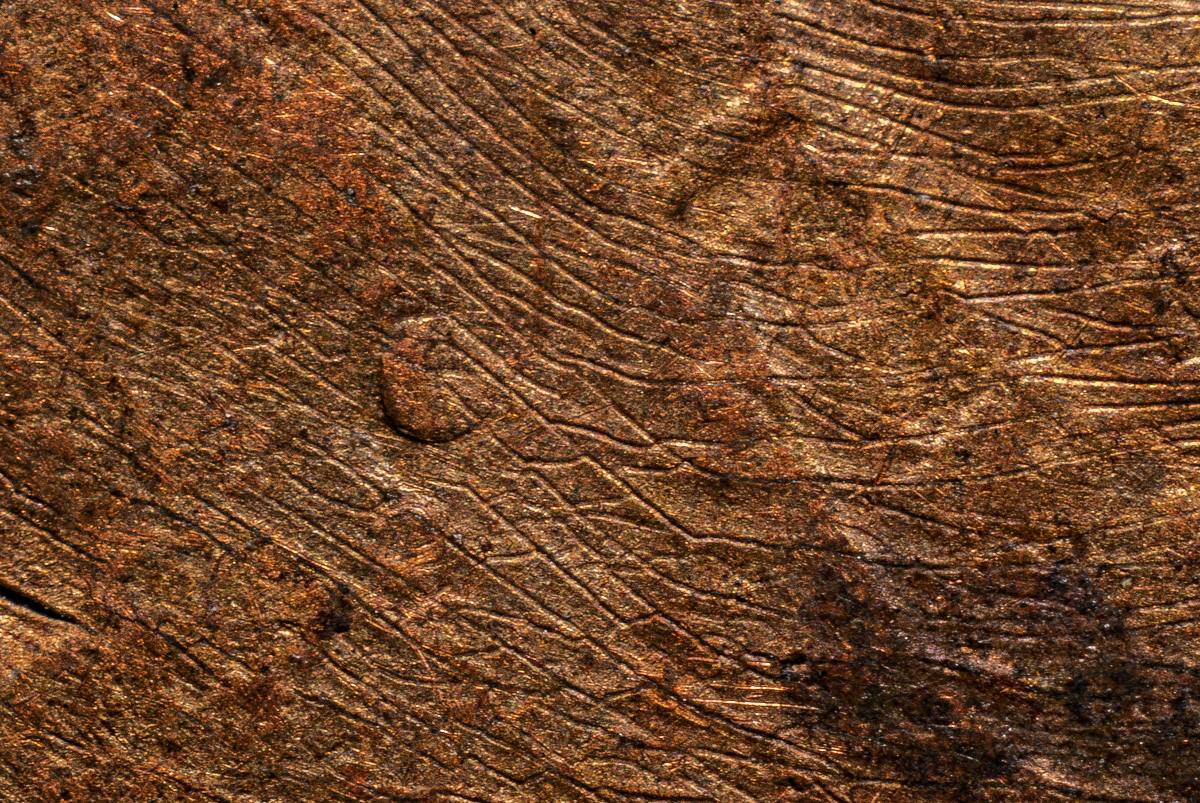
Plating can split in strange ways. Here is a coin of mine that Mr. Diamond used in one of his articles on split plating.
Some-Research-I-Have-Done-On-Why-No-Laminations-On-Zinc-Cents
Edited by stoneman227
01/13/2019 10:50 am
Pillar of the Community
Pete2226's Avatar
United States
3330 Posts
 Posted 01/13/2019  10:52 am  Show Profile   Bookmark this reply Add Pete2226 to your friends list Get a Link to this Reply

Quote:
Plating can split in strange ways. Here is a coin of mine that Mr. Diamond used in one of his articles on split plating.


Very interesting! Would you happen to have a link to that article?
Pillar of the Community
stoneman227's Avatar
United States
2376 Posts
 Posted 01/13/2019  11:02 am  Show Profile   Bookmark this reply Add stoneman227 to your friends list Get a Link to this Reply
If you subscribe to Coin World , you can look it up. It was around December of 2017 . Here is a link to another coin that was included in the article.
http://www.lincolncentforum.com/for...t=Coin+world
  Previous TopicReplies: 23 / Views: 4,727Next Topic
Page: of 2

To participate in the forum you must log in or register.


Disclaimer: While a tremendous amount of effort goes into ensuring the accuracy of the information contained in this site, Coin Community assumes no liability for errors. Copyright 2005 - 2026 Coin Community Family- all rights reserved worldwide. Use of any images or content on this website without prior written permission of Coin Community or the original lender is strictly prohibited.
Contact Us  |  Advertise Here  |  Privacy Policy / Terms of Use

Coin Community Forum © 2005 - 2026 Coin Community Forums
It took 0.38 seconds to rattle this change. Forums