Coin Community Family of Web Sites Join Thousands of Coin, Bullion, & Money Collectors
Royal Estate Auctions - $1 Coin AuctionsRoyal Canadian Mint products, Canadian, Polish, American, and world coins and banknotes. 300,000 items to help build your collection! Coin, Banknote and Medal Collectors's Online Mall Join Thousands of Coin, Bullion, & Money Collectors Specializing in Modern Numismatics Vancouvers #1 Coin and Paper Money Dealer


Username:
Password:
Save Password
Forgot your Password?


This page may contain links that result in small commissions to keep this free site up and running.

Welcome Guest! Registering and/or logging in will remove the anchor (bottom) ads. It's Free!

Ottoman Akce Of Bayezid I

To participate in the forum you must log in or register.
Author Previous TopicReplies: 5 / Views: 1,628Next Topic  
New Member

Canada
22 Posts
 Posted 07/07/2019  7:22 pm Show Profile   Bookmark this topic Add TTerrier to your friends list Get a Link to this Message Number of Subscribers
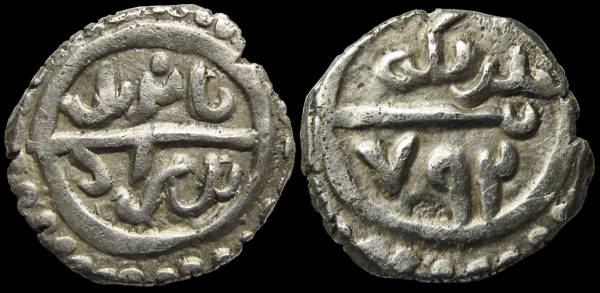
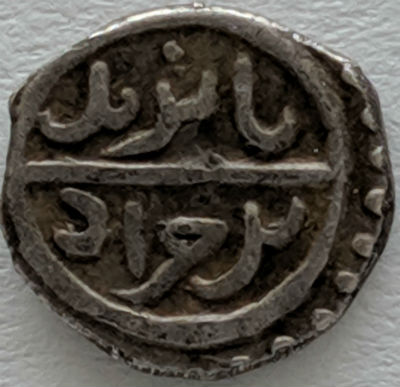
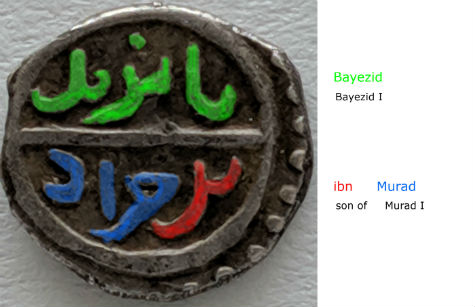
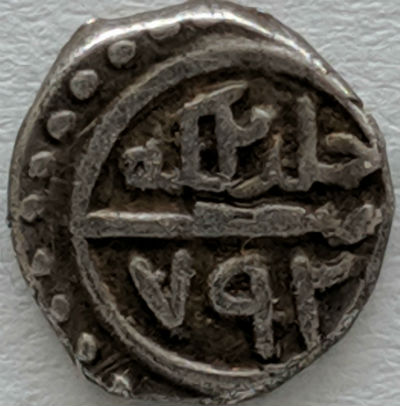
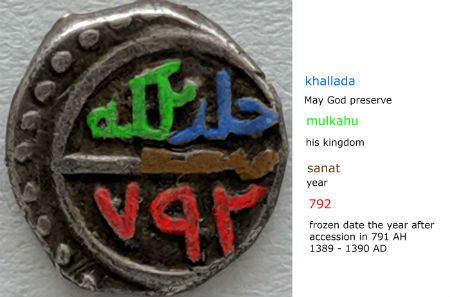
Here is the second attempt at deciphering a coin legend. This time I left out those nasty tuhgras - I don't think I can find a coin with less to figure out than this one.


Ottoman-Akce-Of-Bayezid-I

Transliteration from one language to another will always be subject to differing points of view, especially where one language has sounds not easily expressible in the other.

Even for this simple coin I could quickly find three different versions of the sultan's transliterated name:

Zeno.ru Bayezid
David Collection Bayazid (a great website with lots of historical information and coins with legends written out!)
Stephen Album Bayezit

All three of these references have people who speak Arabic so I have no way to judge why they are different and which gives the most accurate pronunciation of the word. For my purposes I think I will use zeno.ru as it has by far the most reference coins to look at.

One interesting fact about Bayezid is that he was captured by Timur (or Tamerlane as we know him in the west) in 1402 and held prisoner until he died in 1403.


Edited by TTerrier
07/07/2019 11:35 pm
Moderator
Learn More...
Spence's Avatar
United States
34428 Posts
 Posted 07/07/2019  7:41 pm  Show Profile   Bookmark this reply Add Spence to your friends list Get a Link to this Reply
Nice work! My few Akces are from later, but if you happen to post one that is similar to one of mine, I'll add pics to that thread. Keep them coming!
"If you climb a good tree, you get a push."
-----Ghanaian proverb

"The danger we all now face is distinguishing between what is authentic and what is performed."
-----King Adz
Moderator
Learn More...
echizento's Avatar
United States
23731 Posts
 Posted 07/07/2019  7:47 pm  Show Profile   Bookmark this reply Add echizento to your friends list Get a Link to this Reply
I've all but given up trying to translate these.
Pillar of the Community
United States
1554 Posts
 Posted 07/07/2019  9:29 pm  Show Profile   Bookmark this reply Add Kushanshah to your friends list Get a Link to this Reply
If I understand it correctly, Bayezid is the usual English version and Bayezit is the Turkish name. The actual transliteration is b-a-i-z-i-d. I think it mostly boils down to which audience you are catering to. The first "i" functions as a consonant so it is rendered as "y". Since only long vowels are represented by Arabic letters, short "e" is added in the transcription to approximate the way the word is pronounced. The David Collection uses "a" rather than "e" for the unwritten short vowel but this leads to confusion with the letter alif (long "a").

I hope that made sense.

P.S. Don't overlook the word sanat on the reverse between khallada mulkahu and the date.
Edited by Kushanshah
07/07/2019 9:37 pm
New Member
Canada
22 Posts
 Posted 07/07/2019  11:17 pm  Show Profile   Bookmark this reply Add TTerrier to your friends list Get a Link to this Reply
Thanks Kushanshah - I do have one more question - now that you point out the middle line on the reverse is actually the word "sanat" I think I can see where you get an s, but I really struggle to see an n or a t.

When you look at this coin can you actually see "sanat" in the inscription or do you know it should be there and look for a legible part (in this case the "s") and have to assume that the rest of word is just poorly inscribed?
Pillar of the Community
United States
1554 Posts
 Posted 07/08/2019  01:04 am  Show Profile   Bookmark this reply Add Kushanshah to your friends list Get a Link to this Reply

Quote:
When you look at this coin can you actually see "sanat" in the inscription or do you know it should be there and look for a legible part (in this case the "s") and have to assume that the rest of word is just poorly inscribed?

It's a little of both. It didn't really occur to me until I noticed the very right of what at first looked like a simple dividing line. "Sanat" is one of those words which tends to be quite stylized. At some periods (the Mughals are another) it is common words or tails of letters to be stretched across the field as dividing lines. It's a bit more obvious on this example from Zeno:
Ottoman-Akce-Of-Bayezid-I
https://www.zeno.ru/showphoto.php?photo=222193

Sometimes I think they may have done these things purposely, just to mess with us in the future!
Edited by Kushanshah
07/08/2019 01:11 am
  Previous TopicReplies: 5 / Views: 1,628Next Topic  

To participate in the forum you must log in or register.


Disclaimer: While a tremendous amount of effort goes into ensuring the accuracy of the information contained in this site, Coin Community assumes no liability for errors. Copyright 2005 - 2026 Coin Community Family- all rights reserved worldwide. Use of any images or content on this website without prior written permission of Coin Community or the original lender is strictly prohibited.
Contact Us  |  Advertise Here  |  Privacy Policy / Terms of Use

Coin Community Forum © 2005 - 2026 Coin Community Forums
It took 0.23 seconds to rattle this change. Forums