Buffs are one of the most challenging series to grade. Weakness can come from five different factors, and any combination can appear on almost any date and mint in the series.

Design weakness
Die state (die wear)
Die polishing
Strike quality
Circulation Wear
Design weakness issues. The Buff went through nine different obverse and two different reverse designs in its short history. Most of these changes were made to prevent or in response to weakness in the strike or premature loss of detail from circulation. None of the obverse design changes accomplished their purposes. The two types of reverses in 1913 exist because of premature wear on FIVE CENTS on the type 1 coins. This change was generally successful. LIBERTY was designed with weak lettering in 1913, and that design persisted through 1915. The word is so weak on many 1913-15 coins that strength or weakness of LIBERTY should be ignored when grading those dates. The small size of the coin relative to the cluttered design forced placement of the date on one of the highest points of the obverse, the Indian's shoulder. This led to premature wear. The problem was worsened by placement of the left ribbon, which blended into the date on moderately circulated coins. This ribbon was strengthened, weakened, curled, narrowed, and moved repeatedly throughout the series, without success in protecting the date.
Die state (die wear) issues. All three mints overused the dies. The two branch mints were unfamiliar with minting subsidiary coins, and certainly struggled with striking a complex design on a hard metal. To strike the design, they used high striking pressure. To meet production goals, they used the worn dies far too long. To save individual dies, they swapped one die at a time, rather than die pairs. All of this led to very late die state strikes and badly mismatched die pairings.
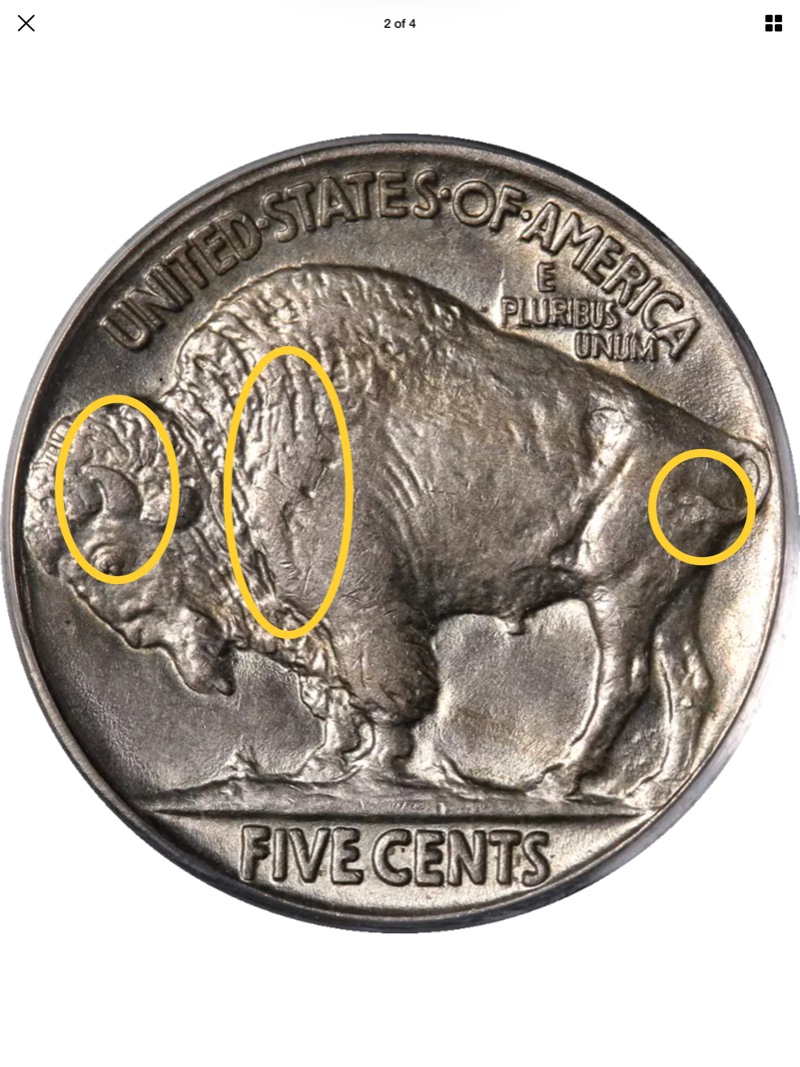
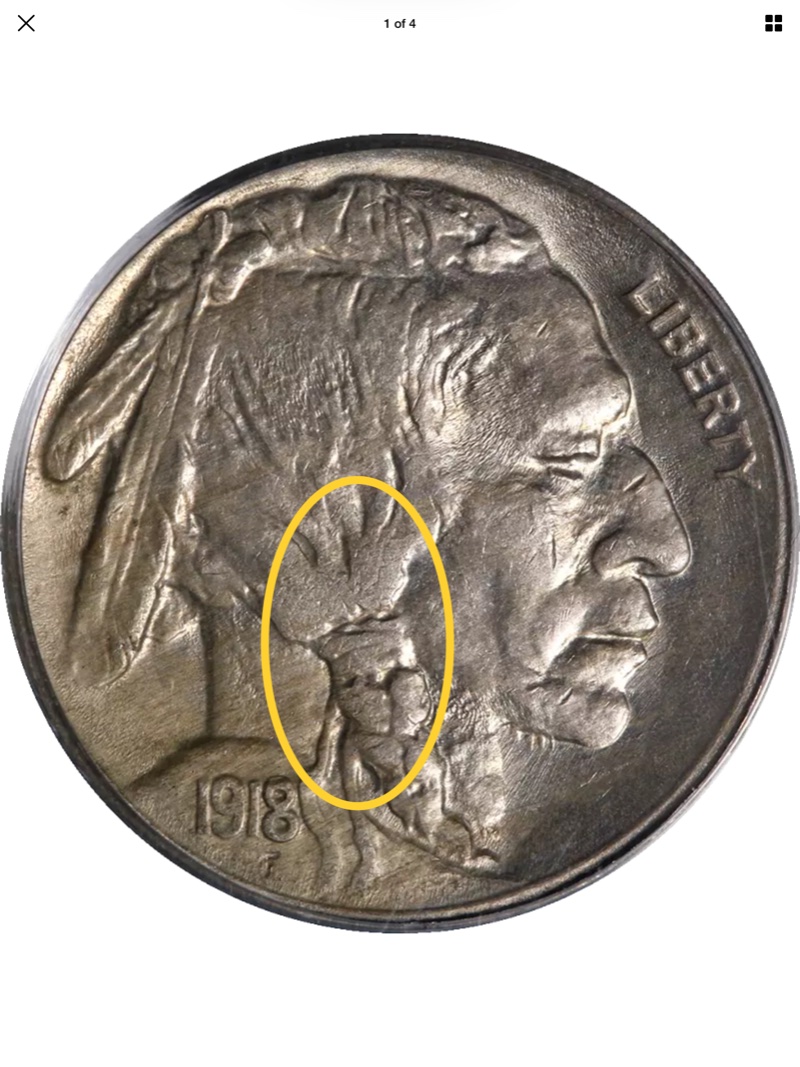
Die polishing issues. The dies clashed frequently. The cluttered design produced well-known obvious clashes, including the Indian's chin with EPU, the second feather with the top of the buffalo's head, and the buffalo's right rear leg with LIBERTY. Die polishing to eliminate the clash marks also damaged integrity of the design.
Strike quality. Philadelphia coins are generally decently struck. San Francisco coins are generally terribly struck. Pre-1934 Denver coins are generally terribly struck. Some dates and mints are almost never found well struck. Examples of awful strike years include 1924-D, 1925-D, and 1926-S.
Circulation wear. Five cents was quite a bit of money during the recession of 1921-1923 and the depression of 1929-1939. The coins circulated heavily. Poor design, over-used and over-polished dies, and weak strikes rapidly became unrecognizable dates and mints with heavy circulation.
Technical grades aside, the scarcest Buff in almost every date and mint is any coin meeting the following four criteria: a higher grade well-struck coin from an evenly-matched die pair without evident die clashes. A coin meeting these criteria in EF-40 may well sell for more than a typical MS-63.
Edited by fortcollins
11/14/2019 9:43 pm






 Posted 11/14/2019 5:08 pm





