| Author |
 Replies: 638 / Views: 128,738 Replies: 638 / Views: 128,738 |
|
|
|
Pillar of the Community
United States
4707 Posts |
Good insight from the minting standards article. This significantly reduces the usefulness of XRF on these coins, since the silver alloy (other than the weight and percent silver) is uncontrolled and the non-silver could be most any metal such as tin, copper, etc. On the other hand the article at least provides what the weight and silver purity standards were so that would screen out potential conterfeits on that basis.
|
|
Valued Member
United States
215 Posts |
Heres some good info 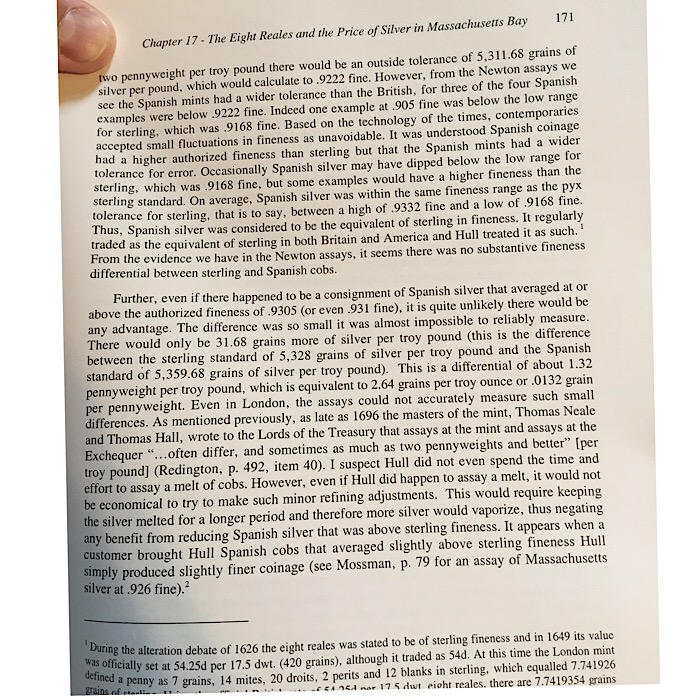 |
|
Pillar of the Community
United States
3368 Posts |
The value of XRF is in determining gold content. If there is none, the coin is suspect of modern fabrication.
California-made sterling-marked 19th century silverware was checked randomly on 4 pieces, and found to vary from 74 to 90.5% silver. None of the pieces came close to the British standard. I would expect the same for the NE piece, and would also expect a large variance among NE pieces. They weren't melting British coins to make these.
"Two minutes ago I would have sold my chances for a tired dime." Fred Astaire
|
|
Pillar of the Community
United States
4707 Posts |
XRF determines metal content, not just gold. It was used extensively in the aerospace industry about 20 years ago when a lot of counterfeit titanium parts from China were prevalent.
|
|
Pillar of the Community
United States
4233 Posts |
The OP remarked on the presence of gold and lead in colonial silver, back on pages 2 & 3, which is also found in his XRF results. I don't know what source he got that from. It seems crazy to me that there is no published composition for the NE coins. They authenticated NE sixpence and shillings without analyzing composition? If so, why does it matter for this coin? And as mentioned way at the beginning of all this, if you're going to make a deceptive collector counterfeit, you just melt some Spanish coins the same as they did in 1652. I feel like we're chasing our tails. Back to this: Quote:
Wanting to accomplish anything by matching the OP's coin vs. another counterfeit NE 3D (if one can be found) is a futile effort First, the contention is that someone could easily create a punch, and that a firm in the UK was copying colonial silver. If so, where are the fake NE threepence? What do they look like? Where did they get the design? Just one example would give us additional information to go on. Second, related to the first - I think it's extremely useful to play "which one is different" against known counterfeits. Which of these is a counterfeit? 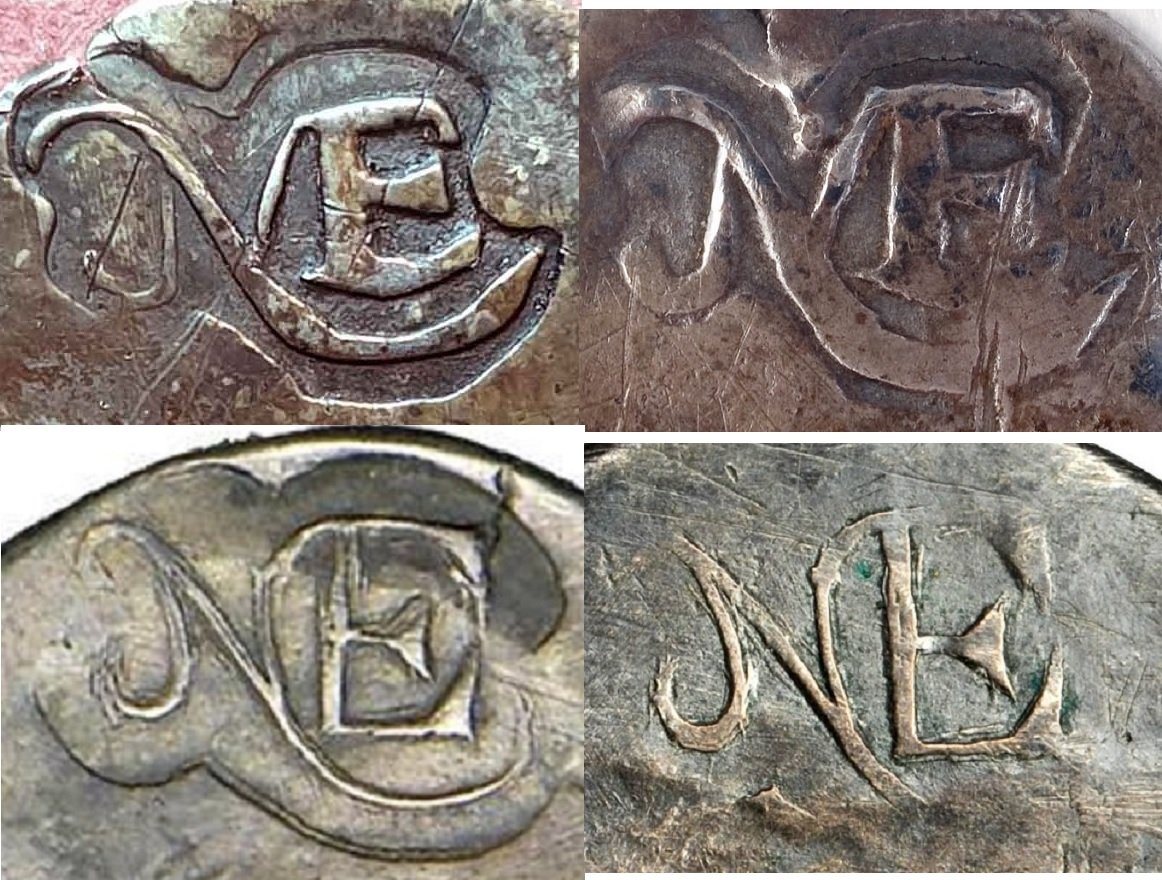 Now, which of these is a counterfeit? 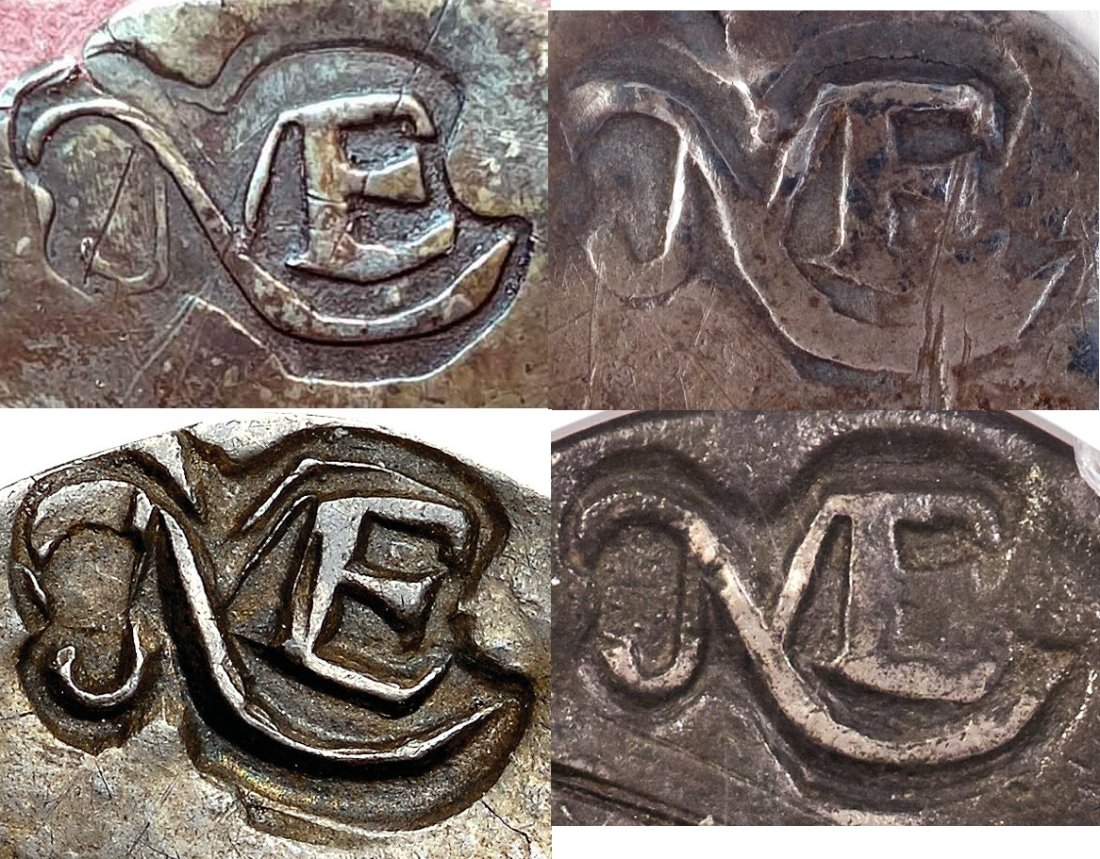 |
|
Valued Member
Canada
235 Posts |
That's all well and good; but if the OP's coin's alloy doesn't match anything known-youre not "chasing your tail", but proving that the OP's item didn't originate with the NE coinage
Consider it a Paternity Test
The name of the Great Britian entity that recreated Massachusetts Silver coins, among others, is called Ashmore
I'll ask: Which is more Important-to prove that it is Genuine, or prove that it is Not? Which is easier? With all that is arrayed for us to consider, is it enough for Encapsulation as The Real Thing? The only 100% unfailable way to ensure it being that is for it to pass the Paternity Test
Edited by whatdowehavehere
04/25/2021 8:47 pm
|
|
Valued Member
Canada
235 Posts |
The Ashmore NE 3D (one of 'em, anyway): https://www.worthpoint.com/worthope...in-489239661It seems that the NE 3D would be, not to say Easy but something like that, to fabricate, in a fashion that would fool most everyone. A little extra "post-mint" tooling here and there, and Voila! Edited by whatdowehavehere
04/25/2021 8:54 pm
|
|
Valued Member
Canada
235 Posts |
Ummmm, I have just been informed that the OP's item is a Mario Fabrication, and that my friend in the biz has a few of them. I've known him since the '80s; he's been dealing in U.S. Colonial coins, British Halfpenny Counterfeits, etc since at least then, and was involved in the founding of C4. He states that there is a C4 article about it, illustrating items from "The Michigan Mint"
Edited by whatdowehavehere
04/25/2021 10:00 pm
|
|
Pillar of the Community
United States
4707 Posts |
Quote:
He states that there is a C4 article about it, illustrating items from "The Michigan Mint" What is C4? |
|
Valued Member
Canada
235 Posts |
Edited by whatdowehavehere
04/25/2021 10:04 pm
|
|
Pillar of the Community
United States
4707 Posts |
So, if your friend has several of these "Mario Fabrications" I presume the value of these fakes is nil and Stacks may not bother with it. The coin holder posted on page 2 is likely also a fake, does the C4 article mention fake envelopes also?
|
|
Pillar of the Community
 United States
8946 Posts |
Quote:
Ummmm, I have just been informed that the OP's item is a Mario Fabrication, and that my friend in the biz has a few of them Care to show a text or email to back that up? |
|
Valued Member
Canada
235 Posts |
Here's an image that he sent to me 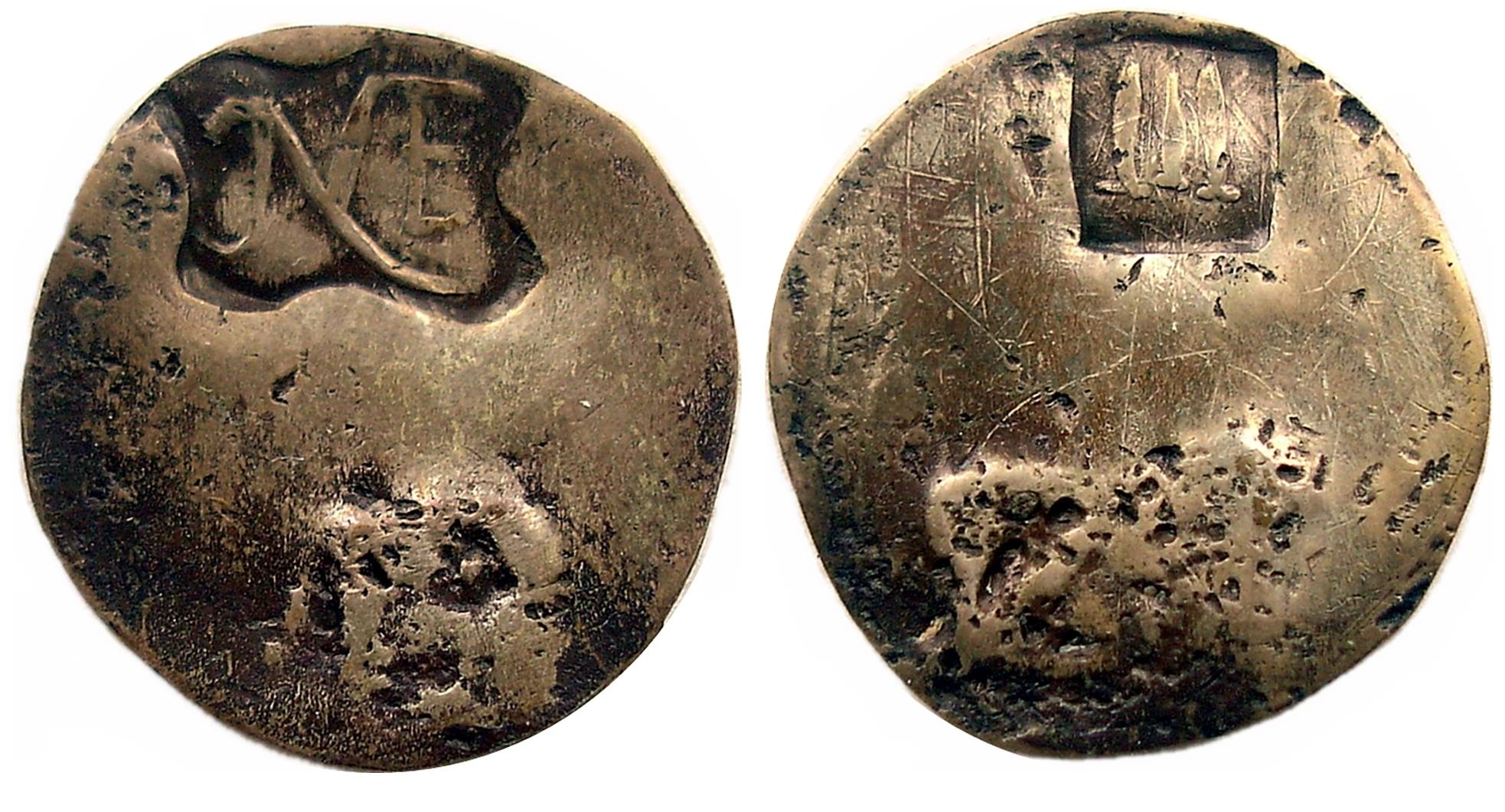 |
|
Pillar of the Community
United States
4233 Posts |
So your friend thinks the OP coin is one of those? Sorry but that's a bit ridiculous isn't it?
|
|
Pillar of the Community
United States
4963 Posts |
The style appears to be extremely crude compared to the coin in question.
I remain skeptical of larsjan's coin's authenticity just due to the extreme rarity, but it seems to be passing every test so far. I absolutely hope it's the real deal, and you haven't provided any strong evidence to the contrary.
|
| |
Replies: 638 / Views: 128,738 |




 First Page
 Previous Page


 Posted 04/25/2021 4:28 pm





