| Author |
 Replies: 47 / Views: 6,283 Replies: 47 / Views: 6,283 |
|
|
|
Pillar of the Community
United States
1801 Posts |
I reached out to Mike Dunigan to see what his thoughts were and got a response back in a second.
"The Calbeto specimen was fake and so was the Elizando coin. There are no known genuine 1772 Potosi 8 Reales.
This piece does not even come close. You may quote me.
1773-July 17 First minting of Bust coinage in Potosi DASI 1.503 Volume III page CCXII. CASE CLOSED."
|
|
Pillar of the Community
United States
1156 Posts |
Mike Dunigan's opinion is of course important to hear but those of us interested in understanding the diagnostics of detecting frauds can get a lot more insight from photo evidence in the absence of weight and SG.
|
|
Pillar of the Community
United States
1801 Posts |
I don't feel posting Mr. Dunigan's opinion on the coin in any way detracts from the visual analysis and examination going on in this thread. For myself, knowing the coin to be a numismatic forgery makes me all the more diligent in my examination. I think we are all interested in the same things, one of the reasons we follow these posts and continue to add to our own personal database the various diagnostics pointed out by researchers like SwamperBob. In the second group of photos provided by the original poster, I find the anomalies/ chatter/suspicious texture around the "7", the "2" and the assayers initials enough to give a "unique find" coin like this a pass. An altered coin ( which I believe this coin to be) is going to pass the SG and XRF test just fine so as Jgenn has pointed out above, the visual diagnostics are important but I would not downplay research into the historical records of the mint or the opinions of knowledgeable people who have studied these coins their entire life.
|
|
New Member
 United States
16 Posts |
First and foremost, thank you swamperbob and jgenn for your continued analysis. It is much appreciated.
As I have stated before, I'm by no means a numismatic historian or collector. I don't know Mike Dunigan, but from statements here, as well as some quick poking around on the Internet, he appears to be a well respected individual. Despite his response being somewhat cavalier and quickly dismissive, at least in the context that it was presented, I will still take it as a valued authoritative source of information. So, thank you jfransch for reaching out to him. However, I agree with jgenn that there may be others with deeper interests in the diagnostic process of detecting frauds. I can appreciate that endeavor and believe it adds a valuable perspective to the greater study of numismatics.
I had two goals when posting to this forum. First, to ascertain if anyone had seen a 1772 in the market before, and second, to hopefully come to a conclusion whether the coin in my possession was genuine for purposes of donation. I went into this investigation with the intent of simply finding those answers, and I'm completely content with the possibility of it being fraudulent. I agree with swamperbob that one reason my grandfather likely held onto this coin was that he also had doubts of its authenticity. If he had it in his possession prior to the publication of my father's second edition, and he considered it genuine, then it would have been marked appropriately as part of their collection. It was not.
My father never spoke much about this coin until recently. It was put away in a box when he returned from my grandfather's funeral long ago. When we started to analyze it together we also had our doubts about its authenticity. We did consider the date being an issue and he felt that either the second 7 or the 2 would have been an area of interest. In that conversation we concluded that it would be less work for someone to change the fourth digit to a 2. Why choose the 1782 Portrait to change the third digit to a 7 when the first assayer initial would also need to be changed from a P to a J? Wouldn't it be easier to select a coin from the 1773-1776 range, simply change the fourth digit, and not have to worry about the assayer initial at all? I still understand why the analysis thus far has been on the 7, so the natural conclusion is that it was changed from an 8 by way of a 1782 host coin, which would be the only one available for that scenario. However, I still struggle with why someone would choose the more difficult route and open up additional areas of scrutiny. Perhaps it was the only coin available to them.
There have been a few listings of this coin and its rarity, my father's book included. He, and those other authors, were all well respected during and after their time in this field of study. I know for a fact how tirelessly my father researched his books, as well as the access he had to all the coins listed therein. The significance of his book at the time is evident in the numerous letters I have in my possession that were written to him from collectors, numismatic societies, and auction houses commending him on his accomplishment. With that said, by the nature of research individuals naturally stand on the shoulders of others. His choice to include the 1772 date was likely based on its inclusion within those other books of well respected authors and collectors. Perhaps for all those authors, including my father, not enough time was given to question its inclusion. We are only human and mistakes do happen.
This leads me to the question of why it was included in those books at all. I'm missing volume 3 of the Dasi book that Mike Dunigan cites, but I don't dispute the start date for that coin type is accurate. After all, the Spanish have been known to keep meticulous records, so I assume someone dug that date up somewhere. There are other books you can find with a quick search of the Internet that also speak of that date including A New World of Gold and Silver (2007) by John TePaske and Wages and Currency: Global Comparisons from Antiquity to the Twentieth Century (2010) edited by Jan Lucassen. In the latter book it states of Potosi:
"On 17 July 1773 the new mint coined its first pesos cordoncillos and pesos de bustos, two weeks before the mint was finished, but long after the Mexico City and Lima mints had began producing these same coins" (Lucassen, p. 283).
While I don't currently have access to any older texts to pinpoint the first instance the 1772 may have been assumed the start date of this coin type beyond a simple listing, some of the comments in Burzio's books allude to certain sources. While I can conclude that they may ultimately be incorrect, or founded in rumor, it is still interesting why they surfaced at all. I'm unsure how anyone would have benefited from the false information that long ago without making further assumptions myself. In any case, here are the Humberto Burzio quotes from his books La Ceca de la Villa Imperial de Potosi y la Moneda Colonial (1945) and Diccionario del la Moneda Hispanoamericana (v. 2, 1958), translated to the best of my ability:
"In confirmation of what we have asserted, we recall that the flyers installed in the Potosi mint for the new Carlos III milled bust coinage, were in 1772, according to testimony of Don Pedro Tagle, superintendent of that mint, in a report letter addressed to the Viceroy of Peru, Don Manuel de Amat y Junient (Vease: Apendice No. 6)" (Burzio, p. 148).
"1772 8 Rs. Monetario Alfredo Benavides of Lima. The Platt House, in Paris (Cat. Mars 1939, p.25, No. 401), records the existence of an 8 reales to this year, data that we have not seen confirmed in catalogs, books and collections consulted in the course of our investigations, with the exception of the indicated by Mr. Benavides, which proves the rarity of the piece (V. Lam. lxxxvi, 650.)" (Burzio, p. 252)
With all that said, it does seem like the visual evidence is mounting in favor that this coin is a fraud, which is still good and welcomed information. I do understand that the weight, SG, and XRF will only confirm that this is a genuine host coin. I will post some of that information as I get it for those that are still interested.
Thanks again to everyone for their time and consideration.
Edited by maetx
06/09/2020 10:54 am
|
|
Pillar of the Community
United States
1316 Posts |
Not intending to hi-jack this thread. 8R/Spanish Colonial topics don't come up everyday, but when they do and you guys jump in with essay length posts, with the science, analytics, manufacturing processes, and history, etc, they quickly turn into the BEST threads on the board. Thank you so much for the contributions! I learn so much and it is very fascinating!
|
|
Pillar of the Community
Czech Republic
803 Posts |
I know we've been focused on the date, edge and shield... but there seems to be an 8 hiding under the U in CAROLUS 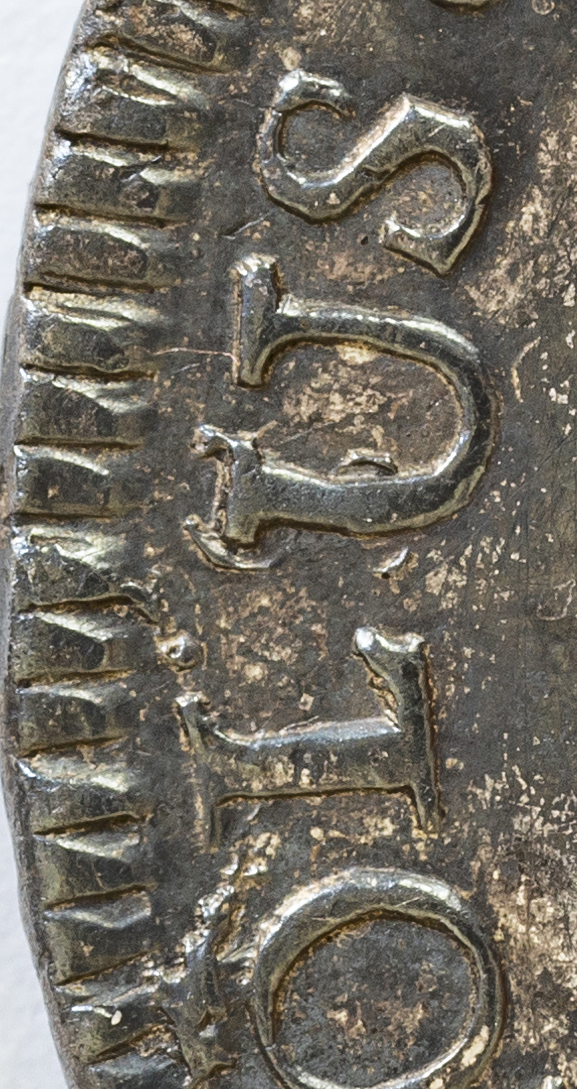 |
|
Pillar of the Community
Czech Republic
803 Posts |
And the reverse 8 seems "decapitated", which would not have happened with a punch. This is a fascinating coin. 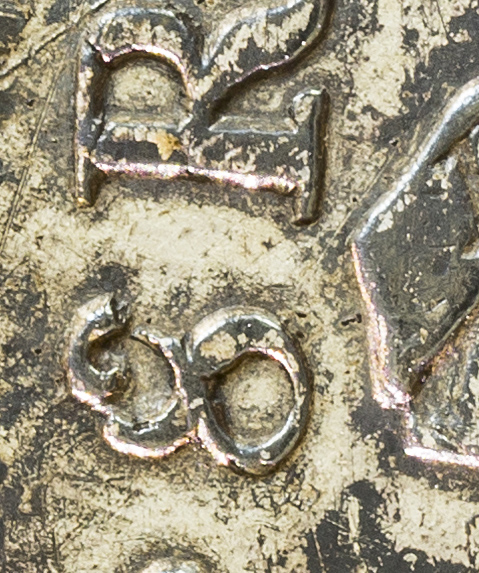 |
|
Pillar of the Community
Czech Republic
803 Posts |
The more I look at the high res images, the more obvious it is this coin was not made using official punches.
|
|
New Member
United States
16 Posts |
Per my last post, and the Burzio quote regarding the Tagle letter, I think these archival records would hopefully clear up the exact start date of that coin type if they haven't been referenced already to prove a 1773 start date. I haven't checked anyone's reference lists yet to confirm its use. http://archives.nypl.org/mss/484What is also interesting is what seems to be a clear statement from the Lucassen quote that the minting of these coins started weeks before the new building was complete. Granted the start date was in July, and weeks before would not put it into 1772, but it still tells us that they minted those coins in the old building. Whether documented or not, there is always the possibility that they could have attempted minting some coins in that building much earlier. Of course this is pure speculation and is simply a comment to the question of whether any 1772s could have existed. Obviously based on the analysis thus far I still believe this coin to be a forgery. |
|
Pillar of the Community
United States
1156 Posts |
I had noticed the "decapitated 8" before but I couldn't figure out how to describe it. Now that I think about it a bit more perhaps it is due to a glitch in a transfer process, like someone sneezed as they were operating the pantograph.
|
|
Pillar of the Community
United States
5362 Posts |
maetx I noted in your recent post that you included: Quote:
In confirmation of what we have asserted, we recall that the flyers installed in the Potosi mint for the new Carlos III milled bust coinage, were in 1772, according to testimony of Don Pedro Tagle, superintendent of that mint, in a report letter addressed to the Viceroy of Peru, Don Manuel de Amat y Junient (Vease: Apendice No. 6)" (Burzio, p. 148). I thought that it was necessary for people following this thread to explain what the word "flyers" refers to. That refers to the actual screw press used to coin 8Rs. They were referred to as flying presses because of the speed at which the counterweights flew around in a circle and the danger that presented to operators who were spinning the weights back and forth continuously for hours. 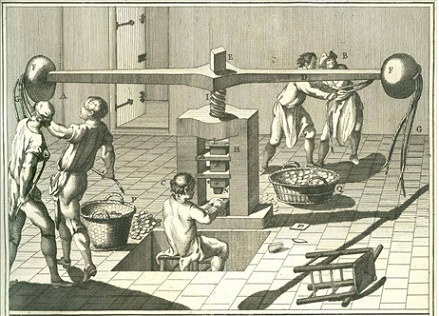 Here comes a theoretical monkey wrench. Just for fun. If the press arrived in Potosi in 1772, where would it have been housed to keep it out of the elements until the new mint building was ready enough to receive it? There is a period of several months before the new building was ready enough. The 1773 Carolus III 8Rs were struck starting July 17, 1773 in the still unfinished mint building. So during the intervening months it was possible that the mint officials may have set up the press to see if it survived transit undamaged. It is also possible that a pattern could have been struck bearing the 1772 date. That mere possibility is in and of itself a void begging to be filled by a super rarity. A fantasy piece. Unless actual definitive written records from 1772 have survived which document the existence of such a coin or coins, I believe there is little option but to consider that a fantasy is by far the most likely. Regarding the question as to why a 1782 date coin might have been selected instead of a 1773, 1774 or 1775 coin, I would suggest the most likely reason is simple availability. The Potosi coins dated 1782 appear in sales somewhat more often than any of the three dates that carry the J assayer mark. That is an observation from watching ebay auctions for the past 20 years and following 8Rs in general for the past 60 years.
|
|
New Member
United States
16 Posts |
swamperbob, great information as always. Thank you.
|
|
New Member
United States
16 Posts |
As promised:
Diameter - 41mm
Weight - 26.83g
SG - 10.32
|
|
Pillar of the Community
United States
1156 Posts |
Interesting, those numbers appear to be consistent with expectations for genuine issues.
Was the host tooled to look like a 1772 PTS JR issue or was a die used for forgeries modified to strike a 1772 PTS JR?
There are many die anomalies that make me think the latter.
Wouldn't you choose a host without so many existing anomalies to tool if the case was the former?
Edited by jgenn
06/11/2020 12:52 am
|
|
Pillar of the Community
Czech Republic
803 Posts |
I agree, Jack. If this was a genuine later date host, variety collectors would have already documented at least that misplaced 8 on the obverse.
|
| |
Replies: 47 / Views: 6,283 |







 First Page
 Previous Page


 Posted 06/09/2020 12:33 am


