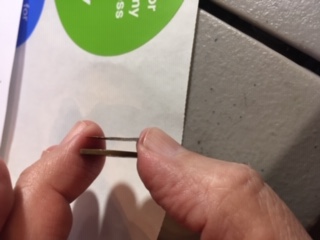
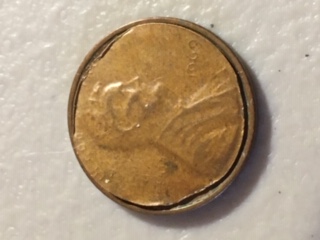
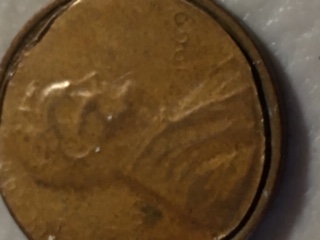
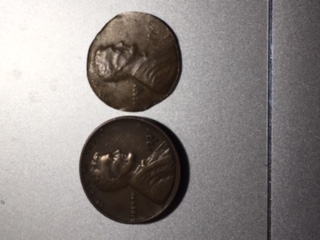
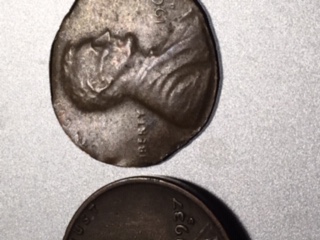
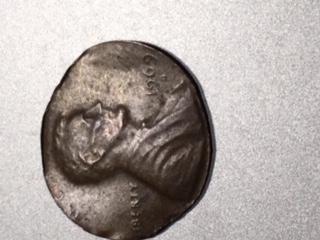
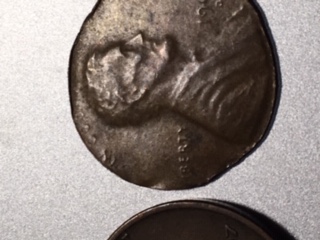
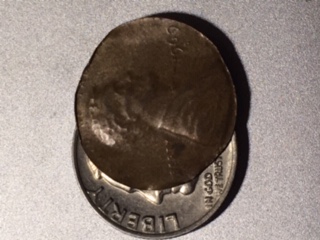
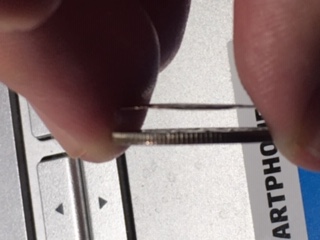
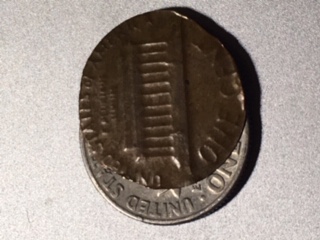
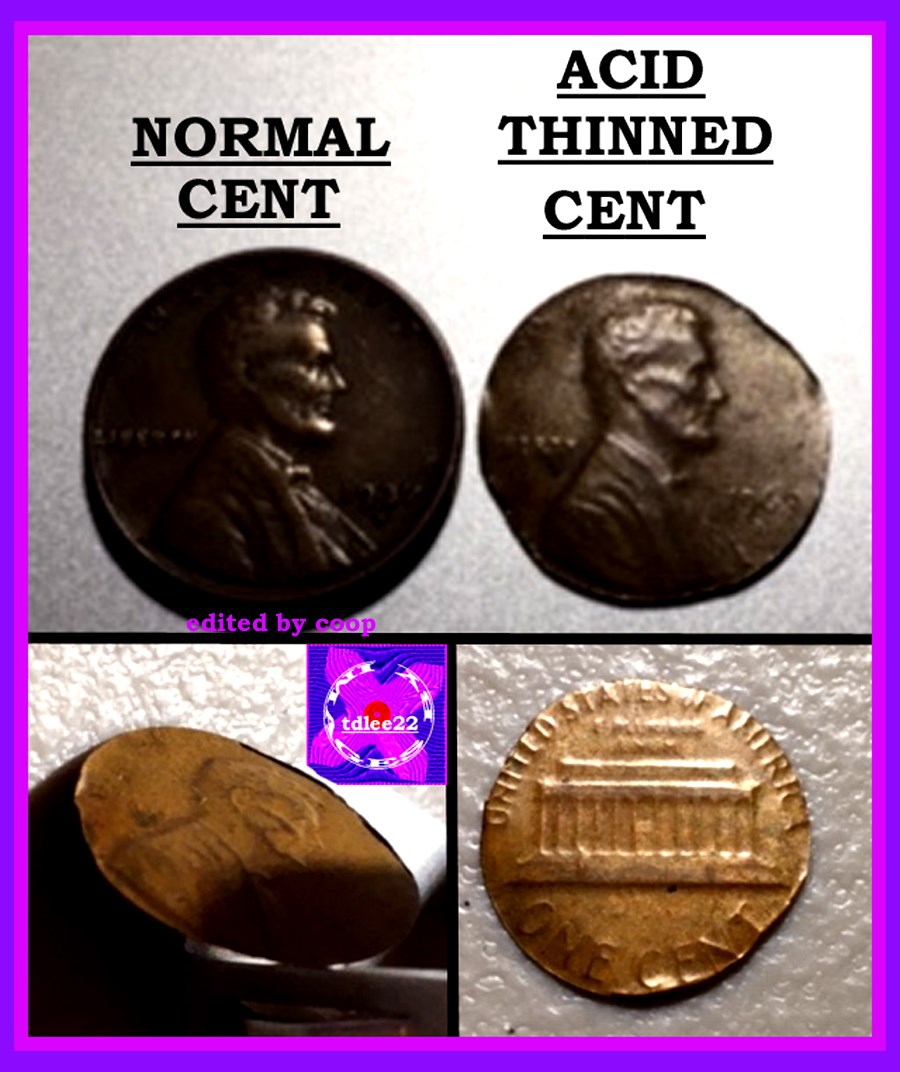
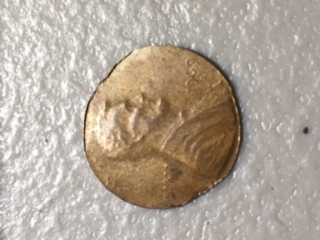
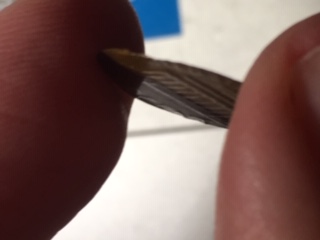
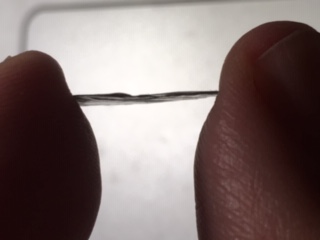
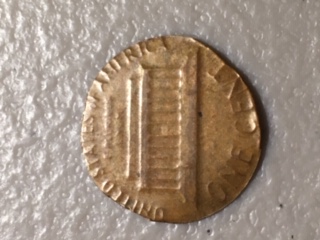
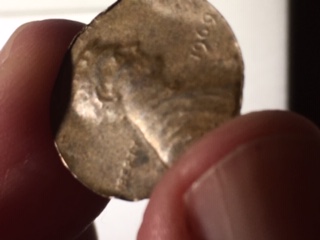
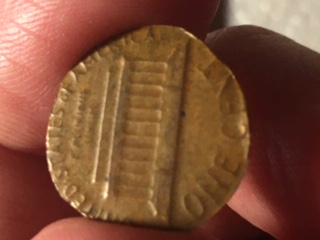
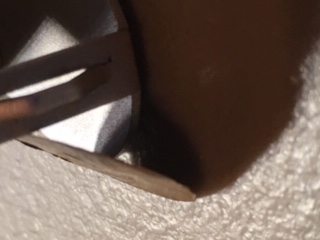
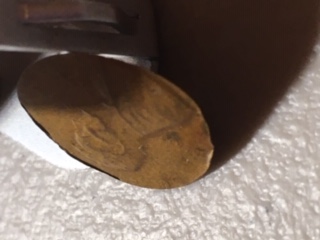
I have run across a thin penny that I have never seen one like it. It looks to be struck on a dime size die. I have included pictures of the penny. In all my years of coin collecting I have never seen anything like this example. Can anyone tell me what I have and what is the value of this coin?
I agree with the upthread comments. The coin took a swim in Nitric Acid. (Don't try this experiment anywhere but a proper lab with appropriate equipment, including a hooded vent.)
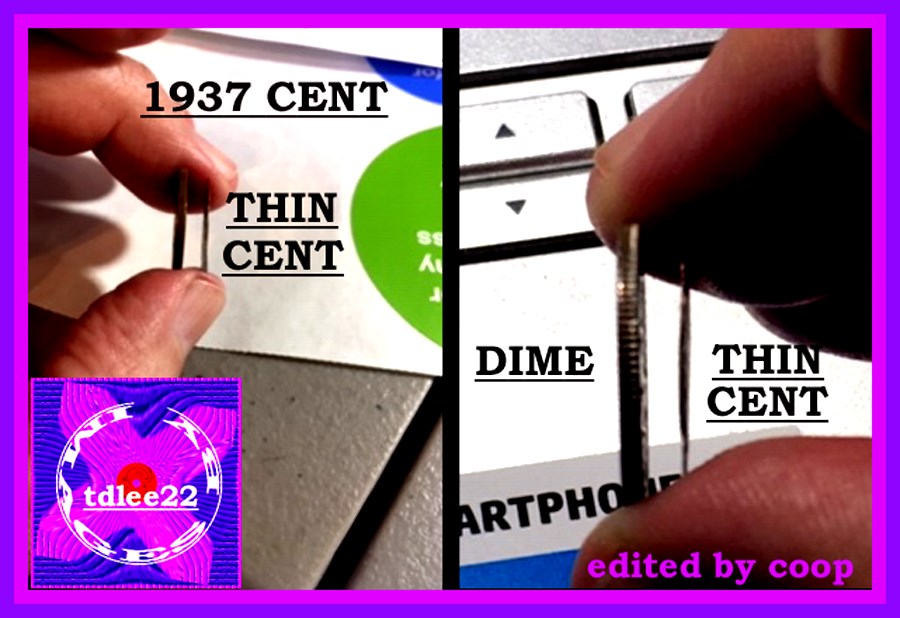
I appreciate all of your replies, but how do you take metal out of the center of a bronze cent without completely destroying the image and type? Acid just can't take metal from the middle of the coin and leave the obverse and reverse in amazing shape if it was placed in acid. The coins face is smooth and not pitted. There is too much detail for this coin to have been placed in acid in my opinion. I have included pictures of the coin beside a 1937-S Wheat cent to show the difference in thickness of the two coins. I have also taken pictures of the coin with a dime. The size of the penny is very close in size to the dime circumference wise.
When acid attacks a metal, it attacks it uniformly. It won't smooth out a surface that has contours, it will match them as it eats away at the metal.
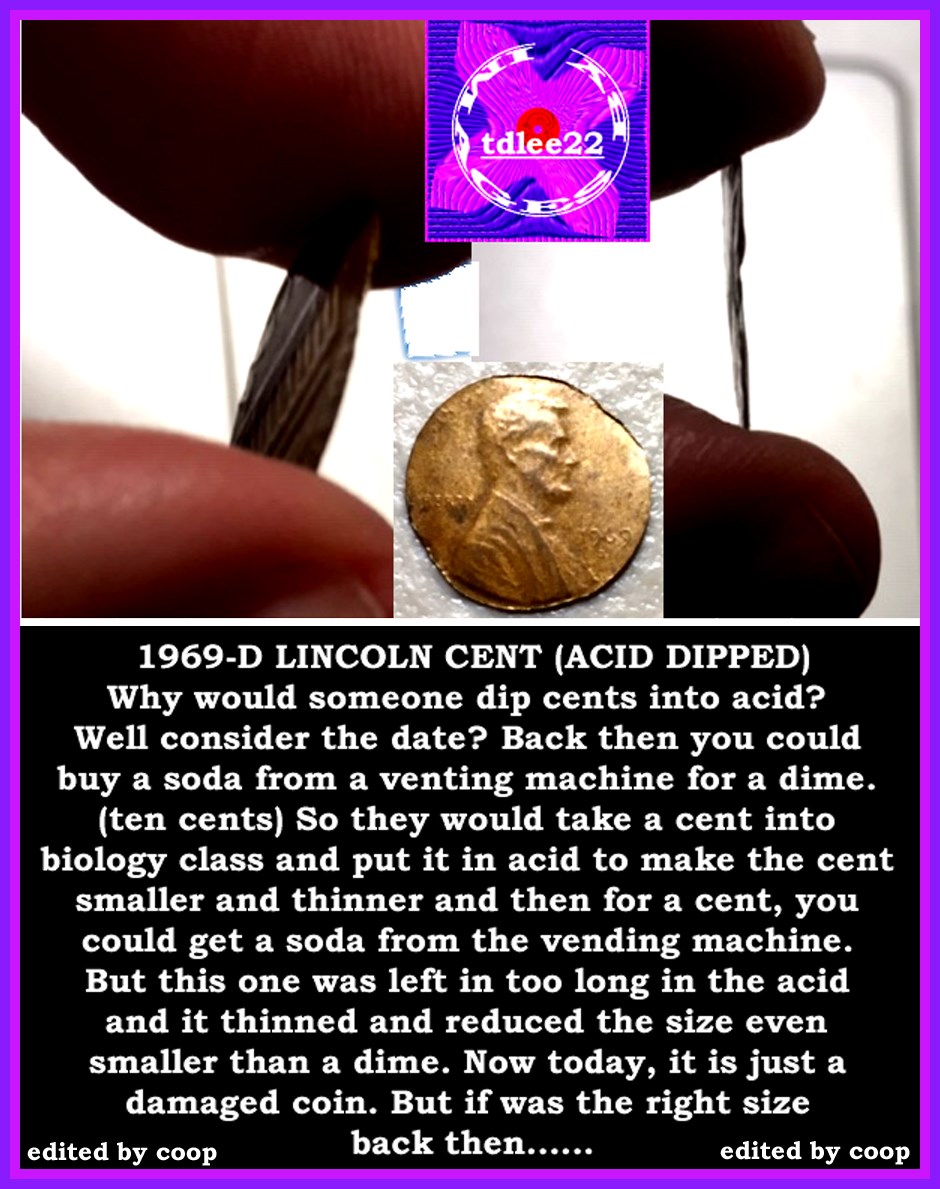
I can assure you that this coin has been dipped an an acid, probably nitric acid as fortcollins said. Here is a video showcasing a similar effect to your cent:
There are mint errors that can make for a thin coin, but yours does not look like them. I have to agree with all of the above, this coin has been subject to acid erosion, most likely deliberate damage, and parts have been grind down. Motive is unknown, but whoever did this probably was trying to get it down to the size of a dime for use in a vending machine (Coke machines in the 60's and 70's were a dime), and perhaps they miscalculated. This does not have the look of a mint error, so it has to be labelled as post mint damage.
Also think about this, if the planchet was that thin to start with, there is no way it would fill the dies with that much detail. The metal to fill the recesses in the die just wouldn't be there. You would have the out line of Lincoln, but all the surface of the bust would be flat because the metal wouldn't get that deep into the die.
Disclaimer: While a tremendous amount of effort goes into ensuring the accuracy of the information contained in this site, Coin Community assumes no liability for errors. Copyright 2005 - 2026 Coin Community Family- all rights reserved worldwide. Use of any images or content on this website without prior written permission of Coin Community or the original lender is strictly prohibited. Contact Us | Advertise Here | Privacy Policy / Terms of Use










 Posted 07/22/2020 08:26 am


 to Community.