|
This page may contain links that result in small commissions to keep this free site up and running.

Welcome Guest! Registering and/or logging in will remove the anchor (bottom) ads and the security checks. It's Free!
To participate in the forum you must log in or register. | Author |
 Replies: 192 / Views: 24,026 Replies: 192 / Views: 24,026 |
|
Pillar of the Community
4628 Posts |
Mods, hopefully we can sticky this thread, so all newcomers and new collectors have the basics on this fascinating and beautiful series of coins. 1. The 8 denominations usedNew Zealand used a Sterling system of coinage from 1840 to 1967. Before 1933 British coins (And from 1910 also Australian) were used here, but starting in 1933 we got our own coinage with 5 silver coins and then the 2 copper ones in 1940. In addition in 1935, 1949 and 1953 Crowns were also issued. This post I will show the 8 deniminations and subsequent posts discuss each and the show some conditions. From lowest to highest. 1. Halfpenny Worth ½d or 1/480th of a pound. Medal Bronze and size 25.4mm (1 inch) weight 5.71 grams. Issued 1940 to 1965, shows a Maori Tiki design and was designed by New Zealand artist Leonard Mitchell.
2. One Penny Worth 1d or 1/240th of a pound, size 30.8mm, metal Bronze and weight 9.40 grams. Issued 1940 - 1964 (1965 set only) This showed a Tui bird in a Kowhai tree and was also designed by Leonard Mitchell in 1939. Like the Halfpenny, the coin was released after the silver denominations. Before late 1939 NZ used Australian and British pennies, these still circulated after 1940. Further posts will show the higher coins. This is a work in progress. Edited by Princetane
08/08/2020 3:46 pm
|
|
|
|
Pillar of the Community
 4628 Posts |
3. ThreepenceThe smallest coin in size being just 16.3mm in size and weighing barely 1.4 grams. These were very fiddly and easily lost. It was worth 1/80 of a pound or ¼ of a shilling.  Like all the coins from here on, these were made 50% silver to 1946 and Cupronickel from 1947 - 1965. Design is by Kruger Grey and shows 2 crossed Maori war clubs known as Waihaka. 4. SixpenceThis coin is worth 6d or 1/40th of a pound, and half a shilling. The coin is 19.1 mm in size and was also considered small weighing just 2.81 grams.  Sixpence on right. Like the 3d, it was 50% silver to 1946 and Cupro nickel afterwards. The design shows a Huia bird. This bird was considered extinct in 1907. Like all the silver coins, it was designed by Kruger Grey and was first issued in 1933/34. 5. ShillingThe one shilling coin is worth 12 pence or 1/20th of a pound. The coin is 23.4mm in size and weighs 5.63 grams  The shilling shows a Maori warrior pouncing ready to attack holding his taiaha (War spear) and wearing a Piupiu (Grass skirt). This image is based on the past and no Maori would dress like this now, except in a cultural performance. Same metal and designer as the 3d and 6d. Edited to add better shots of the 3d and 6d.
Edited by Princetane
08/09/2020 12:18 am
|
|
Valued Member
Australia
370 Posts |
Excellent Stuff. Have always had a soft spot for NZ coins.
|
|
Pillar of the Community
4628 Posts |
The 3 Top denominations 6. FlorinWorth Two shilling (24 pennies - 1/10 of a pound)  Metal - 50% Silver to 1946, Cupronickel 1947 - 1965. Size 28.4mm - weight 11.28grams Design - A flightless bird known as a Kiwi, the national symbol of New Zealand. Designed by Kruger Grey. Issued from 1933 to 1965, no Florins were issued between 1954 and 1961. 7. Half CrownWorth Two shillings and sixpence - 30 pennies, 1/8 of a pound  Weight 14.14 grams - Size 32.14mm, Metal as Florin Designer Kruger Grey and issued 1933 - 1963 (1965 was a one off set coin only). No Halfcrowns were issued between 1954 and 1960. The coin was retired as a denomination in May 1965 2 years before decimalisation. No coins dated 1964 were issued and 1965 dated coins never entered circulation as they were only issued with sets in late 1966. 8. CrownsA crown was worth 5 shillings, 2 Half crowns, 60 pence and ¼ of a Pound  1949 Crown - Half silver - issued for a non existent royal Visit  1953 Royal Visit Coronation coin - Cupronickel. Size 38.5mm weight 28.28 grams. Designers - Waitangi Percy Metcalfe/Kruger Grey Royal Visits - Both James Berry These were only issued 3 times and were non circulation pieces. the 1935 Waitangi Crown (Not shown) is extremely rare and the 1949 and 1953 coins are more common. The regular coins in use were the Half Crown down to Half Penny. Next The Rulers on coins Edited by Princetane
08/09/2020 05:35 am
|
|
Pillar of the Community
4628 Posts |
Rulers on the New Zealand coinsDespite being an Independent country, NZ always used the British monarch on the back of their coins. In this era were 3 rulers and 4 main types. I will show you them from Earliest to latest. 1. King George V 1933 - 1936 This was a colonial portrait designed by Kruger Grey in 1931/32 for the new coinage of Southern Rhodesia and used on their coins from 1932, New Zealand in 1933 and Fiji from 1934. The portrait also appears on Mauritian coins of the era, but nowhere else. Other countries used a different Bertram McKennal portrait from 1911 crowned and uncrowned in the UK. The portrait shows the king in an ermine robe and waering the large state crown. The legend is in English There are NO NZ coins with a portrait of King Edward VIII 2. King George VI 1937 - 1947 This was designed by Humphrey Paget and showed the King without a crown as they decided that "White" Dominions could use this portrait (Previous rulers only had uncrowned coins on those of the UK). Colonies with a largely non white population like Fiji and Jamaica had the crowned effigy of the King. The inscription was again in English and this version has George VI King Emperor. This was on all coins to 1947 and included cupro nickel 1947 dated coins. 3. King George VI 1948 - 1952 Exactly the same as above except the Inscription has changed. With India's independence in 1947, he was no longer and Emperor and thus it was changed to "King George the Sixth"
|
|
Pillar of the Community
4628 Posts |
4a. Queen Elizabeth II - 1953 - 1955 (1956-57 varieties) This protrait was designed by Mary Gillick and again used on all White Dominions and British coinage, again a crowned portrait was used in the colonial possessions. This earlier version has less detail and is the "Strapless portrait), used on all coins to 1955. In 1956 and 1957 (Sixpences only), it was also used on some coins and these varieties range from scarce to rare. 4b. Queen Elizabeth II 1956 - 1965 (1955?) In 1955/56 the portrait was recut to show a shoulder strap and more detail in the hair and wreath. This was used through to the last coins in 1965. There was rumours some 1955 dated sixpences also had this variety, but these are so rare no photos of them exist!
|
|
Pillar of the Community
4628 Posts |
SOME COINAGE FUNDAMENTALS1. All coins were minted at The Royal Mint in London, UK. No coins were ever minted in New Zealand in this era 2. No coins were minted in the years 1938 and 1966 3. The Bronze coins were minted only between 1940 and 1965, previous to this date, Australian and British pennies were used. It was mostly 95.5% Copper or 97% copper with trace amounts of Tin and Zinc added. The rate of copper went up in 1944/45 and 1950s. 4. The "Silver coins" 3d to 2/6 were minted in a Quarternary alloy (50% Silver, 40% Copper, 5% Nickel and 5% Zinc) between 1933 and 1946. In 1947 this was changed to Cupro nickel alloy (25% Nickel and 75% Copper). Let make this clear, all 1947 dated coins are CUPRONICKEL All 1946 coins are the SILVER ALLOY 5. The only exception was the 1949 Crown which was also 50% silver like the pre 1947 silver coins. 6. The 1935 Waitangi Crown is the rarest of all the New Zealand coins ever issued with 1128 minted, They were sold for 50% over face in 1935/36 and thus were rare. 7. Proof coins were minted most years, but issued commercially only in 1935, 1953 and the 1965 Proof like set. 8. Crowns never entered general circulation. Next will be info about each coin starting with Halfpence. An excellent resource and what I use is Robert Pepping - New Zealand coined, Coinage 1933 - 1965, 2017 published and sold in New Zealand.
|
|
Pillar of the Community
Australia
2180 Posts |
I like my New Zealand coins - nice aside to the Australian collection.
|
|
Pillar of the Community
Germany
995 Posts |
Very interesting and informative stuff  |
|
Pillar of the Community
4628 Posts |
Halfpennies 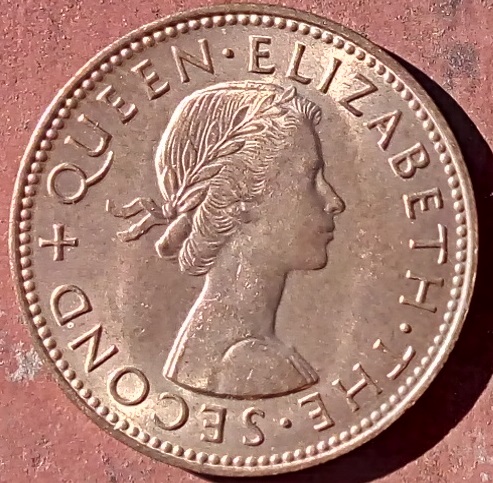 Minted Minted 1940 to 1965. Released Dec 1939 (Coins dated 1940) None minted 1943 or 1948 Rare years - None
Scarce Years 1954 and 1955 (200,000 each) Total minted - 49,256,800 Half pennies are actually quite scarce compared to the penny, they frequently ran out of them in the world war 2 era and the later 1960s when a shortage of all coins took place. Average condition of 1940s and early 1950s coins are fine, 1956 - 1963 are VF and nearly all 1964 and 1965 coins are found EF to UNC. A fun coin to collect and very beautiful for such a low denomination piece. These coins were designed as part of a 3 coin competition in 1939 to celebrate the Centennial of New Zealand anniversary. The Halfpenny and Penny became lasting designs, but the Half crown was a one off.
Edited by Princetane
08/09/2020 8:47 pm
|
|
Pillar of the Community
4628 Posts |
The One Penny coin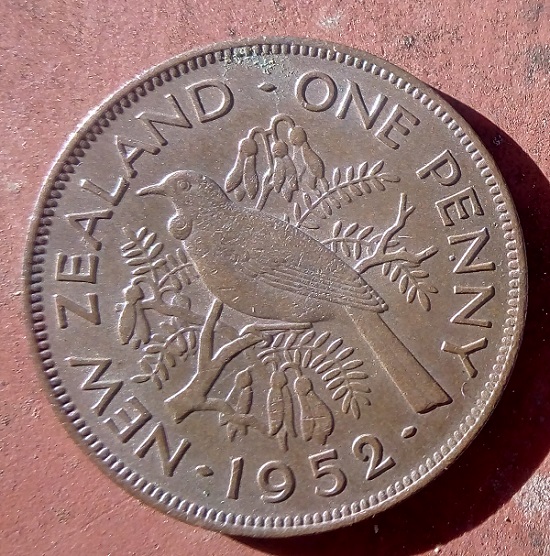 Minted Minted - 1940 to 1964 (1965 was a coin in sets only) Years not minted - 1948 Rare years - None but 1956 NSS variety is rare Scarce Years - None but 1945 Burnished penny is scarce Less common years - 1941, 1954, 1965 (Set only) Total minted - 138,099,000 Varieties - 1945 Burnished and 1956 No shoulder Strap Pennies are amongst the most exciting and commonly collected New Zealand coins with plentiful examples of all dates surviving. They were the most issued of any coin in the NZ Predecimal series. 1964 saw a staggering 18 million coins issued, the highest mintage for any Predecimal coin in one year. 1952 and 1958 also saw nearly 11 million each. Apart from 1965 which had 200,000 in sets - the lowest years saw around 1 million coins issued. Despite this, there was always a shortage of pennies, especially during WW2 again and the 1964 - 1967 period. In late 1966, 6 tonnes (About 650k) of Australian pennies were imported here to alleviate a coinage shortage. In 1944/45, the situation were so dire, that stamps were handed as out change for ½d and 1d amounts. Like now, every price ended in a halfpenny or penny to make it look cheaper (Now just 4/19/11½ instead of £5!  ) Some 1945 pennies were issued on Burnished blanks which were darkened at the mint, so that people would not hoard them as they were "shiny" during WW2. This was meant for British coins, but a handful of Kiwi penny blanks were also burnished and this was not picked up until the coins had been minted, being the war - melting the pennies down again was not in question. The 1956 No shoulder Strap (Type 4a, when all the others were 4b) is very scarce and only around 50k, these coins go for hundreds of dollars and is the only real rarity of this type. Sadly I do not have one now, but will show such a coin on this thread if I ever get one. New Zealanders never had a Farthing coin and my asking of elderly NZer's has most of them never remembering farthings. Most of our oldest are 80s, so their memories only reach back to the early 1940s - so farthings may have circulated before then, but definitely not after 1940. Pennies are mostly found in Fine condition for dates up to 1957, although VF examples are quite common too. For coins from 1957 to about 1962/63 VF and even EF are common, most 1964 Pennies are shiny and at least EF, afew UNC and 1965 coins are always set pieces so AU or UNC. Very rarely will you find penny or a halfpenny in VG or lower condition as Bronze was more durable than silver and unlike Britannia pennies which circulated for well over a century in some cases, these coins only circulated for 27 years. At the same time British and Australian Bronze coins circulated freely and given their low value - heaps have survived many dealers will not touch them with a bilge pole.
Edited by Princetane
08/10/2020 06:54 am
|
|
Pillar of the Community
4628 Posts |
The Threepence - 3dA rarity just for you - you find one with this date - keep it! Minted - 1933 to 1965, none in 1938, 1949 or 1966 Rare Years - 1935 (Obviously) Scarce Years - 1950, 1942 One Diamond, 1956 No shoulder strap Less common years - 1937, 1939, 1941, 1945 Total minted 129,207,364 - 2nd highest of all the coins. The threepence is an interesting coin, which saw the ehaviest usage after the penny. The smallest of the silver coins, it was the most fiddly and easily lost. 1935 is by far the rarest date and the rarest circulation coin in the series (The Waitangi crown was an expensive one off piece, at 7/6 each for a 5/- it made no sense to spend one at the time). These coins included 40k standard and 364 proofs. Even a worn 1935 is at least $200 and figure $1000 for EF and $5000 and up for UNC. Many NZ collections are lacking this coin including mine until June and I had to fight off a few people to get it. Conditionwise, these coins are usually less well preserved than the bronze coins. Any silver ones (1946 and back) are usually found in Average Circulated which means Good to Very Good - basically Terrible would be a way to describe them. Fine and Very Fine cost just a bit more ($5 for common dates, $20 for less common ones) and look a kazillion times better. Figure lots more for EF up, although common dates like 1933, 1946 and 1934 you can find EF for as little as $10! The Curponickel coins again around Fine in most cases, but 1951 and 1952 getting VF and EF can be very easy as many of these were released only in 1963. Most 1950s coins before 1957 are also only Fine and 53/54 sometimes you get coins in VG! 1958 onwards VF is a basal state and EF is usual. 1964 and 1965 UNC is easy to find. An interesting variety is the 1942 with one diamond on the date as well, like this one  Later 3d's look like this  The big difference is the initials KG were added below the clubs in 1937, notice the 1935 3d does not have these.
Edited by Princetane
08/10/2020 03:57 am
|
|
Bedrock of the Community
United Kingdom
19171 Posts |
Very interesting, Princetane!
My paternal grandmother (born in Waimate in 1885) remembered farthings when I met her as a young teenager on my first visit to New Zealand. She gave me a purse full of NZ pre-decimal coins that included several halfpennies and pennies, two halfcrowns and a British George V farthing. I don't think she remembered when farthings disappeared from circulation.
|
|
Bedrock of the Community
Australia
21794 Posts |
I am really a fan of the 1940 Centennial Half Crown.
But it has to be in high MS condition with good luster , and without any breaks in the vertical strands of the skirt.
The colonial portrait of George V is very nearly, but not exactly the same, as the portrait on the Australian Canberra Florin of 1927.
|
|
Moderator
 United States
198004 Posts |
Great stuff. My NZ collection is not a collection. I have one 1964 penny and one 1943 sixpence.  Quote:
The one shilling coin is worth 12 pence or 1/20th of a pound. The coin is 23.4mm in size and weighs 5.63 grams Just a smidgen smaller than our quarter. I always imagined this coins being larger than that. I suppose I need to seek one to examine for myself. ebay awaits!  |
|
Pillar of the Community
4628 Posts |
Great comments guys
NumisRob - most likely it was the 30s then as all British coins except gold which was demonitised in 1931, was legal tender here until 1934 (Silver) and 1967 Bronze. It seems as the Kiwi bronze came in, the farthing was not required.
sel_69 You're in luck, most of the Centennial Halfcrowns are found in at least VF and this was as most were immediately hoarded, but 80 years of greasy fingers and being tossed in buckets, jewellery and junk boxes has worn then down to VF!
J Buck, yes - the coin sizes based on the 1816 British recoinage. Most of the time before 1918, an American dollar was pegged at 4/- to 5/- meaning $4 or $5 = £1, so that a shilling was about 22c - 25c and the Half crown was a bit larger than a Half dollar, mostly it was 4/3 or 4/6 to a dollar. A british sovereign was slightly smaller than a Half eagle etc.
By 1933 with base silver and the war changing dynamics, the dollar was worth much more, but the coin sizes survived until 1992 in the UK, 2005 in NZ and still in Australia.
A 2020 Australian 5c and 10c are the same size as a 1816 Shilling and Sixpence!
|
| |
Replies: 192 / Views: 24,026 |
To participate in the forum you must log in or register.
Disclaimer: While a tremendous amount of effort goes into ensuring the accuracy of the information contained in this site, Coin Community assumes no liability for errors. Copyright 2005 - 2026 Coin Community Family- all rights reserved worldwide. Use of any images or content on this website without prior written permission of Coin Community or the original lender is strictly prohibited.
Contact Us | Advertise Here | Privacy Policy / Terms of Use
|
| Coin Community Forum |
© 2005 - 2026 Coin Community Forums |
| It took 0.55 seconds to rattle this change. |
 |
|
| |
| |




 Posted 08/08/2020 7:20 pm


