Quote:
over half the ones I've seen in collections are
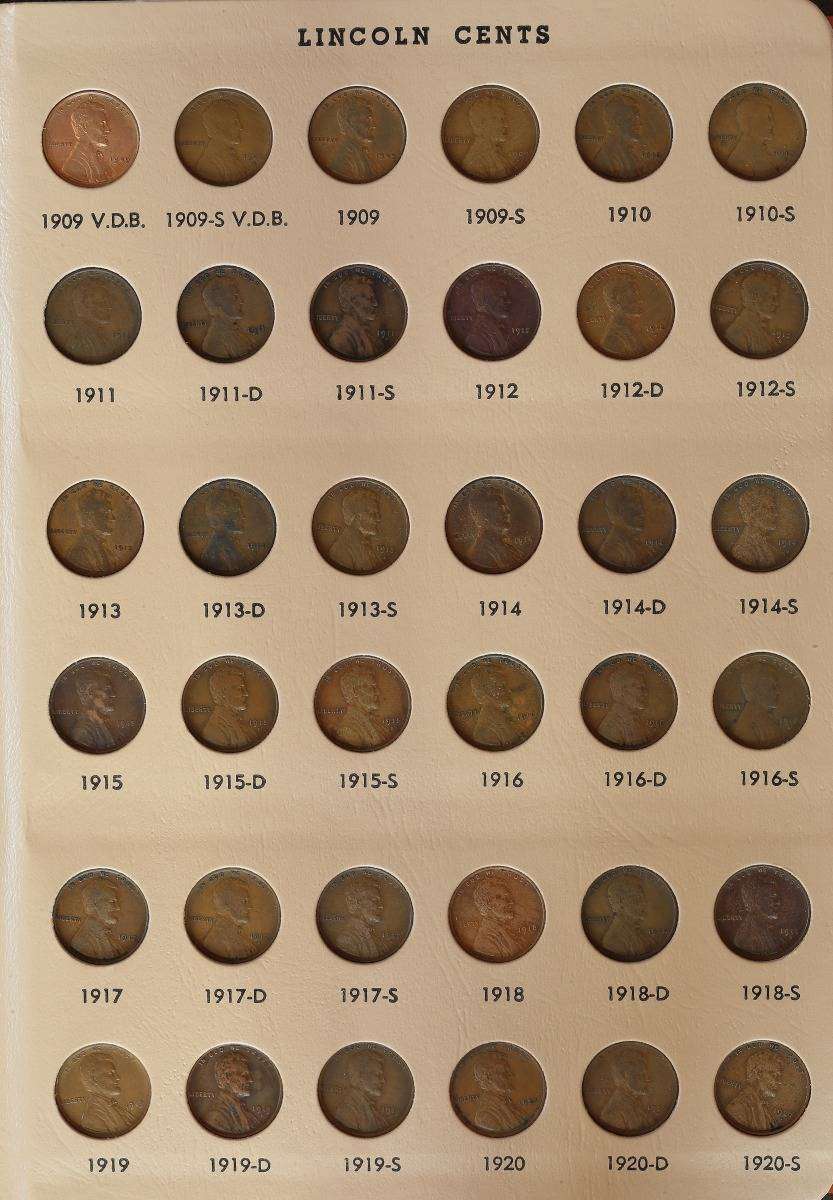
in the album.
Right, I'm aware of that, but how many of those were cracked from holders so that the buyers was sure it was genuine? I should have clarified by raw I meant that they were never submitted in the first place, not sure why I worded it that way.
Quote:
however, in a circulated collection the 09-S VDB is still the key
This is both true and untrue at the same time, I'll elaborate as to why
Quote:
The 14-D is much easier to obtain and is cheaper than the 09-S VDB in, say, VG grades
This is accurate.
Now to elaborate on why even in circulated grades I still believe the 14-D to be the key date.
Firstly, regardless of grade it is a simple fact based on the already presented data that the attrition rate of the 14-D was much higher, and less examples still exist overall regardless of grade.
If we want to get into the data a little more I have no issue doing so. For the purpose of this analysis I will be using slabbed examples as my data points, I am aware that many low grade 14-Ds are traded raw, specifically below the Fine grade range, and will adjust the numbers in accordance with what I, having worked at, and currently working at an LCS have seen and dealt with, as well as data from other shops and markets such as
ebay.
For this data set I'll be breaking it down by general grade range. The ranges will be as follows; Below Good, Good, Very Good, Fine, Very Fine, Extremely Fine, and About Uncirculated.
From my experience and the information I have available in the grades of Poor to About Good about 1 in 3 14-Ds are slabbed, and I've personally never seen an S-VDB below or at AG due to how difficult they are to identify and authenticate, as such I estimate that many examples probably do exist, but are in such a state that a positive identification is not feasible. As such I'll be operating under the assumption that all 09-S VDBs that can be positively identified are slabbed and that while a few may exist that are not slabbed the number would fall within standard deviation and as such are not statistically relevant. Regardless, to adjust for this I'll be adjusting the pop numbers to account for a more realistic population.
PCGS has graded only 3 S-VDBs at AG-03 or below, all 3 of which are AG coins. NGC has graded only 2 examples. As such there are a mere 5 examples known in grades below Good. Logic would dictate there are more that exist, and due to the fact that those such examples are probably sitting in albums never having been submitted I'll give the population a bump to 15.
By comparison, PCGS has graded 57 examples below Good, and NGC graded 29 for a combined population of 86. Adjusting for the fact that around only 1 in 3 or so are slabbed that exist (again based on what data I have observed and can find records of) we can estimate there are about 258 that exist. That would mean in grades below Good the S-VDB is scarcer, though that's largely due to the coin not being positively identifiable often in grades that low.
Now on to the Good range (G-4 and G-6).
Regarding the S-VDB, PCGS has graded 117 examples and NGC 99 for a combined pop of 216. Once at the grade of Good I've found a majority of examples have been slabbed or were cracked after being slabbed. As such perhaps 230 to 250 exist in this grade range.
Now regarding the 14-D, again a majority of known examples are graded, and that will continue from this point out, and to reiterate, when I mean graded, I mean graded at some point in the past, regardless if it was later cracked or not.
PCGS has graded 779 examples in the Good range and NGC 727 for a total of 1506. Again, the S-VDB is much scarcer in the range of Good.
Now onto the VG range.
For the 09-S, NGC has 442 and PCGS has 556 for a total of 998.
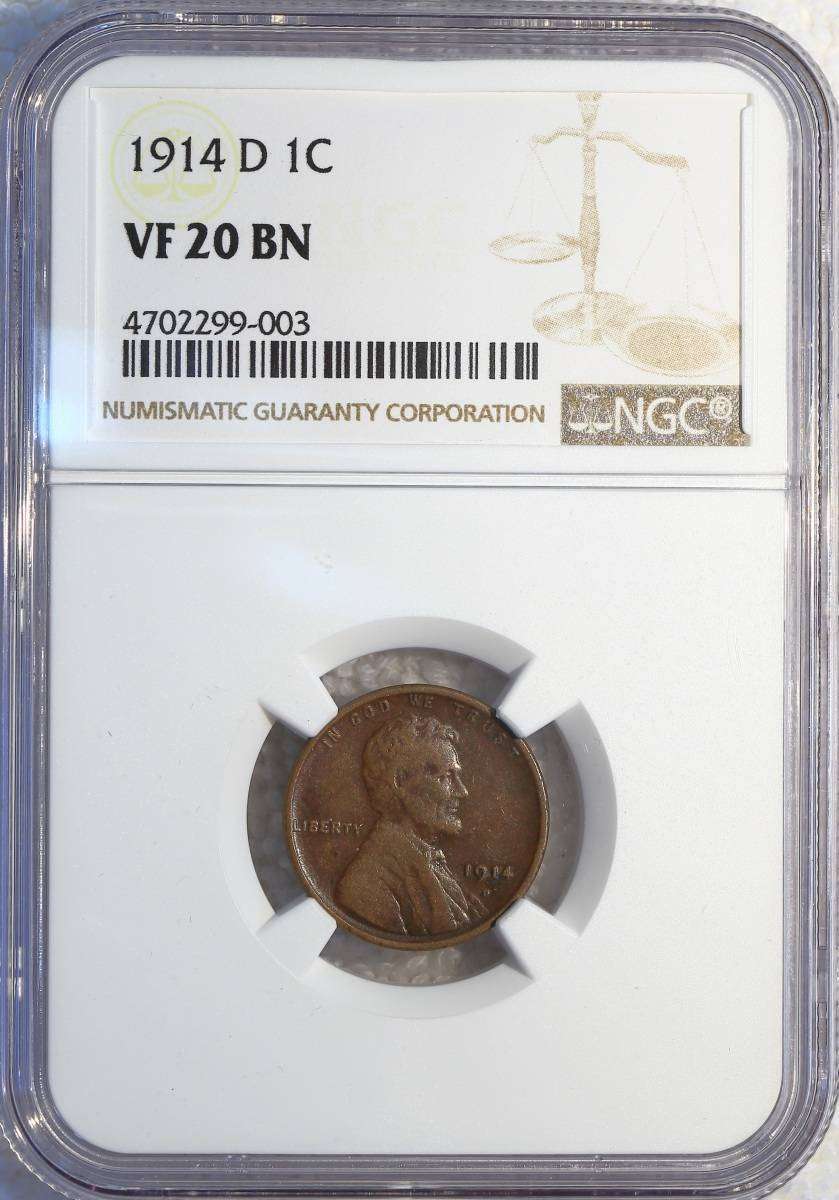
For the 14-D PCGS has 1609 and NGC 1156 for a total of 2765.
Again the 09-S is scarcer. But I'd like to point something out. Earlier I said that there was only around 16.5k of the 14-D exist at best. So far we're only in the bottom 10 grades and we've accounted for 25% of the population in the "low" grade tier. By comparison, with the initial estimate at around 33,000 examples of the S-VDB only about 4% of the surviving population is in the similar grade range. What this means is that while the S-VDB is scarcer in low grades, that grade range only accounts for ~4% of the total population available while that same range accounts for 25% of the population of 14-D examples available.
To go back to your initial statement, this is why the 14-D is so cheap in those low grades. Because in just the "low" ranges a quarter of the population is available and as such is cheaper.
Now onto the fine range.
For the 09-S PCGS has 1737 examples and NGC 1535 for a combined total of 3272.
For the 14-D PCGS 1810 and NGC 1128 for a total of 2938.
This marks the first time the 09-S is more common than the 14-D. This also means that the Fine range alone accounts for almost 18% of the 14-D population, while the Fine range only accounts for just under 10%.
Now onto Very Fine.
As for the 09-S PCGS has graded 4050 in the VF range and NGC 1831 for a total of 5881.
As for the 14-D PCGS has graded 2851 and NGC 1438 for a total of 4283.
Now into the VF range the S-VDB outnumbers the 14-D by a thousand examples.
Now into the EF range which I consider high end circulated.
For the 09-S PCGS has graded 2371 and NGC 1051 for a total of 3422.
For the 14-D PCGS has 999 and NGC 453 for a total of 1452.
Now there exists about twice as many 09-S then 14-D in this range.
Now onto AU.
PCGS lists 2646 09-S VDB in AU and NGC 1308 for a total of 3954.
As for the 14-D PCGS lists 636 and NGC 380 for a total of 1016. Just over a quarter of the pop of the 09-S in AU.
Now to MS. For the MS ranges I will be separating into BN,RB, and RD. I will not separate numerical grades.
For the 09-S in MS BN, PCGS has 1705 and NGC 1244 for a total of 2949.
For the 14-D PCGS has 269 and NGC 221 for a total of 480.
Now MS RB.
For the 09-S PCGS has 4043 and NGC 1894 for a total of 5937.
For the 14-D PCGS has 455 and NGC 184 for a total of 639.
Lastly MS RD.
For the 09-S PCGS has 2432 and NGC 524 for a total of 2956.
For the 14-D PCGS has 263 and NGC 58 for a total of 321.
TLDR
The S-VDB is rarer in anything VG below, anything above and including F the 14-D is rarer and the gap only grows with the grade_





 Posted 09/21/2020 2:21 pm





