| Author |
 Replies: 19 / Views: 3,004 Replies: 19 / Views: 3,004 |
|
New Member
Ukraine
5 Posts |
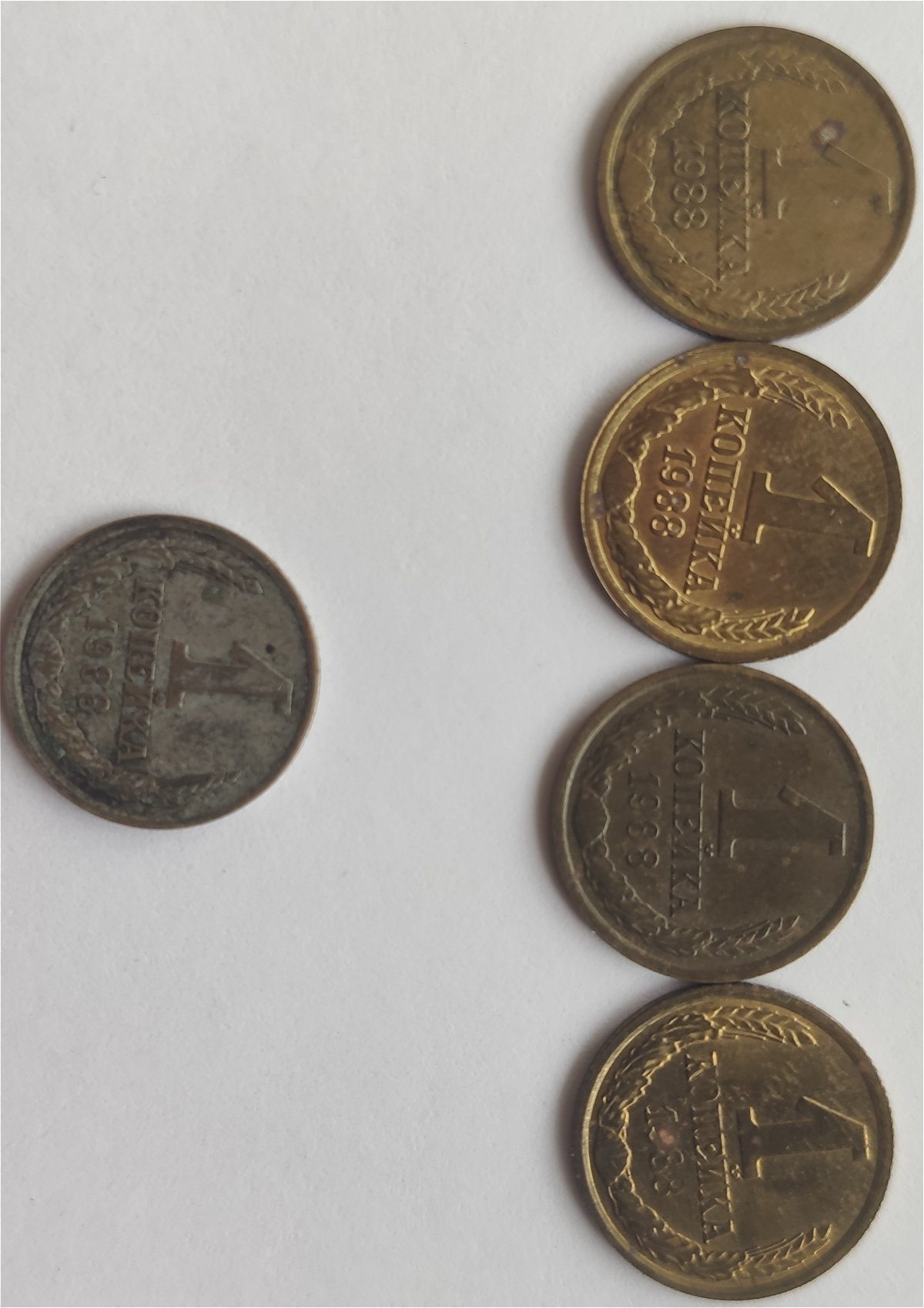
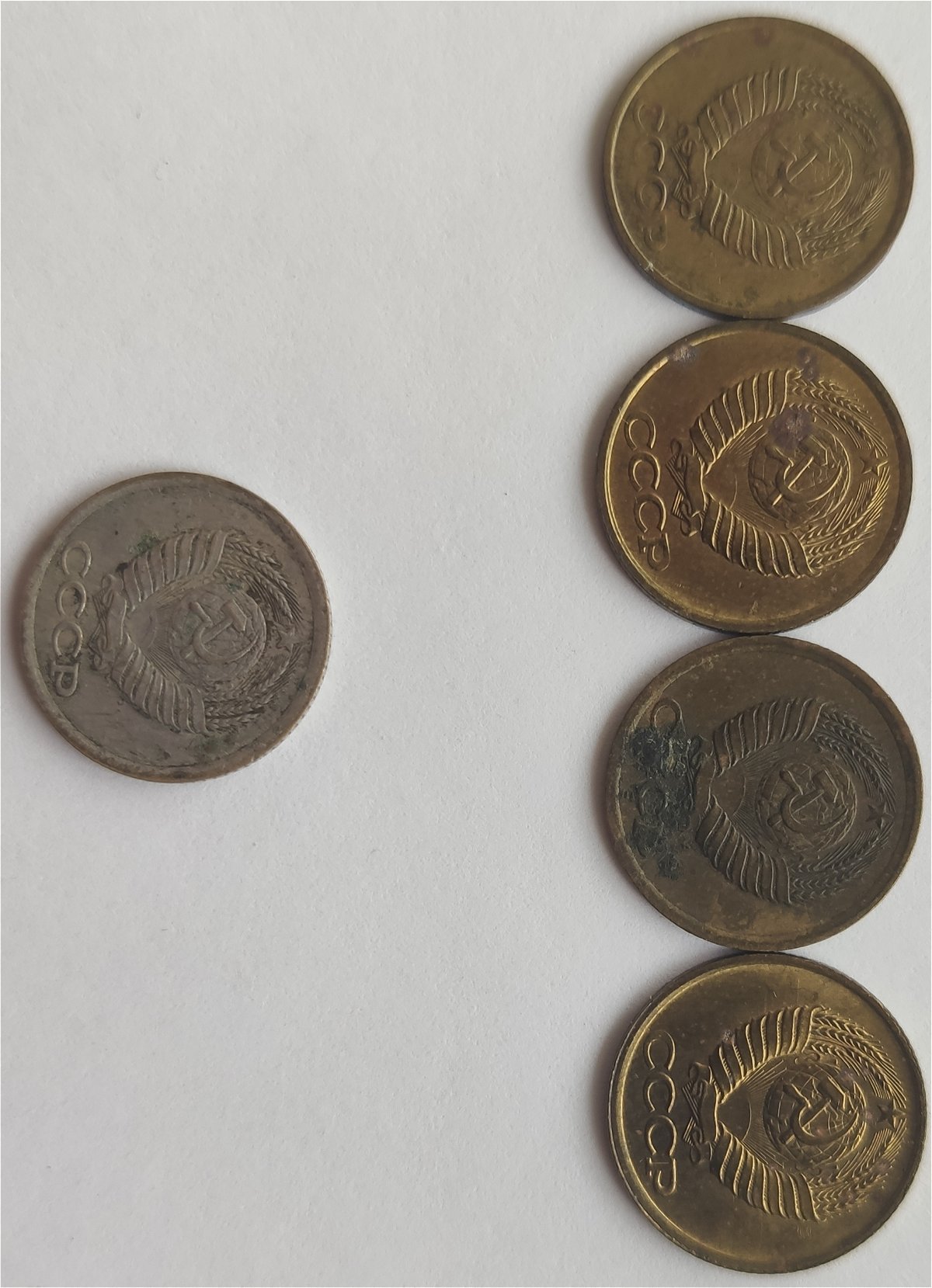
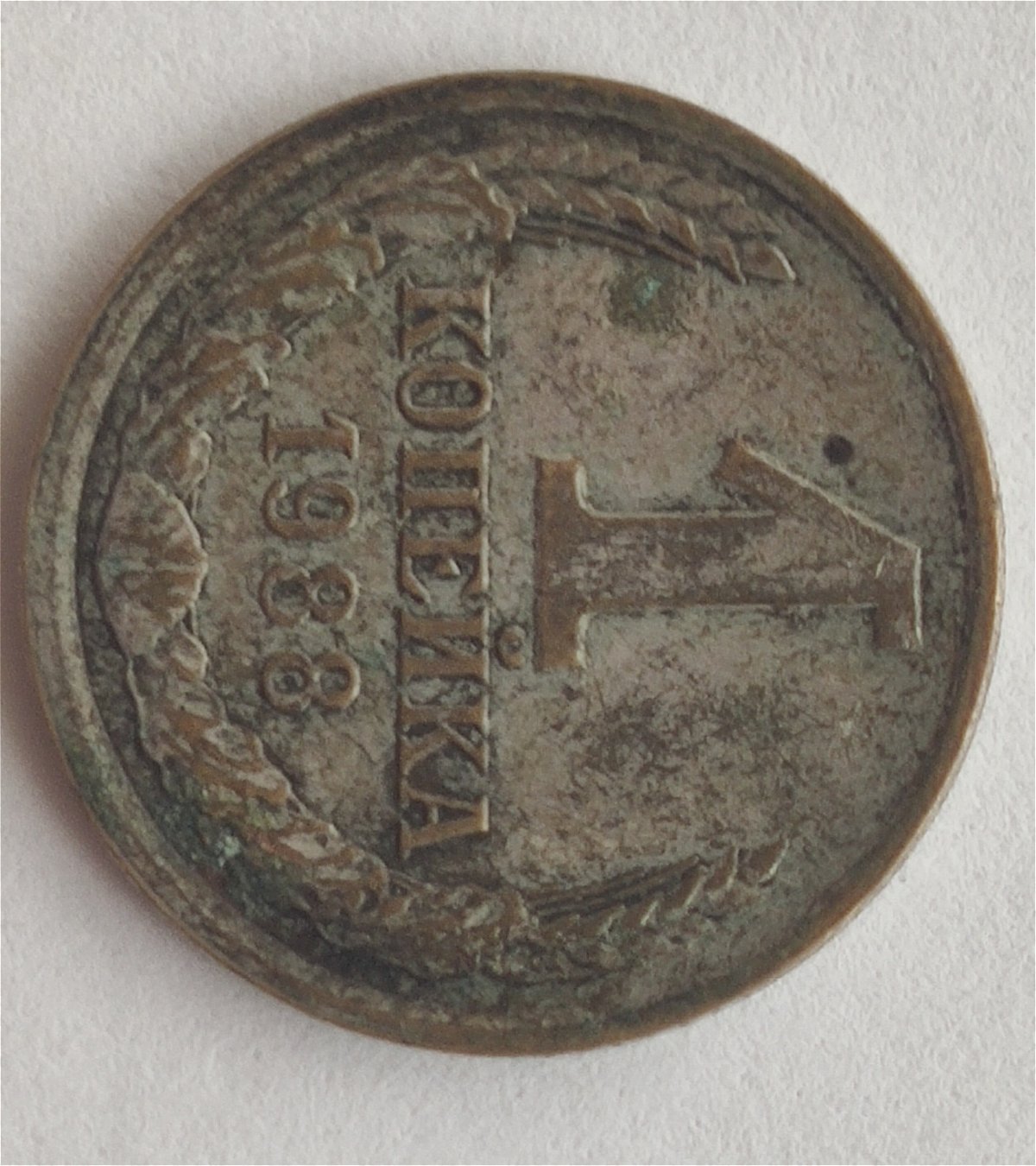
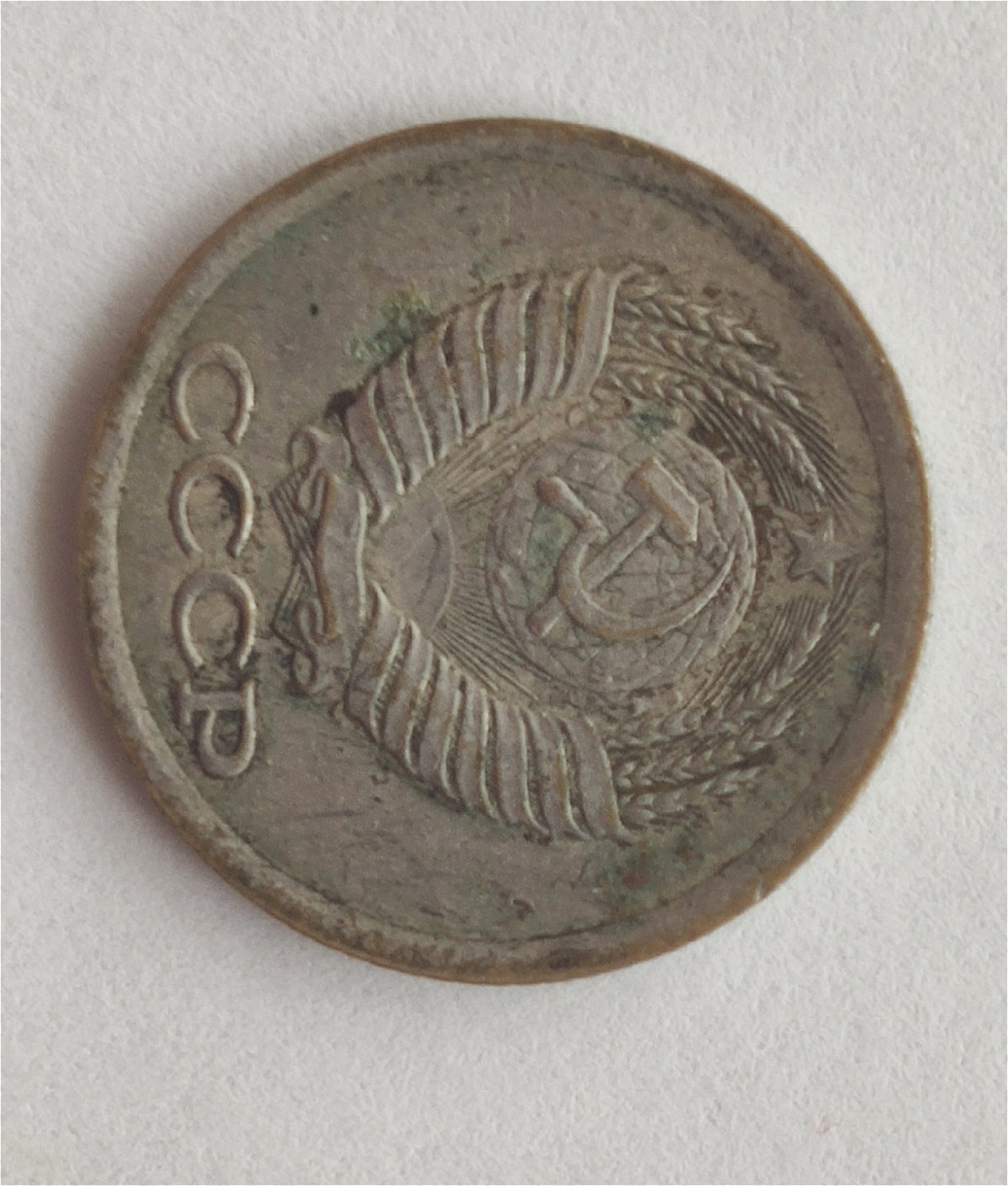
Hey! I could not find a section for Soviet coins, so I am writing here. Please help me evaluate this coin - 1 kopeck of 1988, the Soviet Union. (See photos) It differs from other kopecks of 1988 - in color (gray, ordinary coins were made of manganese brass, test coins were made of iron and covered with a copper-zinc alloy) and weight (I do not have special scales, but it feels lighter than others). In the photographs, the coin is located below for comparison, on top I put the usual kopecks 1988. Thanks in advance)     |
|
|
|
Moderator
 United States
56855 Posts |
 to CCF. Please crop photos properly before posting. One coin per thread works best. John1  |
|
Bedrock of the Community
United States
12477 Posts |
Is it magnetic?
In Memory of Crazyb0 12-26-1951 to 7-27-2020
In Memory of Tootallious 3-31-1964 to 4-15-2020
In Memory of T-BOP 10-12-1949 to 1-19-2024
|
|
New Member
 Ukraine
5 Posts |
John1, okay, Thanks!
Spruett001 no, it's not.
|
|
Moderator
United States
195203 Posts |
to the Community! Your post was moved to the appropriate forum for the proper attention.  If you need help cropping your images, try the Free Image Optimizer. |
|
Pillar of the Community
Australia
3841 Posts |
I believe it's just toned.
Quality control was quite poor back then.
|
|
New Member
Ukraine
5 Posts |
Jbuck, thanks for the transfer)
Gxseries, I didn't even think about it, thanks!
|
|
New Member
Ukraine
5 Posts |
|
|
Pillar of the Community
Canada
2785 Posts |
looks like environmental damage (toning) to me
|
|
Pillar of the Community
 United States
8044 Posts |
Looks like a different composition to me. But that could only be confirmed with analysis.
Also, it looks slightly smaller in diameter to me than the brass coins, but that could just be the photography angle.
|
|
New Member
Ukraine
5 Posts |
Wade, Tdziemia, most likely toning, I will sort out the rest of the collection and then I will bring the coin for analysis.
Thanks)
|
|
Valued Member
404 Posts |
@gxseries, you are actually completely wrong (amazing, from someone who is a self-proclaimed 'expert' on Soviet coinage). Quality control was actually quite good in the Soviet Union, which is why major errors on Soviet coinage are relatively scarce, especially considering the quantities minted. Mint workers were well taken care of, and the environment was highly monitored as Soviet coinage was supposed to play on the international stage.
This is environmental damage causing a leeching of certain minerals from the alloy to the surface of the coin.
Edited by norantyki
02/21/2021 1:53 pm
|
|
Moderator
Australia
16982 Posts |
Given that the gray colour is wearing away on the high points, with the brass underneath showing through, I would assume the coin has been painted or plated - exactly how, why or with what, is impossible to tell (though XRF analysis might indicate the "with what").
Don't say "infinitely" when you mean "very"; otherwise, you'll have no word left when you want to talk about something really infinite. - C. S. Lewis
|
|
Pillar of the Community
Australia
3841 Posts |
Norantyki - you are living under a big rock. Perhaps reading more online would help broaden your knowledge instead of trolling. The zinc component in the Soviet coins has a tendency to cause ugly looking spots and this is more obvious when the alloys are not properly mixed. Early Soviet mint sets are of poor quality and the cellophone were made of brittle material. These only improved around early 1970s. The hard plastic cases didn't fare much better - early examples were found to be corroded. This only improved in the 1980s. Errors were quite commonly found however they have vanished in the last ten years. Here are some quality issue examples. 1967 commemorative 50 kopek in mint set with lovely finger print  1962 3 kopek UNC with zinc rot spot  1975 1 kopek with ugly looking corrosion 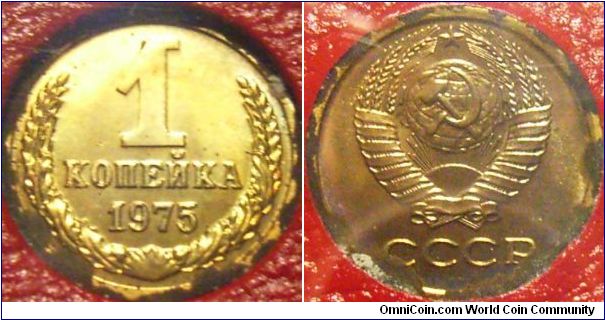 1975 20 kopek with similar issue 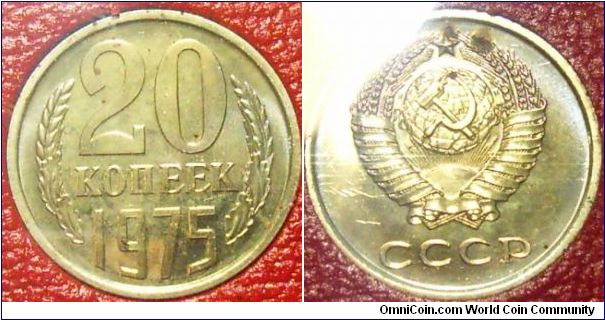 1961 5 kopek off center 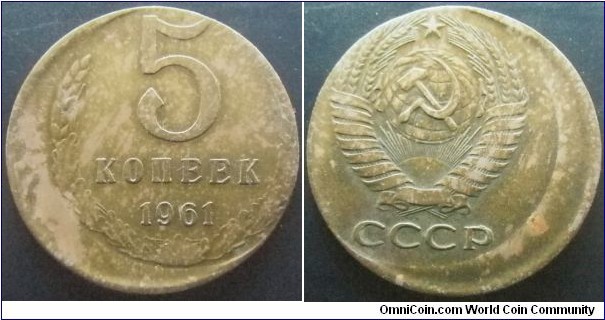 1988 15 kopek clip error - found in some junk lot 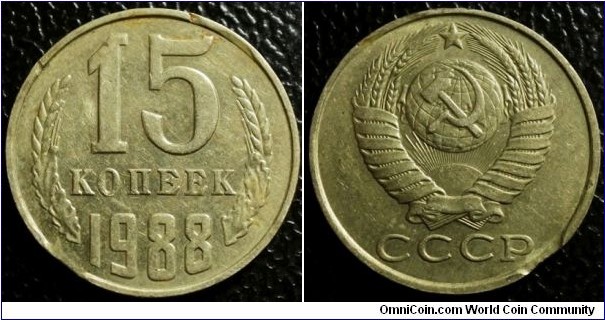 1991 20 kopek double clip 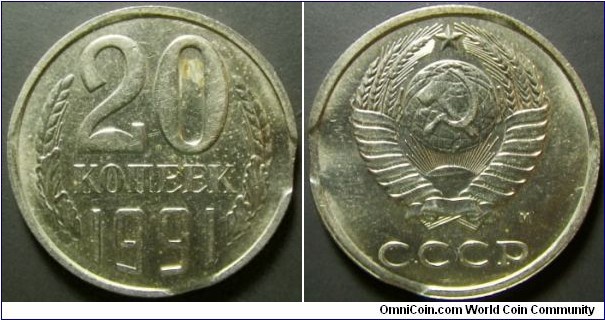 1991 5 ruble off center core 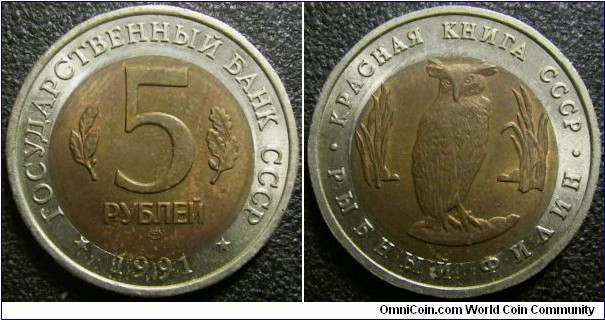 There were a lot of spectacular errors that were sold more than 10 years ago but I kept missing out on them. They rarely appear in the market these days. |
|
Valued Member
404 Posts |
@gxseries - not properly understanding the long-term properties of plastics and quality control are two separate things. What is more is that many of the coins you posted bear environmental, post-mint damage, which has absolutely nothing to do with QC at the mint. Please do yourself a favor and buy yourself a copy of Rylov's work detailing the operations of the Leningrad mint in the 1970s-80s. Any mint produces errors, but errors on soviet coins are 'relatively rare considering numbers produced.' As an FYI, the last coin in your response, although bearing CCCP, was issued after the collapse of the Soviet union, and under very different circumstances, the same ones that produced the lot discussed here (albeit these are far more extreme, they represent the distinct shift in mint management): http://goccf.com/t/333663OPs coin is suffering from what is described as the 'Shredding and Sludge' phenomenon detailed in this article (although the use of a specific ammonia is the catalyst for the article, this type of leaching phenomenon can happen under a wide range of conditions depending on the alloy) - https://www.sciencedirect.com/scien...389420318318Good to see that you still aren't above name calling though. You precipitated the harshness of my responses by slandering me publicly, for which you appear to have suffered no repercussion - that is wrong, just as you are in this instance. Edited by norantyki
02/22/2021 04:56 am
|
|
Pillar of the Community
Australia
3841 Posts |
You can keep trolling. Others can judge and make their opinions. In short summary: - Fingerprints can be found on coins in mint sets. Good quality assurance? - Zinc rot is a genuine issue. This issue is more noticeable in Soviet coins issued after 1961 due to the introduction of zinc in alloy. - Soviet mint errors are supposedly 'relatively rare' yet quite a fair number are affordable for a cup of coffee or dinner. See ebay recently sold prices for instance clipped error. on other hand, try to look for sold prices of error coins from neighboring countries such as China where billions of coins were struck. Doesn't sound 'relatively rare'. - Regardless of what excuses are made for plastic or alloy technology, mint sets are supposed to be the pride of any mint so that an average joe could obtain one and have a piece of it. - Instead many of the early Soviet mint sets were marketed through Mezhnumizmatika and sold overseas at a higher price thus many of the earlier mint sets were not available to the general Soviet public. - Despite the high price, the quality was just not there. Took from 1962 to late 1970s before a proper archive quality was found. That's at least 15 years. Acceptable? Would be hard pressed to find other countries that took that long to find a solution. That doesn't sound like quality assurance. I rest my case. To go back to the original topic - weight of a normal kopek is around 1.0g. Some proper numbers are needed before any further discussion. |
| |
Replies: 19 / Views: 3,004 |










 Posted 02/17/2021 04:45 am