| Author |
 Replies: 14 / Views: 3,053 Replies: 14 / Views: 3,053 |
|
|
New Member
United States
37 Posts |
|
|
|
|
Pillar of the Community
United States
4707 Posts |
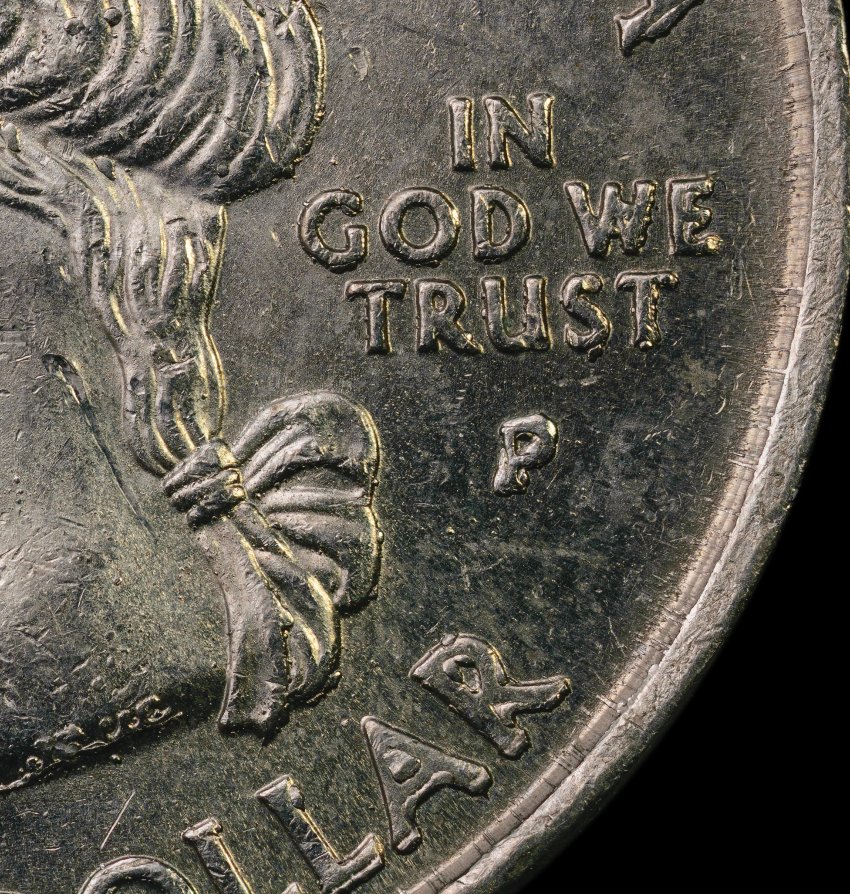
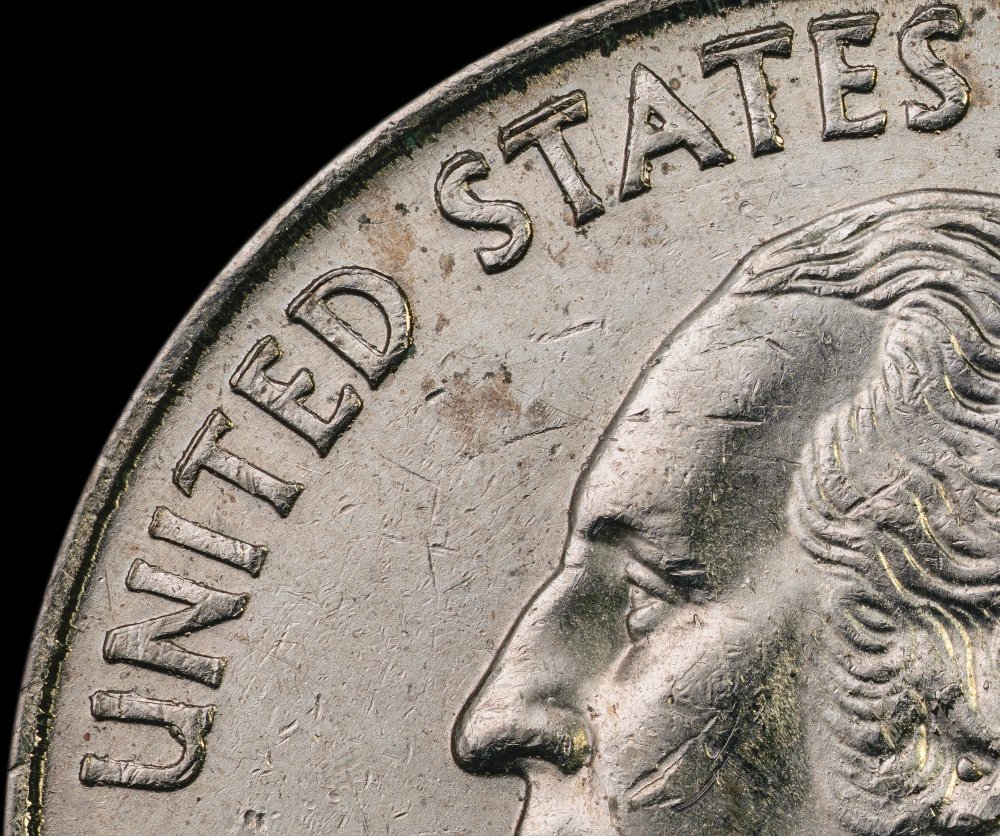
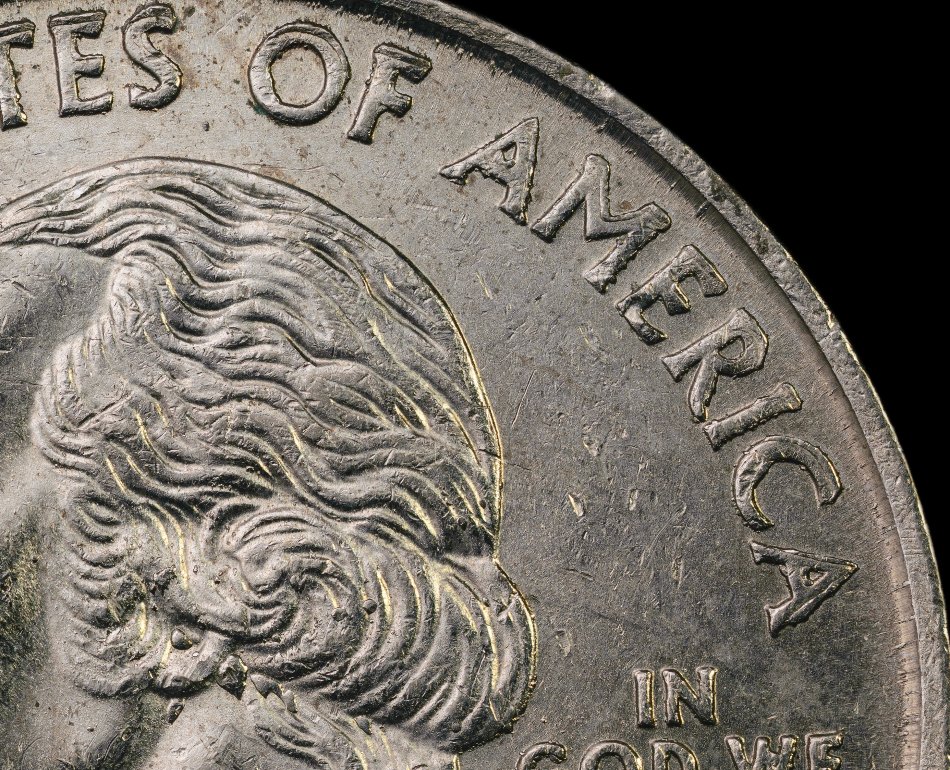
Has nothing to do with the die, the coin has just been beat up.
|
|
Moderator
 United States
56855 Posts |
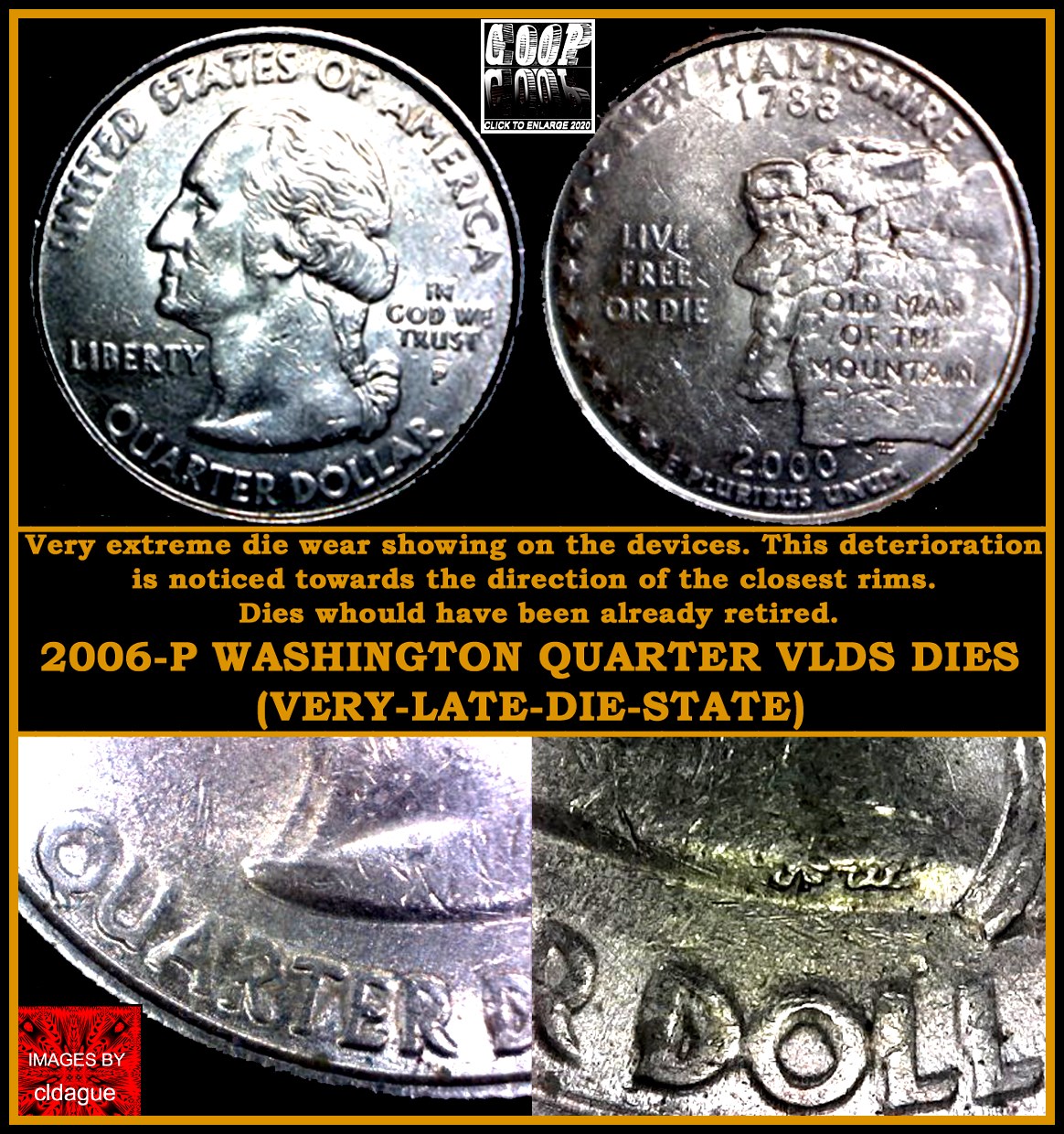
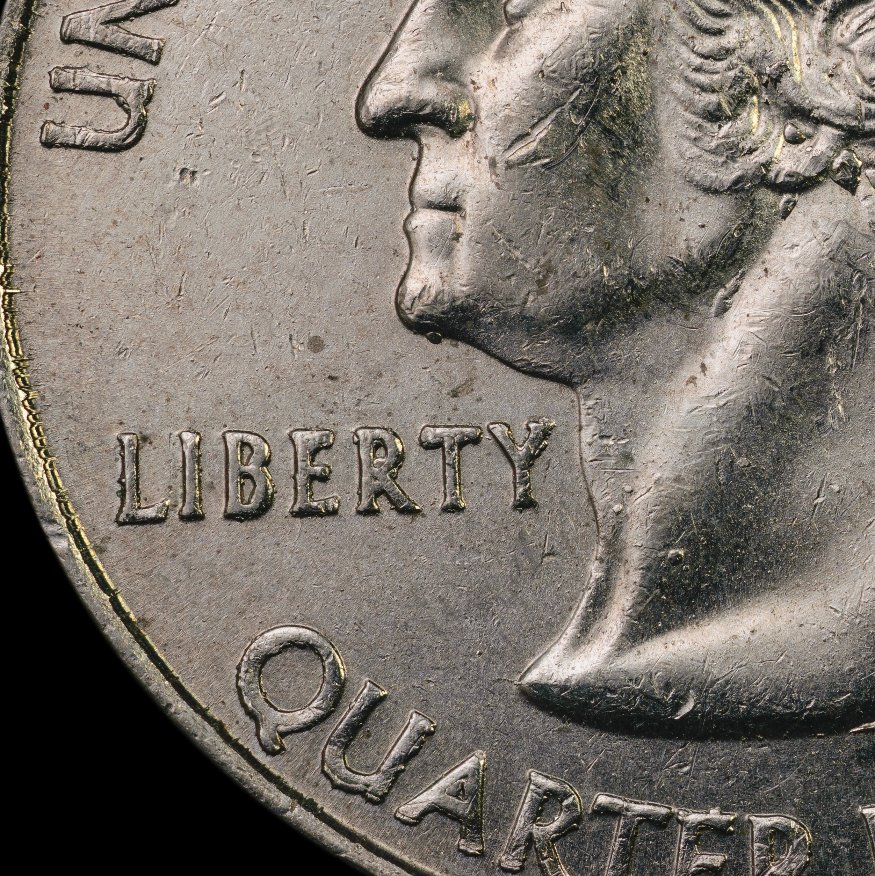
I'm seeing MD on USofA,and something is going on with a bunch of the letters and inside rim? John1  |
|
Pillar of the Community
United States
549 Posts |
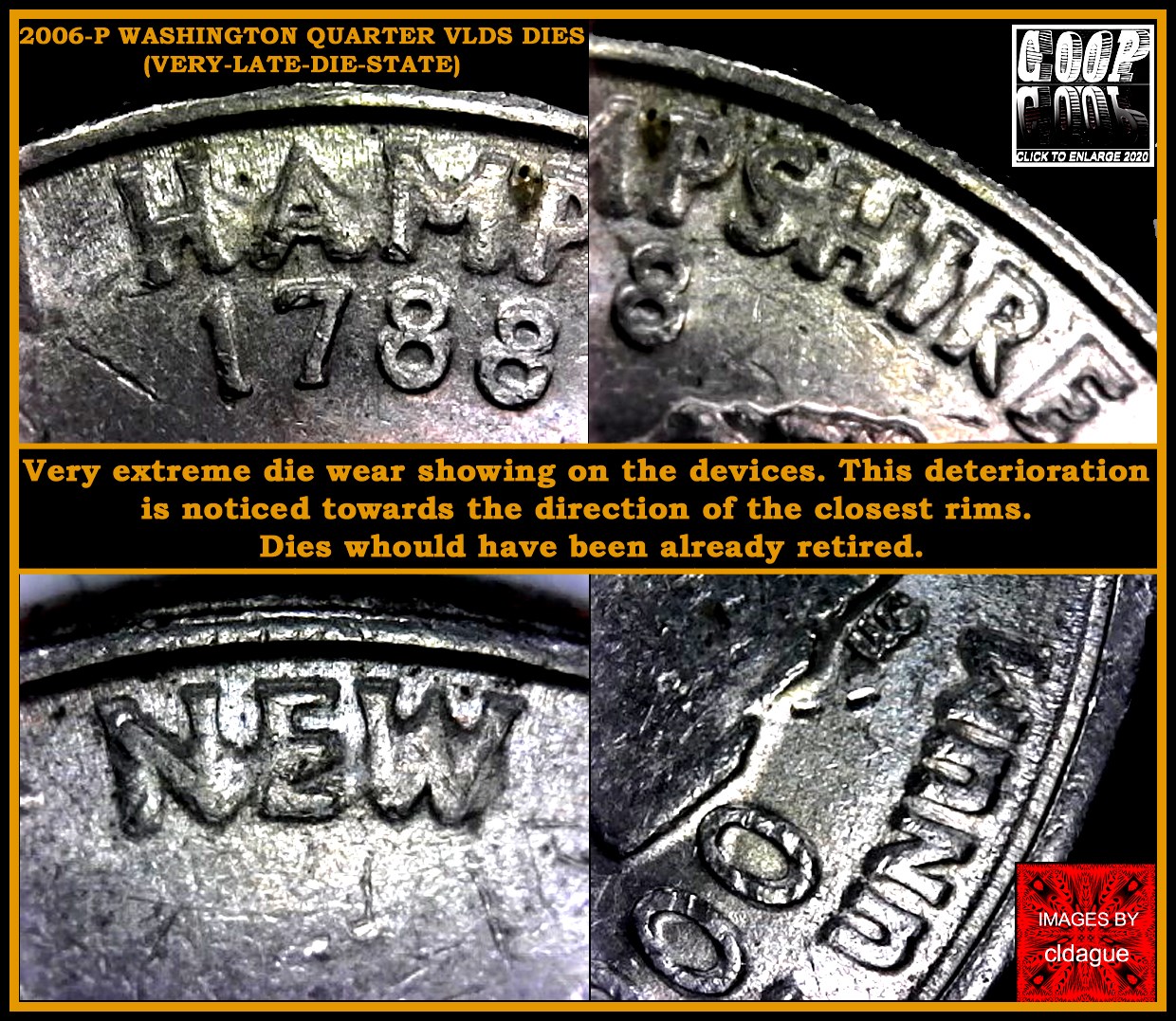
I see a whole bunch of die chips. Doesn't that come from a worn/damaged die? Plus MD. What does the back look like?
Edited by VestigeWolf
05/30/2021 08:32 am
|
|
Moderator
United States
56855 Posts |
|
|
Pillar of the Community
United States
3237 Posts |
I see common Die Deterioration Doubling and what looks like a coin with lots of little nicks and dings from years in circulation. Not any kind of mint error or exotic die event. Edited by SamCoin
05/30/2021 09:01 am
|
|
Bedrock of the Community
United States
62064 Posts |
|
|
Bedrock of the Community
United States
94367 Posts |
Basically just circulation damage.  to the CCF! |
|
Bedrock of the Community
Australia
21792 Posts |
If a die is is pitted with rust, those pits would show up in relief (raised) on the coin.
For a die to be rusted, it would have to sit idle for a very long time in most cases for years, to allow the rust to develop.
It is highly improbable that a coin would be struck from a die, with date date years earlier earlier than the actual strike date. A Mint would have to have a good reason for deliberately doing so, and then only non rusted dies would be used.
Most modern coinage dies are good for around 200 thousand strikes. As such, typical die life is usually less than one week. Thus, it would be highly improbable to find a modern coin struck from rusted dies.
Die chips and grease and debris strike throughs could be confused with a highlky improbable rusted die coin.
|
|
Bedrock of the Community
United States
10065 Posts |
|
|
Bedrock of the Community
United States
62064 Posts |
But if the raised rust is on a die, it could leave incuse marks on the coin. Usually the only time you would see rust on a die would be on the 18th and 19th century coins were the die was re-used on a few years later, like on over date dies. 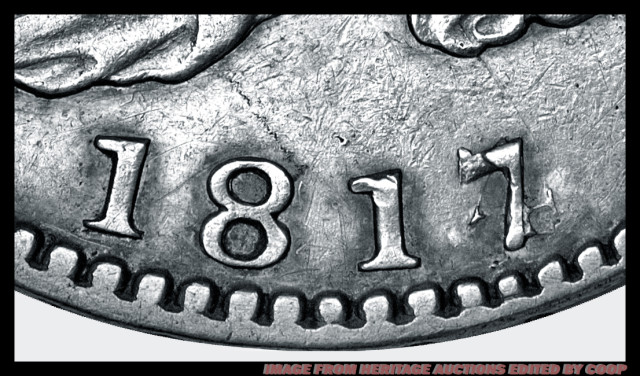 But the mint doesn't re-use dies any longer. When they are retired, the are most of the time defaced and either sold or recycled. 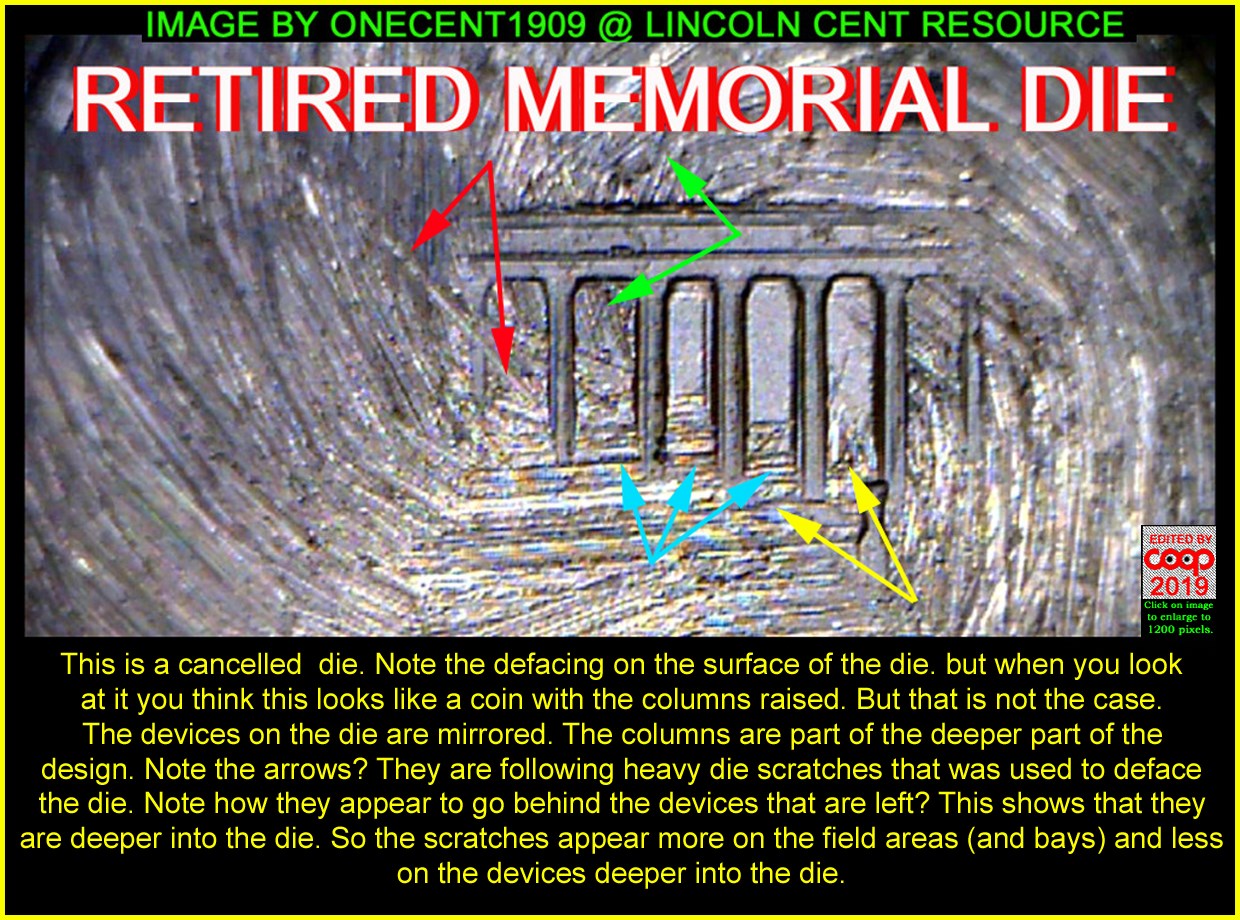 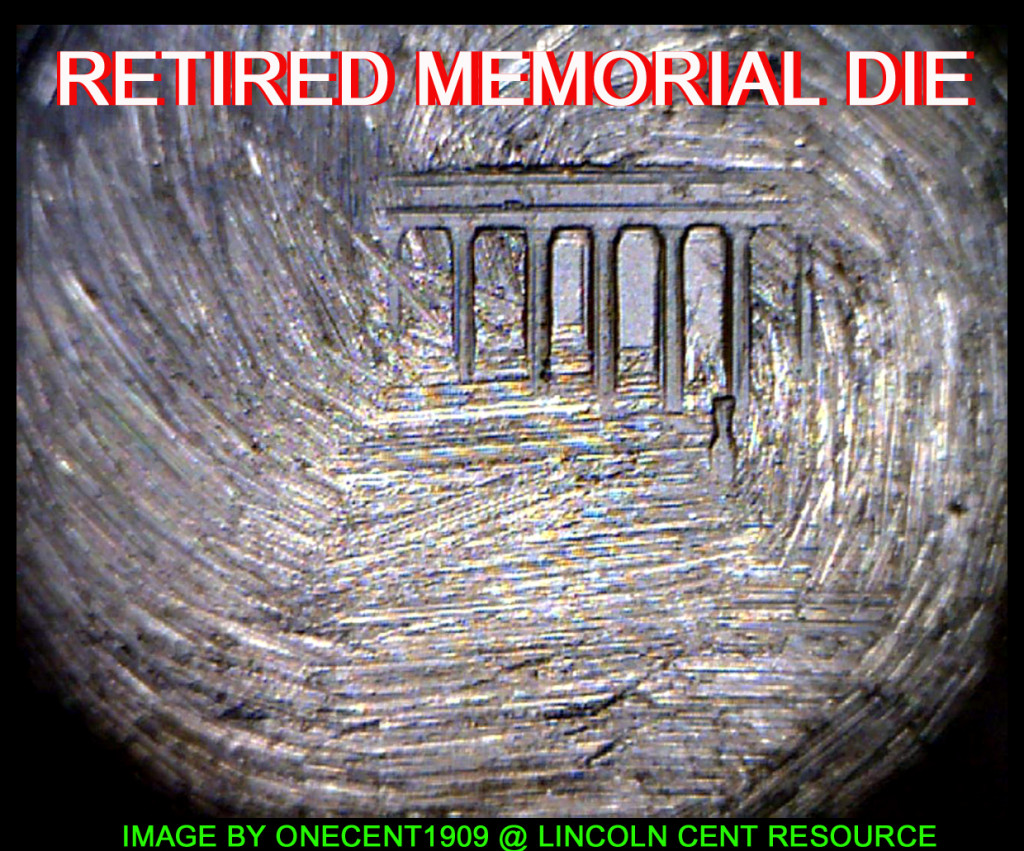 So today they don't stay around enough to rust at the mint. Edited by coop
05/30/2021 10:09 am
|
|
Bedrock of the Community
Australia
21792 Posts |
I would think that rust on the die, being relatively fragile against the hardened metal of the die, would be crushed as it forms, and would be cleared from the die with repeated striking.
|
|
Pillar of the Community
United States
1590 Posts |
I'm thinking some people are not reading your post before replying.
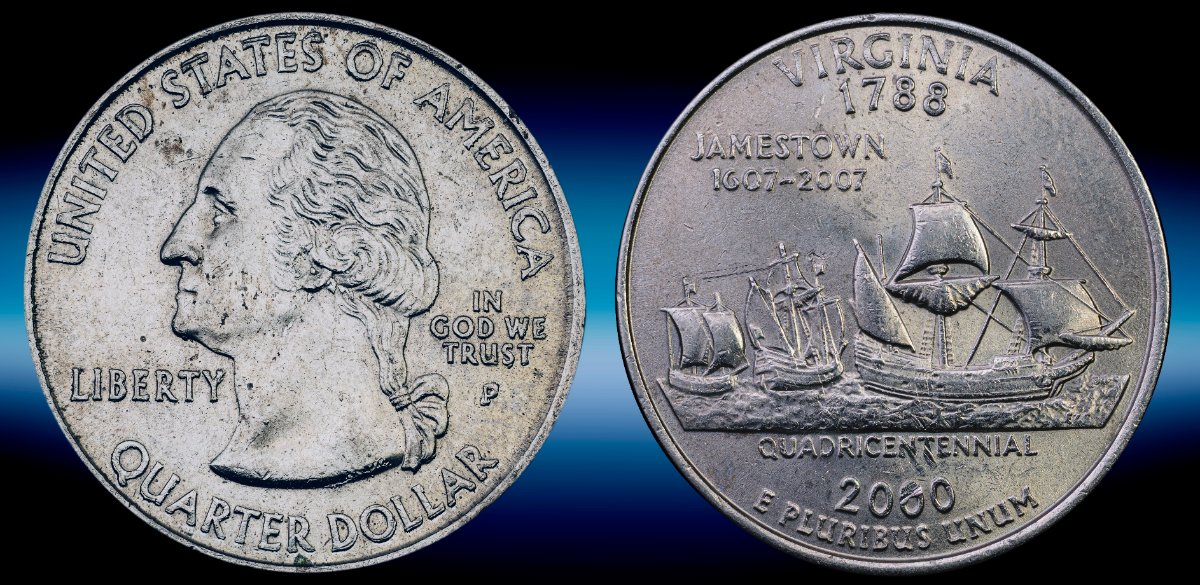
You said you got this from an OBW? Did you mean an OBW of Virginia coins? Or just and obw roll of random coins? I'm assuming you mean the former, as why would you post the later?
If an obw of Virgina coins then circulation damage is dismissed.
I do see an abnormal amount of what I call die chips, that together with letter would suggest a "terminal" state die. I've never seen one this bad.
I don't think it is rust, but I would like to address that issue. As an Engineer I have worked in production facilities and am familiar with both official practices and unofficial practices.
I understand that the mint's practice is to not reused dies. However; I am fairly confident they don't have a person who goes around and destroys the dies the very second they come off the press. I would suspect they are collected at a central point until their are enough to justify the manhours needed to destroy them.
In that interval I can see a possible, but highly unlikely, scenario where the supply of dies does not keep up with the usage and rather than not meet a production goal, an old die is reused. I do not think that is completely impossible. I could be wrong but I think my scenario has a fair chance of actually happening in the real world. As to rust, I find that much more difficult to sustain as I would think that the interval between retirment and defacement would be relatively short. Though without knowing where they were stored, and if there was even the slightest chance that they were stored around corrosive chemicals, I can not say with absolute confidence that a damaged die was not reused. Though I agree it would be a low order probability
Strange things happen in the real world.
|
|
Bedrock of the Community
United States
62064 Posts |
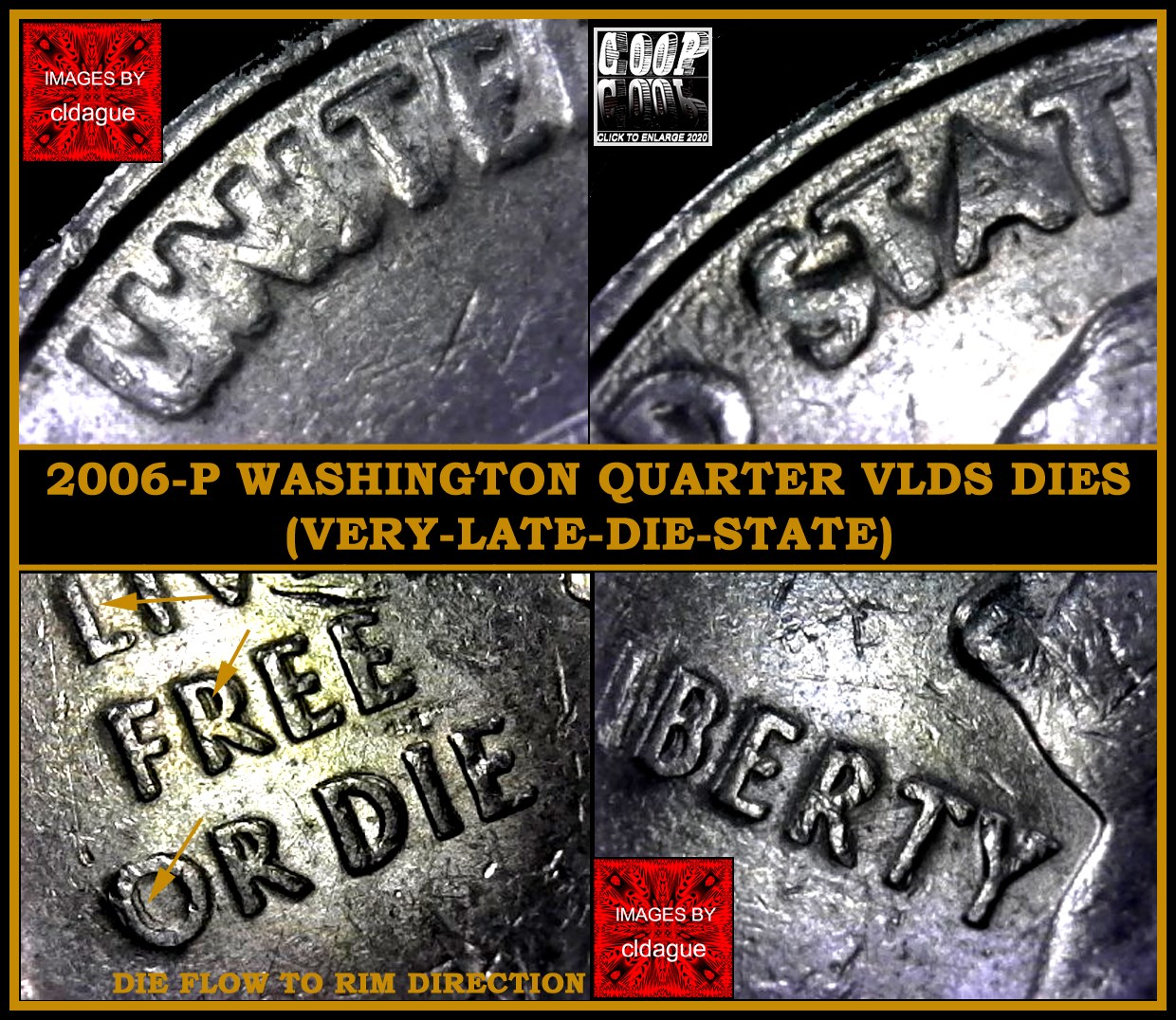
If you are referring to the lines like on 'OF AME', those are die flow lines from an aging die. We need more clues as to what you are seeing. Arrows are great. Otherwise I have to guess what your are seeing? I'm commenting on what I'm seeing on your coin.
|
|
Bedrock of the Community
Australia
21792 Posts |
The practice of the Royal Australian Mint is to report total number of coins struck of each date and denomination in a production year.
Sometimes, dies are retained in production in carry over into the next production year, until the die is worn out.
When worn out, it is retained in security until such time it is convenient to the Mint for the worn out die to be destroyed. They are never re used, and so there is NO chance for rust to develop and the die to return to production at a much later date.
I would think that most, if not all Mints around the World, would follow a similar practice.
|
| |
Replies: 14 / Views: 3,053 |
|








 Posted 05/30/2021 04:53 am