| Author |
 Replies: 9 / Views: 1,221 Replies: 9 / Views: 1,221 |
|
|
New Member
United States
27 Posts |
So in searching about the scarcity of the 1968-D LMC, I came across a post talking about a DDO & DDR that encompassed every device on each, though the pics were of a very badly gouged 1968-D. So I took a very close look at mine, which is pretty detailed considering the dies were worn out by 2968. And it has a lovely deep walnut brown tone. I didn't find a single DDO or DDR, just regular worn devices. When I looked closer on Reverse, I did find an error, and by comparison of the rest of the coin, it certainly looks like it left the mint like this. Before and after the word UNUM in the motto above memorial, there is a dot, as there is in the one photo at the bottom. Mine is missing the dot that follows UNUM. Am I wrong? I googled this and found nothing nowhere online about it, not a single one. Opinions? 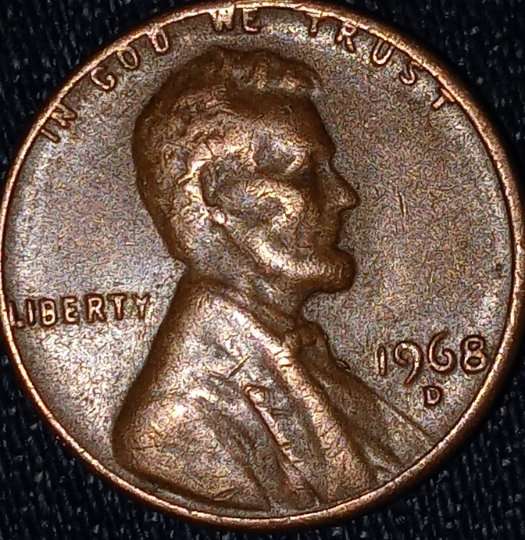 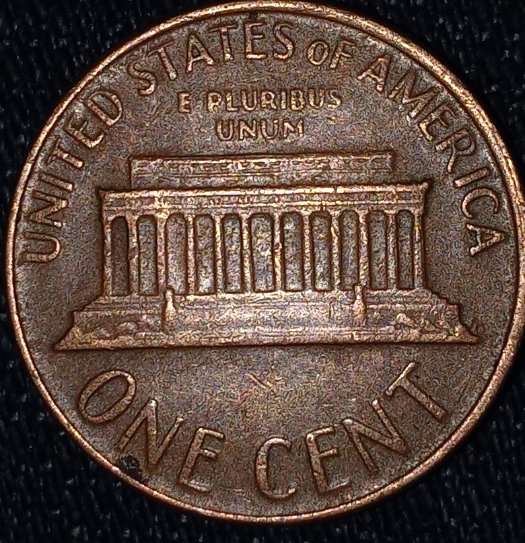 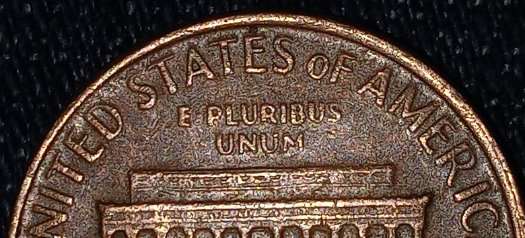 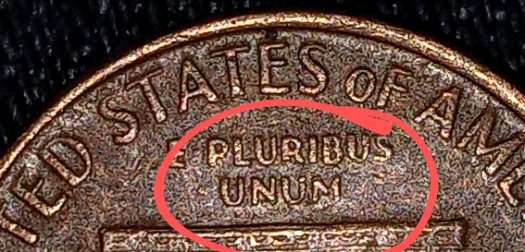 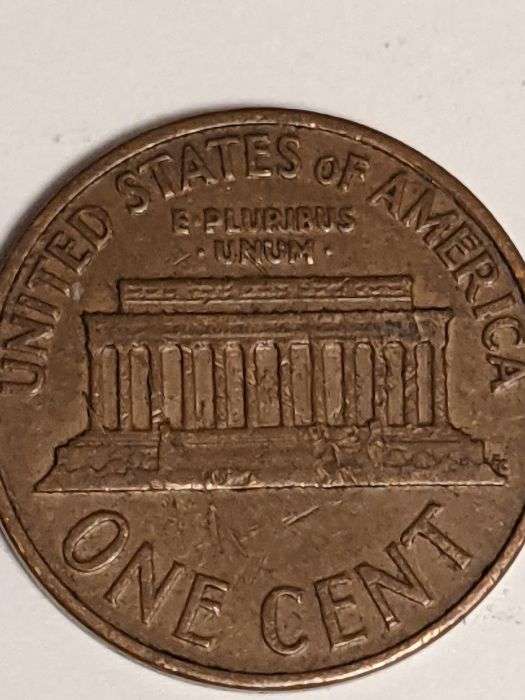 |
|
|
|
Moderator
 United States
34562 Posts |
@dmil, it is hard to know for sure with this amount of circulation wear, but I think that you are right. Most likely there was a small amount of grease in the die when it was struck.
"If you climb a good tree, you get a push."
-----Ghanaian proverb
"The danger we all now face is distinguishing between what is authentic and what is performed."
-----King Adz
|
|
Bedrock of the Community
United States
10065 Posts |
How much squash could a Sasquatch squash if a Sasquatch would squash squash? Download and read: Grading the graders Costly TPG ineptitude and No FG Kennedy halveshttps://ln5.sync.com/dl/7ca91bdd0/w...i3b-rbj9fir2 |
|
Pillar of the Community
United States
713 Posts |
...or aggressive polishing. Looks like a partial floating roof, too. edit: though not sure a 68-D is considered scarce and never heard of one that was both DDO & DDREdited by CentSation
01/02/2022 03:02 am
|
|
Pillar of the Community
Canada
6244 Posts |
strike trough grease yes, maybe. the fact it is very circulated coin do not help. The fact that the circulated coins with damage from this will down any premium for greases strike, if was. Sorry.
|
|
Moderator
United States
107689 Posts |
Nice looking cent. a grease strike through? yes, it does look that way.
|
|
New Member
United States
1 Posts |
Hi,
I can't tell if this is just wear&tear on the coin since 1968 or a defect... Maybe have it checked out?
Best,
|
|
Valued Member
United States
92 Posts |
The die was reworked, removing the dot. The partial "floating Roof" is the tip-off.
Pete
|
|
New Member
 United States
27 Posts |
The only reason I was unsure is because when I researched this coin, the copies I saw of the first strikes of the year looked like mine because it was the last year the dies were used and they were worn out. But the mints re-established mintmarks after not using them for a number of years. But since they were retiring the dies after 1968, I couldn't see them reworking the dies too much, just squeezing one last year from them.
|
|
Bedrock of the Community
United States
62064 Posts |
Die polishing target area to remove clashes on that area. The devices into the rim appears on all the cents that year: 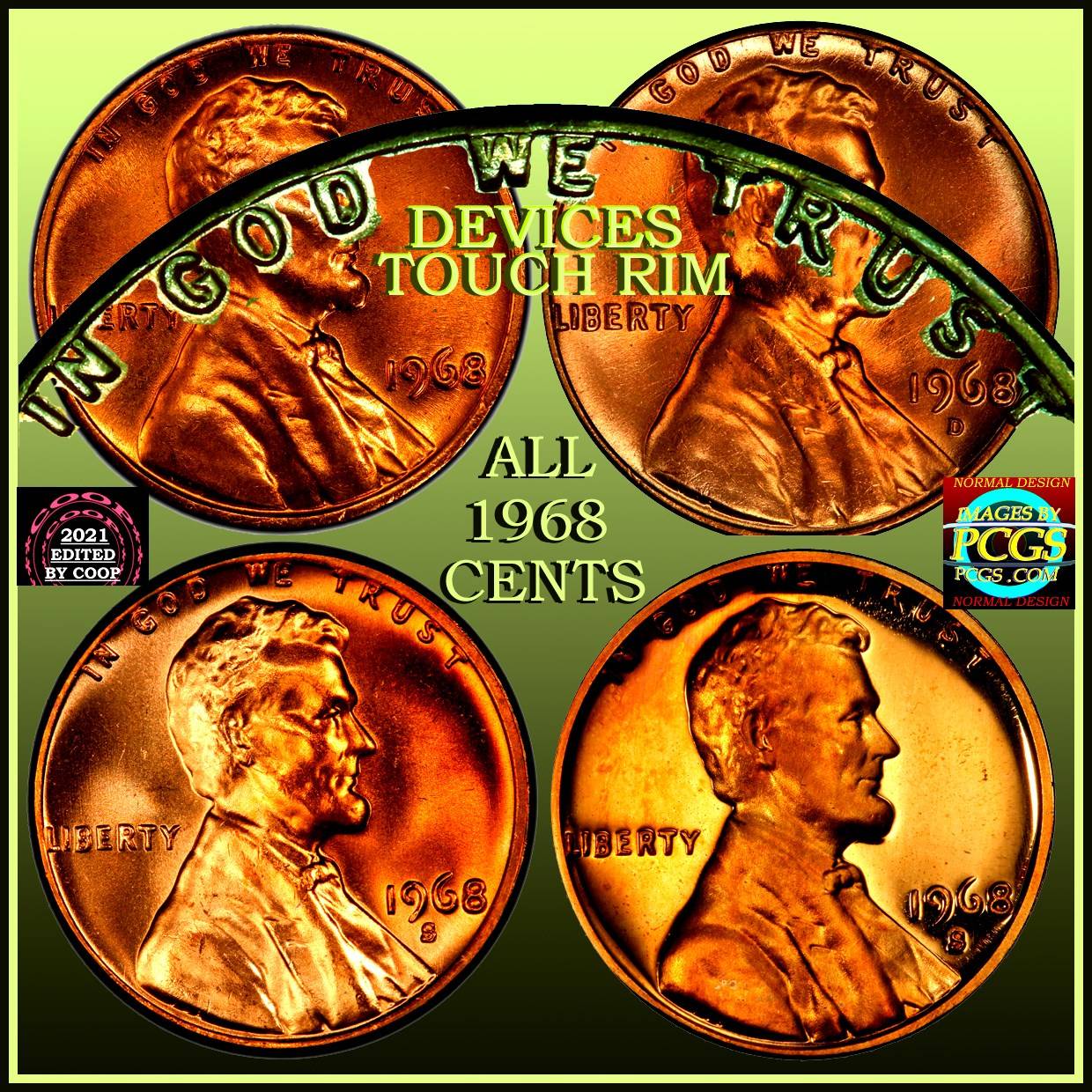 The issue was a spreading master hub issue. Corrected the next year on the new, new master hub. 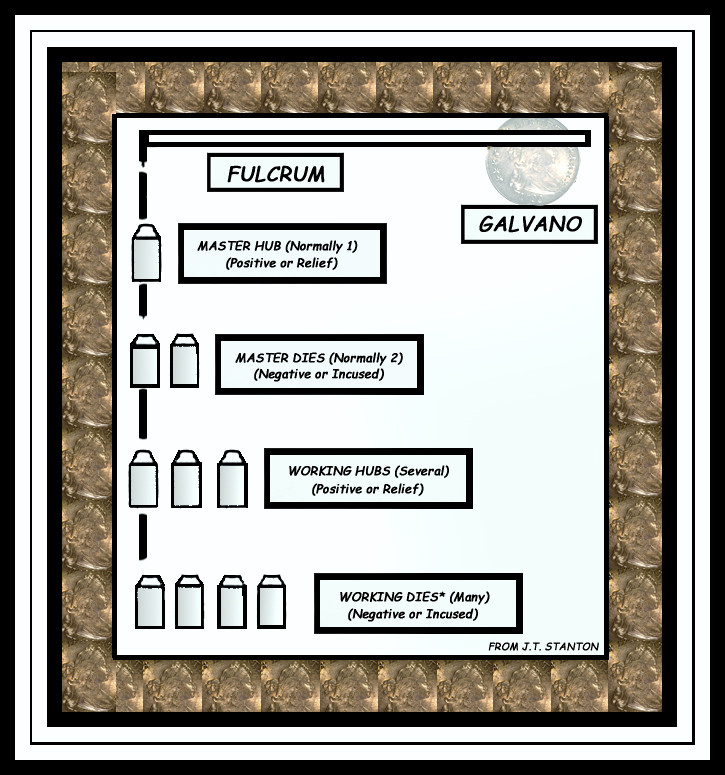 So when this happens on this level all the dies are created with the same issue. Note how the 1969 cents had the newly created hub used that year: 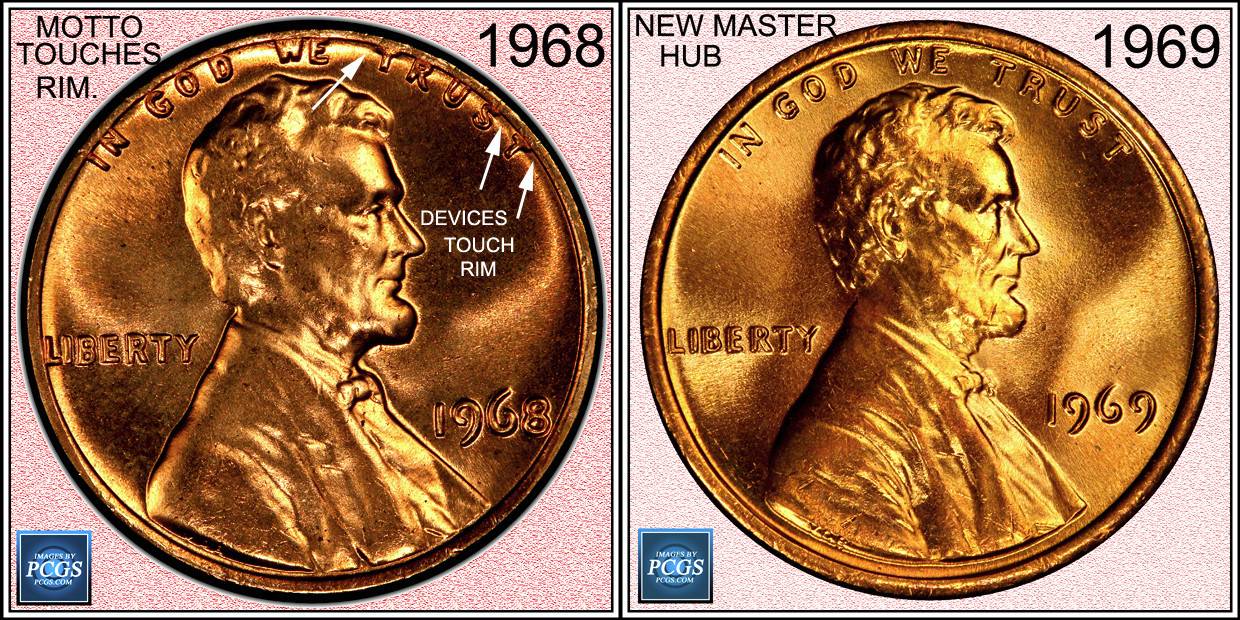 Different size of devices and locations and the bust size enlarges with the master hub was needing replaced. This happened again in the 1982, but they fixed the issue that same year, creating a large and small date, as well as the copper and zinc planchet making a "year/variety" on that year/mint: 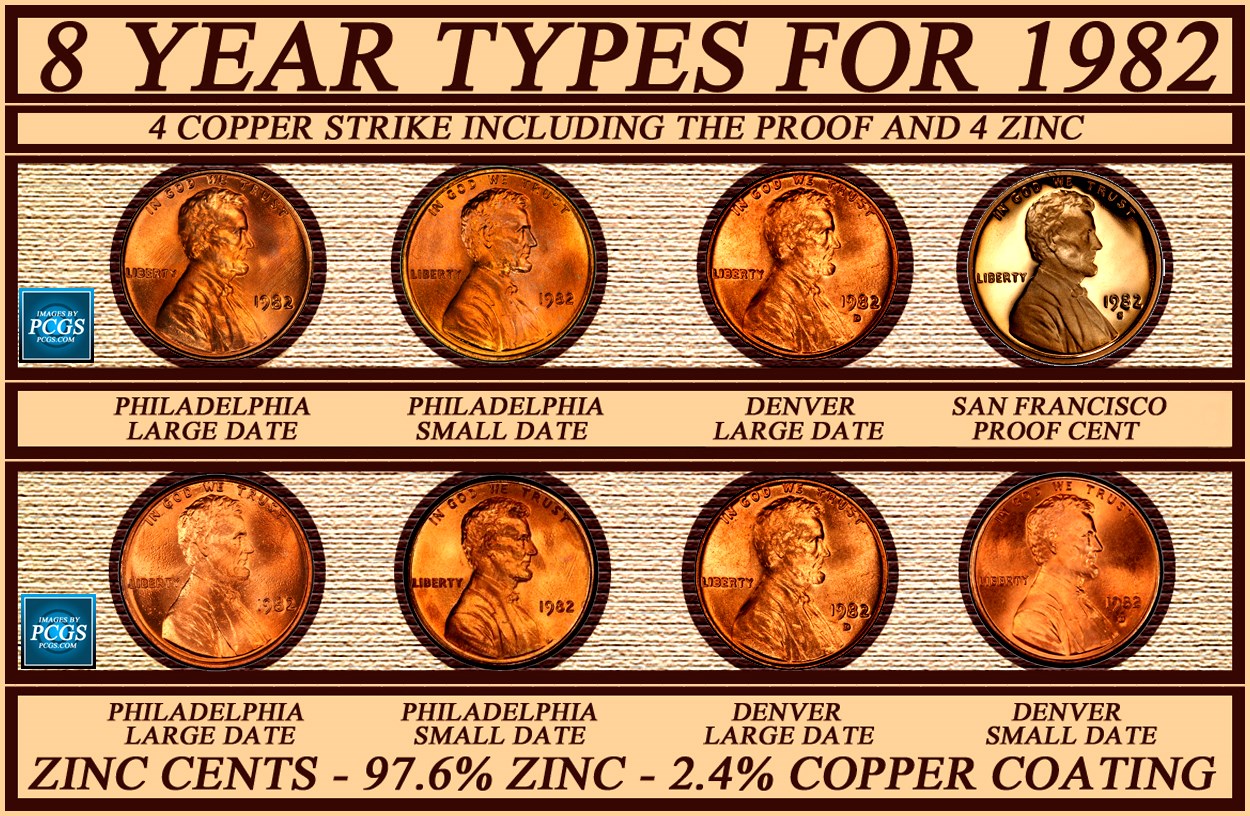 Because the master hub was not changed during 1968, they avoided a large and small date issue that year. CoopHome: What causes the devices to touch the rims on the 1968 cents? Edited by coop
01/02/2022 3:17 pm
|
| |
Replies: 9 / Views: 1,221 |
|










 Posted 01/01/2022 11:14 pm


