| Author |
 Replies: 16 / Views: 2,909 Replies: 16 / Views: 2,909 |
|
Pillar of the Community
United States
2604 Posts |
I found this interesting coin among my dateless philly group. It has at least some of the hallmark features of the 16/16 DDO. However, the third small feather does not show doubling on my coin, compared to the pics I've seen on the 16/16. It could have worn away, since this is a dateless coin. Also, the doubling of the ribbons on my coin is barely detectable, likely due to wear. Like the 16/16, this coin has doubling in the two main feathers, doubling on the chin, neck and eye 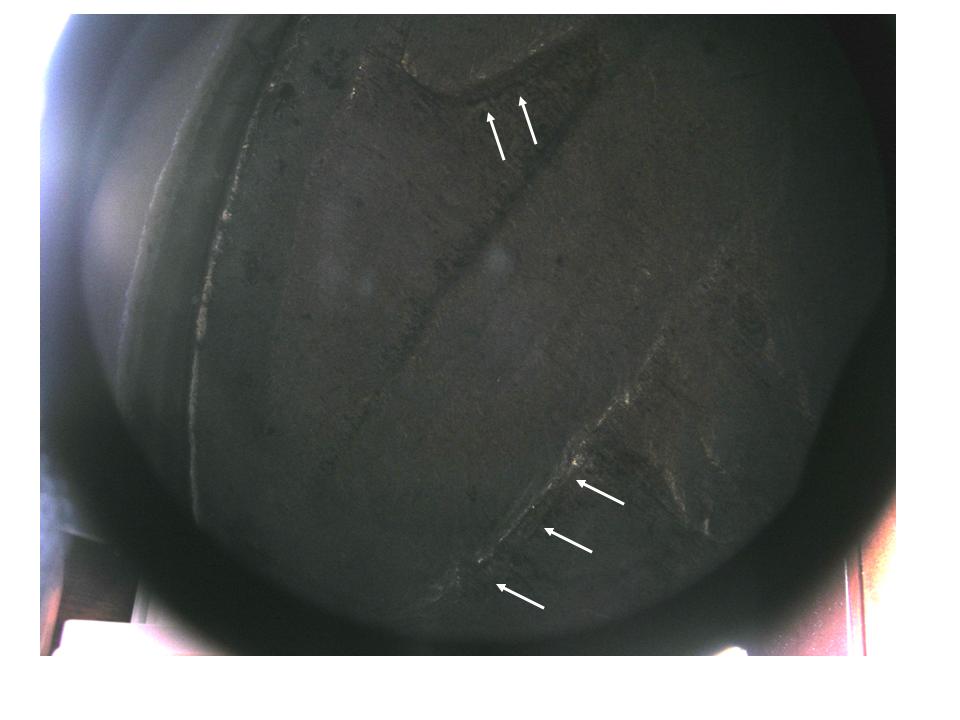 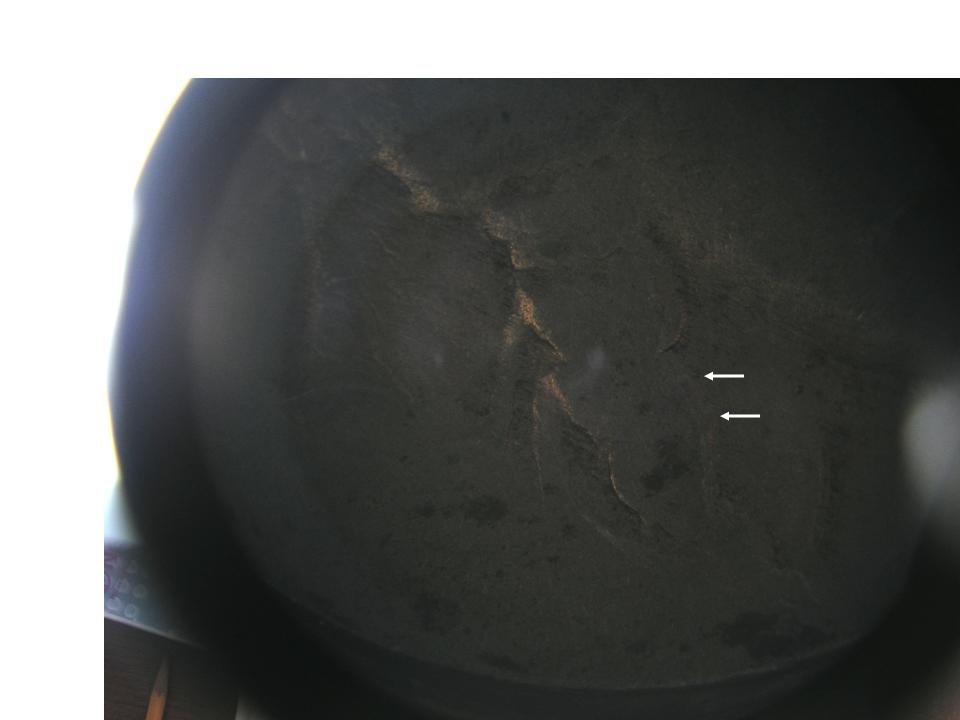 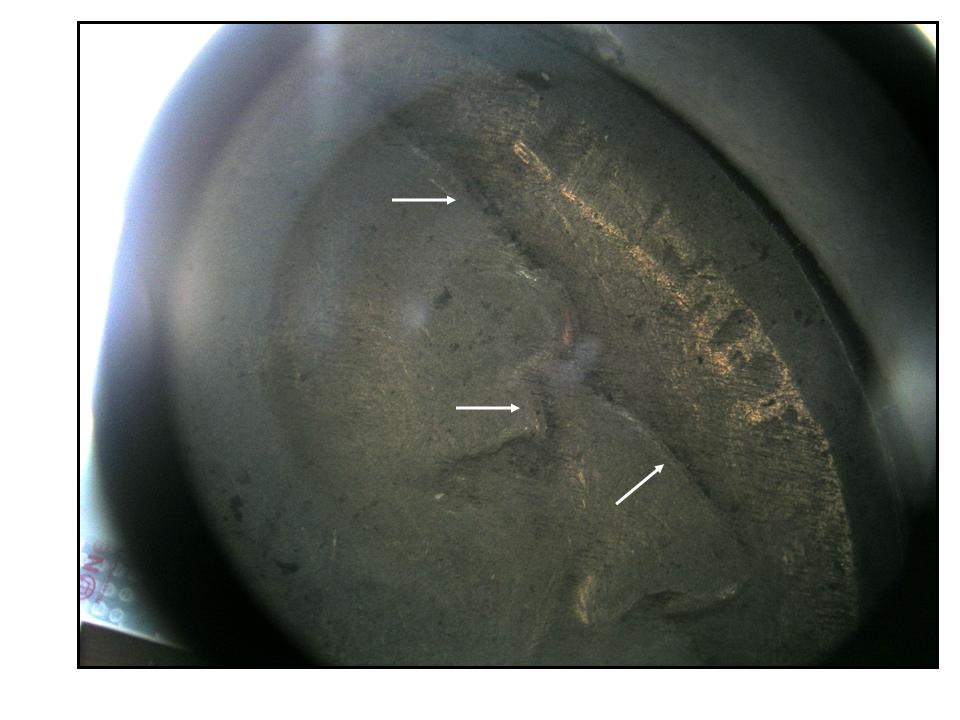 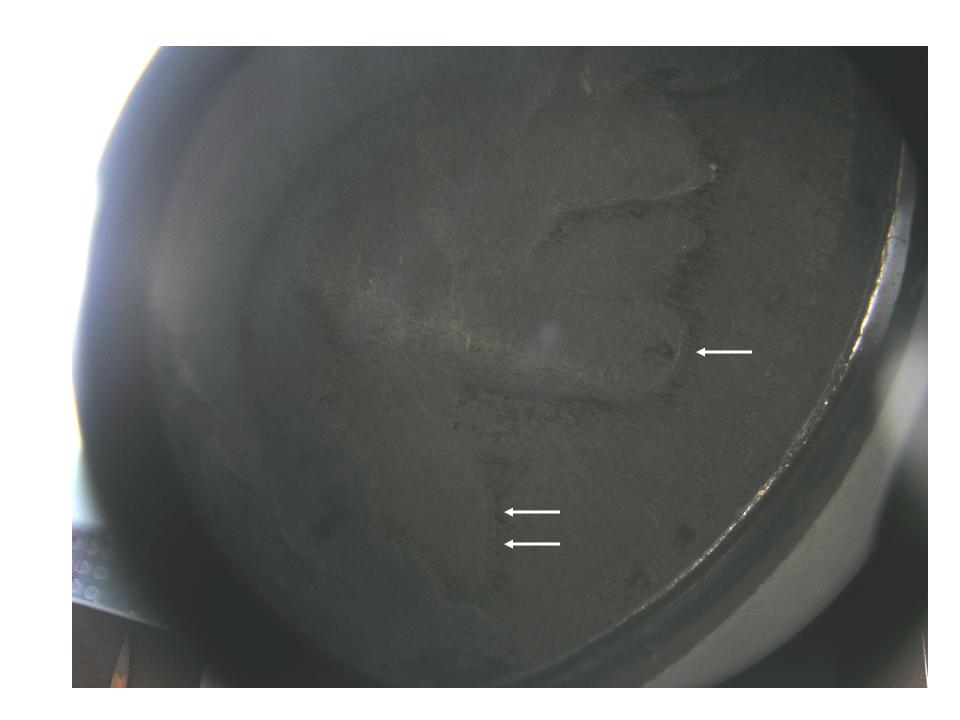 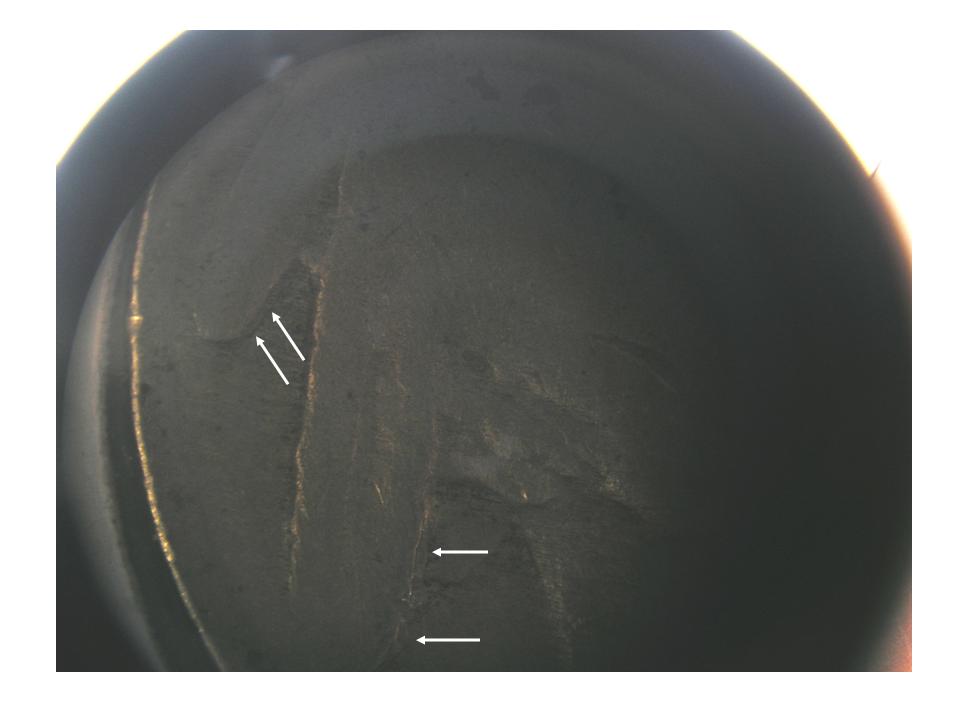 What do you think? If it's not a 16/16, do you know what the other possibilities are? Should I restore the date on this? I'm sorry about the pics. I was taking them through a microscope and the lighting is very difficult to get right. |
|
|
|
Pillar of the Community
United States
1807 Posts |
Here's a pic of the 1916 DDO, see how your coin differs. I think yours has machine(OK I changed it)doubling or Die Deterioration. The name " Buffalo nickel" is actually a misnomer, as the animal appearing on the reverse is in fact a bison and not a buffalo. The true name of this very popular coin is the Five Cent Indian Head, however, the name " Buffalo nickel" seems to have been set as its most widely used and accepted name. 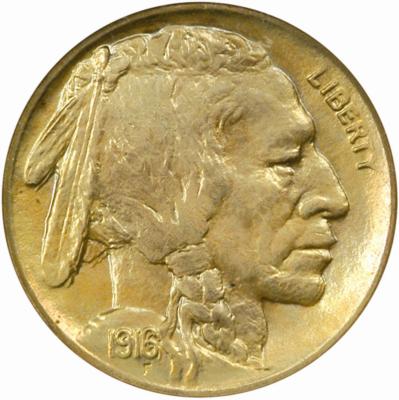 Edited by rockdude
02/01/2009 11:59 am
|
|
Moderator
 United States
56855 Posts |
The photos came out pretty dark on my monitor,can you post better photos so we can see the coin better? John1  |
|
Pillar of the Community
United States
1807 Posts |
I lightened one of them up to help I.D. 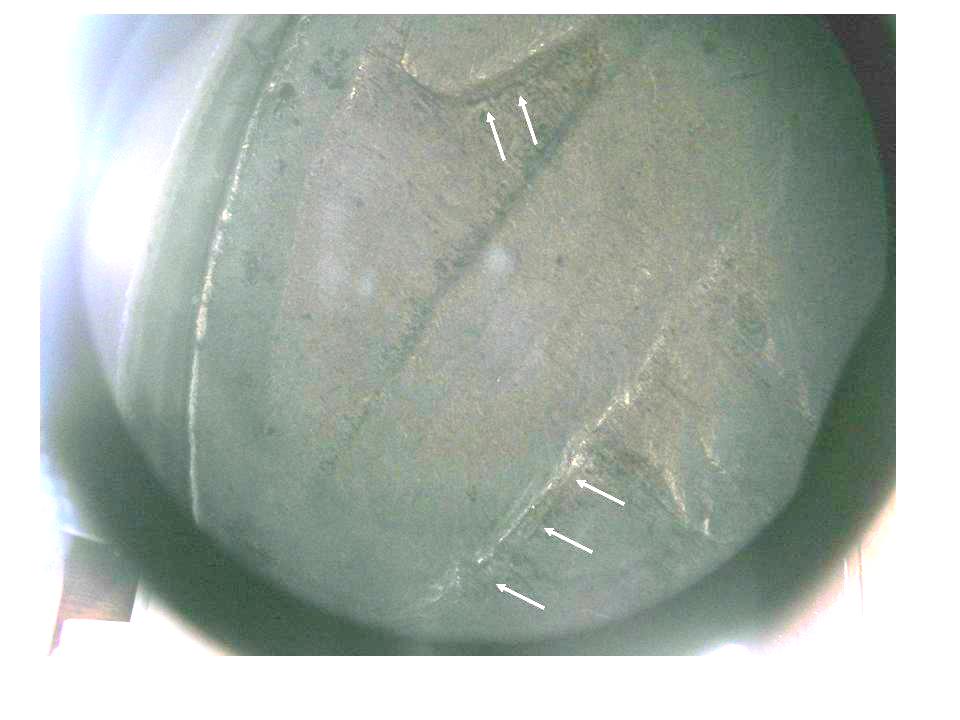 |
|
Bedrock of the Community
United States
62064 Posts |
I think your looking too close. If there is real doubling there it will jump out at you instead of making you look harder to find any. Images too close make a grain of sand into a mountain.
|
|
Pillar of the Community
 United States
2604 Posts |
The is clear separation on the two feathers, so I don't see how this is Mechanical Doubling. It might be that the stuff on the neck, eye and forehead are Mechanical Doubling. This is the only one with doubled feathers I have seen in about 5000 dateless coins, so it isn't common. I've seen several Die Deterioration examples (lacking third feather, for example) and I do not think this is Die Deterioration. I am questioning whether it is a 16/16, however, because there is no doubling on both sides of the long feather, just on one side. I'm raising the point that this might be another DDO- another date, but I don't have a cherrypicker's guide to find out which one it might be. I was wondering if anyone out there might be able to ID it. I also have the option of restoring the date, but the coin is really worn and may not restore successfully. |
|
Pillar of the Community
United States
2669 Posts |
I don't have my book in front of me, but wasn't there an overdate DDO.. 1918? (guessing) and I seem to recall a 1927. I know there were more than just the 1916. Maybe someone with the book handy can give us the PUPs  |
|
Pillar of the Community
United States
3507 Posts |
|
|
Pillar of the Community
United States
1291 Posts |
Considering the wear, I would give it a 50/50 chance. Whatever you do, don't spend it! Send it off for authentication or restore it and let us know the results!
|
|
Pillar of the Community
United States
2669 Posts |
Just for clarity - doesn't look like the 1927 is a DDO, it's an RPM. There's a 192 9 DDO though: look at date, neck and hair braid. The 1918/7-D Overdate & DDO has the date itself as the PUP, with a small die crack "immediately above the tie on the braid, leading slightly downward to the Indian's jaw". I forgot you had said it was Philly though, so it's not this one  1930 DDO has 6 different DDO varieties as of this Cherrypicker's (this is not the new one, there could be more by now). They are not individually listed, but have eyelid and nostril as the PUPs, also check upper lip, and eyebrow on one. So.. let us know if you do decide to restore the date  |
|
Pillar of the Community
United States
1291 Posts |
Mycrob - Have you decided what to do with (about) it yet?
|
|
Pillar of the Community
United States
7629 Posts |
It's " Machine Doubling" - not " Mechanical Doubling". And that's what I think this coin has. It's not the famous and valuable 1916 doubled die...but one way to find out would be to restore the date. Another way, which I cannot tell by the photos alone, is to check the reverse for a mintmark. If the coin has one, then it's definitely not the 1916 doubled die. |
|
Pillar of the Community
United States
1291 Posts |
Mycrob - I have FAITH in you that there will be no mint mark on the reverse. (Right...?) |
|
Pillar of the Community
United States
2604 Posts |
There is no mint mark on the reverse of this coin- it is a dateless Philly. And I do think this is NOT the 16/16 because other features are not correct on the OBV. The doubling of the feathers is similar to the 16/16, but the ribbon is not doubled on my coin, like the 16/16- that is a key difference. My coin also has doubling in the hair pony tail, but photo didn't come out on that. So why is the doubling of the feathers on my coin, which is very similar to the 16/16, Machine Doubling? I don't get it. There is clear separation of the feathers on both coins. You can see it by eye, without magnification. If you put the 16/16 next to my coin, the feathers on both coins look very similar, I think. |
|
Valued Member
United States
301 Posts |
Edited by Jazzcoins
02/02/2009 10:39 am
|
|
Pillar of the Community
United States
7629 Posts |
First of all, nickel dies wear strangely - mostly because the planchets they are striking are very hard. Machine Doubling and Die Deterioration Doubling can take on an effect that looks a lot like hub doubling (doubled dies). Second, the images of your coin show a pretty hefty amount of Die Deterioration - noted by the strong striations that come off the devices in many areas, so Die Deterioration Doubling is at least some part of what's going on with your coin. Third, the 'doubling' you see on your coin is not actually like the doubling on the 1916 doubled die. Most notably because the doubling on your coin 'takes away' from the normal size and shape of the devices in question. In other words, the normal devices on your coin were flattened by a second strike, most likely from a bounce of the die after the first strike - this is known as Machine Doubling, is common, and affects a heck of a lot of coins. MANY novice collectors see this and think doubled die...but they are caused by two completely different things, and only doubled dies have collectible value. |
| |
Replies: 16 / Views: 2,909 |







 Posted 01/26/2009 2:19 pm





