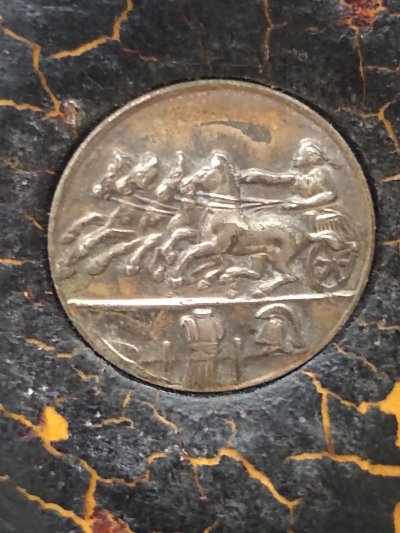
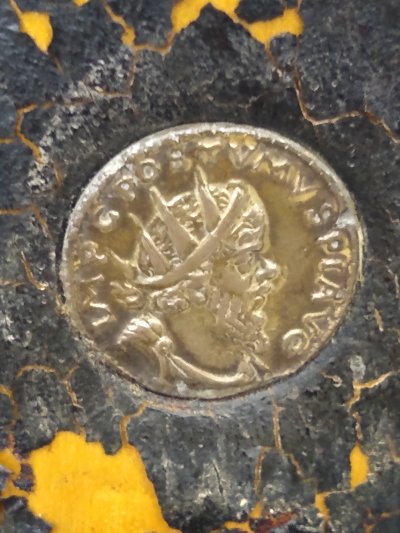
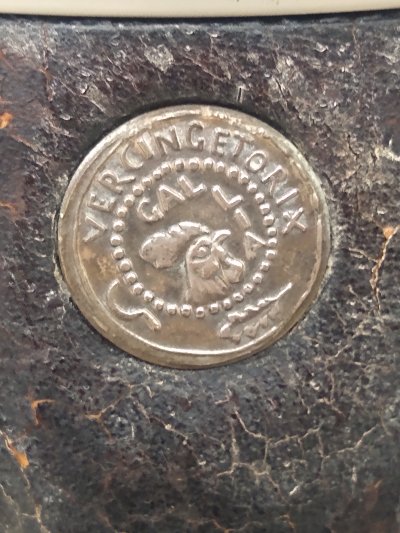
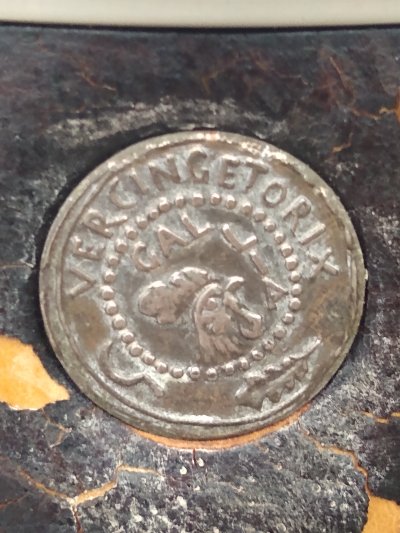
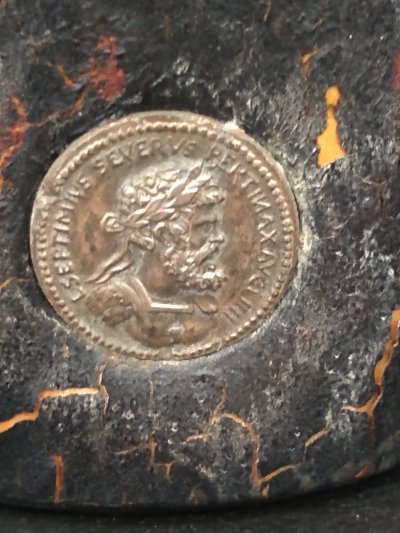
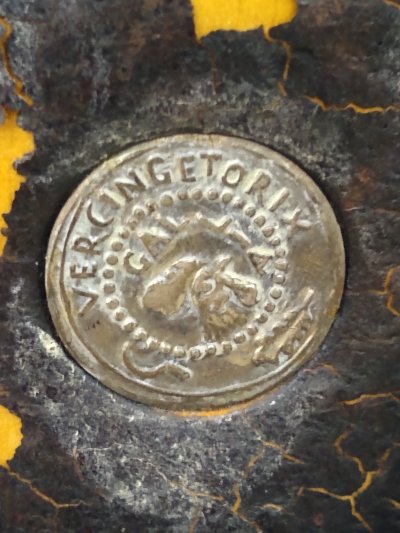
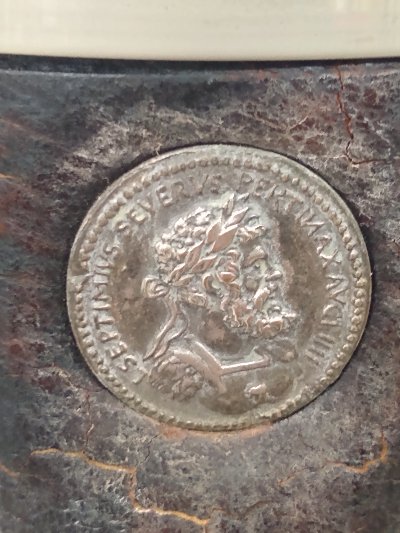
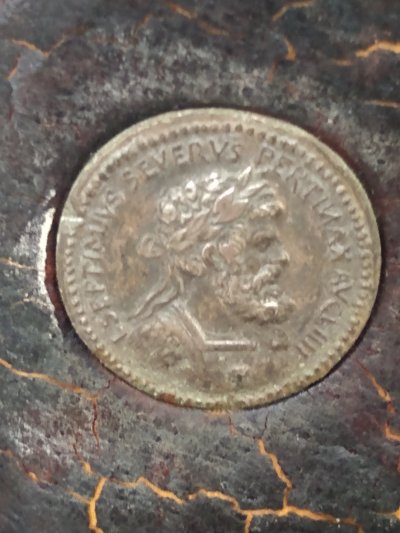
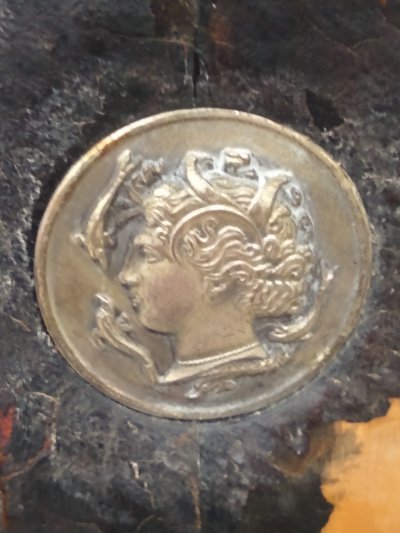
In Italy, the trade in antiquities is regulated. All antiquities in Italy theoretically belong to the State, though the State recognizes that the vast majority of ancient coins are not of high cultural or historic interest so may be collected and traded by private individuals. Buying and selling genuine ancient coins requires a permit, to certify that the coins in question are not of cultural significance. Selling them to tourists or foreigners requires additional paperwork to allow the export of such coins. And while I'm not entirely certain, I'm pretty sure that deliberately damaging an ancient coin by affixing it into another artifact like a cup is against the law.
Selling fakes and replicas of ancient coins is perfectly legal and requires no such paperwork.
One would also hope and wish that the Italian customs officials, inspecting the luggage of a departing tourist with such an item in their possession, have been sufficiently trained to be able to tell that these are fakes. It would be a shame for a tourist to spend time in an Italian prison awaiting trial on antiquities smuggling charges, only for the "antiquities" in question to turn out to be tourist replicas.
Don't say "infinitely" when you mean "very"; otherwise, you'll have no word left when you want to talk about something really infinite. - C. S. Lewis









 Posted 02/02/2022 05:35 am


