| Author |
 Replies: 12 / Views: 1,502 Replies: 12 / Views: 1,502 |
|
|
Pillar of the Community
967 Posts |
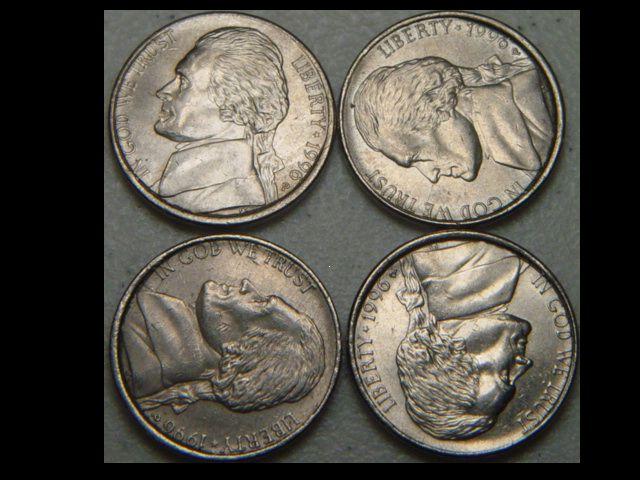 Can anyone tell me what error this is to the rim of these 1996 Jefferson nickels? These appears to be a deep line around the bottom of each coin. The reverse of these coins looks normal. I have seen several of these, but only on this particular dated nickel.
|
|
|
|
Valued Member
United States
377 Posts |
Looks like a Dryer Coin. Can't be though if it's only around the bottom and not on the reverse. Strange indeed, I'll let the Pro's chime in on this one. |
|
Pillar of the Community
United States
1807 Posts |
I'm think they squeezed the press job a little to much, of course that's the layman's term.
|
|
Bedrock of the Community
United States
17884 Posts |
Misaligned die. Obv was too far towards 12:00 allowing a very thick and tall rim to form at the 6:00 position. There is also a possibility that the dies are not parallel and is slightly tipped toward the 12:00 position.
|
|
Pillar of the Community
United States
7629 Posts |
Conder is correct, and this does not add any value to the coins.
|
|
Pillar of the Community
United States
2751 Posts |
Can you tell me if any of the design is cut off along the southern hemisphere of the obverse face, i.e., the date, base of bust, and IN GOD WE? Also, could you provide close-ups of these area? This may be more interesting than the previous comments would indicate.
Error coin writer and researcher.
|
|
Pillar of the Community
 967 Posts |
Below is a closeup of lower part of the coin. The reverse shows nothing irregular. The line around the bottom of the obverse did come from the mint this way. I have several from the same date. The line extends below the IN of the "IN GOD WE TRUST" and also under the tip of the six in the date. Also the rim thickness is the same all around the coin. 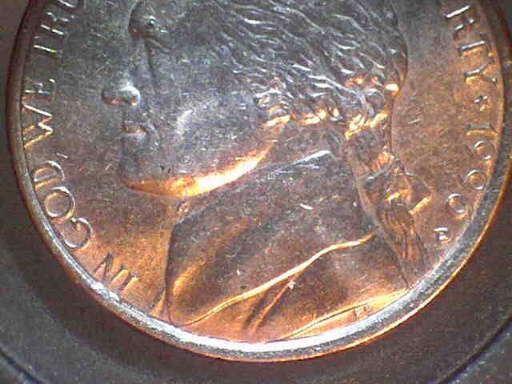 Edited by still lookin
01/31/2009 7:58 pm
|
|
Pillar of the Community
United States
7629 Posts |
Hmm...interesting...so teach us something Mike.
|
|
Pillar of the Community
United States
2751 Posts |
The field has retreated so that the enlarged rim of the coin has reached the edge of the design and may even encroach upon it. This is a "die attrition error". These errors occur when a misaligned die repeatedly contacts the beveled entrance of the collar. This wears away the edge of the field portion of the die. Given the large number of arc degrees that are affected, the die or die assembly was wobbly and was contacting different parts other collar at different times. These errors can get much more severe, as seen in this quarter: 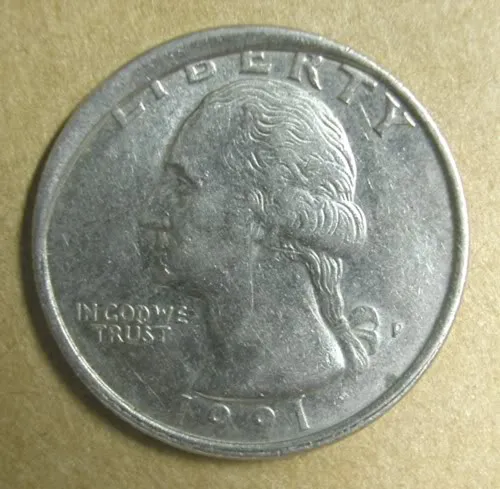 Error coin writer and researcher.
|
|
Pillar of the Community
United States
3507 Posts |
That is fascinating. I've seen a few of these in my searching but just chalked it up to a less than great strike. Great Information!
Thanks you Mike,
Bill
|
|
Pillar of the Community
United States
2751 Posts |
If you're searching rolls for these errors, 1983 is a good year, at least among cents. I've seen perhaps half a dozen for this year.
There are other forms of peripheral die damage/loss that don't fall into the die attrition error category. I don't know what's responsible for the damage in those cases.
Error coin writer and researcher.
|
|
Bedrock of the Community
United States
62064 Posts |
Mike: Could it be that the hubbing wasn't complete. I don't see how a die would break down so symmetrically?
|
|
Pillar of the Community
United States
2751 Posts |
The die doesn't "break down". It is worn down. I wrote an article about these errors some years back in Errorscope. In that article I showed progressions in which the gradual wearing-away was documented. I also documented misaligned dies and misaligned die clashes associated with these die attrition errors.
Error coin writer and researcher.
Edited by mikediamond
02/02/2009 6:00 pm
|
| |
Replies: 12 / Views: 1,502 |
|







 Posted 01/28/2009 11:14 am





