

 Posted 02/09/2022 1:51 pm


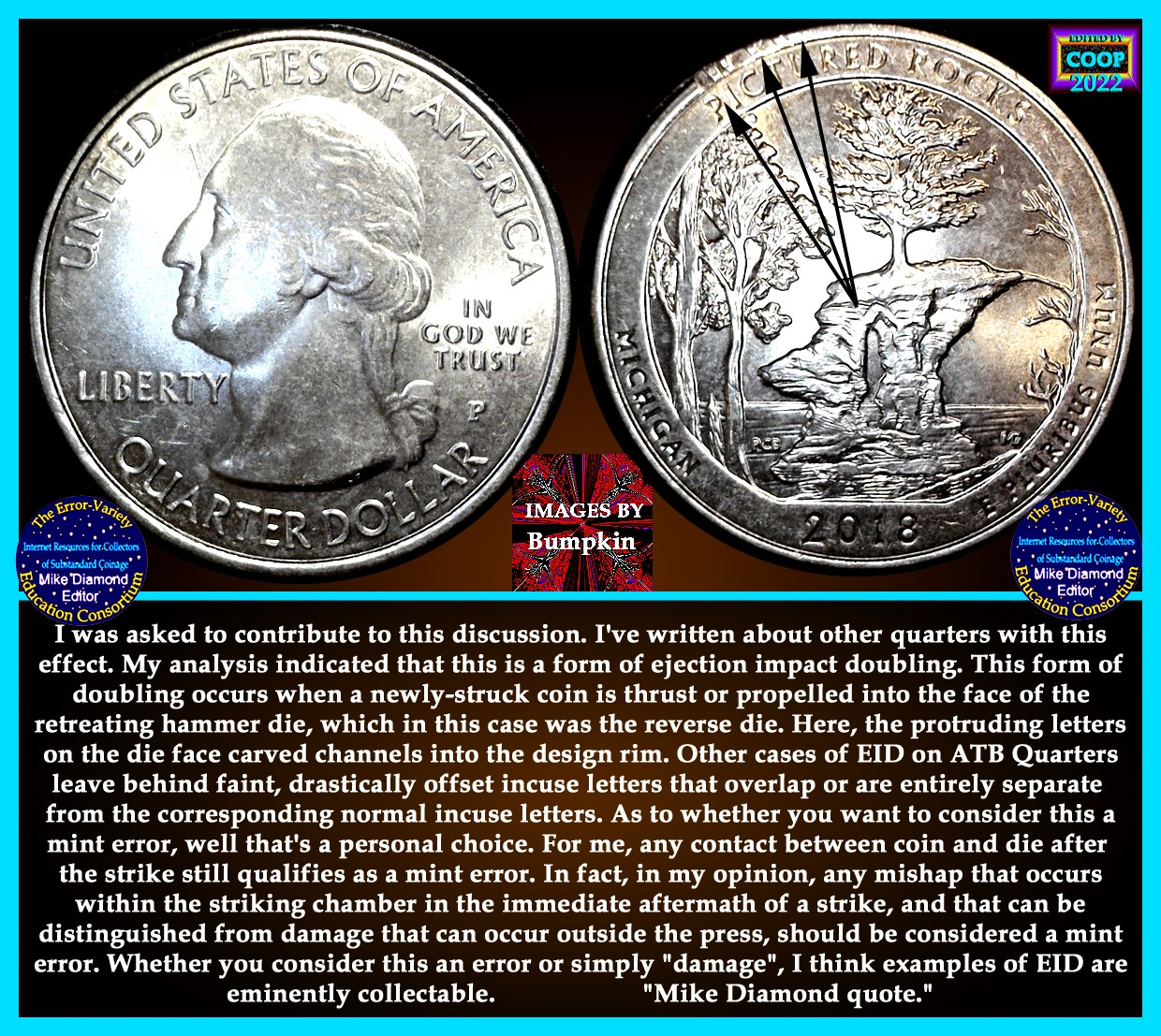
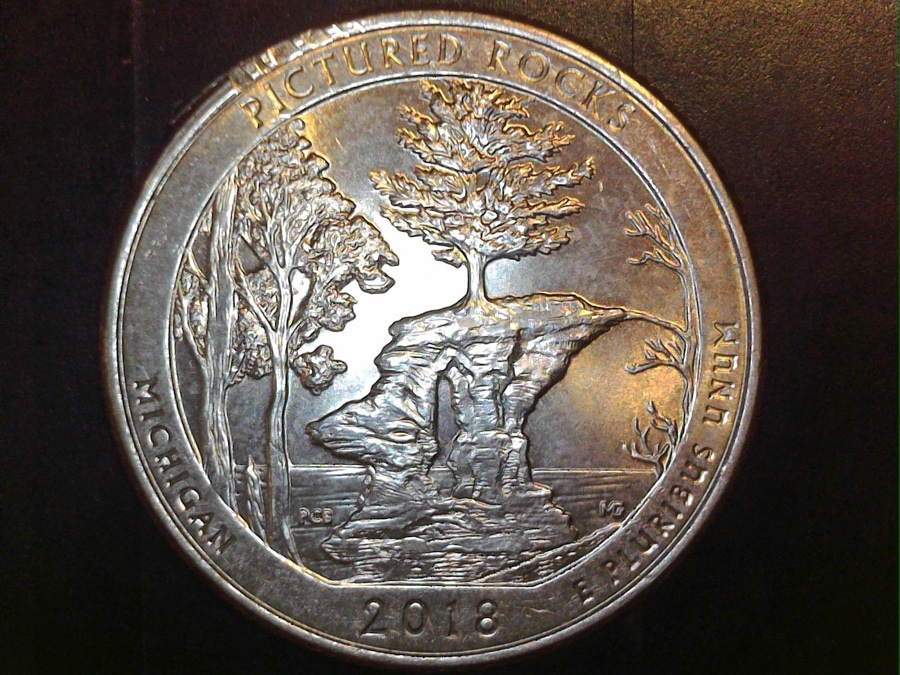
Thank you for replying coop. I do not believe this to be a striking issue. I believe this is an ejection issue as I described in my opening comments. If one was to only look at my pictures sure, it looks like a damaged coin.... PMD. I am not ready to write this one off as PMD to be totally honest and upfront. More importantly, I mean NO disrespect whatsoever in saying that. There has to be an explanation as to how this occurred, in my opinion, immediately during, after or very close thereabouts at the time of ejection of this coin from the striking chamber.
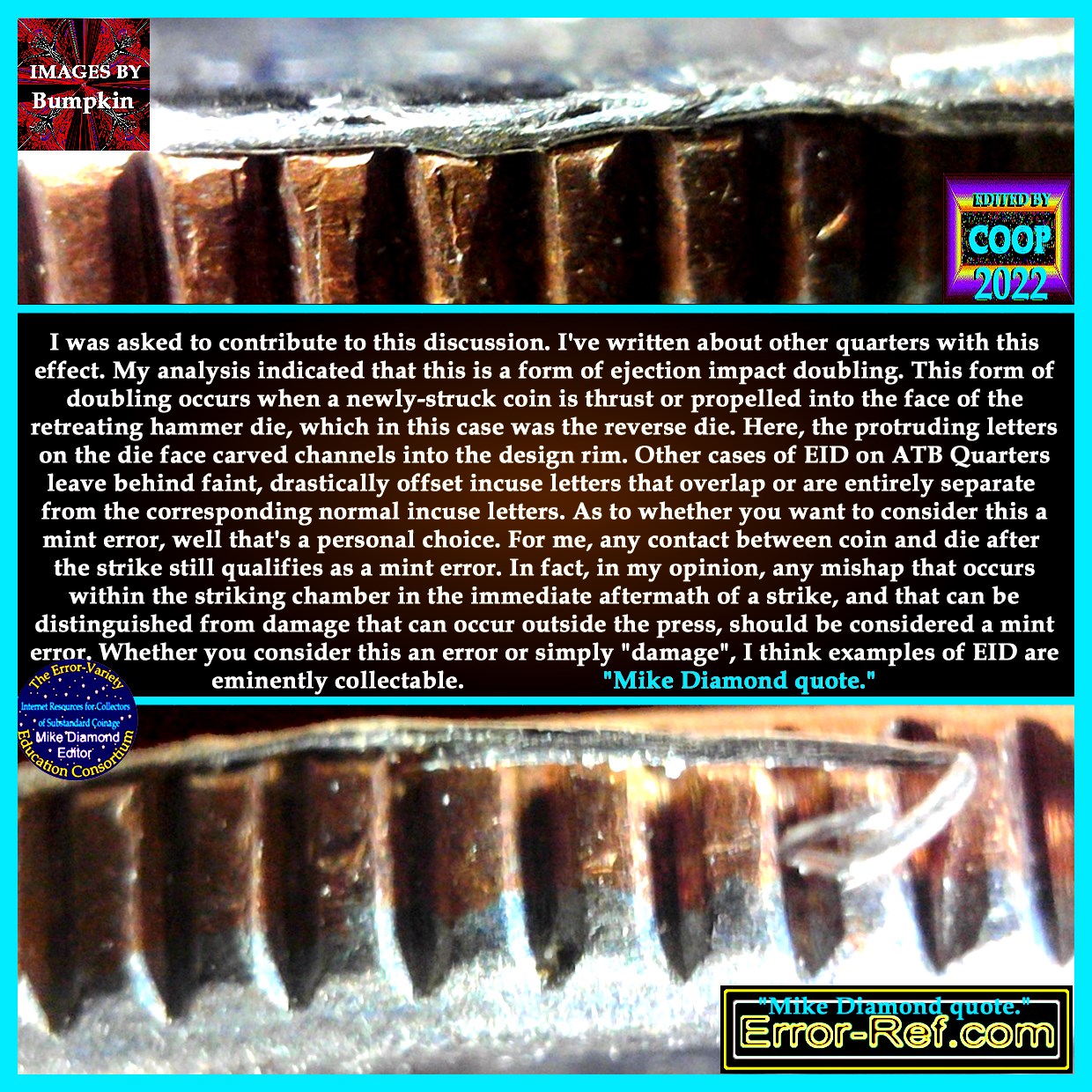
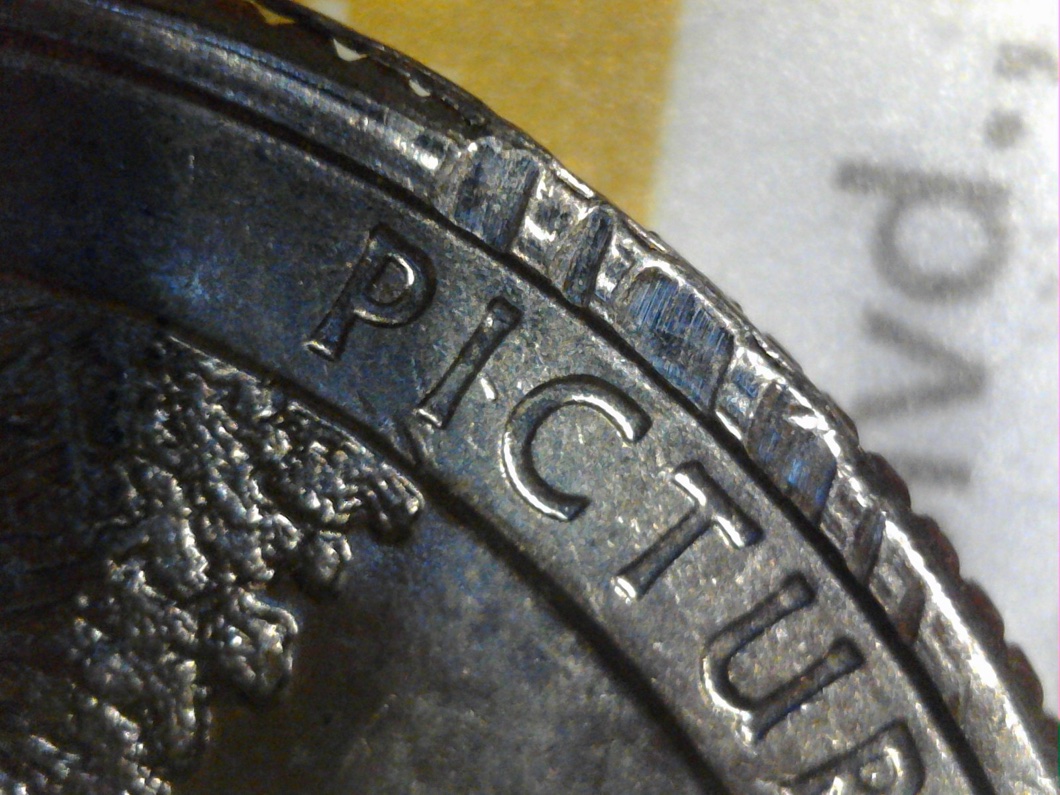
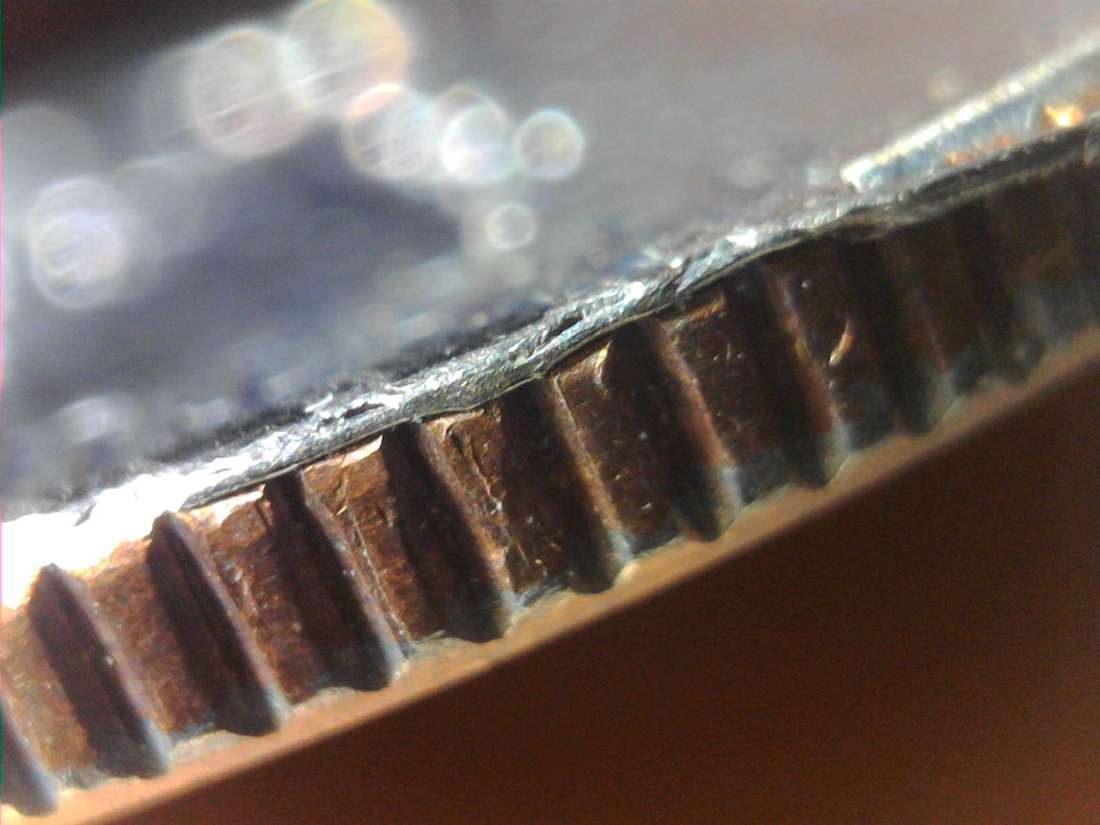
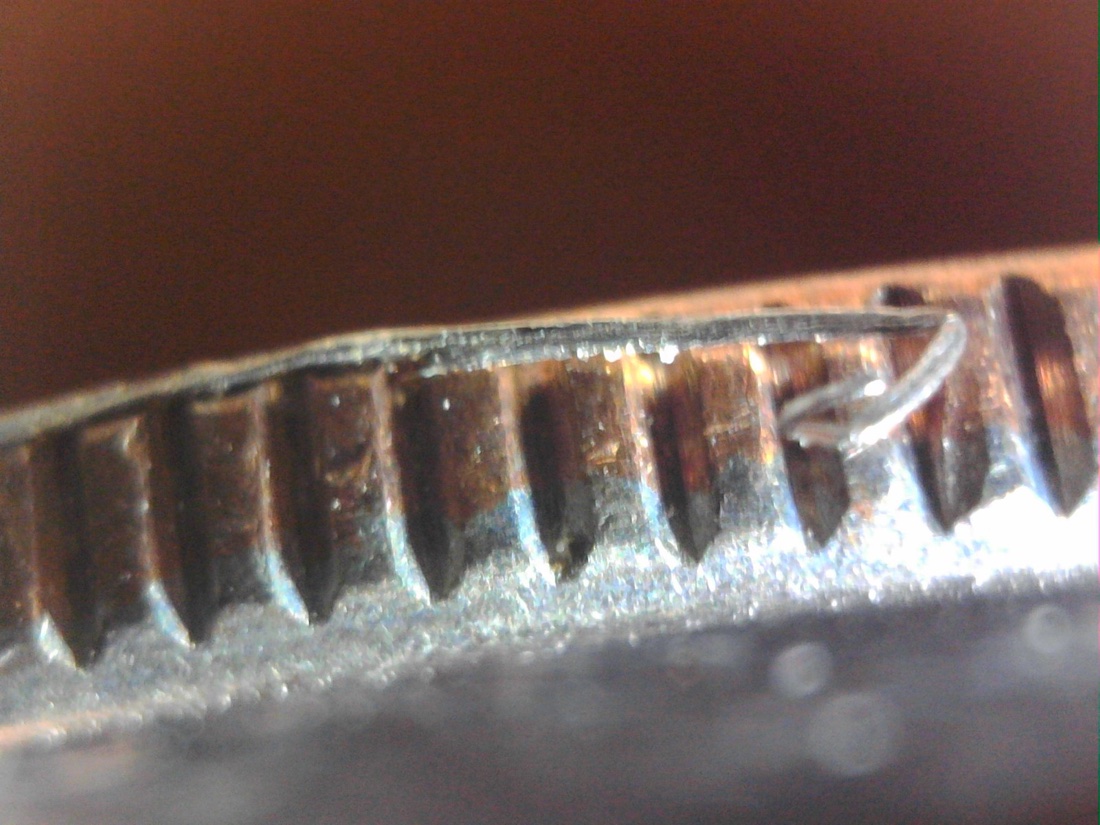
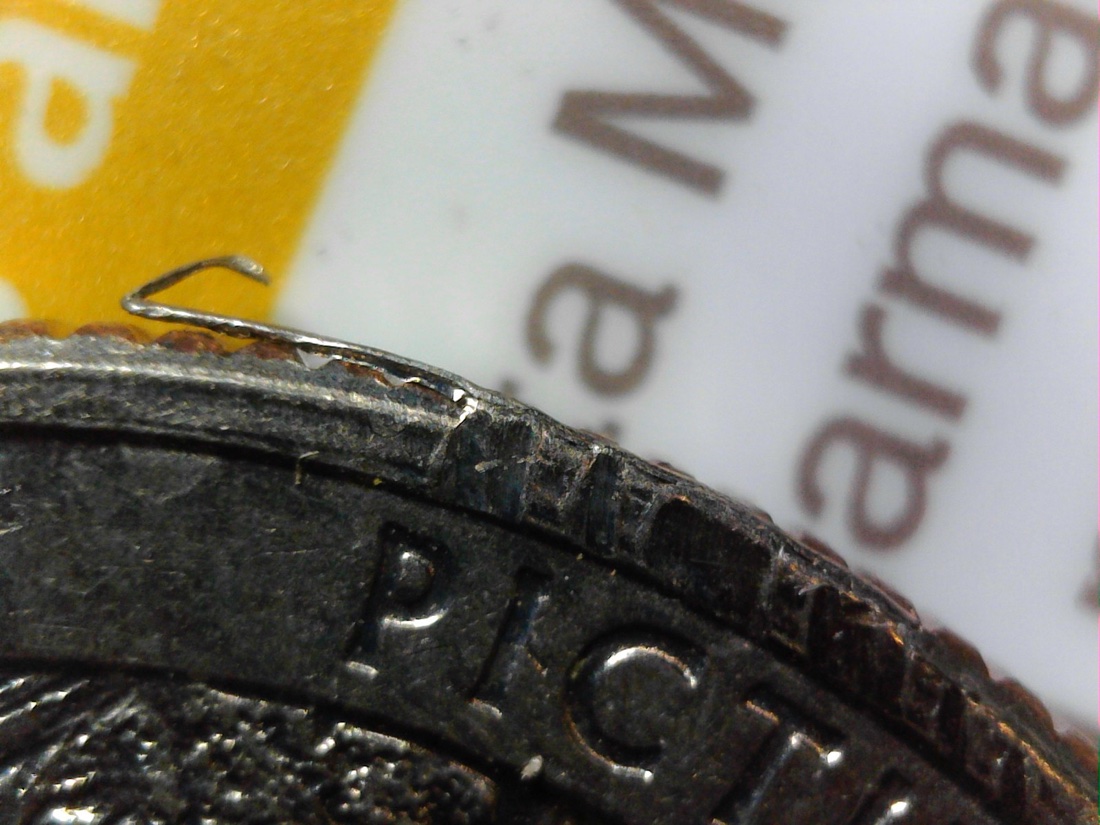
Two observations here please. For simplification sake, I am going to call the detached, yet still attached, piece of metal a "wire". Let's please look at the wire and observe its location in relation to the valleys on the rim. This piece of wire is before (or after depending from which direction you are looking) the indents on top of the rim. The wire is simply not in the way, and was never in the way, of where the indentations are atop the rim. This should rule out, "The peel away of the cladding was caused by the damage".
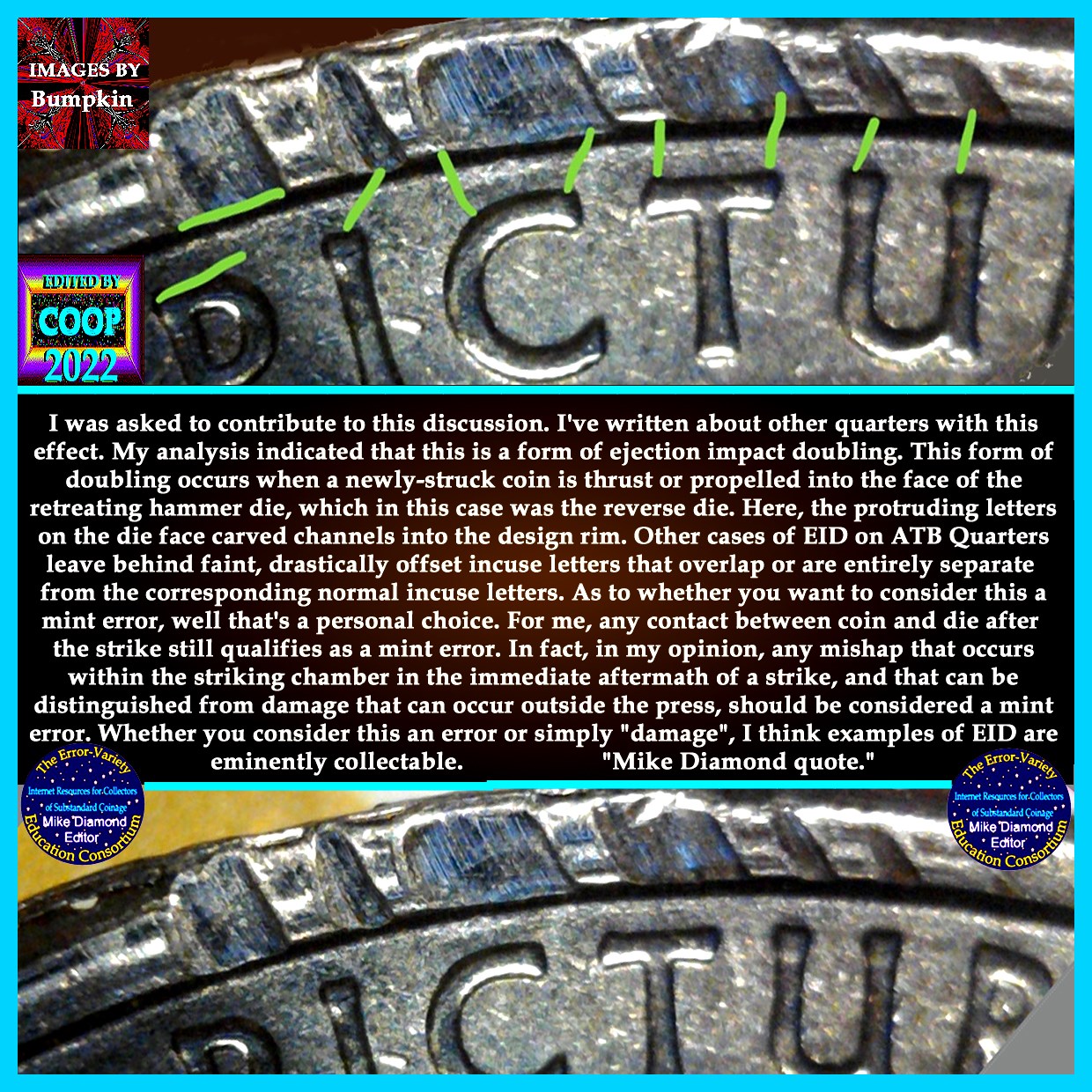
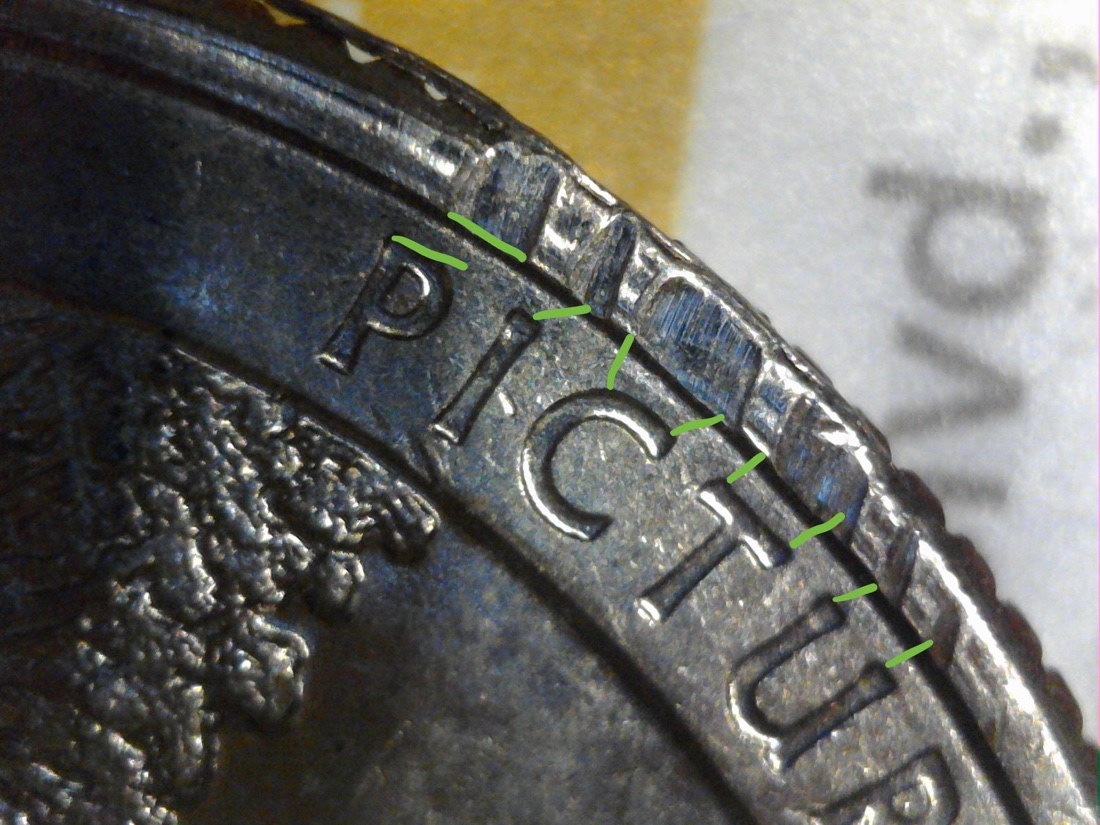
The indents into the rim of the coin are the exact same, dimensionally and proportionally speaking, to the wideness of each individual and adjacent letters of PICTU. We can also see that the very small gutter/crevice separating PICTU from the rim of the coin is not damaged in the very least at all. Had pressure been applied downward motion, in which to create the indents on the rim, it would have most assuredly had closed together this small separating groove.
Secondly, there is not any apparent material buildup from where material was displaced from the indents atop the rim. If this was PMD, and and a foreign object displaced metal here, we would see extra material displaced somewhere but we don't.
This is not an easy one but yet an easy one to write off as PMD.. There are certain variables, characteristics and physics involved here that just do not add up to this being a run of the mill PMD coin. I would politely ask for a re-evaluation coop now that you see I am not saying this is a striking error but some type of damage caused immediately after the strike and before being completely removed from the chamber and collar. Thanks.
Two observations here please. For simplification sake, I am going to call the detached, yet still attached, piece of metal a "wire". Let's please look at the wire and observe its location in relation to the valleys on the rim. This piece of wire is before (or after depending from which direction you are looking) the indents on top of the rim. The wire is simply not in the way, and was never in the way, of where the indentations are atop the rim. This should rule out, "The peel away of the cladding was caused by the damage".
The indents into the rim of the coin are the exact same, dimensionally and proportionally speaking, to the wideness of each individual and adjacent letters of PICTU. We can also see that the very small gutter/crevice separating PICTU from the rim of the coin is not damaged in the very least at all. Had pressure been applied downward motion, in which to create the indents on the rim, it would have most assuredly had closed together this small separating groove.
Secondly, there is not any apparent material buildup from where material was displaced from the indents atop the rim. If this was PMD, and and a foreign object displaced metal here, we would see extra material displaced somewhere but we don't.
This is not an easy one but yet an easy one to write off as PMD.. There are certain variables, characteristics and physics involved here that just do not add up to this being a run of the mill PMD coin. I would politely ask for a re-evaluation coop now that you see I am not saying this is a striking error but some type of damage caused immediately after the strike and before being completely removed from the chamber and collar. Thanks.


 )
)