| Author |
 Replies: 9 / Views: 1,928 Replies: 9 / Views: 1,928 |
|
|
New Member
United Kingdom
2 Posts |
Hi all, my first post here (though I have enjoyed reading quite a few posts over time). I collect antiquities but have avoided purchasing old coins as it seems like a whole new world to me, with an awful lot to learn and a somewhat crowded marketplace. (Perhaps my assumptions are wrong). Anyway, I was purchasing something at a very good auction in Derby, UK recently and came across a spade coin listed as "warring states half jin". The asking price fell and I picked it up on a whim for a nominal fee. My assumption was that the coin is a replica as the state of preservation is too good and no-one else bid for the item. However, the auction valuer said that they have a coin expert who reviews all their coin lots and that he believed it to be real. I attach photos of the spade coin in question. It is approximately 17 grams (so presumably a jin, not a half jin) and 5cm x 3cm. What are your thoughts, coin community? Replica? Real? The calligraphy is quite beautiful either way.  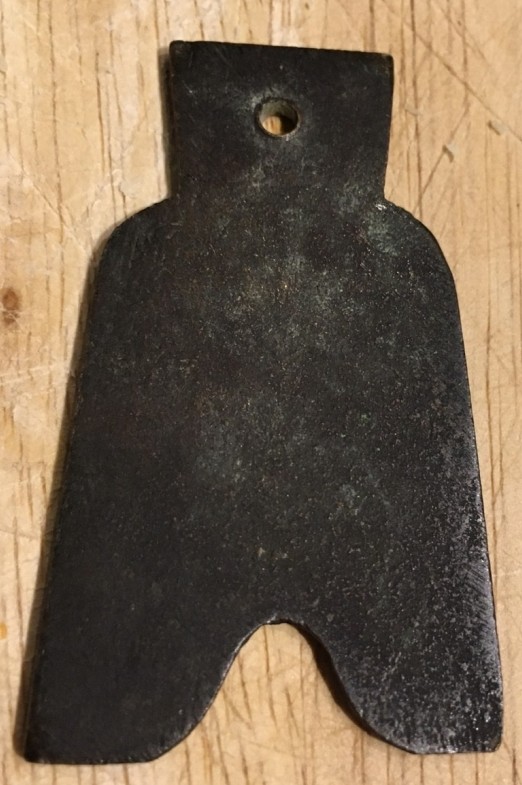 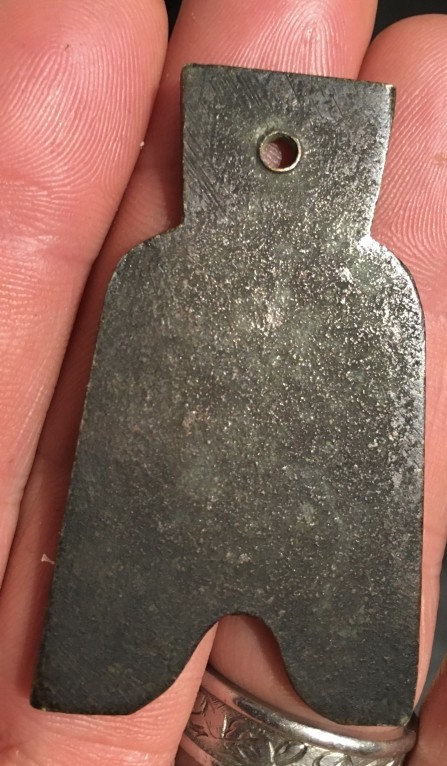 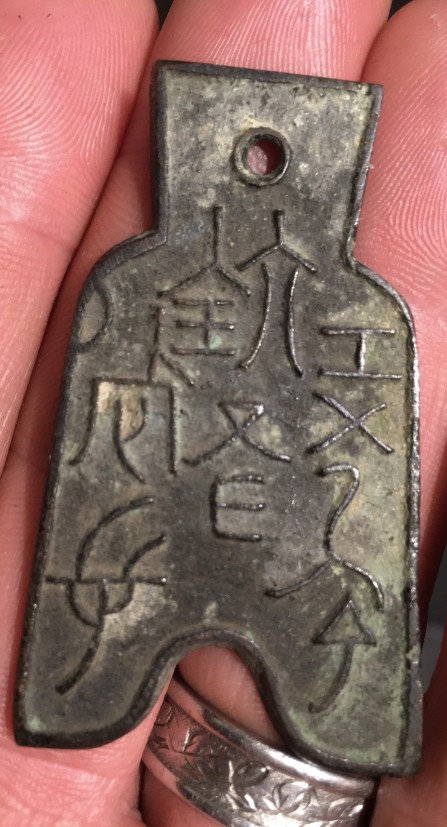 |
|
|
|
Pillar of the Community
United States
797 Posts |
I do not believe this specimen to be genuine, it exibits some modern tooling marks and signs of artificial aging.
the Chinese made zillions of these things in the recent years.
|
|
Moderator
 United States
197800 Posts |
 to the Community! |
|
Moderator
United States
34570 Posts |
@nor, first welcome to CCF. Second, I'm moving your thread over to the ancients subforum to try to get some good eyes on it. We have had a few experts in Chinese numismatics hang out here in the past, but I'm not so sure that they are still as active. My recollection is that I personally have zero aptitude for figuring out this.
"If you climb a good tree, you get a push."
-----Ghanaian proverb
"The danger we all now face is distinguishing between what is authentic and what is performed."
-----King Adz
|
|
New Member
 United Kingdom
2 Posts |
I see what you mean about tool markings - fine parallel lines, as though it had been filed?
I imagined that a fake would be more extravagantly aged, which is why I thought perhaps it was a replica. What are the indications of artificial ageing?
|
|
Moderator
Australia
17031 Posts |
It is, absolutely and definitely, a modern replica. I believe the spade is intended to be this type, on the zeno.ru database: Warring States, Wei Kingdom: https://www.zeno.ru/showphoto.php?photo=19740As you can see, there are several notable differences. The hole at the top, for starters, which is probably put there to allow the tourist buying it to use it for a keyring; plus the general lack of a rim or border around the edge on the genuine item. The characters are close, but somewhat garbled - I doubt a literate person from ancient Wei could have read your coin. Finally, as you point out, the patina is all wrong for a piece of bronze that's allegedly spent 2200 years buried underground. As you are probably aware from your more general antiquities experience, bronze patina is thick and crusty even after just a couple of centuries, and on ancient bronzes you rarely see anything resembling bare metal, unless there's been either a very bad or very very good cleaning job done on it; it looks like a thin dusting over bare metal on your piece. Artificial aging has a whole spectrum of believability, from the laughably silly to the very-genuine-looking. There are lots of different methods they use, too, depending on who they're trying to fool. The tourists in China? They usually get coins dunked in vinegar and left to dry in the sun, which may have been the technique used here on your coin. Simply tossing them into a fire works pretty good too; they've learned what else needs to be tossed into the fire to make the coins "look old" rather than simply "burned". Sometimes (particularly in Vietnam, or so I'm told), genuine old copper coins (that are too badly corroded and damaged to identify) are crushed, and the green powder thus obtained is painted onto the replicas, to give it an authentic "old copper" colour. In the middle east, they feed their fake bronze coins to goats and wait for them to be expelled, though that's kind of hard to do with something as large as your spade. In Eastern Europe and the West in general, a common trend is to slather on a sulfur-laden petroleum jelly and wipe it off after a few days. Don't say "infinitely" when you mean "very"; otherwise, you'll have no word left when you want to talk about something really infinite. - C. S. Lewis
|
|
Pillar of the Community
United States
7067 Posts |
Quote:
In the middle east, they feed their fake bronze coins to goats and wait for them to be expelled, though that's kind of hard to do with something as large as your spade.  |
|
Valued Member
United States
319 Posts |
Very interesting thread. A learning experience as always here in this Community.
Bob...that's baaa-aa-aad. But...I know you're just calling a spade a spade!
|
|
Pillar of the Community
United States
1554 Posts |
Edited by Kushanshah
12/13/2022 6:53 pm
|
|
Valued Member
Australia
497 Posts |
|
| |
Replies: 9 / Views: 1,928 |
|




 Posted 12/12/2022 4:27 pm





