| Author |
 Replies: 12 / Views: 1,660 Replies: 12 / Views: 1,660 |
|
|
New Member
United States
25 Posts |
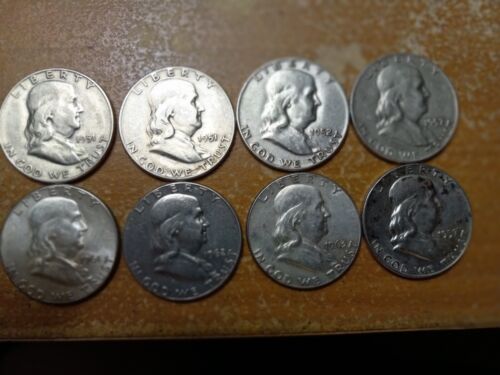 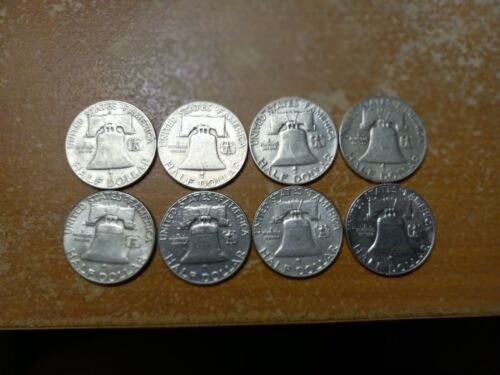 $ Just curious...I can purchase these eight Franklins for $89, including shipping but not tax. Not collecting dates here, just trying to purchase for investment. Looks like it works out, including tax, to about $12 apiece. I'm thinking that's a little high, but on the low end of what they usually go for. UPDATE: Offered $79. Accepted, and ended up paying $90 including shipping and tax. Edited by thomaskl
01/06/2023 11:00 pm
|
|
|
|
Pillar of the Community
United States
2760 Posts |
you can sometimes pick them up for $10 a piece (shipping and tax included) on ebay. But the price you're quoting here is very reasonable. |
|
Pillar of the Community
United States
723 Posts |
To help in your decision making, consider that Currently (01/06/2023) the melt value for a Franklin half is $8.66. Therefore, for eight it would be 69.28. If your not collecting the series, you are paying 27% over current spot. |
|
New Member
 United States
25 Posts |
Melt value is $8.66, but I'm unlikely to find any at that price.
|
|
New Member
United States
25 Posts |
UPDATE: Offered $79. Accepted, and ended up paying $90 including shipping and tax. So around $11.25 apiece.
1951 x (2), 1957 x (2), 1952, 1961, 1962, 1963.
Edited by thomaskl
01/06/2023 11:07 pm
|
|
Bedrock of the Community
Australia
21794 Posts |
If a collector had kept 8 Franklins from 1964 out of circulation, the cost would have been face value - that is $4.00.
US total accumulated inflation rate multiple 1964 to 2022 inclusive, is 9.61. To break even as an investment, the sale price in 2022 would be $38.44
Total price paid above accumulated inflation rate is $51.66.
At a sale price of $79, the above mentioned theoretical collector would have made a profit of $40.56, in 2022 dollar terms. That is a net average annual return above total accumulated official inflation rate of 5.28%.
All prices look to be quite fair and reasonable.
The moral of all this?
- if you buy coins very well, at best value for money at the time of purchase, and you hold for a lifetime, a modest net profit above the inflation rate can be made.
|
|
Moderator
 United States
16012 Posts |
@sel - nice analysis and it supports validating the OP price paid. Quote:
if you buy coins very well, at best value for money at the time of purchase, and you hold for a lifetime, a modest net profit above the inflation rate can be made. This assumes of course that the coins purchased contain a base medal of intrinsic value, such as your 1964 Franklin example. It's the rise in silver value that allows your math to work. You are not going to set aside 2022 clad Kennedy halves, hold them for 50 years, and experience a price increase that exceeds the accumulated inflation that has occurred. Take a look at my other hobby ... http://www.jk-dk.art |
|
Bedrock of the Community
Australia
21794 Posts |
Actually, being an old guy, I have found that it works with most forms of numismatics. Same generally applies to real estate and stock market indexes, over the very long term.
To be very different,
I have tried the same sort of mathematics on a Roman denarius, that I bought in 1965 !
You have to do some inflation rate research first, but I never looked at bullion price histories, although they can have an influence on sale prices for strictly numismatic items, that have a precious metal content, such as the Franklins that are the subject of this thread.
|
|
Pillar of the Community
United States
1173 Posts |
Congrats on your purchase.
|
|
Bedrock of the Community
United States
94367 Posts |
I think you did just fine!  to the CCF! |
|
Pillar of the Community
United States
7601 Posts |
Quote:
I think you did just fine! Me too... the Forum. |
|
Moderator
United States
198004 Posts |
Nicely done.  |
|
New Member
United States
25 Posts |
I just like to know that, if I really had to sell them someday in my future retirement, I'd be able to get my money back out of them.
|
| |
Replies: 12 / Views: 1,660 |
|







 Posted 01/06/2023 9:29 pm


