| Author |
 Replies: 23 / Views: 2,736 Replies: 23 / Views: 2,736 |
|
Pillar of the Community
Canada
870 Posts |
Hello all. I have this indent strike that I have a question about. The reverse indent has incluse denticles and the obverse has a Rim Fin. My question is how this could happen? I would think that the previously struck cent that created the indent would have the denticles going the opposite direction. I would love some opinions from the experts here. Thank you.    |
|
|
|
Pillar of the Community
United States
579 Posts |
|
|
Pillar of the Community
Canada
1018 Posts |
Hello Rob , I see flattened rim on the obverse side too, imo not an indent strike but PMD of some type. |
|
Pillar of the Community
 Canada
870 Posts |
Hi Denny. I put this one out there because there is a Rim Fin on the obverse which likely wouldn't be there if it was PMD. But I can't wrap my head around this one so who knows! Thanks for the reply. Edit: the denticles are incused too so not a hammer hit imho Edited by robmck1967
01/15/2023 2:29 pm
|
|
Pillar of the Community
Canada
1018 Posts |
Could you give a side picture of the rim at that spot?
|
|
Pillar of the Community
Canada
870 Posts |
Extra images 2 pics of the edge   A pic showing that the denticles are incused. 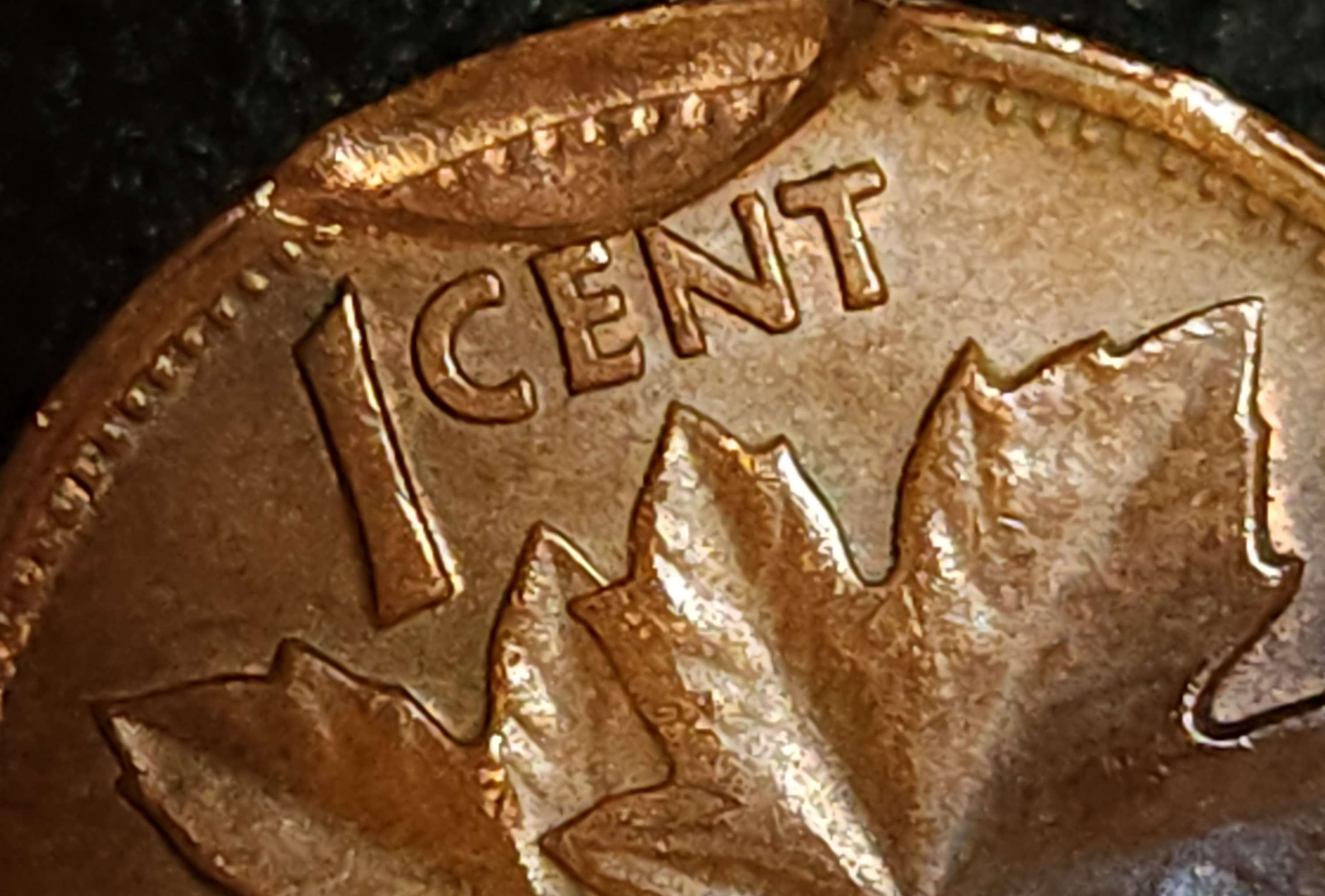 And anpic highlighting the Rim Fin on the obverse. 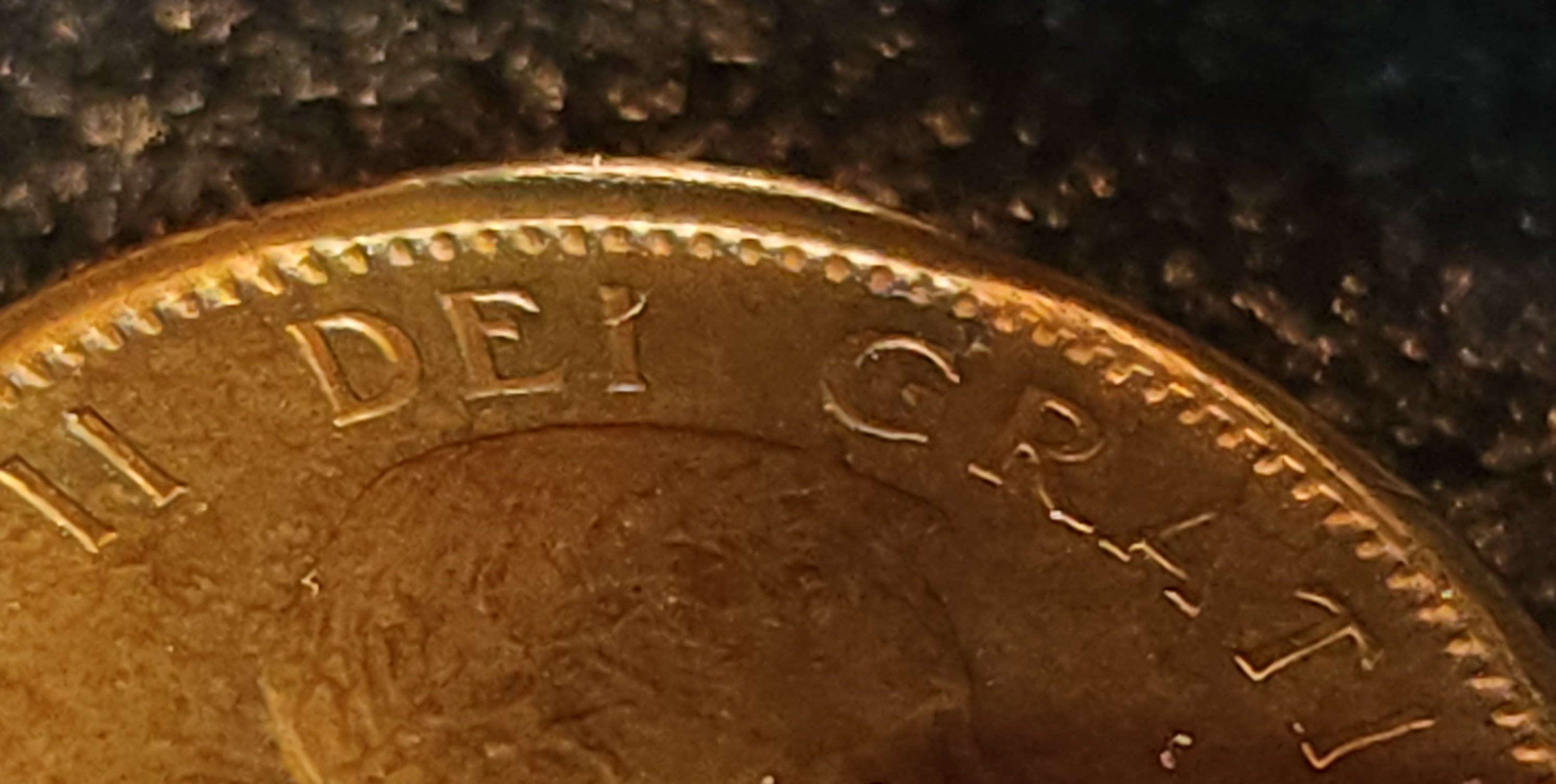 |
|
Pillar of the Community
 Canada
5606 Posts |
If the denticles are incuse there, then it had to be from another coin being forced or pounded into the big coin.
|
|
Pillar of the Community
Canada
2302 Posts |
I am thinking the striking coin (causing the indent) was blank and the denticles you are seeing are the squashed denticles of your host coin. Indent was just not strong enough to remove denticles and rim. Nice coin. IMO
|
|
Pillar of the Community
United States
579 Posts |
|
|
Pillar of the Community
Canada
5606 Posts |
From a mechanical point of view, squashed denticles from the host coin could not be indented/incuse; they would be flattened.
|
|
Pillar of the Community
Canada
870 Posts |
Thanks for all of your responses so far. Error collecting is certainly challenging, and you never stop learning. Lol. I have several indent strikes, and they have similar features such as a Rim Fin, a warped edge, a flattened rim adjacent to the fin, crescent shaped indented area. The coin in question has these characteristics too, so a partial brockage came to mind. What do you guys think about this? Aligned partial brockages: Definition: A partial brockage in which the incuse, mirror-image design elements line up with the corresponding die-struck design elements on the opposite face. http://www.error-ref.com/brockages-...strike-clip/Edit: spelling Edited by robmck1967
01/17/2023 6:47 pm
|
|
Pillar of the Community
Canada
1018 Posts |
I've looked at your pictures many times and I still don't know, interesting coin.
|
|
Valued Member
Canada
234 Posts |
Quote:Aligned partial brockages: Definition: A partial brockage in which the incuse, mirror-image design elements line up with the corresponding die-struck design elements on the opposite face. http://www.error-ref.com/brockages-...strike-clip/ I think you're right robmck1967. Assuming the pattern is incuse, aligned partial brockage is the best scenerio. But I have to tell that this is the thinnest off-axis Capped Die I've seen for now that produced this coin! |
|
Pillar of the Community
United States
4233 Posts |
My first impression, uninformed as it may be, is that it's a small incomplete clip (or whatever that's called) and what you see is a result of striking the odd planchet. I have trouble perceiving the denticles as indented from these images. It looks dovetailed like a clip would be. I can talk myself into seeing a small Blakesley effect on the portrait side opposite the defect, but it could be that the rim is abraded in that area.
|
|
Valued Member
Canada
289 Posts |
With the denticles being incuse, and considering their position in the flattened area, it seems pretty much certain it would be a small elliptical strike clip left in the strike chamber that created a partial brockage. I suppose someone could conceivably recreate that by making their own clip and stamping it hard themselves against another penny at some later point as PMD, but you would expect the colour to be all off in that case. Would take a lot of pressure and a lot to setup too. Looks kinda legit to me, but certainly a weird series of events to create it. |
|
Pillar of the Community
Canada
870 Posts |
Here are the 3 possible types of aligned partial brockages according to error-ref. Number one is most common and most likely due to the rim fim that is present.
1. Brockage from an off-center (partial) die cap. This is the most common cause. A planchet is fed into the striking chamber in an off-center position. It is struck by the dies on both faces and then sticks to one of the dies (usually the upper or hammer die). Another planchet is fed into the striking chamber and the partial die cap is struck into it. The result is an incuse, mirror-image version of the design that is aligned with the die-struck design on the opposite face. These types of aligned partial brockages generally lack an impression of the design rim. When struck in-collar, metal often flows over the top of the collar to form a horizontal lip
2. Brockage from an elliptical clip coin. An oval planchet (an elliptical clip) enters the striking chamber and settles against the collar. It is struck by the dies on both faces and then sticks to one of the dies (again, usually the hammer die). Another planchet is fed into the striking chamber and the elliptical coin is struck into it. Once again you end up with an incuse mirror-image version of the design that is aligned with the die-struck design on the opposite face. This type of aligned partial brockage will usually show an impression of the design rim and will lack horizontal lipping.
3. Brockage from an elliptical strike clip. A planchet is fed into the striking chamber in an off-center position. During the strike it is sheared in two between the hammer die and a collar that is frozen in the "up" position. The oval remnant of the coin within the striking chamber then sticks to one of the dies (usually the hammer die) and is struck into the next planchet. This type of aligned partial brockage may show an abnormally broad "rim" impression, which actually represents an impression of the rounded shoulder that often forms on the face struck by the anvil die. Horizontal lipping is generally absent.
|
| |
Replies: 23 / Views: 2,736 |





 Posted 01/15/2023 2:14 pm





