| Author |
 Replies: 12 / Views: 747 Replies: 12 / Views: 747 |
|
|
Pillar of the Community
 Sweden
2124 Posts |
I am researching a liard that I have recently acquired, one from Stavelot-Malmedy issued 1648-1650 by Ferdinand of Bavaria. Stavelot-Malmedy used the monetary system of its greater neighbor Liège, with 1 florin Brabant-Liège = 80 liards "aidant". The name "aidant" comes from the earlier 15th-16th century monetary system, where 1 florin liegeois = 20 patards/liards/aidants liegeois. The names patard, liard, and aidant seem to have been used interchangeably. Without going into details of the (slightly complicated) relations between different monetary units, I just wonder what the origin of the name "aidant" is? It is used from at least the 15th century. It is worth noting that it is only the Liège patard/liard that was called "aidant". Patards and liards from other provinces (where the two denoted different values) were not. "Aidant" means "helping" or "helper" in French, so unless the name is a corruption of some other word, who or what is helping or gets help? I have browsed several works, old and new, about the numismatics of Liège, and they all refer to the name "aidant", but none gives an explanation of its origin. Internet searches have not resulted in anything useful. I am hoping someone, perhaps among our experts on Low Countries coinage, has an idea. This is the coin, by the way: Liard "aidant", Stavelot-Malmedy, 1648-1650, Ferdinand of Bavaria.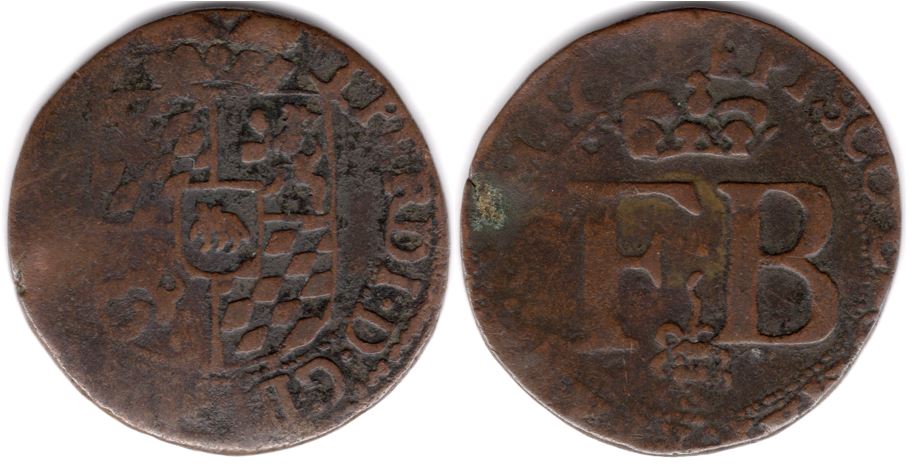 *** Moved by Staff moved to a more appropriate forum. *** *** Moved by Staff moved to a more appropriate forum. *** |
|
|
|
Moderator
 United States
195482 Posts |
Very interesting!   |
|
Pillar of the Community
United States
8051 Posts |
I don't know  But whoever does will also know the origin of the name brule for an even smaller copper of Liege (which I have also wondered about)  |
|
Moderator
United States
34546 Posts |
Maybe reach out to Elsen? If @era and @tdz don't know this answer then I don't know anyone else other than them who might.
"If you climb a good tree, you get a push."
-----Ghanaian proverb
"The danger we all now face is distinguishing between what is authentic and what is performed."
-----King Adz
|
|
Pillar of the Community
 Sweden
2124 Posts |
Quote:
the origin of the name brule for an even smaller copper of Liege Brûle = burnt, so I am thinking that is a local name for coins of copper or low grade billon ("black money"/"monnaie noire"), which in some sense have a burnt look. |
|
Bedrock of the Community
United States
12057 Posts |
Interesting topic. Henaux, 1858, "Constitution du pays de Liège, tableau des institutions politiques, communales, judiciaires et religieuses de cet etat en 1789" citing Bertho from 1769: Quote:
A Liege, on compte ordinairement par florins, sols, liards, et quelquefois par ecus, ce qui arrive sur l'Allemagne. 4 liards pour 1 sol, 20 sols pour 1 florin. » (Bertho, Le Commerce de Liège par comptes faits; 1769; p. 44.)
La denomination wallonne etait, pour l'escalin, skelin; pour la plaquette, blámuse; pour le sou, patâr; pour le liard, aidant. So this just states that the Walloon name for the liard was "aidant." A perhaps more useful reference can be found in "Dictionnaire wallon-français", Remarcle, 1839: Quote:
AIDAN, s. monnaie de cuivre ou de billon au pays de Liege. LIARD. L'aidan valait 24 soz; et fait actuellement un centime, 52, 100°, en monnaie de compte. Il ne faut point confondre notre liard avec celui de France, qui ne valait que 3 deniers ou la 12me partie d'un sol tournois.-S'il est vrai que nous avons eu un stier de grain pour un aidan ou aidant, cette monnaie etait à coup sûr aidante. Au XVIe siècle les Français disaient encore aidance, dans l'acception d'aide, secours, assistance: notre aidant les auraient-ils aide à creer ce mot? Si un PEU d'aide fait GRAND bien, cela n'est pas impossible.-Louki bein sikrok-patár la, avou s'iabi d'klikote, il a de-zaidan: Regardez bien ce pince-maille, avec son habit en loques, il a de l'argent. — Ke hopai d'aidan! My French isn't. (I only speak English, Spanish and some German.) but a pass through Google Translate gives me this, although it would greatly benefit from a native speaker of French or the Walloon dialect: Quote:
AIDAN, s. copper or billon currency in the region of Liege. LIARD. The aidan was worth 24 soz; and currently makes a cent, 52, 100°, in currency of account. We must not confuse our liard with that of France, which was only worth 3 deniers or the 12th part of a sol tournes.-If it is true that we had a tier of grain for an aidan or helper, this currency was definitely helpful. In the 16th century the French still said aidance, in the sense of aid, relief, assistance: would our aide have helped them to create this word? If a LITTLE help does a LOT of good, it's not impossible.-Louki bein sikrok-patár la, avou s'iabi d'klikote, il de-zaidan: Look closely at this mesh pincer, with his coat in rags, he has money. Member ANA - EAC - TNA - SSDC - CCT #890 "Most of the things worth doing in the world had been declared impossible before they were done." -- Louis D. Brandeis |
|
Bedrock of the Community
United States
12057 Posts |
"JAARBOEK VOOR MUNTEN PENNINGKUNDE" has this entry in 1960 for research submitted by a Dr. N. J. E. de Meyer: "LE MONNAYAGE COMMUNAL DE RUREMONDE" A reference for Ruremonde/Roermond, under the chapter for Albert et Isabelle: Quote:
Le 17 juillet 1608 le magistrat invite le maître monnayeur à frapper des
peerdekens, des sous et des demi-sous, don't le pied sera etabli de façon
telle qu'on pourra le justifier et que la qualite de la monnaie ne portera
pas atteinte à la bonne reputation de la ville. Les liards et gigots de cuivre
continueront à être frappes sur le pied actuel. Pour satisfaire les besoins
en petites monnaies, le maître monnayeur pourra fabriquer egalement des
quarts de liards. Google Translate: Quote:
On July 17, 1608 the magistrate invited the master coiner to mint
peerdekens, pennies and half pennies, the foot of which will be established in a manner
such that it can be justified and that the quality of the currency will not affect
not damage the good reputation of the city. Copper farthings and legs
will continue to be struck on the current footing. To satisfy the needs
in small coins, the master coiner will also be able to manufacture
quarters of a farthing. The same reference indicates a "Peerdeken" to be valued at 1.5 sol. Later, the following, ibid. Quote:
Cette decision ne decouragea pas les-autorites gueldroises, car en 1695, le magistrat de Rùremonde et les chancelier et conseillers de la Cour souveraine en Gueldre adressèrent encore des requêtes au roi. Un acte du 13 janvier 1696 portant acceptation de l'accord des aides et subsides de la province de Gueldre par le gouverneur des Pays-Bas espagnols, l'electeur Maximilien-Emmanuel de Bavière, contient le passage suivant: „Son Altesse Electorale ne peut permettre la fabrique de la petite monnoye de cuivre demandee par ceux de Rùremonde, mais elle fera pourveoir la province de la quantite de liards qu'ils (les etats) jugeront necessaire pour le cours du commerce et pour empescher l'eschillement et introduction des mauvais (liards) Google Translate: Quote:
This decision did not discourage the Gelderland authorities, because in 1695, the magistrate of Roermonde and the chancellor and advisors of the Sovereign Court in Gelderland again addressed requests to the king. An act of January 13, 1696 accepting the agreement of aid and subsidies of the province of Gelderland by the governor of the Spanish Netherlands, the elector Maximilian-Emmanuel of Bavaria, contains the following passage: „His Electoral Highness cannot allow the manufacture of the small copper coin requested by those of Roermonde, but it will provide the province with the quantity of farthings that they (the states) deem necessary for the course of commerce and to prevent the exchange and introduction of bad (liards) Member ANA - EAC - TNA - SSDC - CCT #890 "Most of the things worth doing in the world had been declared impossible before they were done." -- Louis D. Brandeis Edited by paralyse
02/28/2024 3:17 pm
|
|
Moderator
United States
34546 Posts |
Well done @paralyse! Thx for helping me learn something today.
"If you climb a good tree, you get a push."
-----Ghanaian proverb
"The danger we all now face is distinguishing between what is authentic and what is performed."
-----King Adz
|
|
Pillar of the Community
Sweden
2124 Posts |
Thank you paralyse, for digging out all those texts! Quote:
So this just states that the Walloon name for the liard was "aidant." Maybe it could have its origin in some Walloon word, that's an idea. I consulted an online Walloon-French dictionary, but it seems the meaning of "aidant" in Walloon is the same as in French: "helper". (A second entry explains the word as the name of an ancient money ... ) Quote:
Maybe reach out to Elsen? Good idea, Spence. I did so earlier today, and they kindly and swiftly responded that they were not aware of any explanation for the origin of the name. Maybe there is no record left of how this name came to be used. I suppose it has to remain one of life's mysteries, for now at least. |
|
Bedrock of the Community
United States
12057 Posts |
It's probably lost to the murky fog of history - the first explanation I cited is almost certainly a folk etymology. So it would make sense that the coin was probably colloquially known as an "aidant" for whatever reason, and then later, folks started to invent stories to "explain" the name since they didn't have the slightest clue either. The world may never know.
British small coinage was at least semi-logical: a halfpenny was worth half a penny, a farthing (=feorting/fourthing) was worth 1/4 of a penny
HRE minors were more difficult to pin down at times: a groschen = little grossus, a pfennig = a penny, but then you had outlier denominations like the petermenger, the heller (lit. "bright" as in bright/shiny silver) and the stüber (lit. = a piece of sth.)
Member ANA - EAC - TNA - SSDC - CCT #890 "Most of the things worth doing in the world had been declared impossible before they were done." -- Louis D. Brandeis |
|
Pillar of the Community
Germany
1856 Posts |
My hat off to you, @paralyse. Excellent research work.
|
|
Bedrock of the Community
United States
12057 Posts |
Thank Google, not me! It's just a matter of being willing to sift through dozens of pages of results.
Member ANA - EAC - TNA - SSDC - CCT #890 "Most of the things worth doing in the world had been declared impossible before they were done." -- Louis D. Brandeis |
|
Pillar of the Community
Sweden
2124 Posts |
Quote:
It's just a matter of being willing to sift through dozens of pages of results. I know the feeling!  |
| |
Replies: 12 / Views: 747 |
|
To participate in the forum you must log in or register.
Disclaimer: While a tremendous amount of effort goes into ensuring the accuracy of the information contained in this site, Coin Community assumes no liability for errors. Copyright 2005 - 2026 Coin Community Family- all rights reserved worldwide. Use of any images or content on this website without prior written permission of Coin Community or the original lender is strictly prohibited.
Contact Us | Advertise Here | Privacy Policy / Terms of Use
|
| Coin Community Forum |
© 2005 - 2026 Coin Community Forums |
| It took 0.39 seconds to rattle this change. |
 |
|










 Posted 02/28/2024 1:38 pm


