| Author |
 Replies: 17 / Views: 997 Replies: 17 / Views: 997 |
|
Pillar of the Community
United States
4707 Posts |
|
|
|
|
Moderator
 United States
16019 Posts |
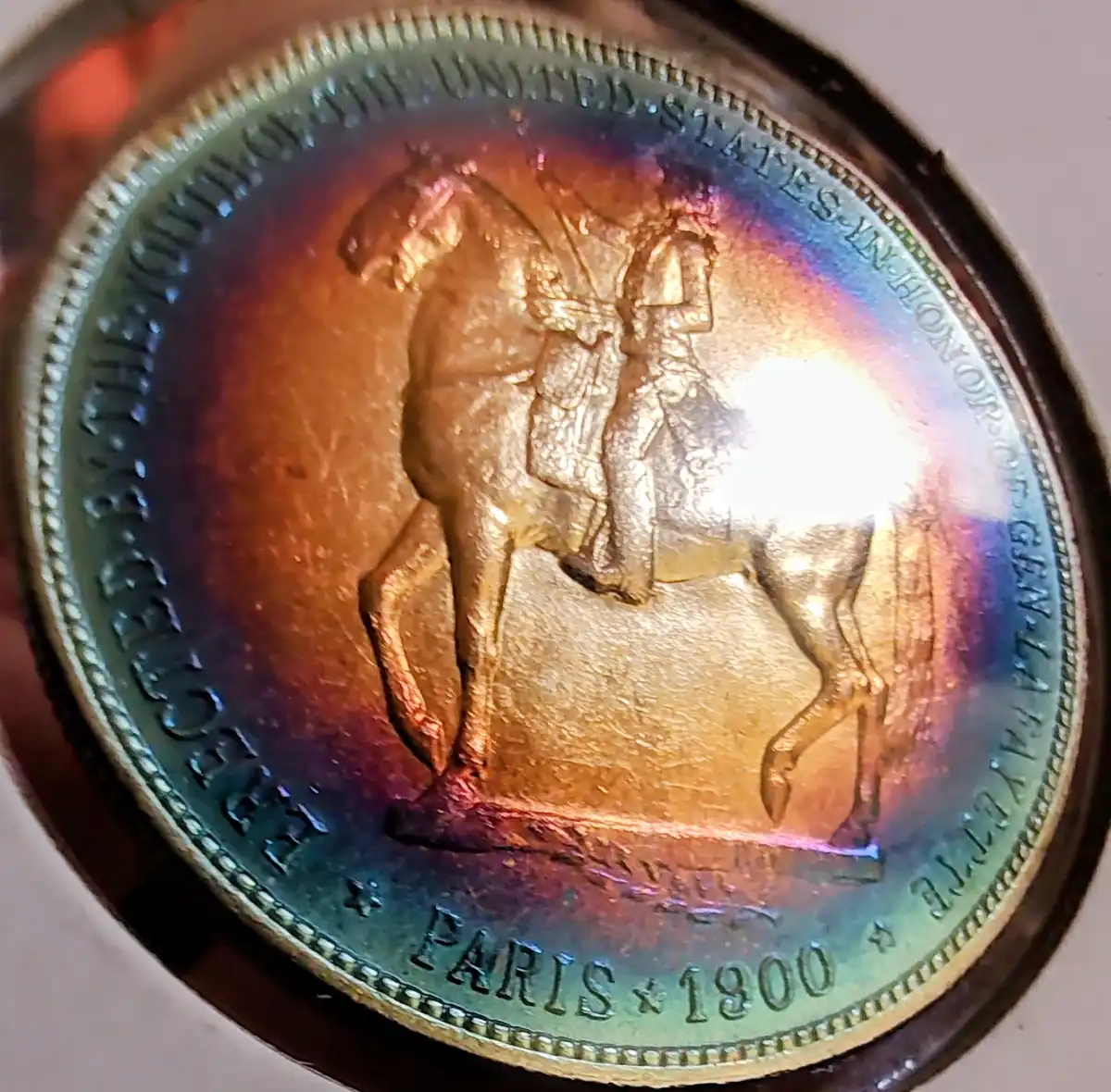
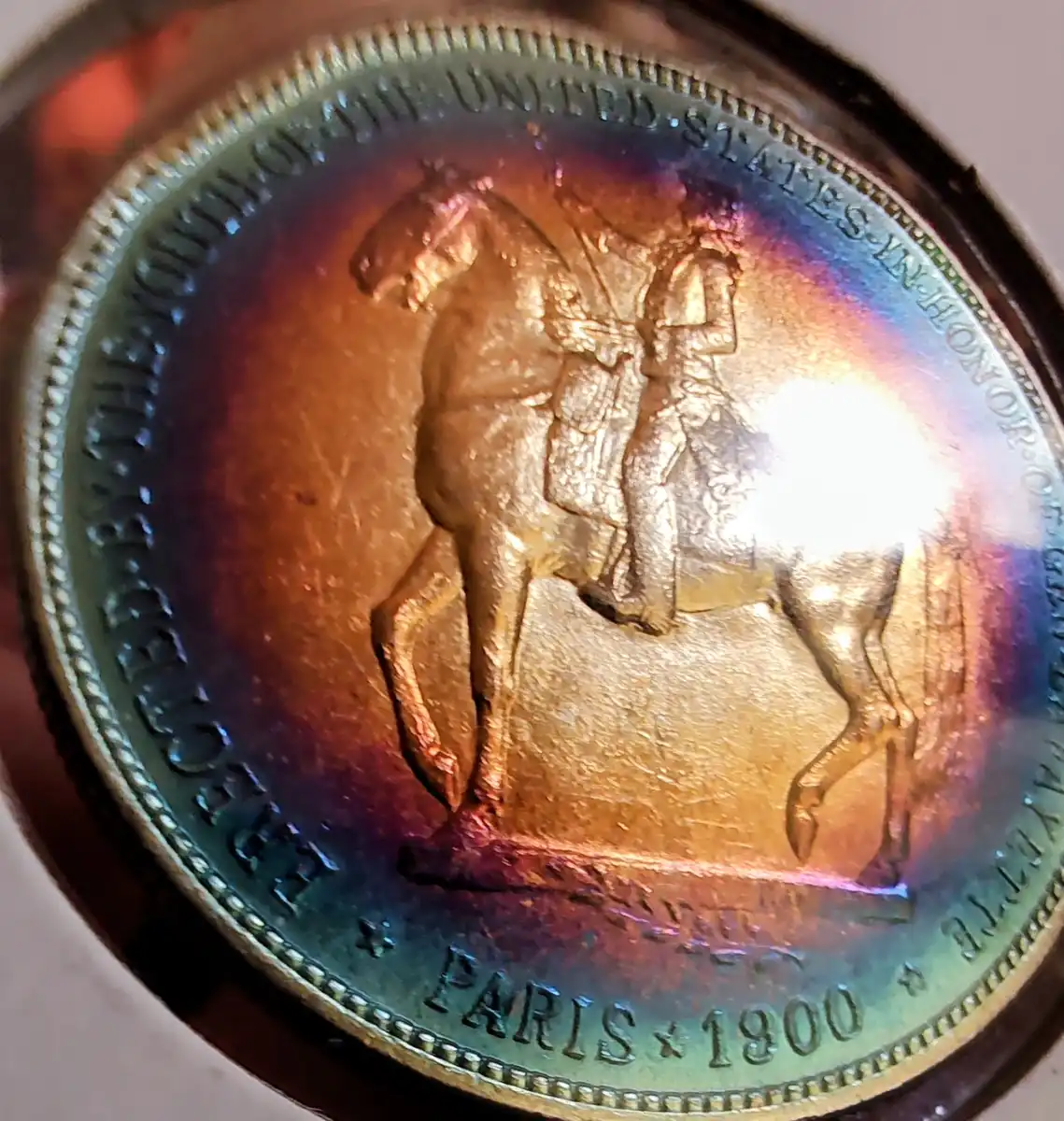
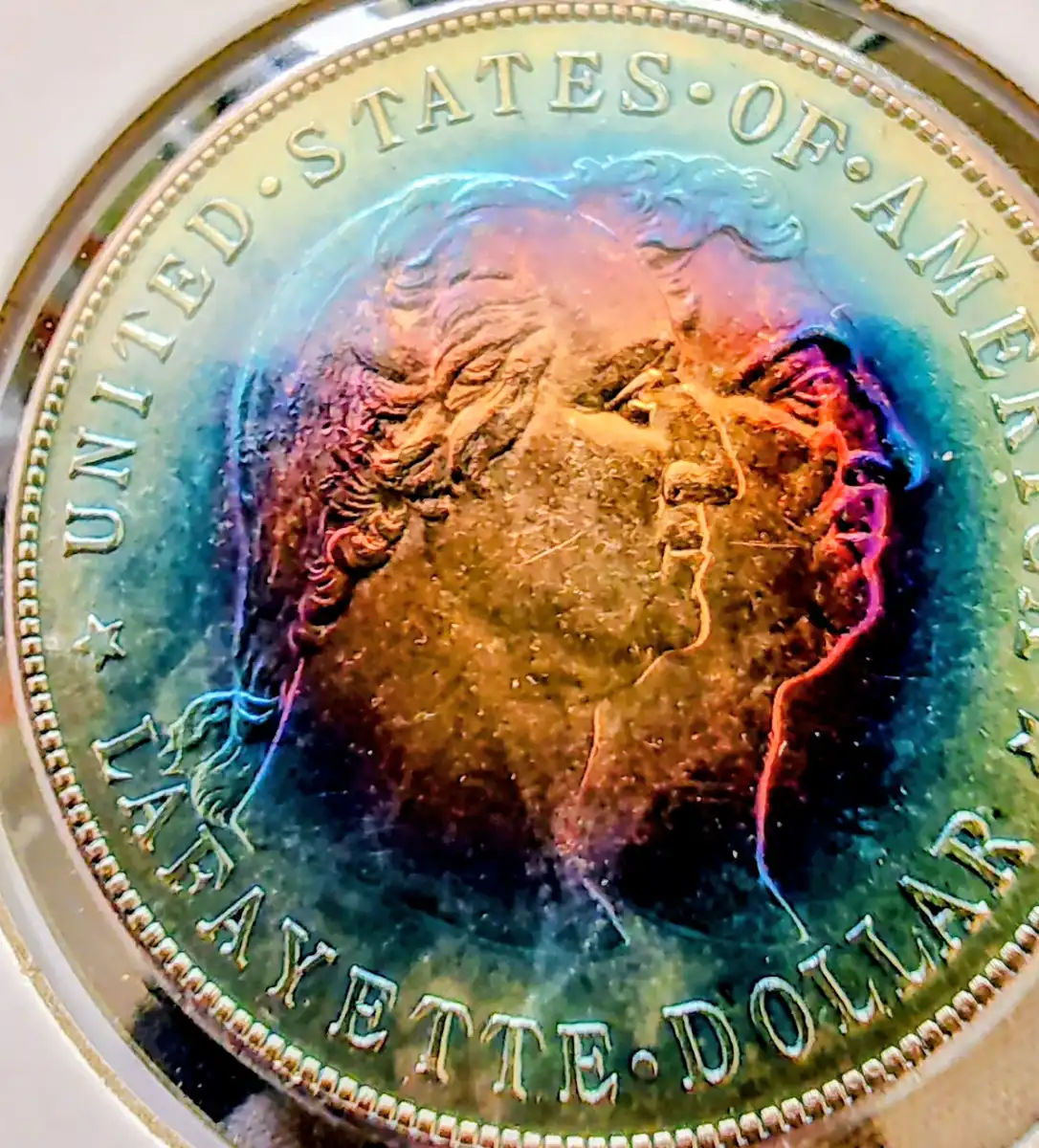
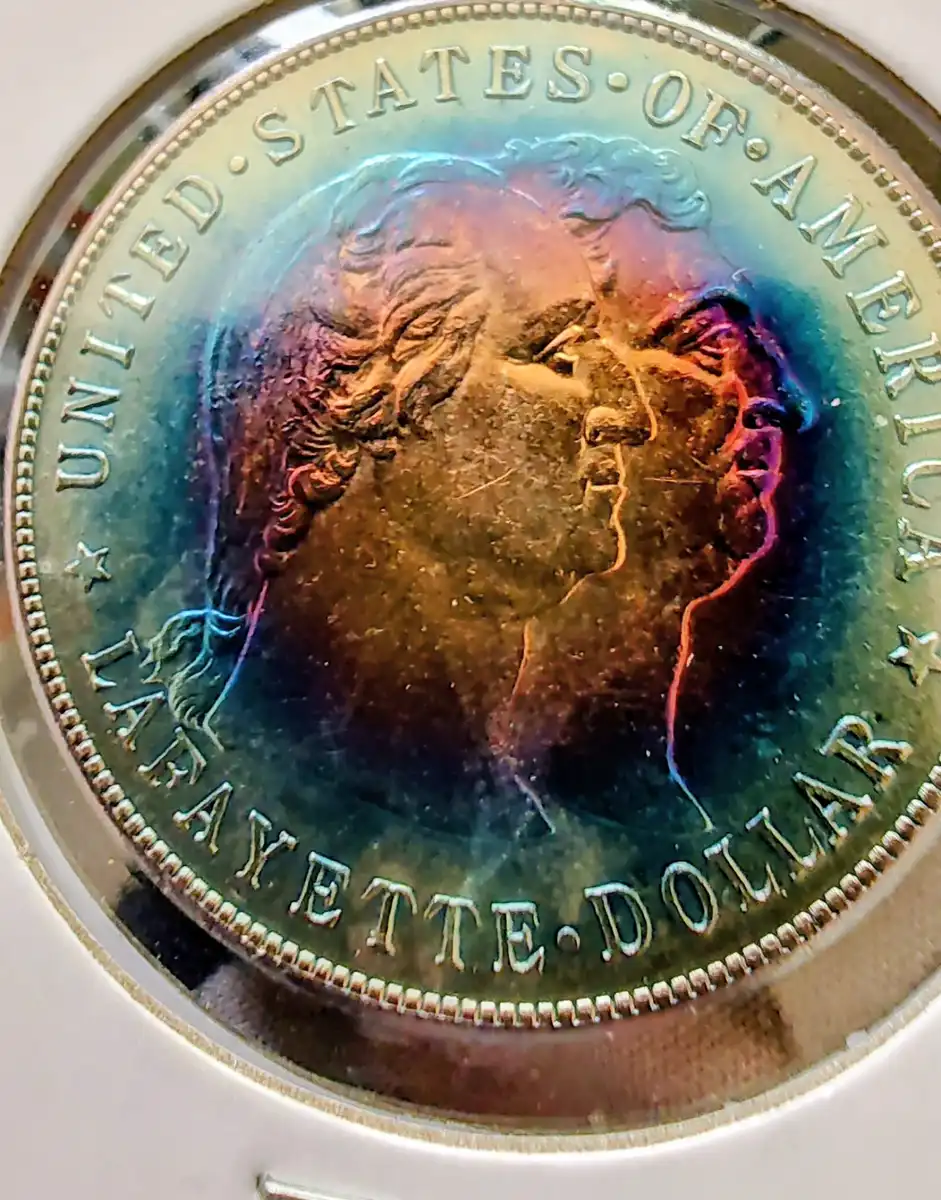
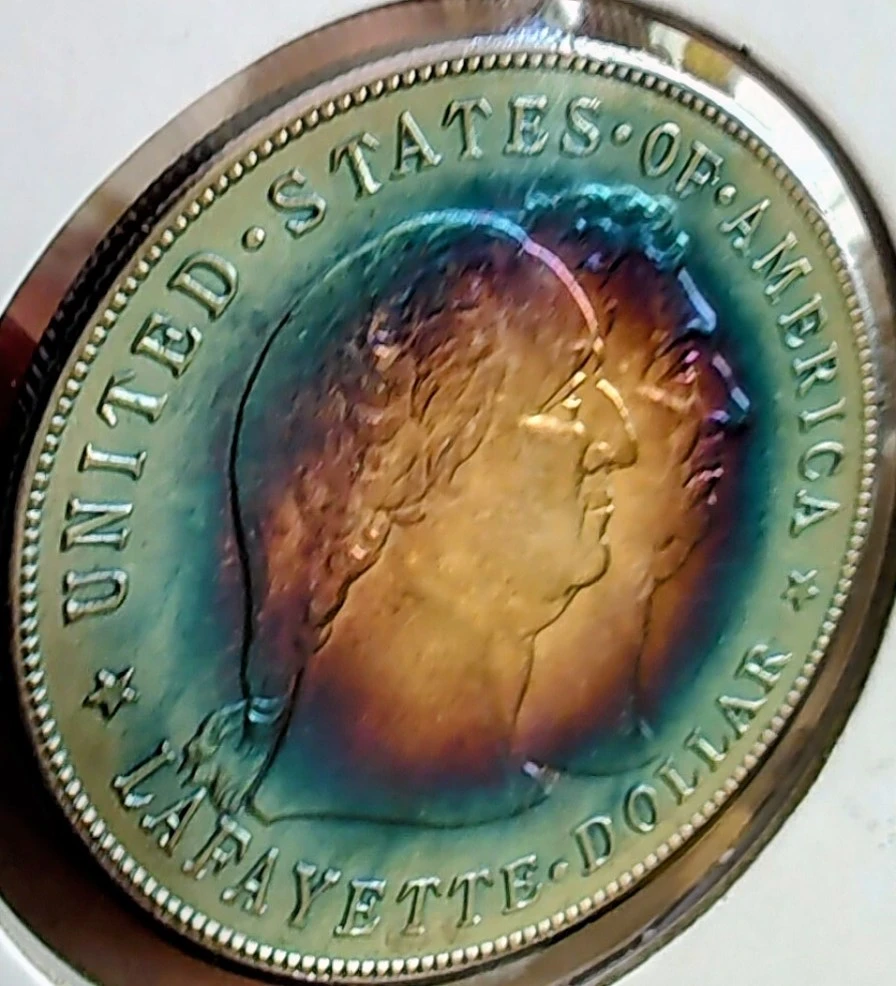
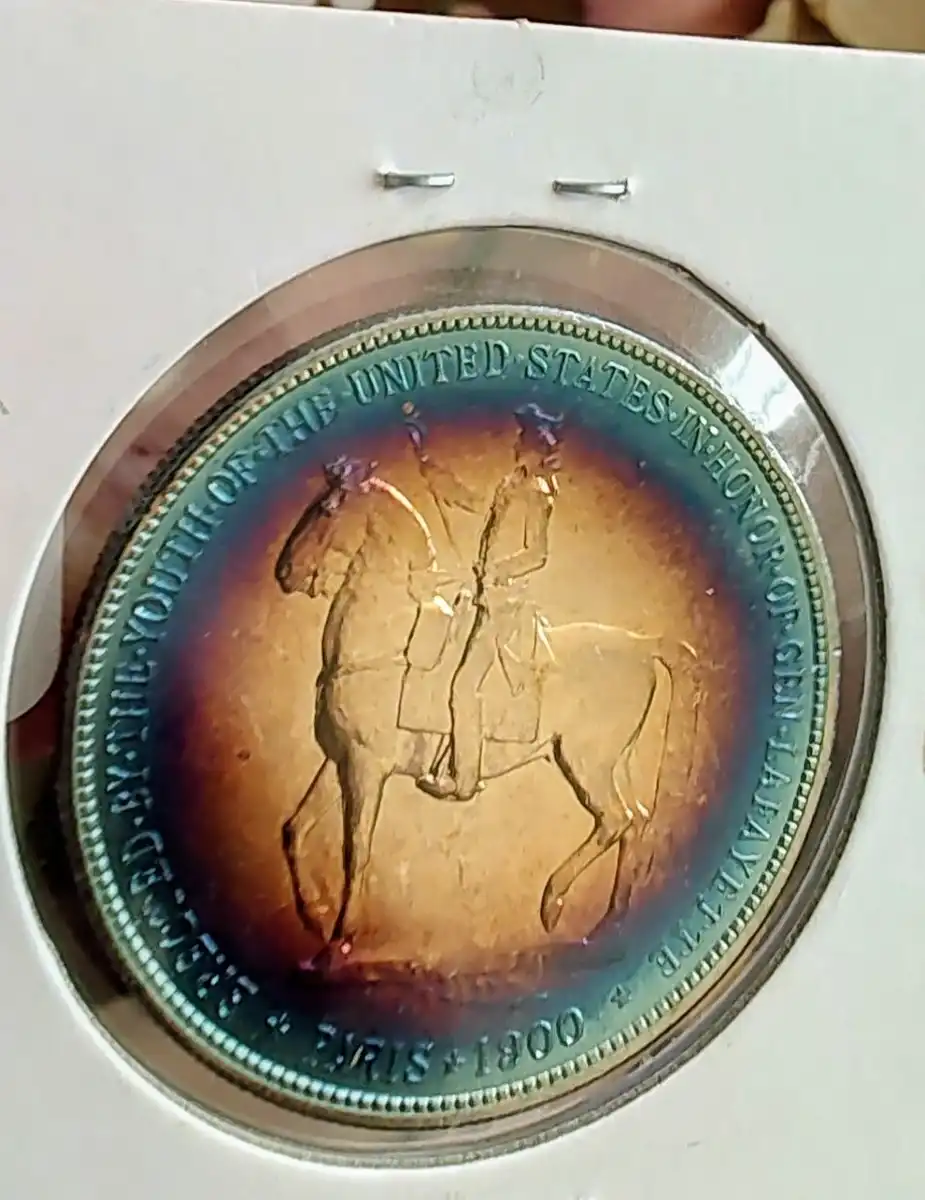
A well preserved example, but it sure looks like man-assisted toning to my eye.
|
|
Bedrock of the Community
United States
10601 Posts |
Your 1st picture - the blue looks "streaky".......  |
|
Bedrock of the Community
United States
80646 Posts |
Could be artificial toning. I don't think it's natural toning in my opinion.
Errers and Varietys.
|
|
Pillar of the Community
United States
5701 Posts |
Jimbucks, May I ask, How was the coin listed when You saw it, ? The colors shown are a bit much for a Naturally Toned Silver Commemorative, In My opinion, Thanks for posting,.... |
|
Pillar of the Community
United States
3863 Posts |
Beautiful, but I'm also thinking artificially toned.
|
|
Bedrock of the Community
 United States
12936 Posts |
This is a visually spectacular coin. Can someone offer an explanation as to how this toning could have occurred naturally? Stored in some suspect album with various oxidizers in the cardboard and suspect plastic slides?
|
|
Pillar of the Community
United States
7738 Posts |
I think it's 100% artificial toning. Too good to be true. One thing is for sure though, if You liked enough to buy it, somebody else will too!
|
|
CCF Master Historian of Commemorative Coins
United States
12640 Posts |
I would be VERY surprised to learn that it is not AT.
Collecting history one coin or medal at a time! (c) commems. All rights reserved.
Edited by commems
04/19/2026 10:05 am
|
|
Pillar of the Community
United States
5701 Posts |
@commems With the amount of commemoratives you have personally seen, Handled, Own, What in Your opinion does this coins surfaces tell you,  In my opinion the hue of blue is Too uniform, Too consistent. I use to hear stories that placing a Silver coin High in a room where people would Smoke for a while, Would change to finish to an extent.  |
|
Pillar of the Community
United States
944 Posts |
Has to be AT but actually quite attractive.
|
|
Pillar of the Community
United States
3747 Posts |
Any toned or higher grade Lafayette Dollar in a 2x2 would concern me unless the coin was accompanied by quality head-on photos for authentication and unadjusted photos to determine actual toning.
There are six known varieties of the Lafayette Dollar consisting of four obverse and five reverse dies. These are referred to as the DuVall numbers. Obverse die 1 is mated with Reverse dies A, B, and C. These are DuVall numbers 1A, 1B, and 1C. Obverse die 2 is mated with reverse die C. This is DuVall number 2C. Obverse die 3 is mated with reverse die D. This is DuVall number 3D. Obverse die 4 is mated with reverse die E. This is DuVall number 4E.
DuVall 1C is unique and DuVall 4E only has two known specimens. That leaves four varieties that can be collected. Two are common and the other two are difficult to find, but can be found with effort. Determining the dies requires clear photos of the obverse lettering and the stem and leaves and "1900" date on the reverse.
There are known toned specimens of he two most common varieties and one of the scarcer but somewhat common varieties. I have only seen a couple toned coins over the years, and the toning is quite muted, about what would be expected for an older album coin. Heritage had a more deeply toned specimen a few years back that sold for somewhere around $15-20K.
Again, I would be wary of any coin that purports to have this level of toning and any Lafayette that is in a 2x2 without excellent detailed photos.
|
|
Pillar of the Community
United States
5701 Posts |
@ fortcollins,
Thank You for the Crash course on the Lafayette Dollars.
I am grateful for the information.
You stated, " Determining the dies requires clear photos of the obverse lettering and the stem and leaves and "1900" date on the reverse. "
The Reverse die that had the " stem and leaves " of a Certain configuration were of Special interest, Some much Rarer than others, If I recall, Thanks Again, MD
|
|
Pillar of the Community
 United States
4707 Posts |
Edited by jimbucks
04/19/2026 2:43 pm
|
|
Moderator
United States
198363 Posts |
Is it market acceptable or not. That is the correct question.  |
|
Pillar of the Community
United States
3747 Posts |
Your coin looks like DuVall 2C, one of the two commonly seen varieties. The key die 2 obverse marker is the sharply doubled second "S" in STATES. The key die C reverse marker is the short stem on the branch, with the stem even with the right side of the first zero in 1900. Since you have the coin in hand, you would be in a better position to verify the attribution. There are several online resources for Lafayette Dollar attribution. The best whole-coin photos of five of the six varieties is on VAMWorld. DuVall Varieties 1B and 2C are the most commonly found varieties. DuVall 3D and 1A are, in that order, scarce but not rare and scarce but definitely harder to find. Just a wild guess here, but these two varieties seem to represent somewhere in the ballpark of 5% of all of the Lafayette Dollars. They are findable, but with effort and additional cost. DuVall 4E is rare, with two known specimens. It's a set stopper. DuVall 1C was reported many years ago, but I am not aware of any photos of that coin online or in publications. Since obverse die 1 and reverse die C are both known, identification would be possible. As far as I know that reported coin is unique. |
| |
Replies: 17 / Views: 997 |




 ***
***


 Posted 04/18/2026 8:09 pm