Before addressing the second half of the question about age, I thought I should try to show some of the details.
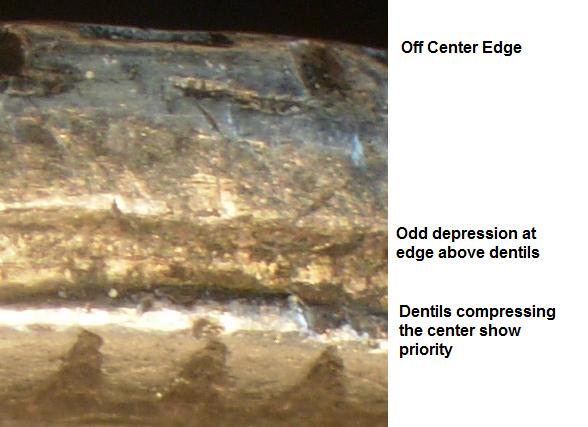
This is a picture of a section of the edge that really bothers me. There is a deep groove located at one side of the blank which is inappropriate. The blanks were cut from rolled ingots with what amounts to a cookie cutter. This blank was weighed and then edged. How this grove fits into that process is beyond me. It was part of the blanking process but why?
It does however prove conclusively that the coin faces were struck AFTER the edge design was applied.
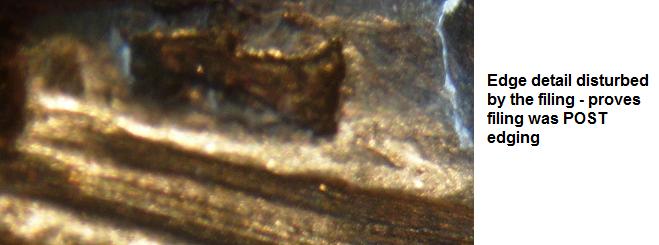
The following shows the edge design where the edge filing occurred. As you can see the rectangle was disturbed by the cutting. Also if you notice the detail within the file mark itself shows ONE single cutting stroke not a back and forth filing motion. To me it looks a bit more like a saw was used as opposed to a hand file. The groves made are quite deep - much deeper than most face adjustment marks.
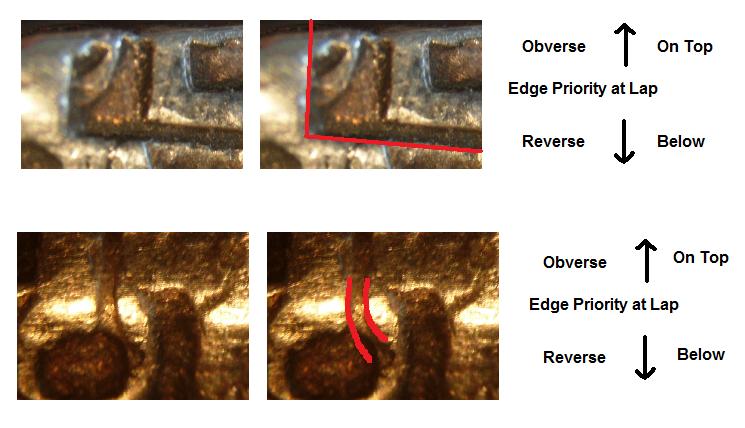
The next is the edge overlaps. The top of the picture is the face side (King's portrait) of the coin in both cases. In both instances the edge applied nearest the top side is cut OVER the other edge.
This error in priority proves that it was not edged on a standard flat bar mill. Both ends of the same half of the edge should never be on top or underneath. You should always find the OPPOSITE of what you start with. Simple physics when you roll a disc between two flat bar dies.
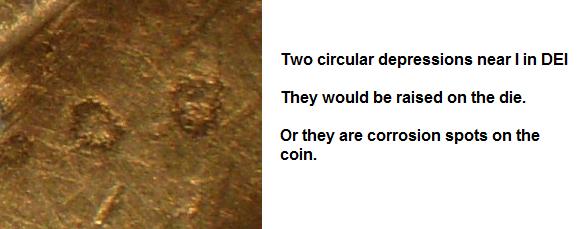
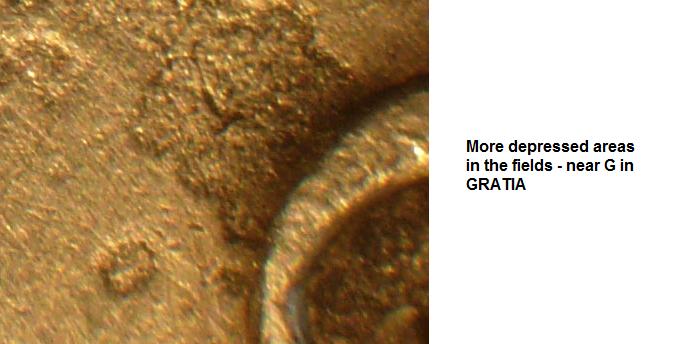
In my earlier post I spoke about the depressions that are seen in many locations on the fields of the coin. These depressions all indicate RAISED die features because they are depressions in the field. Die rust leaves LUMPS in the fields of the coin not depressions. The only natural explanation for these features that I can think of is corrosion of the coin itself. But there is no solid evidence for corrosion in fact in many spots die (mint) luster clearly is present. As a die feature, the most likely reason is a bubble on the die surface which burst before hardening of the molded die - if this is true - then we would be dealing with a MODERN forgery.
These two are near the I id DEI.
There are two more and a depressed area near the G in Gratia.
Here is lower of the depressions near the G at 300X.
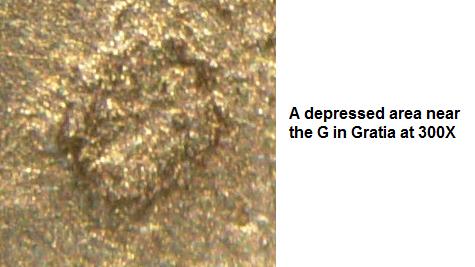
I am not convinced as to exactly what these are but they are very often seen on modern Chinese forgeries. There are several dozen similar features on the coin in many areas.
Next a closer look at the 8 in the date. There is a distinct second impression of a loop to the right of the top loop in the 8. But if you notice there is in addition, something inside the lower loop. What that is is less certain but something is there.
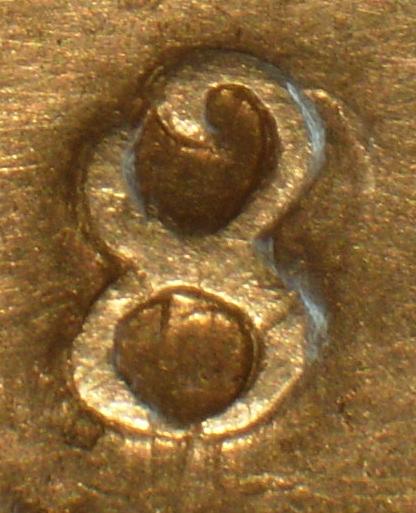
To get a better look I went up in size. The original of this picture fills more than 4 ful screens on my PC but I reduced it to fit here.
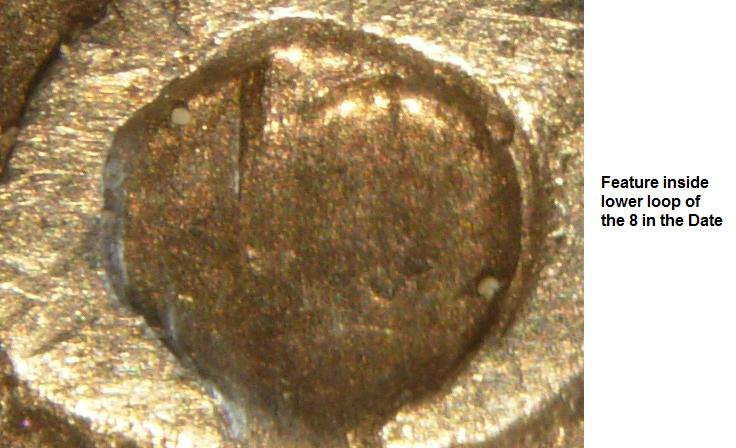
If you notice there is a shelf on the inner edge of the right side of the loop - looks like
Strike Doubling. However, I think it is a die feature not a strike feature because it occurs in many places but is not uniform (displaced or rotational) as you see on strike doubled coins. I believe it was created during the transfer step while the forgers made the dies.
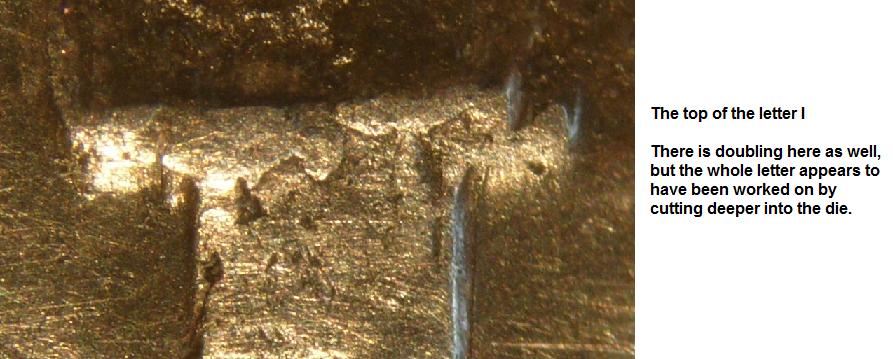
Next look at the top of the letter I. There is not only doubling but some "recutting" deepening of the die itself.
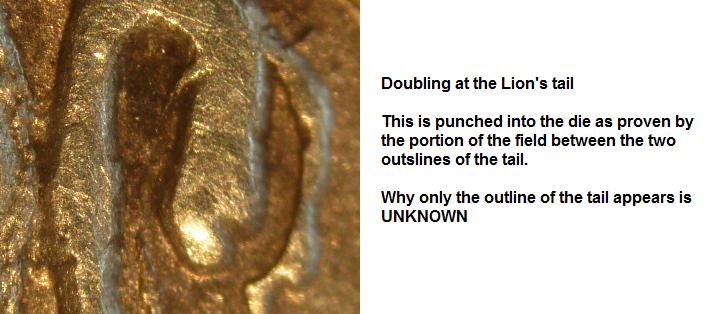
Here is an enlargement of the tail of the lion in the lower quadrant of the shield. The tail is clearly double cut on the die but only in OUTLINE. How can you do that with a punch?
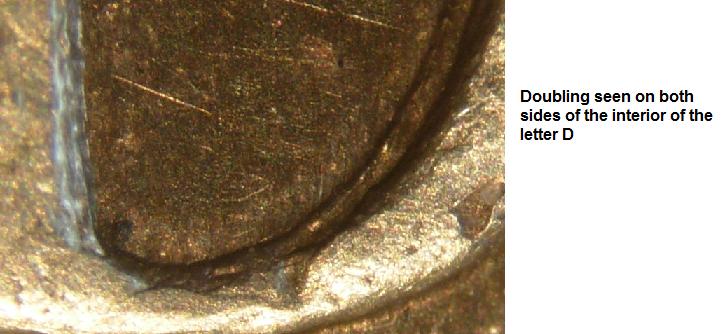
Here is another problem in a letter D - doubling on both sides of the inner loop. The left side the upright looks tripled but the right lower portion has a single thin outline. This is similar to the arcs on the crown shown earlier and on many individual letters. It is not simple
Strike Doubling something happened on the die that created ghost images. The 8 in the date may have been intentional to add value but why the others.
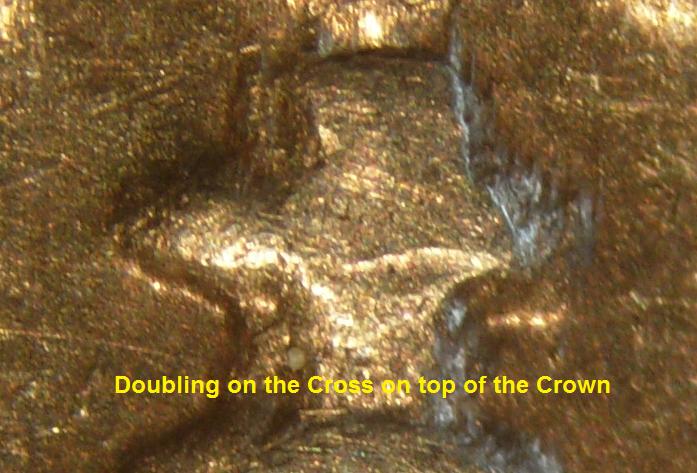
The entire crown is rough and doubled or tripled in many elements. The following is the cross on the crown.
I have tried looking at this a wear doubling as well but it is not the type of ghosting seen on heavily worn dies but in this case die wear is minimal and die state is too early for wear doubling.
So my present conclusion as to age is MODERN. The coin is silver so it has an intrinsic value of 0.78 ounces of silver and in addition I add $15 for the fact it is a Modern forgery (new to me) - so I would peg the value at $30 to $35.
That said the circle in the square edge pattern seen here is often seen on coins I classify as Boston Forgeries. Those were created between the late 1880's and roughly 1933 when China demonetized the " Bustman" dollar. The Boston forgeries are valued on a par with a very common original $35 to $40.





 First Page
 Previous Page


 Posted 05/20/2010 8:48 pm


