| Author |
 Replies: 10 / Views: 1,763 Replies: 10 / Views: 1,763 |
|
|
Valued Member
United States
151 Posts |
After I found one in the wild (posted a few weeks ago), I started looking more at the 1939 Doubled Monticello Nickels. I was mainly looking to see auction prices at different grades etc. Somehow, I ended up buying a lot of 40 of them. I paid ~$31 each. Most are raw but 7 are slabbed. They range from well worn (G-VG) to an ANACS AU53 and a PCGS AU55). I haven't decided if I want to try to sell them or keep it as an unusual hoard. The Cherrypicker's guide lists it as a URS 10(Universal Rarity Scale). That would mean there are only 250-500 in existence. I can't find the numbers right now but I think PCGS and NGC both had ~200 in their slabs. So, here's my question. Is it possible that I really own 5-10% of all of these coins? It doesn't seem like it could be true. Do these figues greatly underestimate the real population? I know these weren't intentionally seperate so there can't be a real count of them but... Also, I've been around this forum long enough that I decided to attach a picture. This is one of the nicer raw ones. Sorry for the quality. 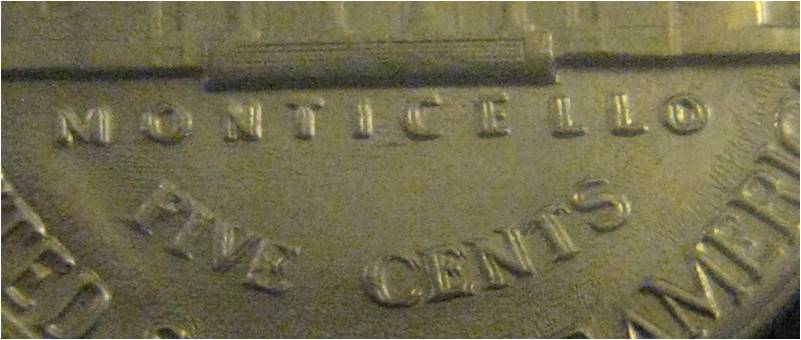 |
|
|
|
Bedrock of the Community
United States
62064 Posts |
VERY NICE!
Those numbers can't be right. The coin is not a EDS coin so it looks like it has made way more than the numbers they estimate.
Edited by coop
09/14/2010 11:02 pm
|
|
Bedrock of the Community
United States
10284 Posts |
Jeepers what a nice coin and if you have a roll of them, holy cow. Congrats on an amazing roll of nickels.
Maybe the number you are getting for a population is for a specific grade, otherwise I would think it is surely a typo.
While they are not 1955 doubled die Lincolns, they are veteran varieties and I would think that they have good investment potential.
|
|
Valued Member
 United States
151 Posts |
You guys made me question my memory so I went looking for the TPG info again. This is from a heritage auction from 2008. I'm not sure if the info updates on their old auction pages but I'd think it wouldn't change dramatically in 2 years. Obviously far from all of the known examples have been sent in for grading. I have no idea what percentage of them has been though so that doesn't get me very far. 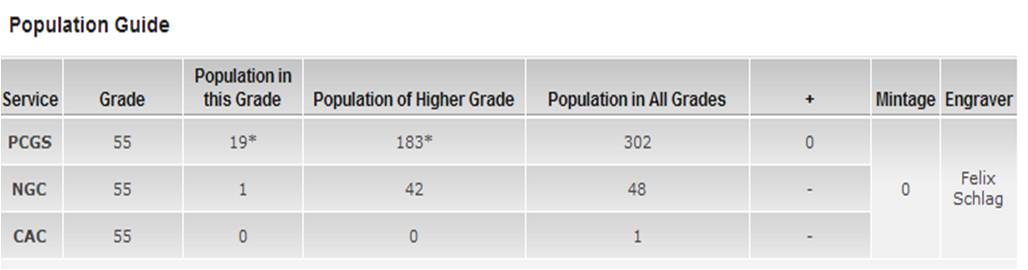 |
|
Pillar of the Community
United States
7629 Posts |
You are counting on ALL of them having been slabbed, and are discounting the fact that many of the slabbed numbers are resubmissions for upgrade. Realistically there is no way to determine the number of any given die in existence, because no mintage figures were kept die for die on modern coins, and the slab game is only for certain people - many more simply keep them in flips or albums, thus are never counted in the "population" data.
Best bet is to use die state to figure the approximate number minted, then use typical age attrition to figure out some wild guess as to how many exist now. I'll start you off by saying that your coin is MDS, and it took about 25,000 strikes to reach that...so we know that at least that many were likely made in the first place.
Now...how many of those made it into circulation? How many were circulated to death and/or buried, lost under porches, etc.? How many are in unsuspecting collector's books as NORMAL 1939 nickels? How many are still in uncirculated rolls waiting to be found? How many are in circulation waiting to be found? How many were found, recognized, then stuck into albums or flips as raw coins to enjoy?
The answers to these questions would be the number made minus the population data - give or take about 20% for reslabbing.
So you see...moral to the story...your question is impossible to answer.
|
|
Pillar of the Community
United States
7629 Posts |
Oh...to add...
Anyone can start reporting a URS for the number of any given die they have seen or have been reported to them...but even that number is wildly inaccurate unless they are certain every collector has reported every example known to them and that none of the numbers are duplicated due to sales, trades, etc.
Basically - population numbers on varieties are worthless except to give some indication as to rarity as compared to other wildly inaccurate data.
If the same source says there are 250 of one variety, 240 of another, then 5 of yet another. The last one is probably the scarcest....or the newest discovery....or the one nobody really cares to collect and report.
|
|
Pillar of the Community
United States
7629 Posts |
Okay, okay...I give.
Population data for die varieties is always wildly inaccurate and pretty much worthless.
|
|
Valued Member
United States
151 Posts |
Ok. The numbers didn't seem right to mw so I figured I'd check. Thanks for the feedback. I'll pretty much ignore population figures from now on.
|
|
Pillar of the Community
United States
4541 Posts |
wow a whole roll of 1939 DDR thats awesome |
|
Valued Member
United States
83 Posts |
All I can offer is the following numbers from the PCGS population report.
1939 DM mint strike = 331 graded
1939 DM Full steps = 20 graded
Hope this helps
|
|
Valued Member
United States
206 Posts |
`Nice find ! Variety are fun to find. the key is how many are made? The nickel die lasts only so long before replacing If it is a double die or DDO or DDR does intermittent inspection of each press cause an early change of that die? Only mint records would tell you and then the error would have to be recorded in details as to the problem..and the reason for changing the die along with the number of nickels made. I have found 14 1964-d mpms there are only 3 in holders from pcgs. I bulk graded them to a 64 and got 4 in holders 2 65 ( top pop)and 2 64. Yet they are not in a variety holders ( $35 more each.) A little insight in to how hard to find this coin... There where 1.3 billion 1964-d dimes minted. The dies the last 300,000 impression on average die life; there where over 4000 dies made for the reverse of this coin. Or one in 4000 coins which is 1 coin in 80 rolls.. |
| |
Replies: 10 / Views: 1,763 |
|










 Posted 09/14/2010 11:14 pm


