| Author |
 Replies: 20 / Views: 5,471 Replies: 20 / Views: 5,471 |
|
Pillar of the Community
United States
5362 Posts |
Here is a very beautiful coin (my opinion). It is the 1840 Goa Rupia from Portuguese India. The coin was auctioned in 2007 and then slabbed and resold last year by a US dealer. It is the finest example ever graded by NGC. In person the coin has beautiful nearly intact mint luster on both sides. The plastic holder does nothing to make it look better. 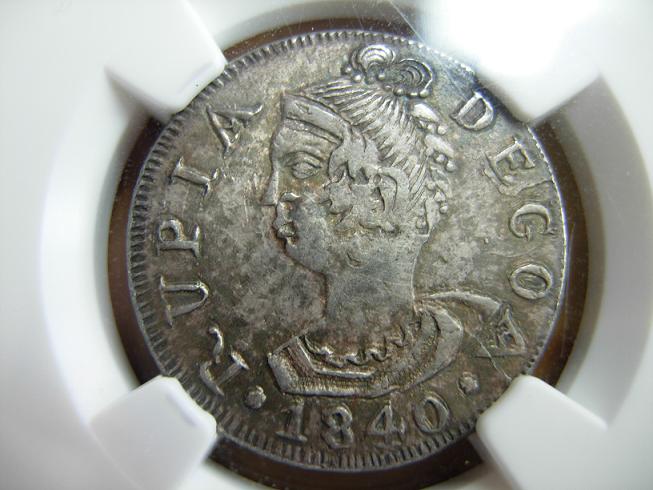 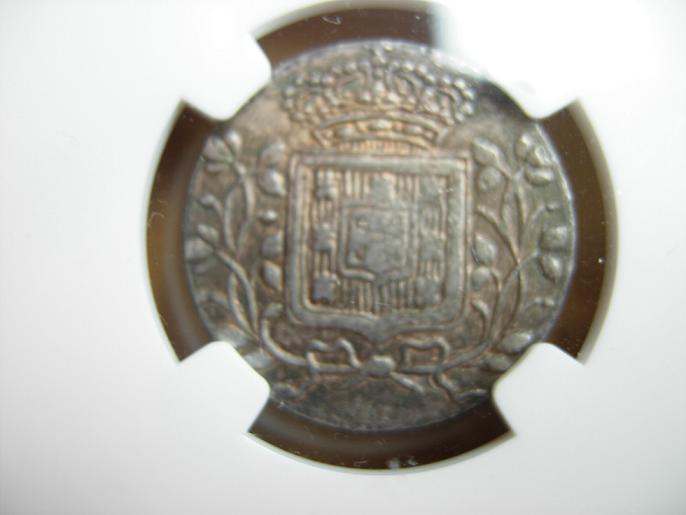 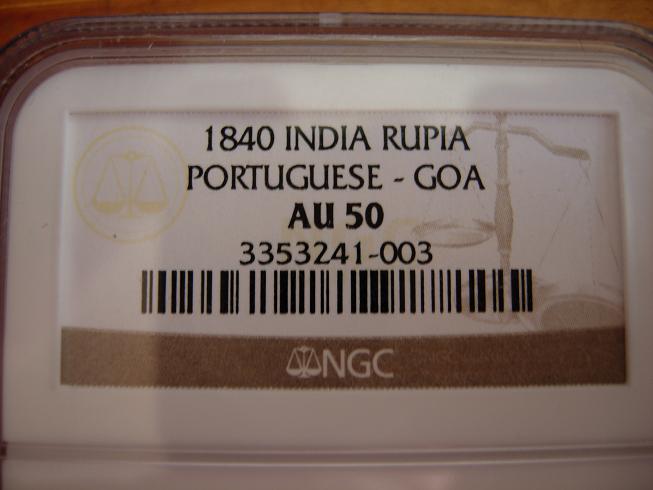 My question is - What is it worth? Anyone venture to guess? |
|
|
|
Bedrock of the Community
United States
10045 Posts |
All I can add is--fascinating coin! I really like the evidence of handwork on the dies.  |
|
Pillar of the Community
United States
4000 Posts |
What an awesome coin! Thanks for sharing!
|
|
Pillar of the Community
Canada
904 Posts |
I have to agree with you 110%..for 1840 it is a beauty, congrats.. |
|
Pillar of the Community
France
1591 Posts |
|
|
Pillar of the Community
Thailand
1509 Posts |
Krause 2009 edition:
KM#269 1840 Good 37.50; VG 75.00; F 105.00; VF 240.00
Oops. Having just compared the graded slabbed one with the link provided by MathieuMa about the fake do you think NGC have been taken in?. I mean what are the chances that this was the original that the fakers used in order to make copies?
Edited by thai-vic
07/02/2011 06:50 am
|
|
Pillar of the Community
France
1591 Posts |
The side with dentils on the fake one don't look alike, it's less wide.
But what I find strange on this one, is that the edge dentils don't go to the end of the coin - check near rupia (it's plain there at the edge)
Swamperbob, are you thying to tell us NGC certified a copy ? :D (wouldn't be the first time ...)
|
|
Valued Member
United States
266 Posts |
If that is the original used to make the copies, that would tend to implicate the unnamed US dealer in the production of the fakes, wouldn't it? We all like to blame all of the fakes on the Chinese, but maybe they are just filling orders.
|
|
Pillar of the Community
 United States
5362 Posts |
MathieuMa Hats off to you for checking.  You have actually posted a photo of one of this coin's BROTHERS from China. The coin is 100% FAKE. Estimated to be about 8 years old they are Chinese. There are at least 3 or 4 other known copies. But this one was actually encapsulated by NGC.  It is a RARE FIND only because it was GRADED by NGC. I am a bit surprised how - knowing my specialty - so many people don't immediately say - Wait a minute, you collect counterfeits. What's up? I have actually had legitimate offers to buy this as real. This coin has a good solid history. It was sold last year at an ANA show in Ohio by a very reputable dealer with good credentials. Prior to that it was in a sale by a large auction house who has a resident expert in foreign coins who was fooled. I am omitting all names because the current owner who also wishes to remain anonymous does not want to tarnish reputations by asking for a refund. He has agreed to sell the coin to me at a substantial loss to be used as a teaching aid. I have contacted NGC and sent in all the "proof" they should need to know conclusively that the coin is a forgery. There is a PERFECT 100% guaranteed proof of forgery on this coin that is not seen on the others. That Proof is so obvious that I saw it in seconds BUT NGC missed it. I have contacted NGC and got a couple very quick responses - they would like the coin back. OF COURSE THEY WOULD. I have offered to bring it to them to show them the problem but under no circumstances is this coin coming out of the holder. I will post a micro photo of one section of the coin showing the feature that CAN NOT HAPPEN on a real die struck coin. Can you spot it? 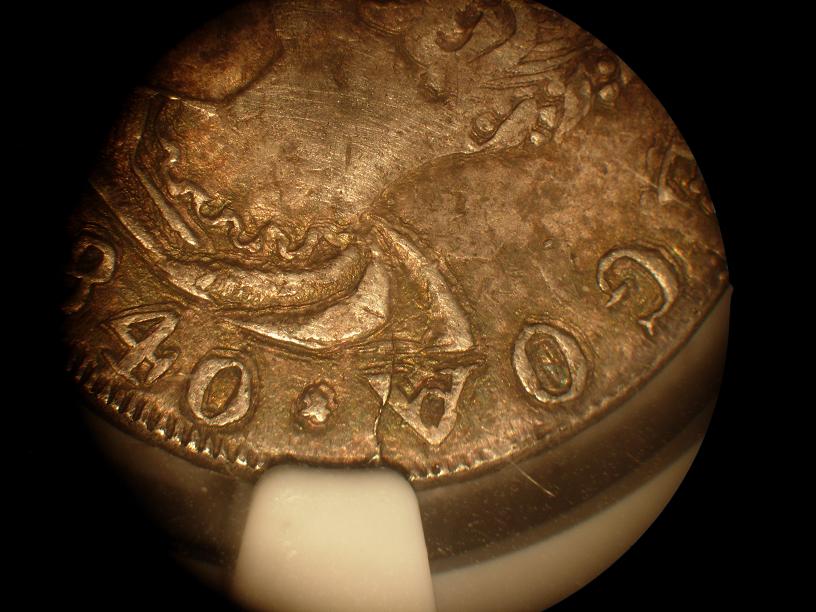
|
|
Bedrock of the Community
United States
10045 Posts |
 Oh...it's fake? Some of these threads spin me around and give me whiplash.  If NGC can be fooled, I would be too. Add this coin to the growing list I'm unqualified to buy.  |
|
Pillar of the Community
United States
4000 Posts |
I should have known swamperbob was up to something.  But, I still don't feel bad because I've never really claimed to know much about anything to begin with!  You're the man when it comes to stuff like this.  |
|
Pillar of the Community
United States
5362 Posts |
MathieuMa I was just re-reading your post and noticed the comment; Quote:
But what I find strange on this one, is that the edge dentils don't go to the end of the coin - check near rupia (it's plain there at the edge) Actually that is just the picture. The dentils do actually run clear to the edge - they are in fact die details. The blank area which is visible only in the photo is actually the edge of the coin because it bulges slightly at the center. These were out of collar strikes so some edge bulge is plausible. It is always an issue that needs to be accounted for when dealing with out of collar strikes. It will still fool me on occasion on pictures. Dentils that end before the edge of a coin are in fact a very good clue for forgery. The only exception on a real coin is where the strike is so far off center that the entire dentils is visible at BOTH ends.
|
|
Pillar of the Community
United States
5362 Posts |
Still no takers on the question of how can I tell this is fake?
Hint - it has nothing to do with the fact that this coin purports to be an 1840 Portuguese India coin. It could happen on any coin of any age made anywhere and the clue would be IDENTICAL.
It is a simple but conclusive ERROR.
|
|
Pillar of the Community
United States
4000 Posts |
Does it have something to do with the "die break" being incuse?   |
|
Pillar of the Community
France
1591 Posts |
I'd go for the A continuing on the right side of the break.
Or metal going higher on the left side of the break (there should be a step here, but no higher metal)
PS : sorry if it's not that clear, english is not my native language :)
Thx as usual for the lesson swamperbob :D
|
|
Pillar of the Community
United States
5362 Posts |
I guess from the fact that I placed the crack in the center of the post it was obvious that the crack was involved. The real problem is simple. Which is why I was bothered that none of the experts called attention to it immediately. Here are the facts. The die had a crack. The coin was struck by the die twice (or more). The crack appears - ONCE. 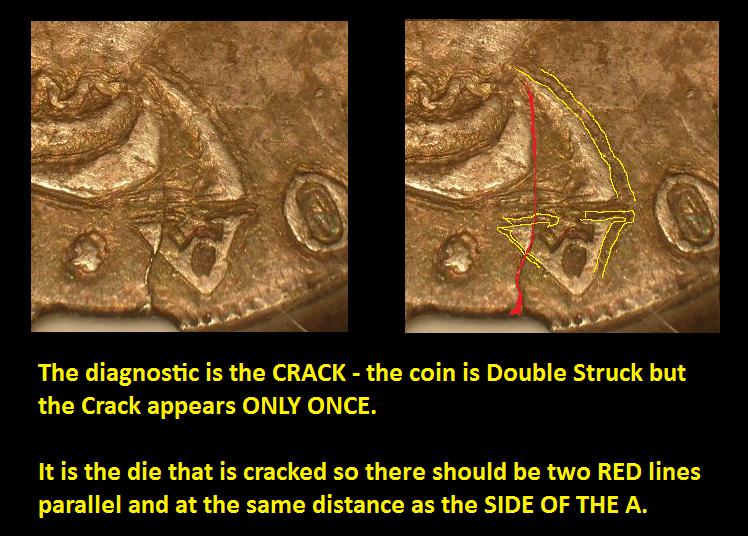 I don't need to compare dings or dots or gouges or what a real 1840 coin looks like or anything else. The crack appears one time on a coin struck more than once. THAT IS IMPOSSIBLE. It proves the multiple image was a DIE feature it was not caused by the actual strike. This coin was struck ONE time with a cracked die, the apparent double striking was on the host coin that was copied. Just in case anyone is prone to say it could be erosion doubling (which by the way is also present) - Notice in particular the upper edge of the cloak - a weak die feature which is distinctly and clearly doubled. That parallel image is NOT a ghost image caused by die erosion. With no other proof whatsoever, I will say the coin is COUNTERFEIT. I need no other proof. |
| |
Replies: 20 / Views: 5,471 |







 Posted 07/01/2011 10:23 pm





