| Author |
 Replies: 33 / Views: 6,360 Replies: 33 / Views: 6,360 |
|
Pillar of the Community
Czech Republic
803 Posts |
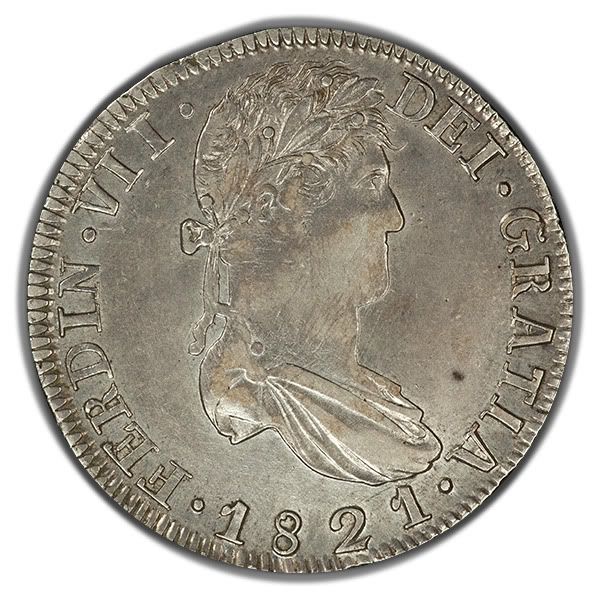
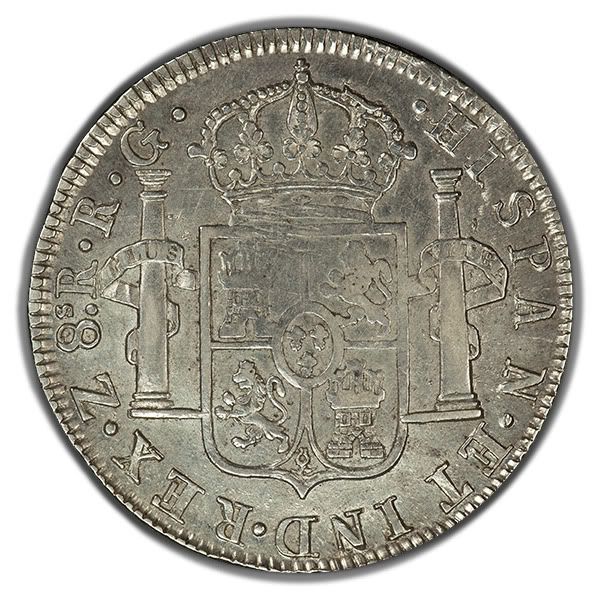
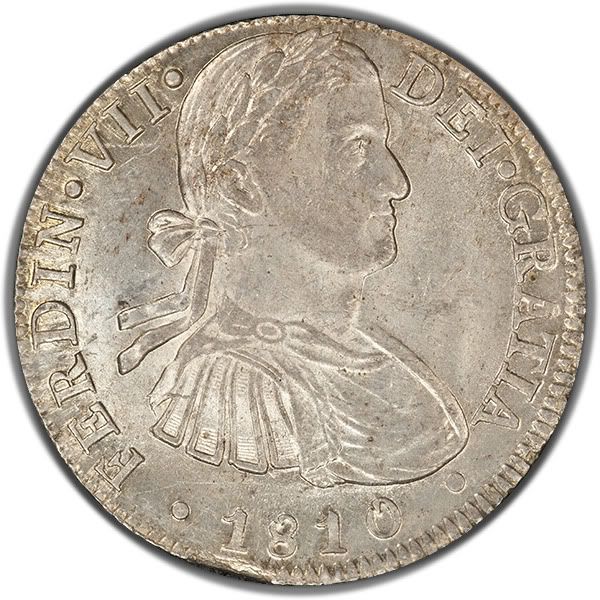
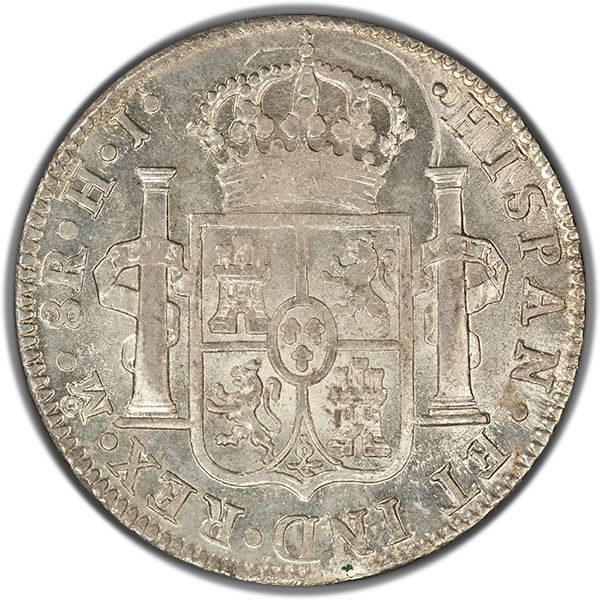
Just a couple of inexpensive pick-ups from the recent Hervera sale: 1821 Zacatecas 8 Reales. Neat error - superscript "s" on the reverse was punched into the die after 8 instead of "Z" (Normal legend would read "Zs 8R", not "Z8sR"). 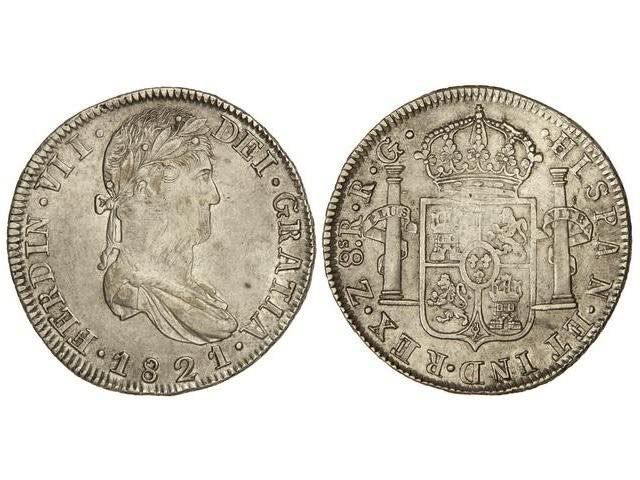 1810 Mexico 8 Reales. I liked the die clash. 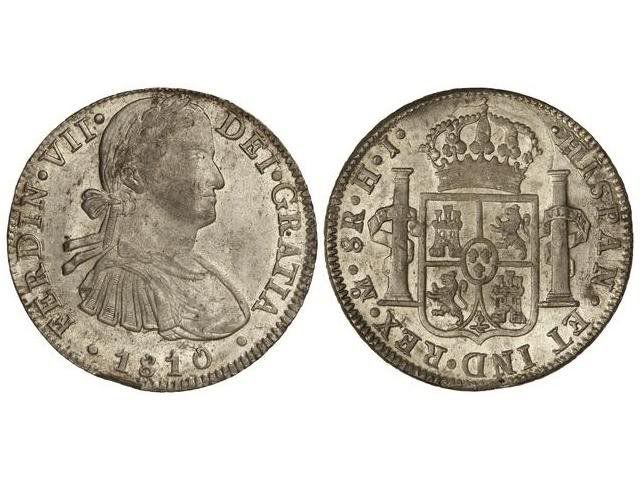 Edited by TwoKopeiki
07/06/2011 7:35 pm
|
|
|
|
Pillar of the Community
 Czech Republic
803 Posts |
Won this one the other day, as well.  |
|
Pillar of the Community
France
1591 Posts |
Beautifull picks ! For now I stopped collecting spanish coins after Carolus IIII (just when it's starting to be interesting and south american countries emerging :D ) - but the more I see those Ferdinand VII coins, the more I think I should continue a bit :p
|
|
Pillar of the Community
United States
1962 Posts |
1. The 1821 Zacatecas pieces are interesting... such deeply/intricately engraved detail. How familiar are you with this date/mint? I've wondered what's going on with the weird two-tone appearance on the cheeks/high points on many 1821 Zs pieces you see (incl. one I own, which made me start noticing this)? It seems to be particular to this date/mint... 2. Nice crusty armored bust 1810... amazingly, that constitutes a decently even strike for these. 3. Nice 1803... solidly struck central detail. Just a bit of planchet stress on the periphery, which is fairly common and not really distracting on this piece. They called it UNC-, which theoretically equates to a low-end UNC on this side of the Atlantic... It's at least high AU (AU58) detail. I don't know if I can say either way if there's any actual wear. The look of the reverse makes a case for UNC. I hope the surfaces are OK on it. I've discovered that Aureo's photo lighting can veil things... which is slightly bothersome since they seem to reserve use of the word "limpiada" for when there's an palpable aroma of steel wool... It does look to have at least some frosty contrast. I'd say you went for pretty strong money on it (unless you're certain it's UNC)... but considering where the market seems to be now for XF and up portrait 8R, it's not really. Did you see this ending today? Nothing special date, NGC "AU det. cleaned". From seller's pics, it's barely scratching AU and the cleaning looks pretty harsh/uneven. Still brought almost 2 bills: http://cgi.ebay.com/1792-MO-FM-PILL...380351142383FWIW, I've also gotten a few pieces from them that I feared were brighter-looking than they turned out to be... so who knows. |
|
Pillar of the Community
United States
1962 Posts |
Also, more generally speaking... Soler doesn't run as many auctions as Aureo, but considering they were less than a week apart, you can't help but compare the two... The Soler auction had a fairly good array of material, and everything I was watching went for fairly strong prices, I thought. I didn't pull the trigger on anything. One thing, though... that's now 2 for 2 for their new online bidding platform having MAJOR technical difficulties... Last time, in their initial run, it permanently crapped out about halfway through... this time, while not as bad, it was periodically freezing for short periods, where you then had to close/reopen the bid screen... In contrast, I thought the Aureo auction was honestly pretty lacking. Not that it was bad for me, necessarily... I won some stuff, a few gold pieces at what I feel are good values even with the high EUR/USD rate, plus a few other small odds and ends that it appears no one was around to bid on (one in particular reinforces my mantra of "always nibble, just in case..."). Here was a goofy thing small purchased, within the arena of weirdness with the Lima mint 1800-08 8R as discussed in an (old) thread I posted to a few weeks back (actually just added to that topic the recent strike price of that cousin coin to the OP's purchase)... Anyway, this is an 1802 Lima 8R, XF+ detail with a weird little rim appendage. If you look only at the observe pic, you'd think it was just a removed mount. However, in the reverse shot, you can see how that little piece appears to be part of the rim that sort of peeled away (?)... and you can see part of the denticles struck on it:  Edited by realeswatcher
07/06/2011 7:23 pm
|
|
Pillar of the Community
Czech Republic
803 Posts |
Just noticed that I made an error when describing the error on the 1821 - the superscript would normally be after "Z", not "R". and legend should read "Zs 8R RG". realeswatcher, thank you for your comments. I've never noticed the tone difference before and will pay more attention to these in the future. 1821 in Zacatecas is an interesting year, as you mention. Due to the amount of coins produced in 1821 (over 2.4 million pesos), as well as the assumption that mint continued production using the same dies well into 1822, there are quite a few varieties to be found. Calbeto alone documents 12. I've been disappointed with Aureo coins in the past, especially when it comes to hairlines, to a point where I'm considering not bidding on their coins again. We'll see if this one makes me change my mind. Mexico AU-MS has been bringing in very strong prices recently and that wouldn't change any time soon. With both PCGS and NGC creating competitive registry sets the prices should remain strong. Have you seen the recent madness on ebay with MS63 and up slabbed common cap and rays? |
|
Pillar of the Community
United States
1962 Posts |
"Madness" LOL... no kidding. Common Cap & Ray 1880's dates in MS63... for a long time, not much different than an equivalent grade Morgan dollar, going for $250, $300, and more?! If only you could go back in time and buy them all at the old pricing... that, and some Chinese Junk and Fat Man dollars :->. Yeah, Aureo can be hit or miss. Their lighting/exposure washes out any perception of the surface you could possibly get. It's similar to Ponterio's photos, but worse... and at least Ponterio is good about mentioning problems. Aureo, not so much... That's one thing I like about Soler y Llach... their cataloging and descriptions (mentioning issues) are usually spot on, and their photography seems a bit more accurate. Also, they almost always give weights on cobs, which I think is necessary information. Here's what I'm referring to with the 1821-Zs pieces... Note that this isn't just "mishandling" making high spots excessively bright... It's almost as if there some metallurgical difference, but only in isolated spots... The first one is mine, and the next 3 are ones I just dug up quickly out of auction archives:   |
|
Pillar of the Community
Czech Republic
803 Posts |
Hmm... I see what you mean about the cheek. Looking at a single coin, I would just attribute it to normal wear, but seeing multiple examples it looks systematic. Interesting puzzle.
|
|
Pillar of the Community
Czech Republic
803 Posts |
Just received the Aureo win and it's hairlined. Going to stop bidding on their AU / MS pieces for the time being.
|
|
Pillar of the Community
Czech Republic
803 Posts |
Nice cameo effect happening on the bust, but the fields are heavily scuffed. I really wish Aureo would improve their photography. Catalog image: My images to show surfaces:   |
|
Pillar of the Community
Czech Republic
803 Posts |
And here's a way to photograph the same coin to hide all surface imperfections:   |
|
Pillar of the Community
United States
1962 Posts |
Well, the piece could be worse... It does have decent frost/some contrast, pops the prices on these - did you see that PCGS63, PL but not noted, go for $2100 a while back on ebay? Yeah, shows mishandling and definitely a lot of wipe marks... but it doesn't look like systematic, uniform whizzing across the whole surface, at least from the pics. Any luster left, or overdipped? Mishandling aside, do you think it's full UNC detail? I would lean towards that over AU58, though not 100% certain. If there's some luster left, "maybe" you have an outside shot at squeezing that into an NGC60? The focal but area seems quite decent-looking, so possibly? If not, hopefully UNC details rather than AU details... Def. not a PCGS candidate. Genny works as cheap beer, NOT as a coin description. |
|
Pillar of the Community
Czech Republic
803 Posts |
I participated in that PCGS 63 auction with what I though was a very strong bid, but ended-up being about 80% of the closing price. It was a nice looking coin, though. Plus knowing PCGS standards I can only assume the surfaces were that of a true 63. A touch of color around the edge added to the appeal, as well.
The coin is fully lustrous and appears to have UNC details. As it is right now, I think it will come back as details grade, however I've seen NGC slab worse examples as 60-61 (but I wouldn't bet on it). It's going in an envelope and going to be put away for a few years.
P.S. I HATE the Genuine designation PCGS uses.
|
|
Pillar of the Community
United States
5362 Posts |
Just to jump in on the subject of the 1821 Zs issues. I have found that date and mint to be the MOST commonly forged date of the "Boston" type coins. I have 14 die varieties in my collection. I attribute that to the fact that so many real coins were produced of this date. It would be the obvious target if you were just trying ot fit in. The "Boston" types are the coins made to mimic real Portrait 8R coins and were initially made using the correct amount of silver. The existence of this class has been very difficult to document but the bare fact that it was in fact done is now beyond doubt. Where these coins were made is still conjectural but the obvious candidates are Mexico City, Birmingham, England and the Boston, Mass. area. Just as obvious as the existence of this class of coins, is the implication that "sharp" operators also made copies with too little silver in their alloy. A recent article in Coin World about the abortive attempt to establish a US mint in California expressly to coin Portrait Mexican 8Rs - clearly implies that not only were silver forgeries made but that debased copies promptly followed once the die duplicating technology was created. So what I am implying is that in some cases especially with 1821 Zs coins you may be dealing with coins that were struck far later than 1822 and were perhaps not made in Mexico. The change in color can in some cases point to a debased silver core being used. That is not the only reason but needs to be looked at closely. Regarding the 1803 coin in high grade with the surface cracking caused by stress in the rolling step - I have one additional caution. High grade copies of Portrait 8Rs are well known among the Boston types and they are notoriously hard to identify. I have a superb near MS example of a triple struck 1784 that I attribute as a "Boston" type. But one thing I have learned over the years is that Boston types often exhibit this same cracked texture. In fact the very first coin of this class that I bought PERSONALLY from the man who made the coin exhibits this texture. I have told the story on the forum before but back in 1957 when I first became interested in coin collecting my Uncle introduced me to a friend of his who in years past was a forger and counterfeiter. That meeting and follow up visits led in large measure to my interest in counterfeit coins - specifically Mexican. This old man was part of a group of men who made Portrait 8R coins in silver for use in the orient. He worked in a foundry that had a "third shift operation". The operation was located in New Bedford, Mass and supplied the coins to a Boston Merchant who dealt with China. The old man still had several copies he said were made BEFORE 1930 and he finally sold me one in 1960 just before his death. It is an unremarkable 1805 Mo TH 8R. But it contains in one coin all of the clues I have over the years used to diagnose similar "Boston" type forgeries. It has the cracked surface on the planchet caused by low temperature rolling. It has soft die cracks and breaks caused by poor grade die steel. It has the odd smile that the old man said they could never get quite right. It has small excess metal around many of the details caused by the duplicating lathe used to make the die. It has incomplete dentils in an area where the strike exceeded the die impression. And of course it has a VERY BAD edge application done with one die applied twice. I have never before shown pictures of this coin before but here it is. I paid $3 for it in 1960. It is one of my most cherished counterfeits and perhaps the coin I have studied most for clues in the past 51 years. 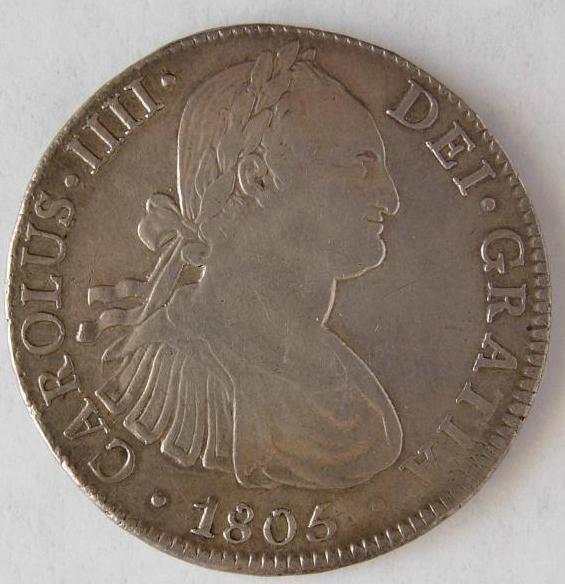 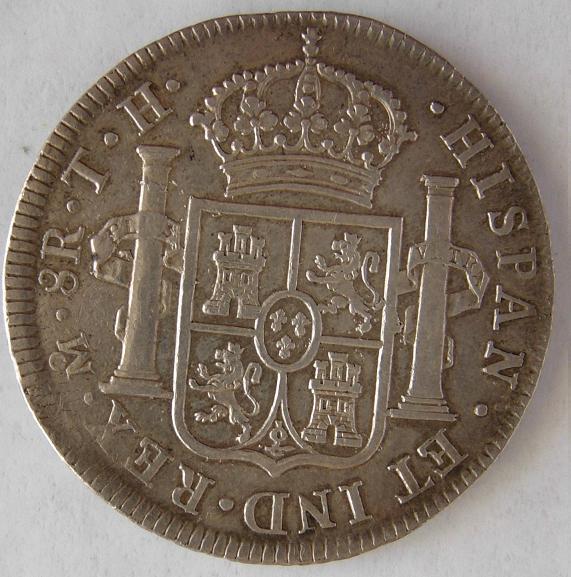 I am not saying your coin is a counterfeit of the Boston type - but it is one I would closely examine if I saw it in person to see if perchance it was not an original. |
|
Pillar of the Community
Czech Republic
803 Posts |
|
|
Pillar of the Community
United States
1801 Posts |
The 21 Zs with "no mouth" is aways a suspect coin. Do you have the abilty to do a specific gravity test on it or at least weigh it?
|
| |
Replies: 33 / Views: 6,360 |










 Posted 07/06/2011 4:54 pm