| Author |
 Replies: 14 / Views: 6,197 Replies: 14 / Views: 6,197 |
|
|
New Member
Netherlands
31 Posts |
Last week I discovered an odd Lincoln Cent 1963-|D (not doubled die). It seems that it was struck on a somewhat bigger die than usual. Also above the portrait of Lincoln the "W" of "We" seems to stand higher than the "E" and closer to that "E" than usual. Although the picture of the obverse is not all sharp, the detail shows exactly what I mean. The rim seems to be double and that is all the way around, so it seems not an off-centre strike. What can be the cause? 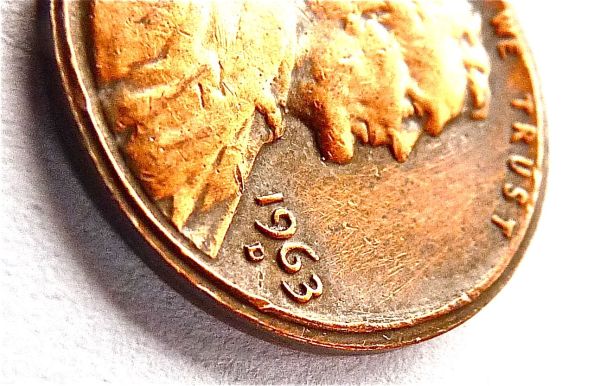 |
|
|
|
Rest in Peace
United States
1943 Posts |
Welcome to the forum. Looks like damage from being encased in it's past and was later broken out.
|
|
Bedrock of the Community
United States
17884 Posts |
I agree, removed from an encasement.
|
|
Pillar of the Community
Netherlands
565 Posts |
Hi Sjaak, "Encased" is something like this.. This one is from my collection.. Very nice looking Indian cent.. I think, to bad it's encased.. 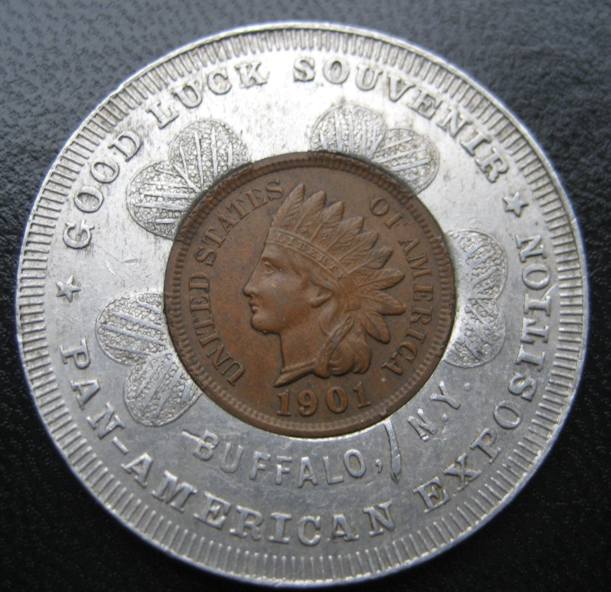 |
|
New Member
 Netherlands
31 Posts |
OK, thamks for the information, but the coin is just a little bit bigger than other Lincoln cents. Can this be caused by encasing?
|
|
Pillar of the Community
United States
3640 Posts |
Interesting. I have an unc. blank planchet with this same
effect around the rim/edge. And it was never encased.
I had posted it on here a while back and got no info on it.
I'll bet whatever happened here was done at either the initial
stock punch or the planchet step. Hope to find out so I can finally identify what I have. I'm not even positive it is a
u.s. one cent blank because of it's weight and diameter etc.
|
|
Rest in Peace
United States
1943 Posts |
Yes, the coin can be enclosed into the encasement with a crimping process which can deform the edge and make the coin larger in diameter.
|
|
Pillar of the Community
United States
3640 Posts |
Sorry, but I have to disagree. I have popped dozens of cents
out of these holders and not one looked like that.
I'd like to see the reverse on that cent also.
|
|
Bedrock of the Community
United States
12437 Posts |
Do you have a way to accurately measure the diameter(caliper or micrometer)? Also, can you get a picture of the edge and direct shots of both sides?
|
|
Pillar of the Community
Netherlands
565 Posts |
This one shows almost the same.. I was also been told it was from an encasement.. 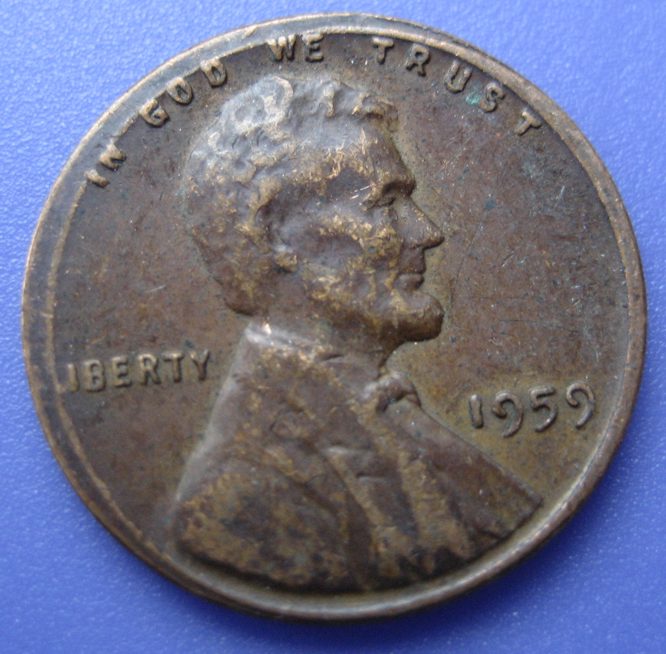 |
|
Pillar of the Community
Canada
1166 Posts |
There are two different types of encasements:  |
|
New Member
Netherlands
31 Posts |
Sorry, I've been away for a day. I will try to get e few good pictures of this cent and I'll ask my coindealer if he can measure the diameter and weight accurately.
More will follow.
In the mean time, thankx everyone for the comments. Casing was a thing I never heard of before (we don't see this much in Europe).
|
|
Bedrock of the Community
United States
62064 Posts |
The coins are pressed into the holder. Something is got to give in order to hold them in place.
|
|
New Member
Netherlands
31 Posts |
I asked my coin dealer to measure it. The coin has a diameter of 19,2 mm (possibly 0.2 mm expanded in the casing process) and weighs 3.11 grams (exactly the same as other Lincoln cents) so I conclude that my "1963-D Lincoln Memorial cent struck on wrong planchet" is a normal 1963-D cent damaged by casing. End of story. |
|
Bedrock of the Community
United States
17884 Posts |
The coin is put into a hole in the aluminum blank and then the aluminum blank is struck by a pair of dies just as a coin is. Often the hole in the holder die is slightly smaller than the coin (See the 1901 Pan-American Exposition pieces shown earlier. Note how part of the design of the clover leaves is struck onto the rim of the cent.) When this happens the rim of the cent is crushed down and the cent is larger in diameter as it presses into the aluminum holder locking them together. If the hole is the same size or very slightly larger the aluminum presses against the cent to lock them together. This method isn't quite as effective. If a cent is removed from on of these holeders the rims may look normal but the edge is typically slightly concave from being pressed in by the aluminum.
|
| |
Replies: 14 / Views: 6,197 |
|







 Posted 07/19/2011 1:31 pm





